Atlassian Wrongful Termination Ruling: A Turning Point for Tech Labor Rights
Understanding the Ruling: Atlassian and the NLRB The recent ruling by a National Labor Relations Board (NLRB) administrative law judge…

For decades, id Software has not merely contributed to the first-person shooter genre; they have been its principal architect, laying down foundational blueprints that continue to define the very essence of what makes an FPS great. In an era where many blockbuster titles lean heavily into sprawling, complex narratives, open-world exploration, or the persistent grind of live-service models, id Software’s flagship series, Doom, consistently charts a different, more primal course. Its enduring success, particularly with recent entries and the anticipation for its newest expansion, stems from an unwavering, almost defiant, commitment to the core ‘feel’ of combat. This isn’t just about shooting; it’s about a kinetic, aggressive ballet of destruction that prioritizes immediate player agency and visceral feedback above all else.
The studio’s design DNA is deeply rooted in what fans affectionately call the ‘id Software rhythm.’ This distinct gameplay loop is a masterful blend of constant, high-speed movement, intensely satisfying shooting mechanics, and aggressive, on-the-fly resource management. Players aren’t just traversing levels; they’re constantly strafing, dashing, and leaping, transforming the battlefield into a dynamic arena where standing still is a death sentence. Every shot fired, every demon eviscerated, directly feeds into the player’s survival, whether through health drops, armor shards, or ammunition. This relentless cycle ensures that every encounter is an active, demanding engagement, far removed from the passive storytelling or cinematic sequences that often punctuate — or even interrupt — gameplay in other modern titles. It’s a challenge that rewards mastery, where skill isn’t measured by memorizing cutscene cues but by the fluidity of your movement and the precision of your aim.
What truly sets id Software apart is their profound understanding of how to balance challenging gameplay with inherent accessibility. While their games are notoriously difficult at higher settings, the core mechanics are intuitive and immediately gratifying. New players can pick up a shotgun and feel its immense power instantly, but veterans discover layers of depth in enemy attack patterns, weapon swapping, and environmental traversal. There’s no hand-holding here; instead, the game empowers you with incredible tools and then unleashes you into a gauntlet, trusting your ability to adapt and overcome. This contrasts sharply with many contemporary titles that often prioritize guided experiences, extensive tutorials, or even remove player failure to maintain narrative momentum. Doom, conversely, posits that the story is in the struggle, the triumph, and the sheer, unadulterated satisfaction of conquering insurmountable odds through pure skill.
For many veteran players, returning to a new Doom title feels less like playing a new game and more like ‘coming home.’ It’s a reaffirmation of the genre’s purest ideals: speed, power, and an unyielding commitment to putting the player firmly in control. In an industry often chasing the next big trend, id Software stands firm, proving that timeless design principles — kinetic movement, impactful combat, and genuine player agency — remain the gold standard. Their philosophy isn’t just about making good games; it’s about crafting experiences that resonate deeply because they tap into the fundamental joy of interaction, making every moment spent in their worlds intensely personal and profoundly rewarding.
The Revelations expansion for Doom: The Dark Ages represents a departure from the industry standard of bloated, superficial content drops. Instead of merely inflating the playtime with repetitive arenas, id Software has opted for a surgical approach to game design, introducing mechanical density that forces players to re-evaluate their relationship with the environment. By layering in new enemy archetypes that punish static gameplay and environmental hazards that demand constant, high-speed spatial awareness, the developers have successfully transformed the battlefield into a dynamic puzzle. This expansion doesn’t just ask players to shoot more demons; it asks them to refine their dance, proving that depth of engagement is far more valuable than a simple increase in map size.
For those who have stepped away from the series for months, the “re-learning curve” of Revelations is surprisingly forgiving, yet deeply rewarding. The brilliance of the game’s core mechanics lies in their tactile, rhythmic nature—once a player picks up the controller, the muscle memory for the classic “glory kill” loop and high-speed traversal instantly resurfaces. Rather than feeling overwhelmed by the new additions, returning veterans will find that the core combat loop remains a perfect foundation upon which Revelations builds its challenges. The pacing adjustments, which introduce brief, intense bursts of platforming and resource management between the frenetic combat encounters, ensure that the player is never lulled into a false sense of security.
The true hallmark of a masterclass expansion is not the quantity of weapons or maps introduced, but the way in which existing mechanics are challenged and evolved to keep the experience feeling fresh after hundreds of hours.
Ultimately, the value proposition of this expansion stands in stark contrast to the common “content dump” model seen in modern shooters. Where other titles attempt to retain interest through sheer volume, Revelations earns its longevity by respecting the player’s time and intelligence. It provides meaningful, challenging content that forces a shift in strategy, turning old tactics obsolete and demanding mastery of the new, tighter combat loops. By prioritizing mechanical evolution over vanity items, id Software has solidified Doom: The Dark Ages as the gold standard of FPS design, ensuring that even lapsed players feel compelled to return to the fray, not because they are chasing rewards, but because the act of playing itself remains unparalleled.
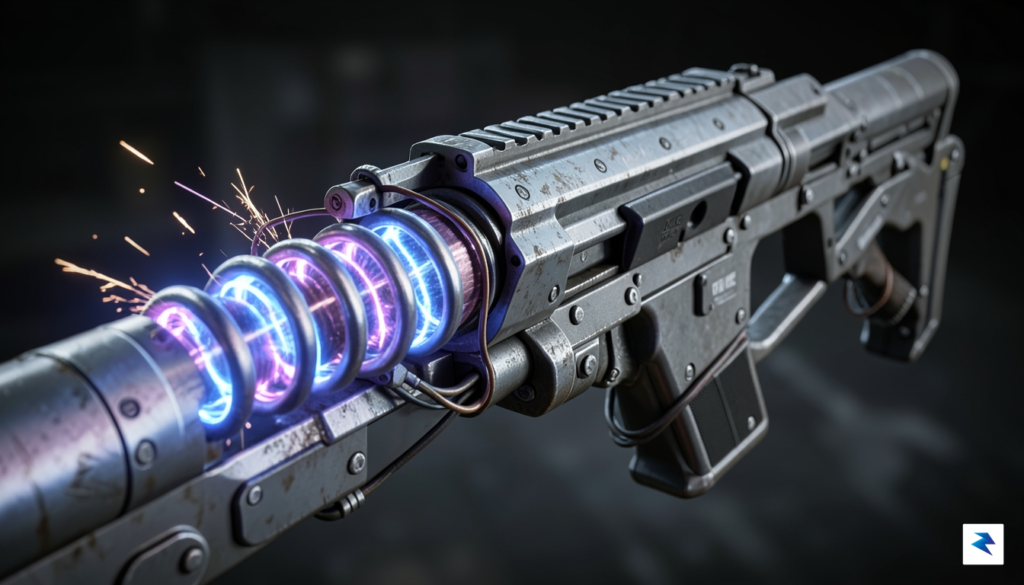
The introduction of the new heavy-caliber kinetic launcher in Revelations is not merely an addition to the armory; it is a fundamental disruption of the established combat rhythm. Unlike the high-burst, close-range reliability of the Super Shotgun or the sustained suppression of the Plasma Rifle, this new tool introduces a sophisticated layer of crowd control and area-denial dynamics. By launching projectiles that stagger clusters of lesser demons while priming larger targets for execution, it rewards players who prioritize tactical placement over reckless aggression. It effectively bridges the gap between mid-range skirmishing and the frantic, up-close brutality that defines the series, forcing players to calculate their shots rather than simply leaning on the muscle memory developed over previous campaigns.
To master this weapon, one must integrate it into the iconic ‘combat dance’ that id Software has perfected. Where the Plasma Rifle serves as a tool for stripping shields and the Super Shotgun acts as the ultimate finisher, this new arrival excels as a setup mechanism. Skilled players will find that by leading with the launcher’s concussive blast, they can shatter the defensive formations of Hell Knights, creating an opening for the rapid-fire weapons to mop up the remaining fodder. This mechanical synergy prevents the dreaded stagnation of playstyles, where one might otherwise rely exclusively on a single “meta” loadout to clear every arena. Instead, the game now demands a constant, fluid rotation of tools, ensuring that the player is always thinking two steps ahead of the demonic horde.
The true brilliance of this new arsenal lies in its ability to turn the environment against the enemy, transforming a desperate retreat into a strategic repositioning maneuver.
Furthermore, the ammo efficiency of this new weapon forces a deeper engagement with the game’s core resource management loop. Because the launcher demands precision to maximize its crowd-control potential, missing a shot carries a heavier penalty than with traditional automatic weapons. This risk-versus-reward structure elevates the difficulty of high-level play, as it compels the Slayer to maintain constant momentum—glory killing for ammo while weaving in specialized shots to thin the herd. By diversifying the tactical options, id Software has successfully ensured that even veterans of the franchise must relearn how to conquer the arena, proving that the deepest combat systems are those that constantly evolve alongside the player’s own growing expertise.

The architecture within the latest expansion for Doom is not merely a backdrop for carnage; it is a meticulously engineered instrument designed to dictate the player’s kinetic state. Where earlier iterations of the series relied on wide-open arenas to facilitate circle-strafing, the new levels in Revelations demand a more sophisticated dance. By intertwining extreme verticality with claustrophobic, interconnected corridors, id Software has crafted a spatial puzzle where stopping is synonymous with failure. Every jump pad, ledge, and floor grate serves as a deliberate suggestion, guiding the player through a seamless loop of acceleration and violence that feels both instinctive and intellectually demanding.
The concept of “combat flow” is where this architectural evolution becomes most apparent. In these new stages, the map is treated as a continuous circuit rather than a series of disconnected rooms. Corridors act as conduits that maintain the player’s speed, while arenas are designed with structural “anchors”—pillars, teleporters, and tiered platforms—that ensure the player is never static. Unlike the base game, which occasionally allowed players to bunker down in a defensible corner, the layout in Revelations actively punishes stationary tactics. Enemies are positioned to flank from higher elevations, forcing the player to constantly reassess their route through the environment, transforming every encounter into a high-speed navigation challenge.
The brilliance of the new design lies in its ability to make the environment an active participant in the firefight, turning the floor into a playground and the ceiling into a trap.
This shift represents a maturation of the studio’s design philosophy. By layering complex geometry that rewards spatial awareness, id Software has evolved beyond traditional arena shooters. The integration of environmental hazards—such as shifting walls and floor-based traps—acts as a metronome, forcing players to time their movements with the environment itself. This rhythmic quality is what elevates the experience from simple reflex-based shooting to a high-stakes performance. It is a masterful demonstration of how structural design can influence player psychology, effectively turning the act of movement into the player’s most lethal weapon. Through this architectural discipline, the expansion proves that the secret to the series’ longevity is not just the guns, but the ground upon which the war is waged.
The recent success of *Revelations*, the latest expansion for *Doom*, stands as a powerful testament to a philosophy often overlooked in an industry obsessed with innovation for innovation’s sake. Ultimately, this expansion doesn’t just add more demon-slaying; it deepens the core experience by respecting the player’s intelligence and skill above all else. It understands that true engagement comes not from an endless stream of novel mechanics, but from the mastery of meticulously crafted ones, demanding precision, quick reflexes, and strategic thinking in every brutal encounter. This unwavering commitment to mechanical purity is precisely what elevates *Doom* beyond mere spectacle, forging a connection with players that endures long after the initial graphical dazzle fades.
In an era where many titles chase fleeting trends, prioritizing sprawling open worlds, complex narrative branches, or photo-realistic graphics, id Software steadfastly adheres to a different, more timeless principle: perfect the fundamental interaction. While visual fidelity certainly enhances the experience, it is the responsive controls, the visceral impact of each weapon, the rhythmic dance of dodging and attacking, and the intricate enemy design that truly define the *Doom* experience. These are the elements that provide a deep, intrinsic satisfaction, encouraging players to return, refine their techniques, and push their limits. *Revelations* doesn’t reinvent the wheel; instead, it polishes every spoke, ensuring that the wheel of combat turns smoother, faster, and more satisfyingly than anything else on the market, proving that impeccable execution will always outlast superficial novelty.
As we look towards the future of the *Doom* series and the broader landscape of first-person shooters, the resounding success of this expansion serves as a crucial reminder. id Software’s ability to remain profoundly relevant, even as they stick to their roots, stems from this deep understanding of what makes a game truly great: a rock-solid foundation of compelling mechanics. While other developers might feel compelled to chase the latest fads or pack their games with every conceivable feature, *Doom* stands as a defiant counter-example, a beacon for focused design. It champions the pure, unadulterated joy of movement and combat, carving out a distinct and vital niche in an increasingly crowded genre by delivering an experience so polished and engaging that it speaks to the primal thrill of mastery. This dedication to mechanical excellence is not just id Software’s legacy; it is the enduring secret to long-term franchise success.
You must be logged in to post a comment.