Why Doom: The Dark Ages Remains the Gold Standard of FPS Design
The Id Software Philosophy: Why Doom Still Defines the Genre For decades, id Software has not merely contributed to the first-person shooter…


A profound, yet often unacknowledged, transformation is subtly reshaping the landscape of white-collar professions across industries. Beneath the surface of daily operations, a new kind of project is taking root: highly skilled professionals are now being actively incentivized to meticulously document every facet of their own complex workflows. This isn’t merely about creating training manuals for new human hires; rather, it’s a quiet but deliberate effort to codify human intelligence, decision-making, and even intuition, all with the explicit purpose of training advanced artificial intelligence systems.
Companies are deploying a range of strategies to encourage this knowledge transfer. Many are offering attractive bonuses, additional project stipends, or even framing these documentation tasks as crucial components of performance reviews and career development. The allure of extra compensation, coupled with the implicit understanding that participating is a form of “future-proofing” one’s role in an increasingly automated world, often proves compelling. Consequently, highly paid experts in fields like finance, law, engineering, and creative design find themselves dedicating significant portions of their time to articulating the very nuances that once made their roles uniquely human and irreplaceable.
The documentation required goes far beyond simple task lists. Professionals are asked to dissect their thought processes, record the unwritten rules and heuristics they apply, illustrate how they navigate ambiguous situations, and even log the ethical considerations that inform their judgments. This process involves capturing tacit knowledge – the kind of expertise that is often learned through years of experience and is difficult to articulate – through detailed flowcharts, annotated case studies, decision trees, and interactive simulations. By painstakingly breaking down their expertise into discrete, explainable steps, these workers are, in essence, creating the most comprehensive blueprints imaginable for their own eventual automation.
This unprecedented exercise in self-dissection presents a significant ethical and practical dilemma. While contributing to the efficiency and scalability of future business operations, these professionals are simultaneously building the very tools that threaten to diminish or even eliminate the need for human input in their specialized domains. They are, quite literally, teaching algorithms to think, analyze, and even “decide” with the depth and complexity previously reserved for human experts. The current financial incentives, while attractive in the short term, obscure the long-term implications of empowering digital entities to replicate and potentially surpass human capabilities.
Ultimately, this quiet transformation marks a critical pivot in the value proposition of human expertise. The new gold rush isn’t about discovering untouched resources, but rather about meticulously extracting and refining the intellectual capital embedded within human professionals. As these detailed operational maps are fed into sophisticated AI models, the future of work hinges on how organizations and individuals navigate this paradox: celebrating innovation while grappling with the profound implications of enabling machines to perform tasks once considered the exclusive purview of the highly skilled human mind.

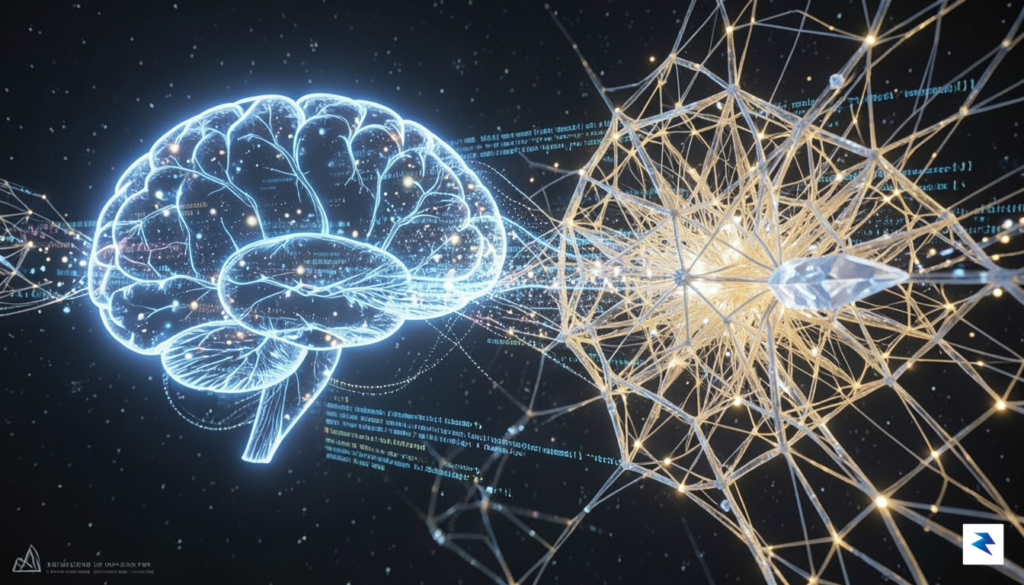
The transformation of human expertise into machine-readable intelligence is rarely a moment of sudden automation; rather, it is a meticulous, iterative process of digital cartography. At the heart of this shift lies the conversion of “tacit knowledge”—the nuanced, intuitive skills that professionals develop over years of practice—into rigid, structured datasets. Companies are not merely deploying software; they are systematically deconstructing the cognitive habits of their workforce. By mapping workflows into granular, programmable steps, organizations can translate the abstract decision-making processes of a lawyer, a coder, or a strategist into a format that large language models and neural networks can effectively digest and eventually replicate.
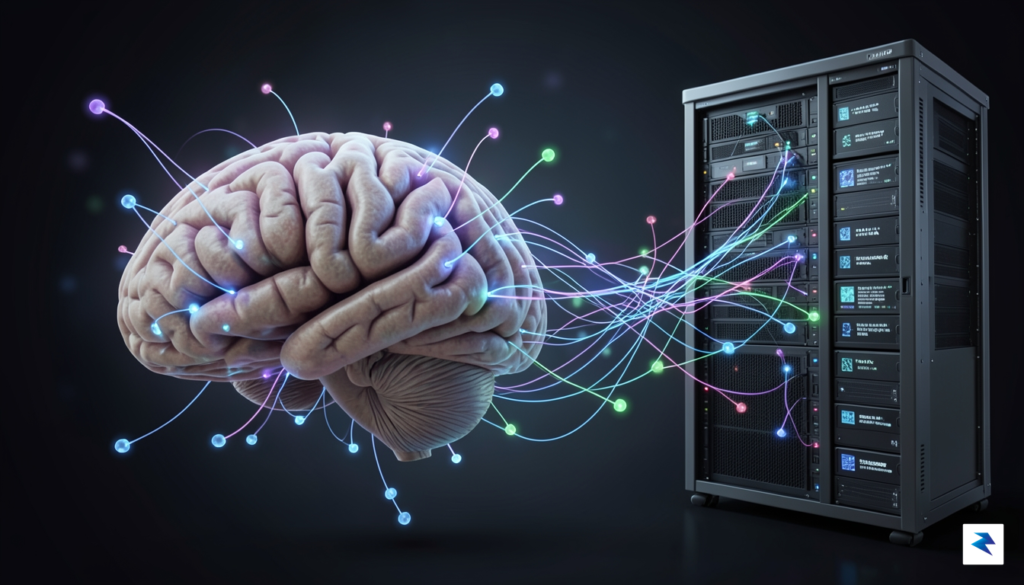
This conversion relies heavily on methodologies such as Human-in-the-Loop (HITL) and Reinforcement Learning from Human Feedback (RLHF). In these frameworks, the professional acts as both the subject and the architect of their own digital successor. Through HITL, workers provide constant validation for machine-generated outputs, effectively training the system to recognize the difference between a mediocre draft and a master-level execution. RLHF takes this a step further by forcing humans to rank multiple machine responses, thereby fine-tuning the model’s “preferences” to align with human standards of logic, tone, and accuracy. This feedback loop is essential because, without this human-centric calibration, AI models remain prone to hallucinations and aimless pattern matching.
The true engine of AI advancement is not found in the silicon of the processor, but in the relentless, daily effort of humans teaching machines how to mimic the specific contours of their own professional judgment.
To achieve professional-grade performance, the level of precision required is staggering. Tasks that once felt organic—such as diagnosing a complex legal brief or optimizing a supply chain—must be broken down into discrete, logical instructions that an algorithm can parse. This requires professionals to document their “mental models,” essentially turning their intuition into a set of repeatable heuristics. As these granular instructions accumulate into massive training libraries, the distinction between the human practitioner and the tool becomes increasingly blurred. Consequently, the worker is not just operating a machine; they are actively building the blueprint for a system that will eventually possess the agility to replicate their most valuable contributions at a fraction of the cost and time.

The modern professional landscape is currently defined by a seductive, high-stakes temptation: the opportunity to command premium fees by guiding organizations through the integration of artificial intelligence. For many, serving as an “AI consultant” or a specialist in automated workflows feels like a pinnacle achievement, offering lucrative compensation that is impossible to turn down in a fluctuating economy. These roles often involve mapping out intricate human decision-making processes, documenting institutional knowledge, and refining the very algorithms that promise to transform legacy industries. Yet, this immediate financial bonanza—often characterized as a set of “golden handcuffs”—masks a precarious reality. By meticulously codifying their own expertise into digital datasets, professionals are inadvertently accelerating their own journey toward professional obsolescence.
This transition marks a fundamental shift in the nature of human labor: the worker is no longer the primary driver of value, but rather a temporary “data provider” tasked with training their digital successor. As corporations ingest this human nuance and tacit knowledge, the need for the human contributor diminishes in direct proportion to the model’s increasing accuracy. Once the training data is sufficiently robust, the individual who once held the keys to the process becomes little more than a redundant expense on the corporate ledger. It is a slow-motion migration from an essential asset to a legacy cost, where the worker’s own productivity gains are harvested to build the very walls that will eventually fence them out of the workplace.

The tragedy of the current labor transition is that the most skilled experts are the most likely to be automated first, as their high-value, repeatable cognitive labor is the most valuable fuel for the machine.
A central, often avoided, question remains: does this rapid integration of AI actually create meaningful new job categories, or does it simply cannibalize the existing middle class? Proponents of the technological revolution often point to historical precedents, arguing that every industrial shift eventually births more jobs than it destroys. However, this perspective may overlook the unprecedented speed of the current cycle, which threatens to hollow out the middle tier of the knowledge economy long before new roles can be established or workers can be retrained. By prioritizing short-term consulting fees over long-term structural viability, many professionals are trading their future autonomy for a seat at the table during the industry’s own liquidation. In this environment, the race to implement AI is not just a drive toward efficiency; it is an aggressive competition to see which professional can facilitate their own replacement with the greatest speed and accuracy.

There is a unique, quiet trauma in the act of meticulously documenting one’s own expertise for the purpose of automation. For many professionals, their craft is not merely a job but a repository of hard-won intuition, nuanced judgment, and years of iterative learning. When forced to feed this data into a machine, the expert is effectively distilling their identity into a series of predictable patterns. This process transforms years of human experience—the kind of “tacit knowledge” that usually requires decades to cultivate—into cold, algorithmic output. As the system begins to replicate these insights with increasing proficiency, the individual is left to confront the unsettling realization that their professional value is being systematically extracted, digitized, and eventually rendered redundant.

This erosion of professional identity is deeply tied to the loss of agency. In traditional career structures, mastery provides a sense of autonomy; the expert is the final arbiter of quality and the primary driver of creative or technical outcomes. However, as the AI takes over the execution of these tasks, the expert’s role shifts from being a creator to a mere supervisor or, worse, a data janitor. This transition strips away the purpose that once defined their daily work, leaving behind a hollowed-out version of their former career. When the “human touch”—the idiosyncratic, unpredictable, and empathetic aspects of professional work—is replaced by a synthetic approximation, the intrinsic motivation that sustains long-term career satisfaction begins to fracture.
The true cost of automation isn’t just the loss of a paycheck; it is the slow, systematic dismantling of the pride that comes from being the sole architect of one’s own professional output.
Furthermore, the fear of “algorithmic erasure” introduces a profound existential dread that extends far beyond immediate job security. It is the haunting prospect that one’s life work has been repurposed to minimize the necessity for human thought entirely. This creates a cycle of professional disillusionment, where individuals feel complicit in their own obsolescence, essentially training a digital ghost to inhabit their workspace. Over time, this realization can lead to a pervasive sense of alienation, as the professional feels increasingly disconnected from the results of their labor. When the output of a career is no longer a testament to human ingenuity but a reflection of a machine’s ability to mimic it, the psychological weight of that disconnect can fundamentally alter how one perceives the value of their time, their intellect, and their future contribution to society.

The encroaching automation of the knowledge economy does not signal the end of professional utility, but it does mandate a fundamental shift in how we define value. As algorithms become increasingly proficient at processing data, drafting technical reports, and executing standardized workflows, the premium on purely analytical output is plummeting. To remain indispensable, professionals must pivot away from tasks that rely on pattern recognition and toward those rooted in deep human empathy, nuanced ethical judgment, and complex social intuition. These domains require an understanding of human motivation and moral ambiguity—facets of existence that remain stubbornly difficult to codify into machine logic.

Adapting to this transition requires a deliberate strategy of skill diversification. Instead of attempting to out-compute the machines, workers should cultivate a hybrid intelligence that leverages AI as a tool rather than a competitor. This means focusing on roles that necessitate high-stakes accountability and interpersonal negotiation. Whether it is navigating the emotional complexities of leadership, managing sensitive stakeholder relationships, or mediating conflicts that require a sophisticated grasp of cultural context, the most resilient careers will be those that integrate technical literacy with profound emotional intelligence. By doubling down on these human-centric competencies, professionals can transition from being mere information processors to becoming essential architects of strategy and culture.
The most valuable professional in the age of AI is not the one who works the fastest, but the one who best navigates the spaces where technology, ethics, and human nuance intersect.
Furthermore, staying relevant necessitates a proactive engagement with the governance of our own tools. We must advocate for ethical AI labor practices that prioritize the amplification of human potential rather than the extraction of human expertise for data training. This involves participating in the discourse around regulation and transparency, ensuring that the integration of automation into our workplaces is designed to augment our capabilities rather than render our judgment obsolete. Remaining relevant in a post-automation era is not a passive pursuit; it is an active, ongoing commitment to refining the very qualities that make us uniquely capable of stewardship. By focusing on moral clarity and interpersonal complexity, we ensure that the knowledge economy continues to be a space for human flourishing rather than merely a warehouse for automated output.
You must be logged in to post a comment.