Waze Gets an AI Makeover: How Gemini is Changing Your Drive
The Evolution of Waze: Integrating Gemini AI The landscape of modern navigation is shifting beneath our tires, and Waze is at the forefront of…

The recent surge in artificial intelligence adoption has shifted rapidly from a fascinating technological experiment to a profound structural challenge for the global workforce. This transition is no longer just a subject for science fiction enthusiasts or tech conferences; it has become a central pillar of economic discourse. The gravity of this shift was solidified when over 200 prominent economists signed a collective statement warning that the current trajectory of AI integration threatens to destabilize labor markets on a scale not seen since the dawn of the Industrial Revolution. By moving beyond the initial “AI hype”—often characterized by speculative market valuations—these experts are forcing a conversation about the cold, hard economic reality of productivity gains versus widespread job displacement.

Historically, industrial transitions were defined by the automation of manual labor, where machines replaced the physical exertion of the worker. However, the current AI revolution is fundamentally different in scope and target. Unlike the assembly lines of the 20th century, modern generative AI is capable of performing tasks previously thought to be the exclusive domain of the human intellect. From legal brief analysis and software coding to creative writing and financial forecasting, the threat has migrated from the factory floor to the high-rise office. This “cognitive automation” means that highly educated, well-compensated professionals are now finding their roles vulnerable to algorithms that can replicate their output at a fraction of the cost and time.
The true economic danger lies not in the existence of AI itself, but in the speed at which it is being integrated into the economy, potentially outpacing our ability to retrain workers or restructure social safety nets.
To understand the scale of this alarm, one must distinguish between legitimate productivity growth and the potential for long-term labor stagnation. While proponents argue that AI will create entirely new categories of employment, economists are concerned about the “transition gap”—a period of significant duration where millions of workers find their skills obsolete before new, sustainable roles can be filled. The fear is that the efficiency gains realized by corporations will be concentrated at the top, while the broader workforce faces wage suppression and systemic unemployment. Consequently, the consensus among these leading voices is that without proactive policy intervention, the transition to an AI-driven economy risks deepening inequality rather than fostering a new era of shared prosperity.

The historical narrative of technological advancement has long been characterized by the transition from muscle to machine. During the Industrial Revolution, steam engines and mechanized looms replaced physical dexterity, pushing labor toward the burgeoning service and cognitive sectors. However, the current artificial intelligence revolution represents a departure from this pattern because it targets the very seat of human economic value: cognitive processing. Unlike the slow, incremental adoption of the personal computer, which initially augmented human workflows, modern generative AI is rapidly compressing decades of expertise into software that can synthesize information, draft complex legal filings, and write functional code in seconds. This speed of adoption is unprecedented, leaving little room for the traditional workforce to retrain or pivot before the underlying requirements of their roles are fundamentally transformed.

This phenomenon, often described as cognitive displacement, is uniquely destabilizing for the middle class. While previous disruptions primarily affected blue-collar labor, today’s AI tools are proving most adept at replacing tasks performed by accountants, paralegals, copywriters, and middle managers—roles that once seemed insulated from automation. When a machine can analyze financial statements or summarize thousands of pages of case law in an instant, the entry-level positions that historically served as the training ground for junior professionals risk disappearing. This creates a “hollowing out” effect where the ladder for career progression is effectively dismantled, making it significantly harder for the average worker to gain the experience necessary to reach senior, strategy-focused roles.
The fundamental risk of the AI era is not merely that jobs will be lost, but that the barrier to entry for high-skill professions is collapsing, decoupling professional output from the traditional years of human apprenticeship.
Economists are currently grappling with the productivity paradox: the uncertainty regarding whether AI will truly generate a net surplus of new, high-quality jobs to offset these losses. Proponents argue that by automating drudgery, AI will unleash a wave of entrepreneurial innovation that creates entirely new industries. However, skeptics point out that the rate of displacement may outpace the rate of job creation, leading to a structural mismatch where the workforce cannot adapt quickly enough to the new demands of the economy. Unlike the transition from the farm to the factory, the leap from the office to an “AI-augmented” workplace requires a high degree of technical fluency and abstract reasoning that may not be universally accessible. Consequently, policymakers must consider whether the current economic infrastructure is equipped to support a labor market defined by perpetual, rapid-fire skill obsolescence.
The prevailing “wait and see” approach adopted by many legislative bodies is increasingly viewed by economists as a dangerous gamble that ignores the rapid velocity of artificial intelligence deployment. Relying solely on market forces to self-correct during a technological revolution of this scale risks creating a permanent underclass of displaced workers and exacerbating existing wealth inequality. To prevent these socioeconomic tremors from turning into a systemic crisis, experts argue that we need a proactive, evidence-based policy framework that prioritizes human stability alongside technological advancement.

The first step in this policy pivot is a radical improvement in how we measure labor market shifts. Current government statistics are often too sluggish to capture the nuance of AI-driven displacement, often missing the “hollowing out” of mid-level professional roles until the damage is already done. Policymakers must invest in real-time labor analytics that track task automation across industries, allowing for localized interventions before mass unemployment occurs. Without precise data, any attempt at regulation will be akin to performing surgery with a blindfold, leaving workers vulnerable to sudden shifts in the economic landscape.
To effectively mitigate the risks of automation, we must transition from reactive welfare models to proactive, career-long investment in human capital.
Beyond data collection, economists are proposing a suite of structural reforms designed to decouple basic survival from traditional, 40-hour employment models. One primary suggestion involves the creation of portable benefits—a system where healthcare, retirement contributions, and paid leave are tied to the worker rather than the specific employer. As the gig economy expands and traditional career paths fracture under the weight of AI efficiency, portable benefits ensure that workers maintain a safety net regardless of whether they are full-time employees, freelancers, or participants in a hybrid workforce. Furthermore, large-scale, government-subsidized reskilling initiatives are no longer optional. These programs must move beyond generic vocational training, focusing instead on high-level cognitive and emotional skills that AI is currently ill-equipped to replicate.
Finally, there is an urgent need to reconsider the current tax structures that incentivize corporate automation over human labor. Currently, many tax codes favor capital investment, making it significantly cheaper for firms to replace personnel with algorithms than to invest in human training. Economists are advocating for a rebalancing of these incentives; specifically, they suggest exploring tax policies that discourage the excessive displacement of staff while funding the social programs necessary to support displaced workers. By shifting the financial burden away from labor and ensuring that the productivity gains from AI are broadly shared, policymakers can foster an economic environment where innovation supports, rather than cannibalizes, the livelihoods of the general population.

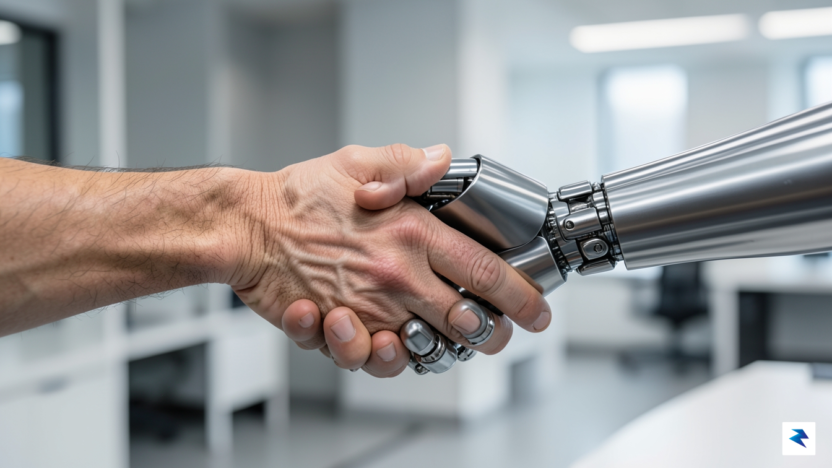
Rather than fearing an inevitable displacement by algorithms, the most effective path forward lies in mastering the “human-in-the-loop” workflow. This model posits that artificial intelligence functions best as a sophisticated co-pilot, handling the heavy lifting of data synthesis, pattern recognition, and routine task automation, while human professionals provide the essential layer of judgment, ethical oversight, and strategic direction. By positioning yourself as the conductor of these technological tools rather than a competitor to them, you transform AI from a disruptive threat into a powerful lever for productivity. This shift requires a mental pivot: stop viewing your output as a finished product of your own manual labor and start viewing it as the orchestration of intelligent systems that you refine, validate, and personalize.

To thrive in this evolving landscape, professionals must double down on the uniquely human competencies that silicon cannot replicate: critical thinking, complex problem-solving, and emotional intelligence. While a machine can generate thousands of code snippets or market research reports in seconds, it lacks the context to understand the nuance of human relationships, the weight of corporate culture, or the ethical implications of a strategic choice. Investing in these “soft” skills is no longer a luxury; it is a career survival strategy. When you cultivate the ability to lead teams, negotiate with empathy, and discern the “why” behind the “what,” you become indispensable. These attributes allow you to manage the outputs of AI, ensuring that technology serves business goals rather than dictating them in a vacuum.
Success in the age of automation will not be defined by how much you can produce, but by how well you can direct, interpret, and humanize the output of intelligent machines.
Continuous learning must also become a foundational habit rather than a sporadic effort. The rapid pace of technological change necessitates a mindset of agility, where pivoting your career trajectory is viewed as a standard operational procedure rather than a sign of instability. Consider adopting a “T-shaped” skill profile: maintain deep expertise in your core domain while actively building a broad, working knowledge of how AI tools are reshaping your specific industry. If you feel your current role is becoming overly susceptible to automation, use your existing domain knowledge as a springboard to move into adjacent areas—such as AI integration, data ethics, or human-machine interface management—where your industry experience provides a competitive edge that a pure technologist might lack.
You must be logged in to post a comment.