
The Right-to-Repair Victory: What the John Deere Settlement Means for Farmers
The Evolution of the Right-to-Repair Movement For generations, the American farm was defined by a culture of self-sufficiency. If a tractor…


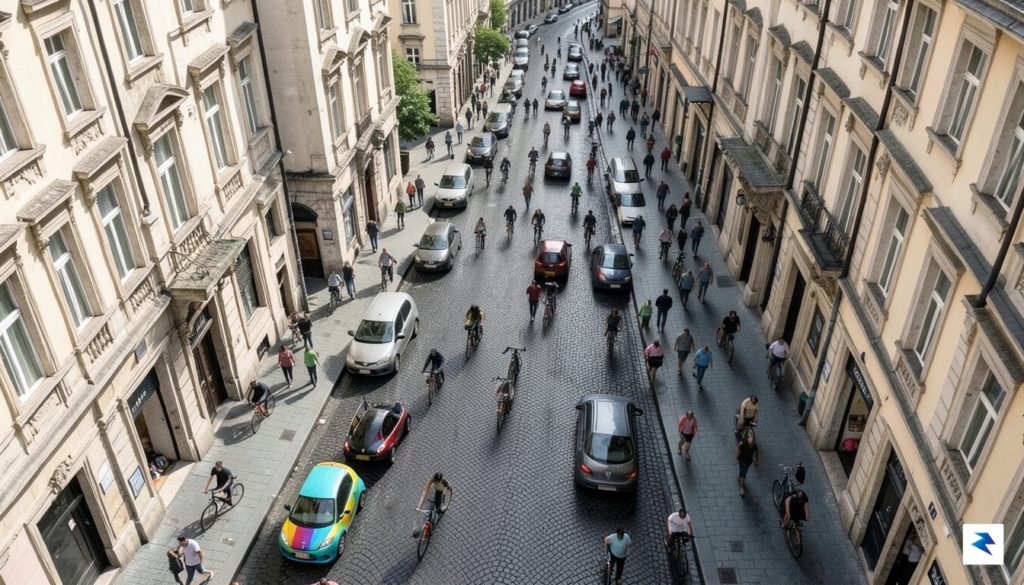
For decades, the automotive industry has been locked in an escalating arms race, producing increasingly massive SUVs and trucks that prioritize raw power and imposing silhouettes over the practical realities of city life. However, as urban density reaches an all-time high, these automotive behemoths have become a primary source of gridlock rather than a solution to it. The traditional internal combustion engine vehicle, designed for long-distance highway travel, often fails to address the unique demands of the modern “last-mile” commute. Navigating narrow historic streets or hunting for a parking spot in an oversaturated downtown core highlights the inherent inefficiency of using two tons of steel and plastic to transport a single person just a few blocks.
This mounting frustration has spurred a fundamental shift in how we perceive personal transit, ushering in the era of micro-mobility. Unlike standard passenger cars, micro-mobility solutions—which include everything from e-scooters to ultra-compact electric quadricycles—are engineered specifically for the constraints of metropolitan environments. These vehicles favor agility, minimal physical footprints, and high energy efficiency, effectively turning the “bigger is better” philosophy on its head. By embracing a minimalist approach, these vehicles reclaim valuable urban space that would otherwise be dedicated to massive, idle machines, thereby easing the flow of traffic and reducing the environmental impact of daily commuting.
The transition toward these smaller form factors is not merely a stylistic choice; it is a pragmatic response to the dual pressures of climate change and infrastructure limitations. Because these vehicles require smaller battery packs and utilize fewer raw materials during manufacturing, they represent a significantly lower carbon footprint than their full-sized counterparts. Furthermore, the ability to recharge these compact units using standard household outlets democratizes electric mobility, removing the reliance on complex, high-voltage public charging infrastructure that often acts as a barrier to entry for many urban residents.
The future of urban transportation lies in decoupling personal mobility from the heavy, space-consuming footprint of the traditional SUV, proving that in the heart of the city, smaller is not just better—it is essential.
Ultimately, the current pivot in the electric vehicle market reflects a maturing understanding of how we interact with our cities. By prioritizing form factors that align with the human scale rather than the highway scale, manufacturers are finally addressing the reality that our streets were designed for people, not for oversized tanks. As we look ahead, the integration of these agile, micro-electric vehicles promises to reshape the urban experience, turning the daily grind of city driving into a more seamless, sustainable, and surprisingly efficient endeavor.

The Fiat Topolino represents a radical departure from the bloated, high-performance vehicles that dominate modern roads, favoring a philosophy of “less is more” to conquer the chaos of the metropolis. Measuring in at a footprint smaller than a standard tournament-sized ping-pong table, this micro-mobility solution is purposefully engineered to navigate narrow cobblestone alleys and slip into parking spaces that would prove impossible for even the smallest hatchback. Its design pays homage to the legendary 1936 Fiat 500, affectionately known as the “Topolino” or “little mouse,” by blending mid-century Italian charm with the silent, zero-emission efficiency required for modern urban living.

Underneath its endearing, boxy exterior, the Topolino is strictly a tool for short-range transit rather than long-distance touring. It is powered by a modest 5.4 kWh battery, which limits the vehicle to a top speed of roughly 19 mph (30 km/h) and a total range of approximately 47 miles on a single charge. While these figures might seem restrictive to those accustomed to highway driving, they are perfectly calibrated for the “last mile” commute or quick errands within a city center. The intentional performance caps are a safety and regulatory choice, allowing the vehicle to be classified as a quadricycle in many markets, which significantly lowers the barrier to entry for younger drivers and urban commuters who don’t require the complexity of a full-sized automobile.
The Topolino isn’t designed to compete with high-speed highway traffic; it is designed to replace the bicycle or the crowded bus for the most congested parts of the day.
The interior layout is a masterclass in spatial efficiency, prioritizing minimalism and utility over luxury. There is no trunk in the traditional sense; instead, the cabin features a clever, open-plan design where the passenger seat is slightly offset to provide extra storage for grocery bags or a briefcase in the footwell. The dashboard is stripped of complex infotainment screens, replaced by simple interfaces that focus on essential connectivity, such as a smartphone dock that serves as the primary hub for navigation and media. Every surface is designed to be durable and easy to maintain, acknowledging that this vehicle is intended to be a rugged companion for the daily grind rather than a status symbol kept in a showroom. By shrinking the vehicle, Fiat has effectively expanded the possibilities for how we interact with our cities, proving that personal mobility doesn’t need to be heavy or expensive to be effective.
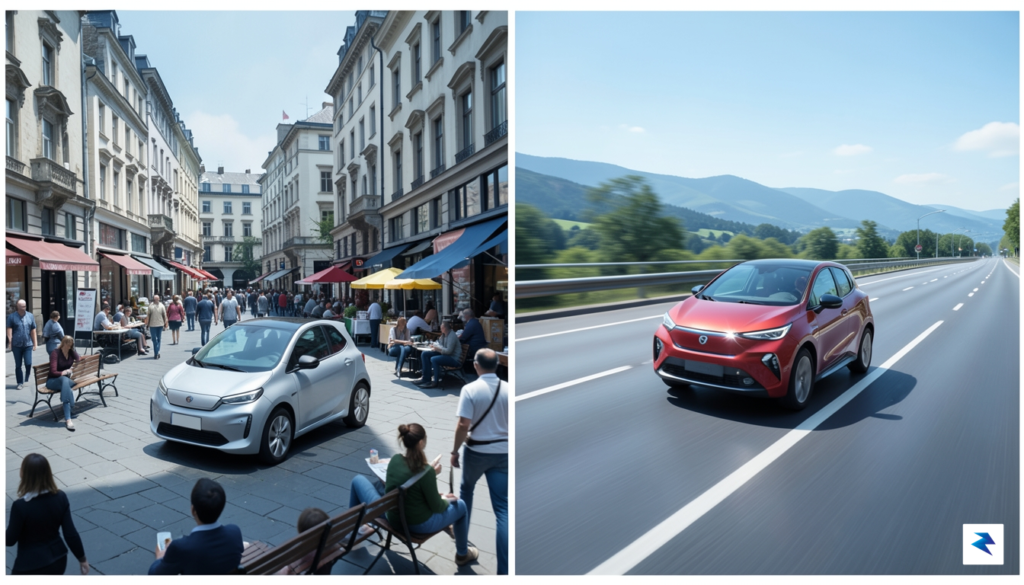
To the modern driver accustomed to highway speeds and rapid acceleration, a top speed of 19mph sounds less like a vehicle and more like a motorized tricycle. However, this figure forces a necessary re-evaluation of what we actually require from a city car. In the heart of a dense metropolis, traffic congestion frequently renders high-performance engines useless, as the actual average speed of an urban commuter often hovers well below 15mph. By embracing a lower speed threshold, this micro-EV shifts the focus from raw power to pure utility, prioritizing the ability to zip through narrow corridors and navigate gridlock where full-sized SUVs become immobilized.

The psychology of driving is deeply tethered to the perceived necessity of speed, yet the reality of urban transit suggests that maneuverability and parking ease are far more valuable commodities. When you are liberated from the hunt for a massive parking space—or the anxiety of navigating tight, centuries-old city streets—a 19mph speed limit becomes a feature rather than a bug. This vehicle is not intended for the interstate or the sprawling suburban commute; it is a specialized tool designed to reclaim the city for the individual. By shedding the weight of powerful batteries and complex cooling systems required for highway travel, the vehicle achieves an efficiency level that standard EVs simply cannot match.
The true metric of urban mobility is not how fast a vehicle can reach its destination, but how effortlessly it can exist within the city’s complex architecture.
Safety is also fundamentally redefined at these speeds. A collision involving a vehicle capped at 19mph carries a fraction of the kinetic energy of a standard passenger car, drastically reducing the severity of potential accidents for both the occupant and vulnerable road users like cyclists and pedestrians. Furthermore, the light weight of the chassis means that the car stops almost instantly, providing a level of control that is inherently safer in unpredictable traffic. Ultimately, the trade-off is clear: you lose the ability to merge onto a highway, but you gain a nimble, stress-free, and remarkably efficient mode of transport that turns the chore of city driving into a manageable, even charming, experience.
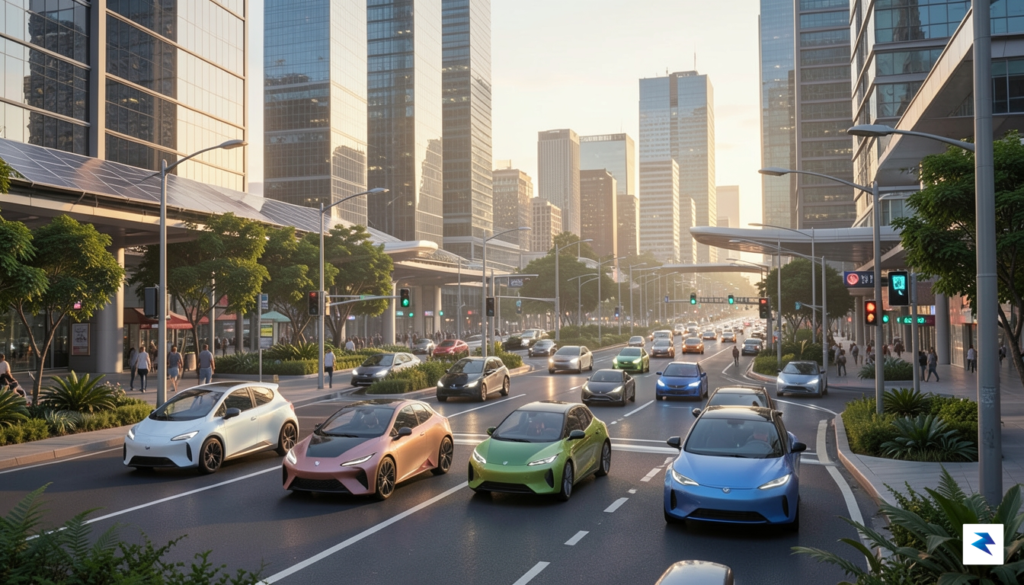
Integrating micro-vehicles like the Fiat Topolino into the modern urban landscape necessitates a fundamental rethink of our current regulatory frameworks. Because these machines occupy a unique middle ground—surpassing the speed and mass of a bicycle while falling far short of the requirements for a standard passenger car—they fall into a specialized category known as quadricycles. In many jurisdictions, this classification exempts them from the rigorous crash-test standards and advanced safety systems mandated for traditional automobiles. While this lighter regulatory touch is exactly what makes these vehicles affordable and accessible to drive, it also creates a complex dialogue regarding how they should interact with heavy traffic. The absence of crumple zones and advanced airbag systems means that, in a collision with a standard SUV or sedan, the occupants of a micro-EV are at a significant disadvantage.
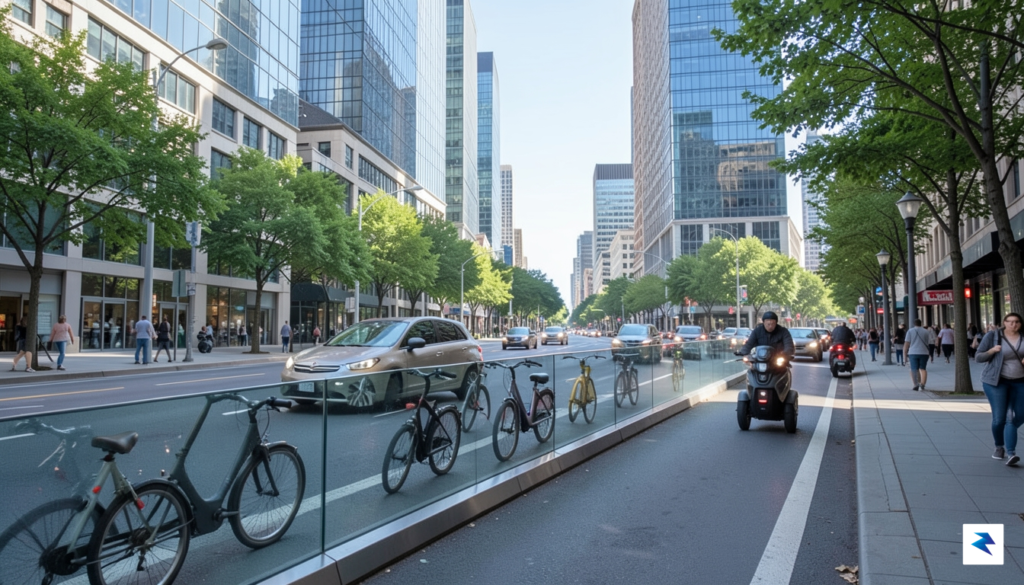
To mitigate these inherent risks, city planners are increasingly looking toward infrastructure redesign as the primary safety mechanism. Rather than forcing tiny EVs to compete for space with high-speed, multi-ton vehicles, urban design experts suggest that the future of transit lies in the expansion of dedicated low-speed lanes. By creating a tiered road network, cities can effectively separate high-velocity traffic from smaller, agile commuters. This approach not only provides a buffer for the occupants of micro-vehicles but also encourages a more diverse range of transportation options, effectively reducing the overall volume of large cars in dense city centers. When small EVs are permitted to use bike lanes or specialized micro-mobility corridors, the potential for catastrophic accidents is significantly reduced, turning a perceived safety liability into a sustainable transit advantage.
The success of the micro-EV movement depends less on the vehicles themselves and more on our willingness to reallocate urban space to prioritize accessibility over sheer vehicle size.
Ultimately, the transition toward these diminutive electric vehicles requires a shift in public perception regarding what constitutes a “roadworthy” machine. As we move away from the era of oversized vehicles dominating every inch of the asphalt, we must establish clear guidelines that define where these vehicles belong. This involves updating traffic laws to reflect the realities of 19mph top speeds, ensuring that these drivers are not hindered by slow-moving restrictions while also protecting them from faster-moving lanes. As more municipalities adopt “15-minute city” planning strategies, where essential services are within a short distance of home, the utility of the micro-EV becomes undeniable. By combining smart, localized regulation with infrastructure that favors human-scale transit, we can foster an urban environment that is not only safer but also significantly more efficient for everyone involved.

Determining whether a micro-EV like the Fiat Topolino fits into your life requires a fundamental shift in how you view personal transportation. This vehicle is certainly not a replacement for a family sedan, nor is it designed to conquer highway on-ramps or long-distance commutes. Instead, it serves a specific, high-utility niche: the urban dweller who values agility above all else. If your daily routine consists of navigating dense city blocks, running errands within a three-mile radius, or struggling to find parking in overcrowded districts, this micro-mobility solution offers a level of freedom that traditional cars simply cannot match. By eliminating the search for parking and sidestepping the need for frequent trips to a gas station, the Topolino transforms the chore of city driving into a manageable, even whimsical experience.

To decide if you are the ideal candidate for this shift, consider your financial and logistical footprint. For many, the cost of ownership for a micro-EV is drastically lower than the combined expenses of public transit passes, ride-sharing fees, or the prohibitive insurance and maintenance costs associated with a full-sized internal combustion vehicle. When you factor in the negligible electricity costs for charging—often no more than a standard household outlet—the math starts to favor the micro-EV for those who prioritize efficiency. Furthermore, because these vehicles are built with simplicity in mind, there are fewer mechanical parts to break, which translates to a lower long-term maintenance burden. For the urban minimalist, this vehicle is not just a mode of transport; it is a strategic tool for financial and temporal liberation.
The true value of a micro-EV isn’t found in its horsepower, but in the hours it returns to your schedule by removing the friction of urban logistics.
Before committing to such a drastic change in transportation, potential buyers should run a quick personal audit. Use the following checklist to evaluate if you are ready to trade up to a smaller footprint:
Ultimately, the decision comes down to your willingness to decouple your identity from the “bigger is better” automotive standard. If you are tired of paying for oversized metal cages that spend 95% of their time parked, a micro-EV provides a refreshing, low-impact alternative. By aligning your vehicle choice with the reality of your actual daily travel needs rather than the theoretical possibility of a cross-country road trip, you can reclaim your city and simplify your life in one tiny, efficient package.
You must be logged in to post a comment.