
The True Economic Power of YAGNI in Software Development
Understanding the Misconception of YAGNI The common interpretation of YAGNI—"You Ain't Gonna Need It"—often gets reduced to a blunt directive…
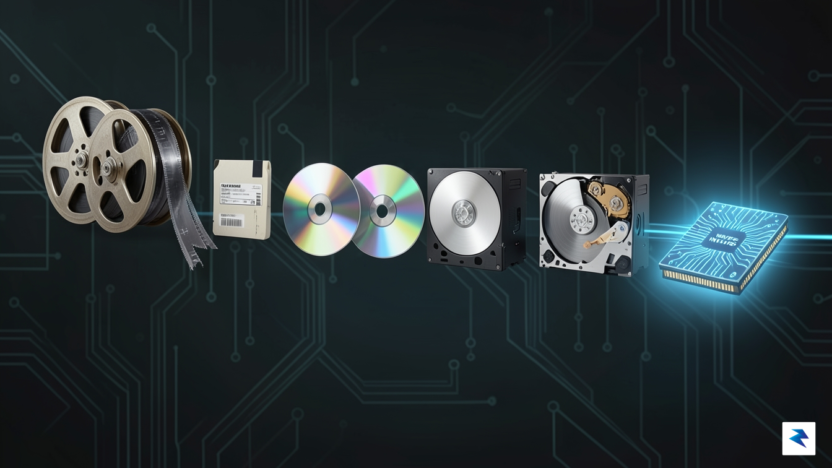
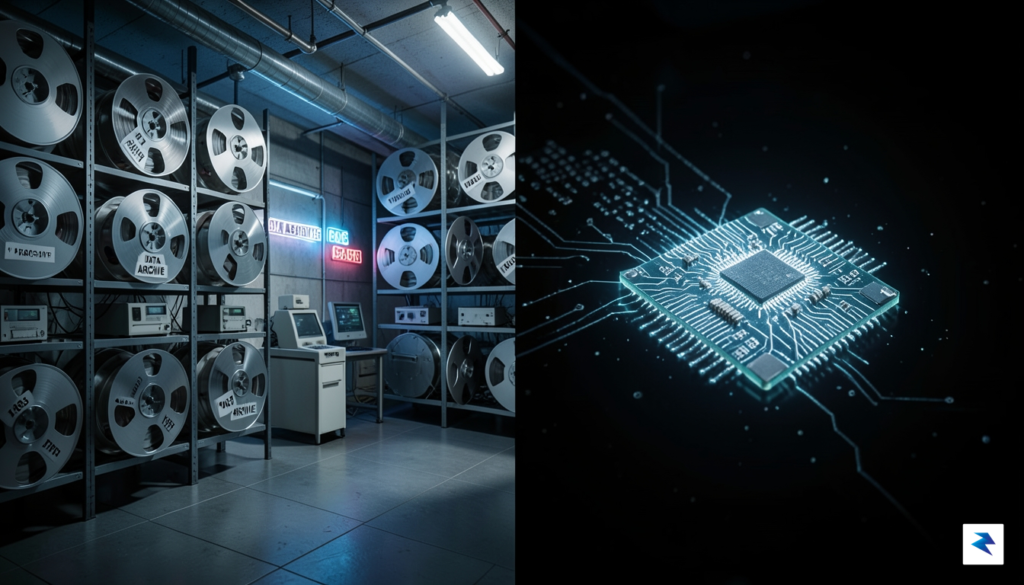
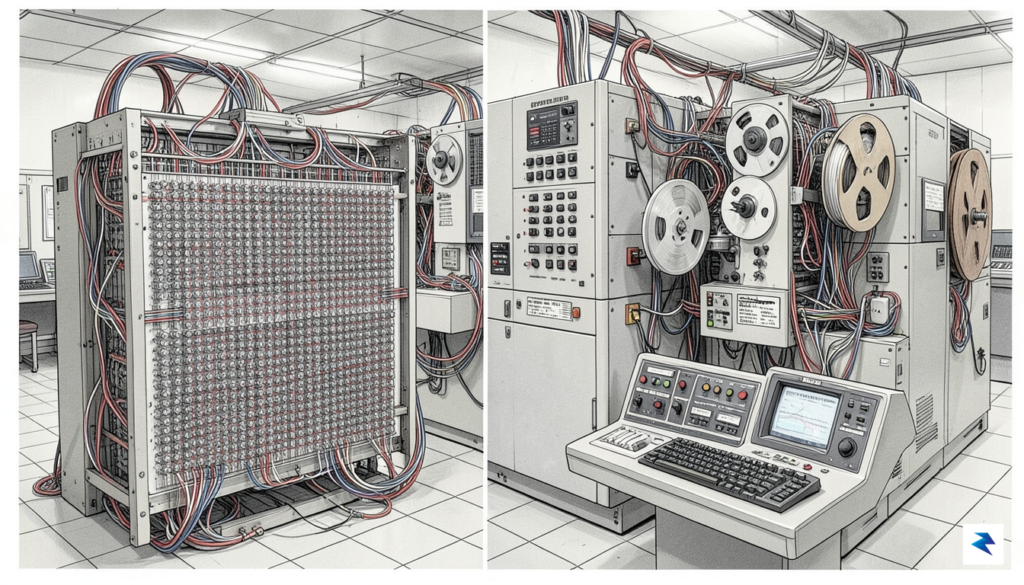
Imagine a time when a computer required an entire room, its core processing power reliant on intricate arrays of magnetic rings strung by hand. This was the reality of the 1960s, a nascent era where digital information storage was a monumental undertaking, both physically and financially. Early mainframe systems employed technologies like magnetic core memory for immediate access and bulky magnetic tape or refrigerator-sized hard disk drives for persistent storage. These components, while groundbreaking for their time, offered capacities measured in mere kilobytes or megabytes, at costs that were astronomically prohibitive, effectively confining computing and data management to the exclusive domain of governments, large corporations, and academic institutions.
This initial scarcity, however, was quickly challenged by a relentless wave of innovation that fundamentally redefined the economics of digital information. What began as a trickle of improvements soon accelerated into an exponential decay in costs, a phenomenon often paralleled with Moore’s Law, which observed the doubling of transistors on integrated circuits. Engineers continually pushed the boundaries of physics and materials science, shrinking components, improving manufacturing processes, and devising ingenious ways to pack more data into ever-smaller footprints. The transition from laborious magnetic core memory to compact, silicon-based semiconductor RAM, alongside significant advancements in hard disk drive technology, marked key milestones in this relentless pursuit of density and affordability.
The implications of this relentless cost reduction were nothing short of revolutionary. Data storage, once a luxury reserved for the privileged few, gradually transformed into a ubiquitous utility. This dramatic shift began to democratize computing, moving it from specialized, climate-controlled labs into offices, then into homes, and eventually, into the very pockets of billions worldwide. As the price barrier crumbled, so did the limitations on what humanity could store, process, and access. It laid the groundwork for the personal computer revolution, the internet, and the subsequent explosion of digital content that defines our modern world, turning data from a precious, guarded commodity into an accessible, everyday resource.
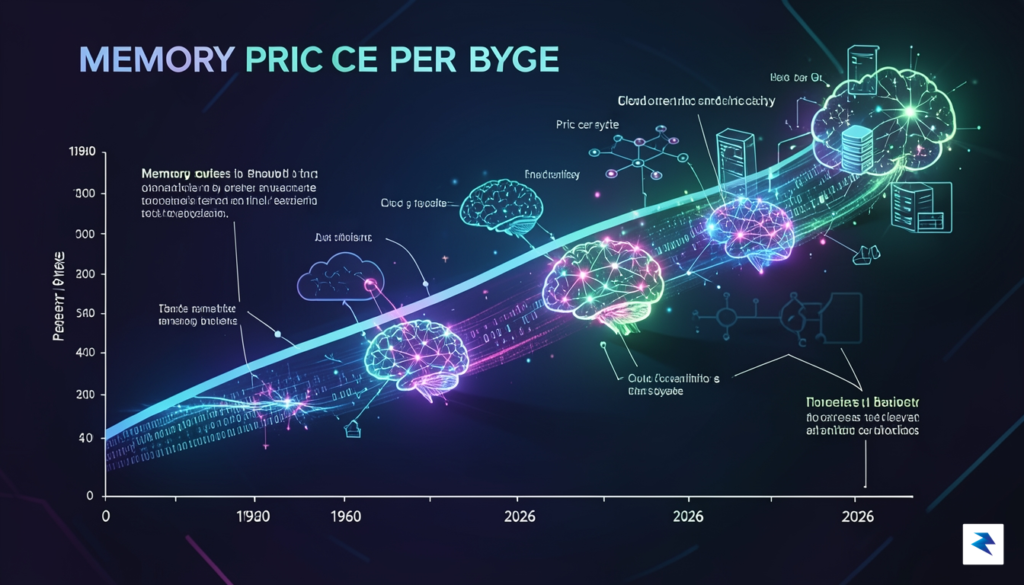
To truly grasp the magnitude of this transformation, consider the journey of the price per gigabyte over six decades. In the 1960s, storing a single megabyte could cost thousands of dollars in today’s money, making a gigabyte an unimaginable fortune. By the turn of the millennium, a gigabyte was still a significant investment, but within reach for many consumers. Fast forward to today, and that same gigabyte, especially with the advent of high-capacity flash storage in our smartphones and SSDs, costs mere pennies. This isn’t just a downward trend; it represents a fundamental re-calibration of value, reshaping how we interact with information, enabling everything from streaming global entertainment to storing every photo ever taken, all within devices that fit in the palm of our hand.
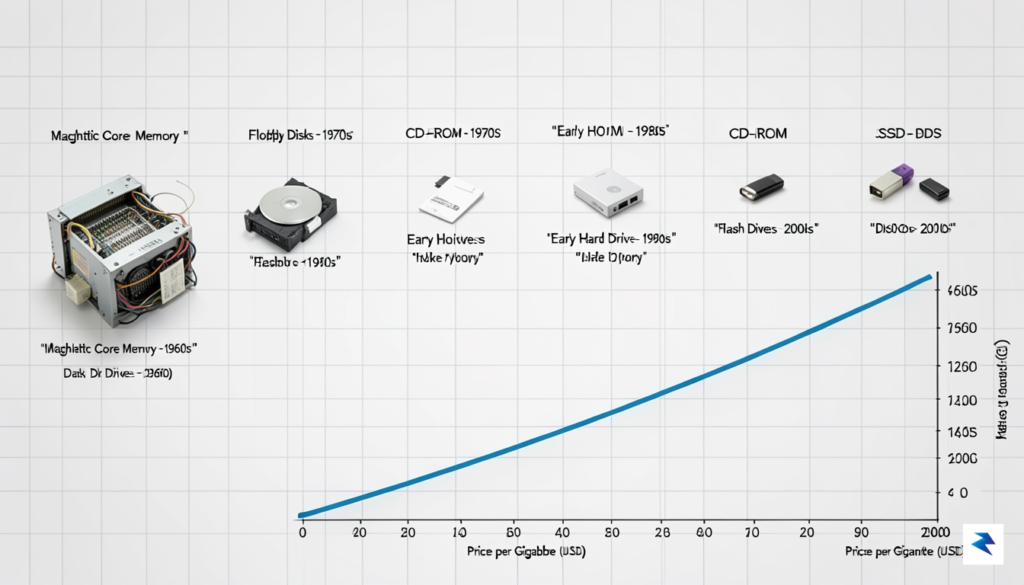
The journey of digital data storage, measured by the humble price-per-gigabyte, tells a story of technological triumph unlike almost any other in economic history. From the colossal, room-filling machines of the 1960s to the minuscule chips powering today’s smartphones, the cost of preserving information has plummeted with an astonishing, almost counter-intuitive consistency. This relentless deflation challenges conventional economic wisdom, where scarcity typically dictates value, instead revealing a profound narrative of innovation constantly driving down the barriers to digital abundance. Understanding this economic arc is an exercise in appreciating the compounding nature of technological efficiency, a force that has reshaped industries and daily life alike.
In the nascent days of computing, the 1960s and early 1970s, storage was an astronomical expense, a luxury reserved for governments, large corporations, and pioneering research institutions. Imagine paying hundreds of thousands of inflation-adjusted dollars for a single megabyte—a tiny fraction of what a modern smartphone operating system consumes, let alone a gigabyte. These early magnetic core memories and tape drives were hand-assembled marvels, their production costs reflecting bespoke engineering, limited scale, and the sheer novelty of digital data preservation. At this stage, data storage was an intensely guarded, scarce resource, dictating conservative data retention policies and specialized applications.
As the decades progressed into the 1980s and 1990s, the advent of personal computers and the standardization of hard disk drives began to chip away at these formidable costs. While still expensive by today’s standards—with gigabytes costing thousands of inflation-adjusted dollars—the price-per-gigabyte started its steady, exponential decline. This era saw the shift from specialized data centers to individual desks, laying the groundwork for a future where digital storage would become commonplace, albeit still a significant component of hardware costs for early adopters. Manufacturers began to scale production, moving towards more automated processes, which further accelerated the cost reduction curve, making larger storage capacities more accessible.
The true ‘tipping point,’ however, arrived with full force in the late 1990s and early 2000s, catalyzed by the internet boom and the explosion of digital media. Suddenly, consumers needed to store MP3s, digital photos, and eventually, videos. This insatiable demand fueled a manufacturing arms race, particularly in NAND flash memory. It was during this period that the price-per-gigabyte dropped below the psychological barrier that had previously limited widespread consumer adoption, enabling devices like iPods, early digital cameras, and later, ubiquitous streaming services and pervasive cloud storage to flourish. This era demonstrated how falling storage costs could unlock entirely new markets and consumer behaviors, creating a positive feedback loop for further innovation and price reduction.
Today, we live in an era where the price-per-gigabyte of NAND flash and solid-state drives (SSDs) is almost negligible compared to its historical figures, often measured in mere cents or even fractions of a cent. This incredible efficiency has not only made personal terabytes commonplace but has also fundamentally reshaped the economics of hardware manufacturing. Companies must constantly innovate, pushing the boundaries of density, speed, and endurance just to maintain slim profit margins in a market where storage is increasingly viewed as a commodity. The relentless pursuit of cheaper, faster, and denser memory has become a high-stakes game for manufacturers, requiring massive capital investment in fabrication plants and continuous research and development to stay competitive.
Looking ahead to 2026 and beyond, this trajectory shows no signs of abating. The implications extend far beyond consumer devices,
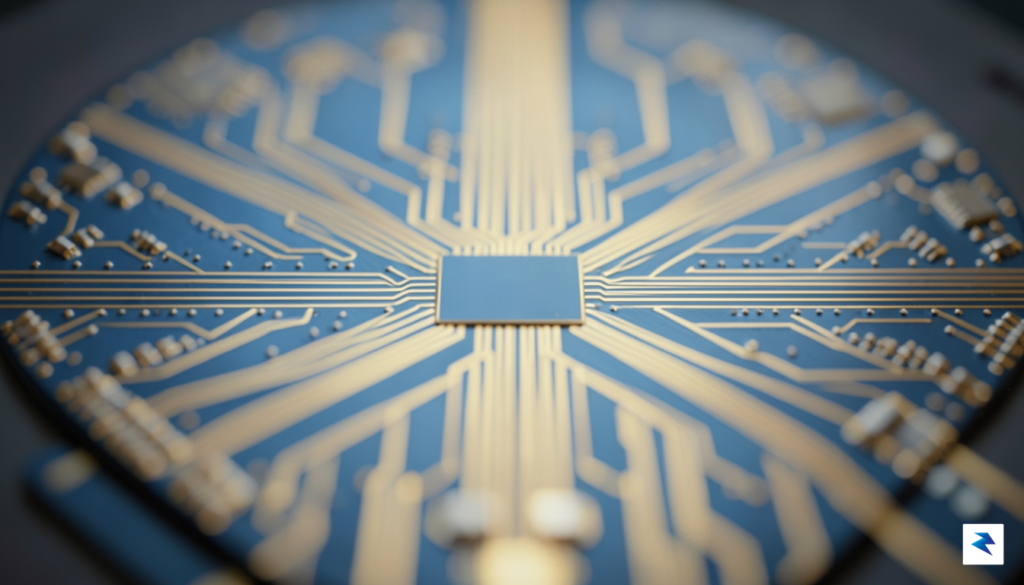
The dramatic reduction in the cost of digital memory over the past six decades is not merely an economic trend; it is a direct testament to humanity’s relentless pursuit of miniaturization, efficiency, and scale in technology. This plummeting price curve, which has democratized access to vast amounts of data, was engineered through a series of groundbreaking innovations in materials science, semiconductor manufacturing, and architectural design. Each successive technological leap not only built upon the last but often rendered previous production methods economically obsolete, paving the way for exponentially cheaper storage.
In the nascent stages of computing, memory was a bulky and expensive commodity, often relying on magnetic cores or cumbersome disk platters. The true revolution began with the invention of the integrated circuit (IC) in the late 1950s and its subsequent application to memory components like DRAM (Dynamic Random-Access Memory). This breakthrough allowed thousands, then millions, of transistors to be fabricated onto a single silicon chip, replacing discrete components that were individually wired. The ability to etch increasingly intricate patterns onto silicon wafers using photolithography became the bedrock of modern memory production, enabling a continuous shrinkage of transistor size and a corresponding increase in density and speed, all while driving down the cost per bit.
While DRAM revolutionized volatile memory, the demand for persistent, non-volatile storage spurred the development of NAND flash memory in the 1980s. Unlike hard drives with their moving parts, NAND flash offered solid-state reliability, faster access times, and a significantly smaller footprint, making it ideal for everything from digital cameras to USB drives. However, the true game-changer for cost reduction came from the ability to store more than one bit of data per memory cell. Initially, Single-Level Cell (SLC) NAND stored one bit, providing maximum reliability and speed. The introduction of Multi-Level Cell (MLC) technology, which stores two bits per cell, effectively doubled storage capacity without significantly increasing chip size. This innovation marked a critical turning point, offering a compelling balance of cost and performance for consumer applications.
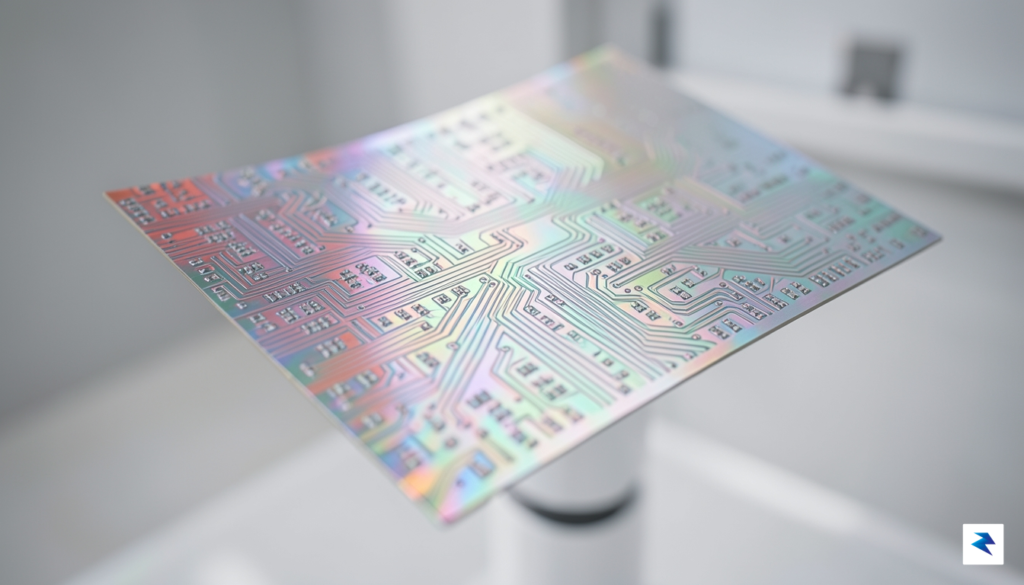
The drive to squeeze more data into every available micron of silicon intensified, leading to the development of Triple-Level Cell (TLC) and Quad-Level Cell (QLC) NAND. TLC technology, storing three bits per cell, represented another massive leap in density, making solid-state drives (SSDs) economically viable for mainstream computing and vastly accelerating the demise of traditional spinning hard drives in many applications. QLC, pushing the boundary further to four bits per cell, continued this trend, offering even greater capacity at a lower cost per gigabyte, albeit with some trade-offs in endurance and write speed compared to its predecessors. These advancements in bit density were crucial for meeting the insatiable demand for storage in smartphones, cloud computing, and massive data centers, where even marginal cost savings per bit translate into billions globally.
However, planar (2D) scaling of memory cells eventually faced fundamental physical limitations, as transistors became so small that quantum effects and interference between adjacent cells became problematic. The industry responded with another paradigm shift: 3D NAND technology. Instead of simply shrinking cells horizontally, 3D NAND stacks memory cells vertically in multiple layers, much like a skyscraper. This architectural innovation dramatically increased storage density without relying solely on shrinking individual cell dimensions, circumventing the physical barriers of 2D scaling. The ability to stack dozens, and now hundreds, of layers has led to exponential increases in capacity and further driven down the cost per bit, ensuring that memory prices continue their downward trajectory even as demand skyrockets.
Beyond the fundamental design innovations, the relentless reduction in memory costs has also been fueled by monumental advancements in manufacturing processes and the sheer scale of global production. Modern semiconductor fabrication plants, or “fabs,” are multi-billion-dollar facilities employing cutting-edge robotics, advanced lithography, and ultra-pure environments to produce billions of memory chips annually. The continuous refinement of manufacturing processes, including higher yields (the percentage of functional chips per wafer) and more efficient material usage, directly translates into lower unit costs.
Furthermore, the establishment of a highly specialized and globally interconnected supply chain has been instrumental. Major memory manufacturers operate at an immense scale, leveraging economies of scale that are virtually unparalleled in any other industry. Intense competition among these global players drives continuous innovation and efficiency improvements, ensuring that technological advancements are rapidly translated into consumer benefits. This global ecosystem of design, fabrication, assembly, and distribution has democratized access to digital storage, making once-unimaginable capacities commonplace and affordable for everyone, from individual consumers to hyperscale cloud providers.

The relentless pursuit of cheaper, higher-capacity memory that defined the last six decades is undeniably entering a new phase as we approach 2026. While the historical trajectory has seen storage costs plummet dramatically, enabling everything from personal computing to global cloud infrastructure, the industry’s compass is now recalibrating. The driving forces are shifting from sheer affordability and raw density to critical considerations like energy efficiency, long-term sustainability, and the development of truly non-volatile memory architectures. This pivot reflects a maturing technological landscape where the environmental footprint and operational costs of data storage are becoming as significant as, if not more important than, the initial price per gigabyte.
For decades, the miniaturization of silicon transistors, famously encapsulated by Moore’s Law, has been the primary engine for memory advancements. However, the physical limitations of shrinking silicon chips are becoming increasingly apparent and profound. As transistors approach atomic scales, engineers grapple with quantum tunneling effects, increased heat dissipation challenges, and the fundamental difficulties of manufacturing at such precision. Consequently, simply squeezing more transistors onto a die yields diminishing returns, not only in terms of performance gains but also in skyrocketing power consumption and manufacturing complexity. This looming physical barrier necessitates a fundamental re-evaluation of how we design and build memory systems, pushing us beyond the traditional silicon frontier.

This impending crisis in silicon scalability has spurred intense research into revolutionary memory technologies that promise to redefine computing for the next decade and beyond. Among the most exciting contenders are DNA storage, which leverages the incredible density and longevity of biological molecules to store vast amounts of data in a compact, stable form, potentially for millennia. Another promising avenue is optical memory, utilizing light to read and write data, offering the potential for unparalleled speeds and significantly lower power consumption compared to current electronic methods. Furthermore, advancements in novel materials are yielding resistive RAM (RRAM) and phase-change memory (PCM), both offering non-volatile characteristics combined with speeds far exceeding traditional NAND flash, paving the way for instant-on computing and persistent data access without constant power.
The fundamental value proposition of memory is undergoing a profound transformation. Where once the holy grail was simply “cheaper storage,” the focus has decisively shifted towards “faster, more efficient access.” In an era dominated by artificial intelligence, real-time data analytics, and the ubiquitous Internet of Things, the ability to process and retrieve data with minimal latency and energy expenditure is paramount. Energy efficiency is no longer just an environmental concern; it’s a critical economic factor, directly impacting the operational costs of data centers and edge devices. Therefore, future memory solutions will be judged not just by their capacity or cost per bit, but by their ability to deliver unprecedented speed, unparalleled energy efficiency, and seamless integration into complex computing ecosystems, fundamentally reshaping the competitive landscape.

Data storage is not merely a utility; it is the fundamental bedrock upon which the entire modern digital economy rests. From streaming high-definition video to conducting complex scientific simulations, every interaction, every insight, and every innovation ultimately traces back to the ability to store and retrieve vast quantities of information. By meticulously examining the historical trajectory of memory prices, spanning from the nascent days of computing in the 1960s to projections for 2026, we gain an unparalleled lens into the very forces that have shaped, and will continue to shape, technological progress. This isn’t just an academic exercise; it’s a vital strategic imperative for anyone building, investing in, or navigating the future of technology.
The dramatic, decades-long plummet in the cost-per-byte of digital storage has been nothing short of revolutionary, acting as a silent enabler for the most transformative technologies of our era. Consider the current boom in artificial intelligence and big data analytics. These fields are inherently data-hungry, requiring immense datasets for training sophisticated models and generating actionable insights. Without the continuous, exponential decline in storage expenses, the sheer volume of data necessary to train a large language model or power a global social network would be economically unfeasible, if not physically impossible. This historical trend reveals that the very boundaries of what AI can achieve are inextricably linked to the ever-decreasing cost of storing the digital fuel it consumes. Understanding this profound relationship allows developers and researchers to anticipate future capabilities, pushing the envelope on model complexity and data scale.
For businesses and infrastructure planners, grasping these long-term storage economics is not merely advantageous; it’s absolutely crucial for sustainable growth and competitive advantage. Building future-proof infrastructure, whether it be hyperscale data centers, distributed cloud architectures, or localized edge computing solutions, requires a keen understanding of how storage costs will evolve. Over-investing in expensive, limited capacity solutions can stifle innovation and inflate operational expenditures, while underestimating future data needs can lead to costly retrofits and performance bottlenecks. By projecting the memory price curve, organizations can make informed decisions about hardware procurement, cloud adoption strategies, and the design of their data pipelines, ensuring scalability and cost efficiency for years to come. This foresight translates directly into optimized capital expenditure and greater agility in a rapidly changing technological landscape.
The historical memory price curve also serves as a critical compass for directing research and development (R&D) investments and guiding venture capital. When storage costs were prohibitively high, R&D focused intensely on miniaturization and increasing density. As costs have fallen, new avenues for innovation have emerged, ranging from novel memory technologies like MRAM or phase-change memory to advanced data compression algorithms and intelligent storage management systems. Investors, too, can identify promising areas by observing where the price curve might flatten or where new technological breakthroughs could dramatically alter the cost landscape. Companies developing solutions that either contribute to this cost reduction or leverage it to create new data-intensive services are often poised for significant growth. This continuous drive for efficiency and capability is a direct response to, and a driver of, the evolving economics of data storage.
The consistent downward trajectory of memory prices isn’t just a historical footnote; it’s a living roadmap for where to innovate, how to build, and what to invest in for the next wave of technological disruption.
Ultimately, the ability to store more data for less money has been the silent engine of the digital age, dictating the very boundaries of what is technologically and economically feasible. For developers, this means the freedom to experiment with larger datasets and more complex algorithms. For businesses, it translates into the potential for deeper insights, more personalized customer experiences, and entirely new service offerings. For investors, it highlights where the next big opportunities lie, from novel storage solutions to data-driven platforms. By understanding the profound impact of the 60-year price crash in memory, we are better equipped not just to react to technological shifts, but to proactively shape the future of artificial intelligence, big data, and the entire digital ecosystem.
You must be logged in to post a comment.