
OpenAI’s Reported Move into Robotics: A New Era for ChatGPT
The Shift Toward Ambient AI For the past decade, our relationship with artificial intelligence has been strictly mediated by the glowing…
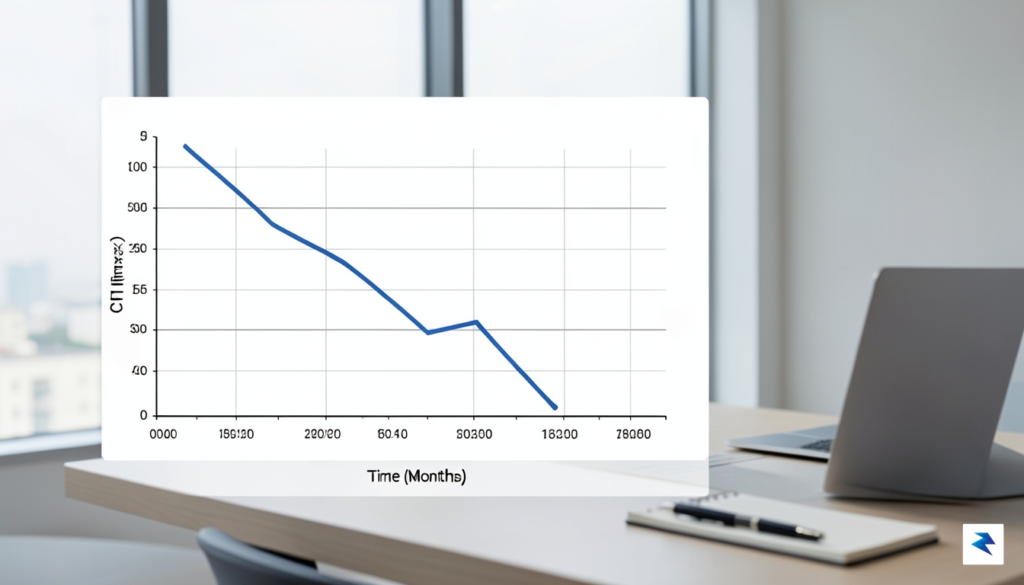
The latest Consumer Price Index (CPI) report for June arrived as a welcome exhale for an economy that has spent months bracing against the persistent headwinds of elevated costs. For the first time in an extended period, the data revealed a cooling trend that finally aligned with the optimistic forecasts of many analysts, suggesting that the aggressive monetary tightening cycle initiated by the Federal Reserve is beginning to achieve its intended deceleration. This cooling was not merely an isolated statistical anomaly; rather, it was driven by notable price contractions in key sectors, most significantly in used vehicle markets and apparel, alongside a stabilization in the costs of essential household goods. By easing the pressure on core inflation, these figures provided a rare, tangible signal that the supply-side bottlenecks and excess demand that defined the post-pandemic era are finally beginning to uncoil.

However, while the June figures offer a snapshot of progress, seasoned economists and policymakers are quick to temper their enthusiasm with a necessary dose of pragmatism. The technical mechanics behind this cooling—largely attributed to a correction in goods-related inflation—do not necessarily indicate that the battle against rising costs is won. Services inflation, particularly within the housing and medical care sectors, remains stubbornly persistent, acting as a structural anchor that prevents a rapid return to the Federal Reserve’s two percent target. Consequently, market participants are maintaining a guarded posture, recognizing that while the trend is moving in the right direction, the road to absolute price stability is rarely linear. This caution is amplified by the realization that economic data is backward-looking, capturing the conditions of the previous month rather than the unfolding volatility of the global landscape.
The cooling of inflation in June represents a significant milestone, yet it serves as a fragile victory that could be easily undermined by external shocks and shifting geopolitical realities.
Beyond the domestic metrics, there is a growing recognition that the U.S. economy does not operate in a vacuum. Even as the CPI report painted a picture of domestic relief, underlying currents in the international energy markets—spurred by heightened tensions in the Middle East—threaten to undo these modest gains. The energy sector is notoriously sensitive to geopolitical instability, and any disruption to global supply chains or shipping corridors can translate almost instantaneously into higher costs at the pump and increased manufacturing overhead. Thus, while consumers might feel a temporary respite in their monthly budgets, the prevailing sentiment in financial circles is one of watchful waiting. Policymakers are now tasked with the delicate balancing act of acknowledging the cooling data without prematurely signaling an end to the cautious fiscal approach that remains vital for long-term economic health.

While domestic economic reports have recently offered a sense of relief to American consumers, the global energy landscape remains precariously balanced on the edge of a knife. The escalating friction between the United States and Iran has moved beyond diplomatic posturing, evolving into a tangible threat that could rapidly dismantle the progress made in stabilizing consumer prices. As these geopolitical tensions intensify, the primary concern for economists and energy analysts alike is not domestic demand, but the security of the world’s most vital maritime arteries. Any significant disruption in the Middle East has historically acted as a force multiplier for volatility, turning regional skirmishes into global financial headaches.
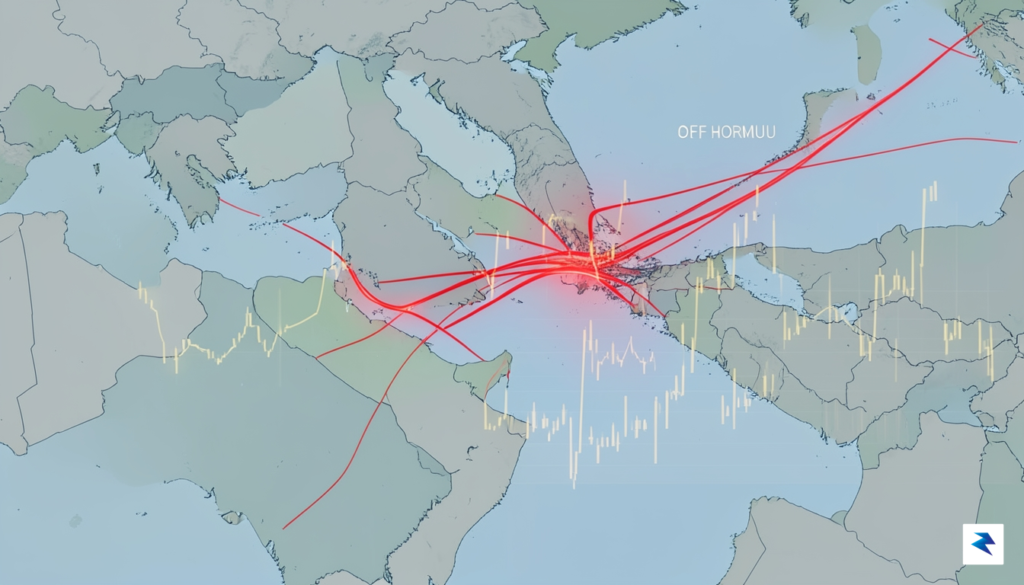
The centerpiece of this vulnerability is the Strait of Hormuz, a narrow waterway that serves as the world’s most important oil chokepoint. Through this slender passage flows roughly one-fifth of the total global petroleum consumption, making it the lifeline of the international energy market. If the U.S.-Iran conflict were to escalate into a direct confrontation or lead to a blockade of this corridor, the impact on crude oil prices would be instantaneous and severe. Because the global market operates on a just-in-time delivery model, even the mere perception of a supply chain bottleneck is sufficient to trigger panic buying, sending the price of a barrel of oil—and subsequently gasoline at the pump—skyward.
The historical correlation between Middle Eastern instability and energy price shocks is undeniable; when the region catches a cold, the global economy often develops a fever.
Analyzing history provides a sobering perspective on what could lie ahead. Previous conflicts in the Persian Gulf have consistently demonstrated that energy markets are hypersensitive to military activity in the region. Whenever the threat of restricted transit arises, the market adds a “risk premium” to every barrel of oil, effectively raising costs before a single drop of supply is actually lost. This psychological pressure is often just as damaging as actual physical disruption. If the current standoff continues to deteriorate, we may find that the hard-won gains in lowering the Consumer Price Index are quickly erased by a sudden, sharp climb in energy costs that ripples through every sector of the economy, from transportation and logistics to manufacturing and retail.
Ultimately, the stability of our current economic recovery is tethered to factors far outside the control of domestic policymakers. While inflation metrics may appear promising on paper, they do not account for the volatility inherent in international power struggles. As long as the Strait of Hormuz remains a focal point of military posturing, energy prices will remain susceptible to rapid, unpredictable spikes. For the average household, this means that the fight against inflation is far from over, as the hidden hand of geopolitics continues to pull the strings of the global energy market.

The recent cooling of domestic inflation figures provides a moment of relief for American consumers, yet it masks the precarious reality of our interconnected global economy. Inflation is rarely a self-contained domestic phenomenon; rather, it is the cumulative result of logistical efficiency and the seamless movement of goods across borders. When regional conflicts erupt in critical maritime transit zones—such as those currently rattling the Middle East—the ripple effects are felt instantly in every corner of the global supply chain. What begins as a localized geopolitical dispute quickly transforms into a logistical nightmare, forcing a re-evaluation of how we source, transport, and price the goods that populate our store shelves.

One of the most immediate casualties of these rising tensions is the stability of shipping insurance premiums. As insurers categorize high-risk zones, carriers are forced to absorb soaring costs to guarantee the safety of their vessels and cargo. These additional expenses are not quietly absorbed by shipping conglomerates; they are passed directly down the line to retailers and, eventually, to the end consumer. Furthermore, when the threat of conflict becomes too great, vessels are forced to abandon established, efficient routes for longer, costlier detours. This rerouting adds weeks to manufacturing lead times, effectively throttling the just-in-time delivery models that have defined modern commerce for decades.
The fragility of our current supply chain infrastructure lies in its dependence on specific, narrow chokepoints. When these points are compromised by war, the entire global pricing mechanism experiences a systemic shock that domestic policy alone cannot offset.
The impact extends far beyond shipping costs, reaching deep into the heart of global manufacturing. Modern products are complex assemblies of components sourced from dozens of different countries, relying on a delicate “daisy chain” of logistics. If a critical component—be it a microchip, a specific raw material, or a piece of specialized machinery—is delayed due to regional instability, the entire production cycle grinds to a halt. This creates a hidden inflationary pressure known as supply-side scarcity, where the lack of availability forces prices upward even when demand remains steady. Despite the lessons learned from recent global disruptions, these findings underscore that our supply chains remain fundamentally vulnerable to geopolitical shocks. We are reminded that as long as our economic prosperity relies on the predictable transit of goods through volatile waters, total immunity from external strife will remain an elusive goal.

It is all too easy to view inflation as an abstract collection of government statistics or dry reports released by the Bureau of Labor Statistics. However, the reality of economic volatility is deeply personal, manifesting in the numbers you see on a gas pump screen or the rising total at your grocery store checkout. When geopolitical tensions flare in the Middle East, the ripple effect is not merely a headline in the morning paper; it acts as a direct tax on your household budget. Because global oil markets are inextricably linked to stability in the Persian Gulf, any threat to shipping lanes or energy production creates an immediate, reflexive jump in the price of crude oil, which eventually trickles down to the refined gasoline you put in your car.
Beyond the immediate pain at the pump, these conflicts trigger a broader inflationary pressure through the global supply chain. Nearly every physical good you purchase—from electronics and kitchen appliances to fresh produce—must be transported across vast distances. When fuel prices spike, the cost of moving these goods rises exponentially, forcing logistics companies to adjust their shipping rates to remain profitable. Businesses do not typically absorb these increased operational costs; instead, they pass them along to the end consumer in the form of higher retail prices. This creates a cascading effect where the cost of living climbs not because demand has surged, but because the basic infrastructure of global trade has become more expensive to operate.

Furthermore, we must account for the uncertainty tax that businesses impose when global stability is in question. In times of geopolitical turmoil, corporate planners and supply chain managers become naturally risk-averse, stockpiling inventory or hedging against future volatility by preemptively raising prices. This “fear premium” ensures that even if a supply chain disruption hasn’t fully materialized, consumers are already paying more at the register to buffer against potential future shocks. It is an invisible tax that saps your purchasing power long before a physical product even arrives on the shelf.
The true cost of geopolitical instability is rarely found in the price of a single barrel of oil; it is found in the cumulative erosion of consumer confidence and the quiet, steady climb of daily essential costs.
To navigate these turbulent financial waters, it is essential to build a degree of resilience into your personal finances. While you cannot influence international diplomacy, you can mitigate your exposure by prioritizing essential spending and maintaining a modest cash buffer to absorb sudden price spikes. Understanding that these costs are often temporary reactions to global instability can help you avoid panic-buying, which often exacerbates the very price increases that trigger concern in the first place. By staying informed and maintaining a flexible budget, you can better protect your family’s financial health even when global events threaten to disrupt the status quo.

The trajectory of the U.S. economy remains a complex puzzle, defined by a persistent tension between cooling inflationary pressures and the unpredictable nature of global geopolitical instability. While recent domestic data suggests that the Federal Reserve’s long-standing effort to temper price growth is finally gaining traction, the sudden re-emergence of conflict in the Middle East introduces a volatile variable that cannot be easily forecasted. Historically, the American economy has proven remarkably adept at absorbing external shocks, relying on a robust labor market and diverse industrial sectors to weather periods of turbulence. However, the current environment demands a sophisticated balance of policy vigilance and market patience, as the transition from an era of high inflation to one of stabilized growth remains fraught with potential interruptions.

Central to this navigation is the role of the Federal Reserve, which must now operate with extreme precision. Policymakers are tasked with the delicate mission of maintaining interest rates at levels that continue to suppress inflation without inadvertently stifling the underlying momentum of the economy. If energy costs rise sharply due to regional conflicts, the Fed faces the difficult challenge of distinguishing between transitory supply-side shocks and more permanent shifts in price expectations. By maintaining a data-dependent approach rather than a reactive one, the central bank can provide the necessary stability to keep long-term inflation expectations anchored, even as short-term commodity prices fluctuate in response to international headlines.
True economic resilience is not the absence of volatility, but the ability to maintain long-term structural integrity while navigating periods of high uncertainty.
Beyond the scope of monetary policy, the inherent diversification of the U.S. economy serves as a critical buffer against the risks posed by shifting global alliances and disrupted supply chains. The transition toward domestic manufacturing and the expansion of renewable energy infrastructure are key components in reducing vulnerability to external energy price spikes. As businesses and consumers look toward the coming months, the path forward will likely be defined by how effectively these structural adaptations can insulate the broader market from geopolitical fallout. Ultimately, sustaining economic health will require a blend of prudent risk management at the institutional level and a measured, optimistic outlook from the public, acknowledging that while the road ahead contains significant challenges, the foundational strength of the economy provides a reliable anchor for the future.
You must be logged in to post a comment.