
Samsung Galaxy Z Fold 8 Wide: What to Expect from the New Design
The Evolution of the Foldable Form Factor From the moment Samsung unveiled its groundbreaking original Galaxy Fold, the company has…


The period known as the Late Bronze Age, roughly spanning from 1600 to 1200 BCE, represents a pinnacle of ancient civilization, a truly globalized world long before the term existed. Across the Eastern Mediterranean and Near East, powerful empires and kingdoms flourished, including the sophisticated Mycenaeans of Greece, the mighty Hittites of Anatolia, the wealthy New Kingdom Egypt, and the vibrant Minoans of Crete, alongside the kingdoms of Assyria and Babylonia. These entities were not isolated but were deeply interwoven through an intricate web of diplomacy, trade, and cultural exchange, forming a highly interconnected international system. Goods, ideas, technologies, and even people moved across vast distances, facilitating an era of unparalleled prosperity and innovation.
However, this vibrant, interconnected world came to an abrupt and devastating end around 1200 BCE, an event often dramatically dubbed the “Late Bronze Age Collapse.” This label, while evocative, frequently leads to a common misconception: that the collapse was a singular, instantaneous cataclysm, perhaps brought on by a massive invasion or a sudden natural disaster. Such an oversimplification, however, belies the far more complex reality. The unraveling of this sophisticated system was not a sudden fall from grace but rather a protracted process, a cascading series of failures that played out over several decades, if not longer, profoundly reshaping the geopolitical landscape of the ancient world.
At its heart, the Late Bronze Age was sustained by a system of centralized palatial economies. These grand palaces served as the economic, administrative, and religious hubs, controlling agriculture, manufacturing, and long-distance trade. They managed vast resources, from copper and tin vital for bronze production to exotic luxuries, facilitating an unprecedented degree of specialization and wealth accumulation. While incredibly efficient in times of stability, this centralization also rendered the entire system remarkably fragile. Dependencies on distant resources, specialized crafts, and a relatively stable political climate meant that disruptions in one area could have profound and far-reaching consequences across the entire network.
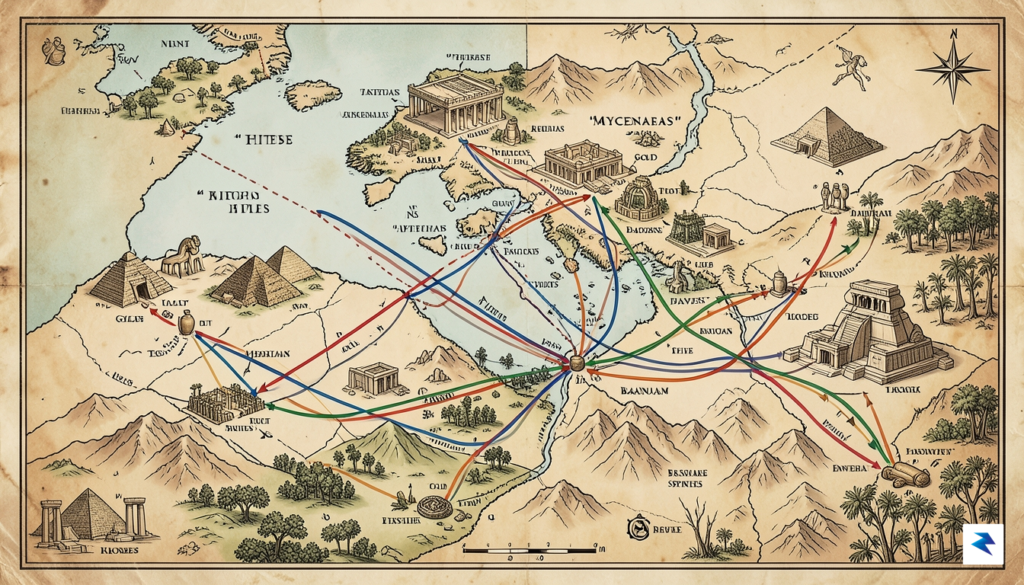
The reality of the collapse was a convergence of multiple, interacting stressors rather than a single decisive blow. Environmental changes, particularly severe and prolonged droughts, likely led to widespread famine and population displacement, straining existing resources and social structures. Internal revolts and social unrest, perhaps exacerbated by economic hardship, challenged the authority of the ruling elites. Simultaneously, external pressures from groups like the enigmatic “Sea Peoples” contributed to the instability, disrupting vital trade routes and perhaps even directly attacking coastal settlements and major cities. The systemic nature of the Late Bronze Age meant that these individual challenges did not occur in isolation; instead, they fed into one another, creating a vicious cycle that ultimately overwhelmed the entire fragile edifice.
Therefore, understanding the Late Bronze Age Collapse requires moving beyond simplistic narratives of a single cause or a sudden, dramatic event. It was a complex, multi-layered process of institutional decay, economic dislocation, demographic shifts, and environmental pressures that collectively dismantled a highly integrated world. The ensuing “Dark Ages” were not merely a void, but a period of profound transformation, demonstrating how even the most advanced and interconnected civilizations can unravel when faced with a perfect storm of challenges, leading to a fundamental restructuring of society and the emergence of entirely new cultural paradigms in the subsequent Iron Age.

By the 13th century BCE, the eastern Mediterranean had evolved into a remarkably sophisticated “International Age,” a period defined by a level of interconnectedness that was unprecedented in the ancient world. Great Powers—including the Egyptians, Hittites, Mycenaeans, Kassite Babylonians, and the Mitanni—formed a tightly coupled geopolitical ecosystem held together by extensive diplomatic correspondence and lucrative trade routes. These civilizations were not merely neighbors; they were business partners whose elites exchanged luxury gifts, royal brides, and specialized artisans. This high-status network created a veneer of stability and unprecedented prosperity, fostering an environment where ideas, technology, and wealth flowed seamlessly across borders.
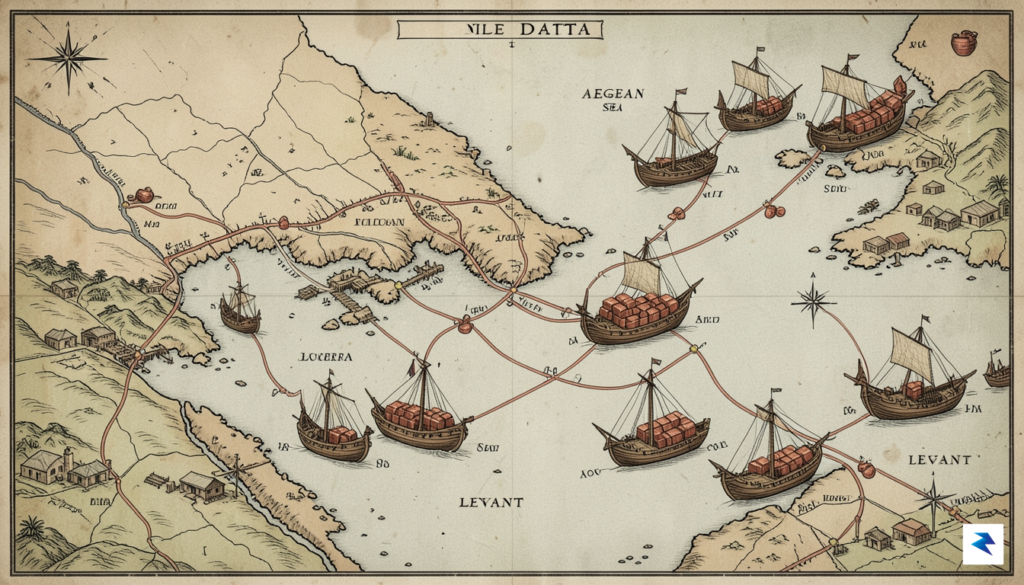
The true vulnerability of this system lay in its reliance on long-distance supply chains to maintain the essential industry of the era: the production of bronze. Because copper and tin—the two primary components of bronze—are rarely found together in the same geological regions, empires were forced to source these materials from vast distances. Tin, in particular, was a precious commodity often transported across thousands of miles from regions as far as Central Asia or the western Mediterranean. This logistical complexity meant that every kingdom depended on the stability of maritime lanes and the cooperation of distant middlemen to keep their workshops running. The entire military and administrative framework of these empires rested on a precarious foundation of international supply chain management.
“The Late Bronze Age was a world of globalized elites, where the failure of a single link in the supply chain could trigger a domino effect that shattered the economic bedrock of entire civilizations.”
Consequently, this interdependence transformed the strengths of the Bronze Age into a profound structural weakness. When geopolitical tremors or environmental disruptions began to destabilize key ports and shipping hubs, the flow of raw materials slowed to a crawl, leading to severe resource crises. As the cost of bronze skyrocketed and the mechanisms of prestige-gift exchange stalled, the ruling elites lost the ability to maintain their armies and bureaucracies. What had been a system designed for collective prosperity suddenly functioned as a vehicle for collective failure; the collapse of one node in the network inevitably placed unsustainable pressure on the next. Once the delicate web of credit and commerce began to fray, the centralized power structures of these empires struggled to adapt, leaving them exposed to the series of shocks that would eventually bring the era to a definitive end.
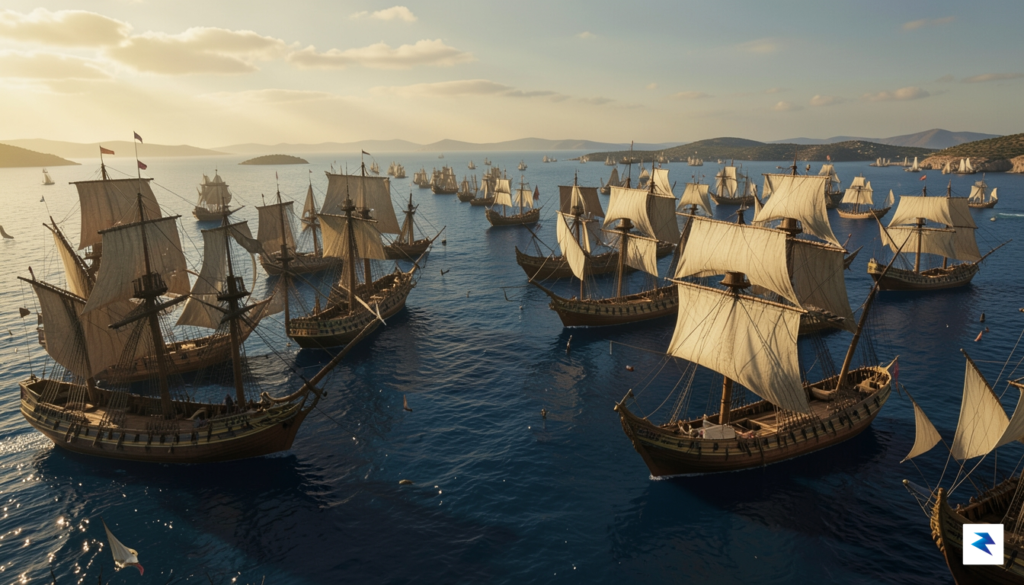
For generations, popular narratives surrounding the Late Bronze Age Collapse have painted a vivid, almost cinematic picture: hordes of mysterious “Sea Peoples” descending upon the established civilizations of the Eastern Mediterranean, razing cities to the ground with fire and sword. This dramatic image, often fueled by ancient Egyptian inscriptions depicting epic battles, has led many to believe that these enigmatic invaders were the primary, if not sole, architects of the catastrophic downfall that reshaped the ancient world. However, a deeper look at the archaeological and textual evidence reveals a far more intricate tapestry of decline, suggesting that the “Sea Peoples” were less of a singular, organized invasion force and more a symptom of a world already teetering on the brink.
The term “Sea Peoples” itself is a modern construct, derived from various names mentioned in Egyptian records, such as the Peleset, Sherden, Lukka, and Denyen. These groups were likely diverse in origin, possibly hailing from regions spanning the Aegean, Anatolia, and even further west, rather than constituting a unified ethnic or political entity. Their movements were not necessarily a coordinated military campaign aimed at conquest, but rather a complex mix of opportunistic raiding, desperate migration, and the displacement of entire populations in search of new lands or resources. They were, in essence, people caught in the throes of a failing system, seeking survival amidst widespread instability.
Indeed, the catalyst for these migrations and raids appears to have been profound, pre-existing systemic weaknesses. Climate change, particularly severe and prolonged droughts, is increasingly recognized as a major contributing factor, leading to widespread crop failures and famine across the region. Such environmental pressures would have destabilized agricultural economies, strained trade networks, and forced communities to abandon their homes in search of sustenance. Consequently, the “Sea Peoples” can be understood not as the instigators of collapse, but as human waves propelled by the very same environmental and economic crises that were simultaneously eroding the foundations of established empires.
Beyond these external pressures, the internal vulnerabilities of Late Bronze Age societies played a crucial, often overlooked, role in their demise. The highly centralized palace economies, dependent on elaborate trade routes and a specialized bureaucracy, proved remarkably fragile in the face of widespread disruption. As resources dwindled and trade faltered, the palaces’ ability to provide for their populations and maintain order diminished significantly. This internal weakness likely fueled social unrest, peasant revolts, and the breakdown of traditional hierarchies, making these states ripe for internal collapse even before any external threat materialized. The loss of central authority meant a weakening of defenses, a decline in public works, and a general unraveling of the social contract.
Ultimately, the Late Bronze Age Collapse was not a simple narrative of invaders conquering great empires, but a multifaceted “systems collapse.” It was a convergence of climate change, widespread famine, the disruption of vital trade networks, internal revolts, and the cumulative stress on complex, interconnected political and economic systems. The “Sea Peoples,” far from being the sole perpetrators, were merely one visible manifestation of this broader disintegration—a desperate response to a world in turmoil, rather than the singular cause of its undoing. Their arrival often served as the final blow to already crippled states, rather than the initial force bringing down flourishing civilizations.
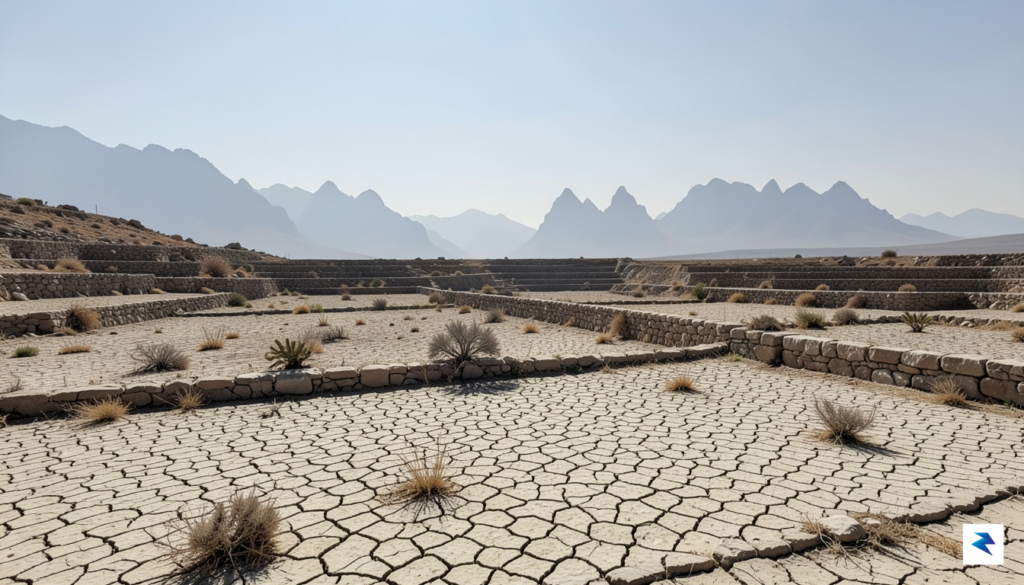
For decades, scholars viewed the sudden disintegration of Mediterranean civilizations as a mystery tied primarily to the mysterious “Sea Peoples.” However, modern paleoclimatology has fundamentally shifted our perspective, revealing that the ground beneath these ancient empires was literally drying up. High-resolution data from pollen analysis and oxygen isotope samples in stalagmites indicate that the eastern Mediterranean was gripped by a multi-century “megadrought” starting around 1200 BCE. This was not a temporary dry spell, but a persistent climatic shift that devastated the agricultural foundations upon which the Bronze Age palatial economies were built.
The rigid, top-heavy bureaucracies of the Mycenaeans, Hittites, and Egyptians were entirely dependent on predictable agricultural surpluses to sustain their complex hierarchies. These states functioned through a delicate system of redistribution: the peasantry produced grain, olives, and wine, which were then funneled into centralized storehouses to pay artisans, fund professional armies, and maintain the ruling elite. When the rains failed, the entire mechanism stuttered. As harvests dwindled, the state’s ability to command labor or pay its soldiers evaporated, triggering a catastrophic feedback loop. Without a surplus, the central authority could no longer incentivize loyalty or project power, leaving them vulnerable to both internal unrest and external threats.
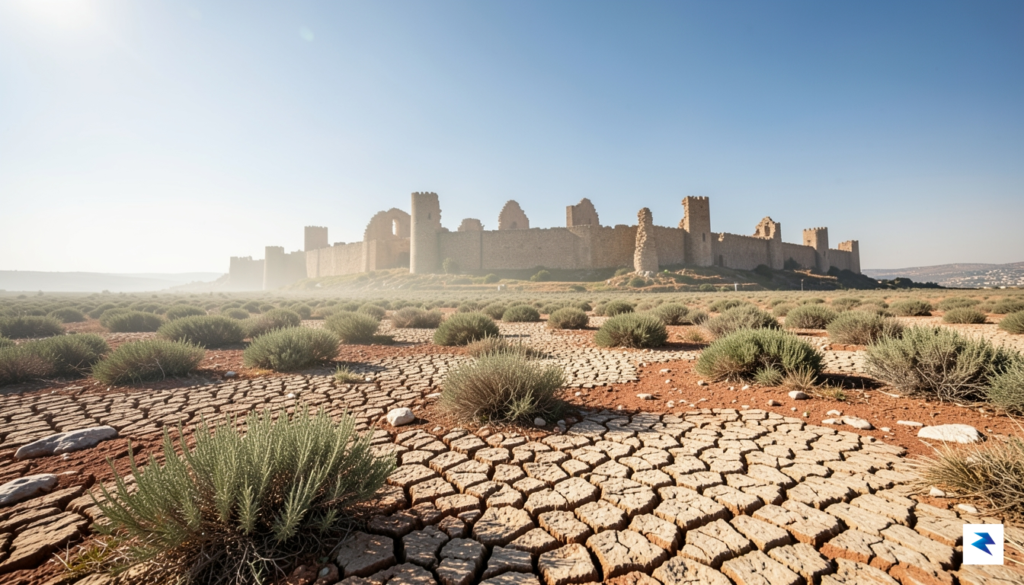
This environmental scarcity acted as a powerful force multiplier for existing socio-economic fractures. In times of plenty, the heavy taxation required to support imperial bureaucracies was perhaps tolerable, but during prolonged famine, it became an existential burden. As the state failed to provide food security or protect its borders against raiding parties, the social contract essentially dissolved. Peasants, faced with the choice between starvation and flight, likely abandoned their lands in search of sustenance, effectively dismantling the tax base and labor force required to keep the palace economies operational.
The collapse was not merely a military defeat, but a systemic failure where environmental instability exposed the inherent fragility of centralized, high-consumption societies.
Ultimately, the decline was a cascade of failures. Climate-driven food insecurity stripped the empires of their primary wealth, which in turn paralyzed their administrative and military capabilities. Once the military apparatus became too thin to manage the borders or maintain order, the resulting political instability created a vacuum. This chaos encouraged mass migrations and internal rebellions, turning a manageable agricultural crisis into a total civilizational collapse. By the time the environmental conditions began to stabilize, the interconnected web of trade and governance that defined the Late Bronze Age had been shattered beyond repair.
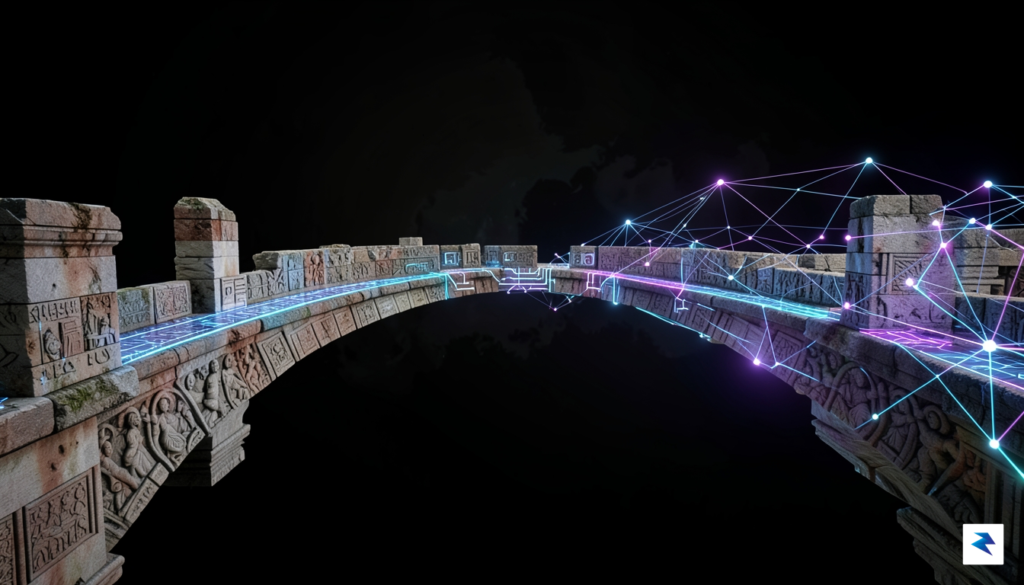
The disintegration of the Late Bronze Age civilizations serves as a profound, sobering mirror for our contemporary globalized world. Just as the interconnected empires of the 13th century BCE relied on a delicate web of trade, diplomacy, and resource dependency, modern society functions through a similarly intricate network of supply chains, digital infrastructure, and international markets. When we examine the rapid disintegration of these ancient powers, we are forced to confront the reality of the complexity trap. Systems that become too specialized, too rigid, and too interdependent often lose the capacity to adapt when multiple stressors—such as climate change, famine, or mass migration—strike simultaneously. Much like the Hittites or the Mycenaeans, our modern global architecture is highly optimized for efficiency, yet it often lacks the inherent redundancy required to survive a systemic “perfect storm.”

The lesson here lies in the dangerous illusion of invulnerability that accompanies hyper-connectivity. In the Late Bronze Age, the collapse was not caused by a single cataclysmic event, but rather by the cascading failure of these interconnected nodes. Once the flow of tin and copper was interrupted, the entire military-industrial capacity of the region crumbled, leading to a domino effect of internal uprisings and economic ruin. Today, we face a similar risk: as our systems grow more tightly coupled, the margin for error shrinks drastically. When one sector of our global economy or environment falters, the impact ripples across the globe with unprecedented speed. By studying this ancient pattern, we learn that resilience is not synonymous with size or reach; rather, true stability is found in the ability to decouple and function independently when the broader network fails.
The primary takeaway from the Late Bronze Age is that complexity is a double-edged sword: it offers unprecedented prosperity during times of stability, but it demands a level of adaptability that rigid, centralized power structures are rarely capable of providing.
Moving forward, the scholarly consensus suggests that we must prioritize decentralization and local self-sufficiency as essential buffers against global volatility. While the ancient empires sought to exert total control over their peripheries, the historical record indicates that those who survived the collapse—or were best equipped to weather the transition—were often those with more localized, flexible social and economic structures. This is not a call to abandon global integration, but rather a reminder that we must cultivate “local resilience” to complement our global ambitions. Understanding the past is therefore not merely an academic indulgence; it is a critical tool for risk management. By recognizing the warning signs of systemic brittleness, we can begin to build a future that values institutional agility and human-scale sustainability over the fragile, monolithic structures that have historically proven so susceptible to sudden, irreversible decline.
You must be logged in to post a comment.