
Adrafinil: The Smart Way to Keep Your MacBook Awake for AI Agents
The MacBook Lid-Closed Dilemma: When Productivity Hits a Power Wall For modern developers and engineers, the MacBook has become the ultimate…
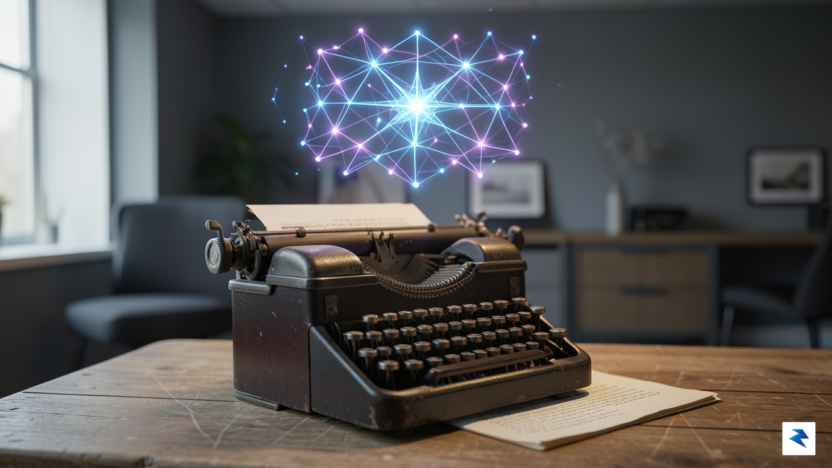

When Margaret Atwood speaks, the literary world listens, not merely because of her mastery of speculative fiction, but because of her uncanny ability to track the trajectory of human societal shifts. During her recent appearance at the Babell Literary and Cultural Festival, Atwood turned her gaze toward the rapid encroachment of artificial intelligence, cutting through the hyperbolic optimism of Silicon Valley with a deceptively simple, yet devastatingly accurate assessment: the principle of garbage in, garbage out. This mantra serves as a stark reminder that machine intelligence does not exist in a vacuum of objective genius; rather, it is a digital digestive system processing the entirety of our collective output—the profound, the petty, the prejudiced, and the mundane.
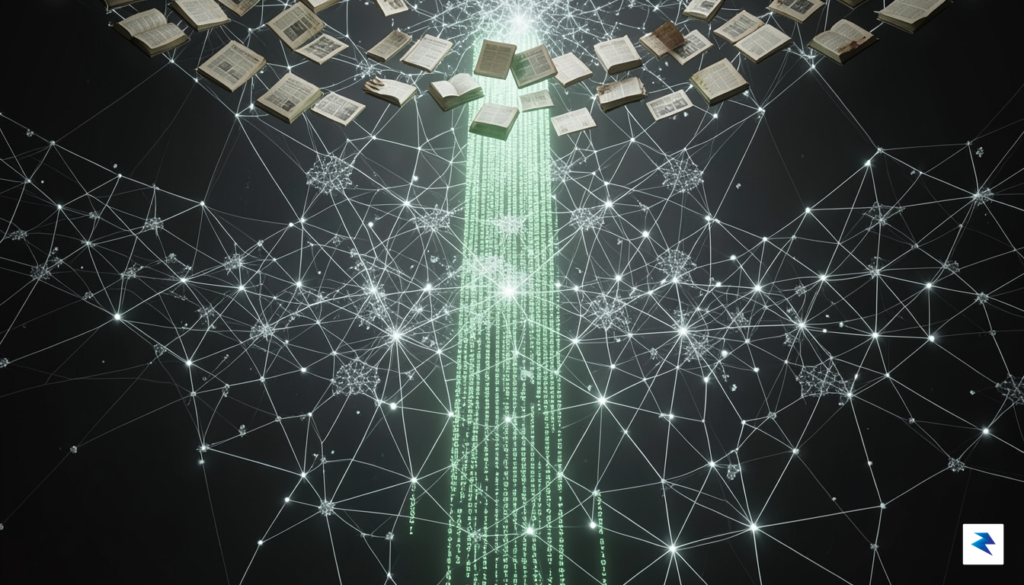
Literary figures like Atwood are uniquely positioned to act as the sentinels of this technological age because they have spent their careers dissecting the nuances of language, ethics, and human fallibility. While software engineers often view large language models as marvels of predictive probability, authors recognize them for what they truly are: sophisticated mirrors. By training these systems on the sum total of human writing, we are not creating an entity that possesses true, original thought. Instead, we are building a massive, automated reflection of our own history, complete with the structural biases, historical misconceptions, and creative limitations that have defined human civilization for millennia. As Atwood suggests, if we feed the machine the remnants of our past, we cannot reasonably expect it to sprout the seeds of a perfected future.
The danger is not that machines will begin to think for themselves, but that they will perfectly replicate the ways we have failed to think clearly for others.
Ultimately, the critique offered by Atwood challenges us to reconsider the definition of creativity itself. There is a prevailing anxiety that AI will eventually eclipse human artistic output, yet this fear overlooks the essential spark of lived experience that defines literature. An algorithm can mimic the style of a gothic novel or the cadence of a poem, but it lacks the visceral weight of human suffering, joy, and existential struggle that breathes life into the written word. By framing AI as a repository of garbage in, garbage out, Atwood shifts the focus from the machine’s potential to the user’s responsibility. We must acknowledge that these tools are merely extensions of our own cultural data set, requiring a more discerning, critical engagement if we are to prevent the automation of our collective ignorance.

At its core, the computing adage “garbage in, garbage out” (GIGO) serves as a stark reminder that even the most sophisticated algorithmic architectures are subservient to the quality of the information they consume. In the realm of Large Language Models (LLMs), this principle is not merely a theoretical concern but a fundamental constraint on machine intelligence. These models do not “think” in the human sense; rather, they function as incredibly complex statistical engines that map patterns within vast datasets. If the source material is riddled with systemic biases, factual inaccuracies, logical fallacies, or linguistic mediocrity, the resulting output will inevitably mirror those flaws, amplified by the model’s veneer of authoritative tone.
To understand the scope of this challenge, one must consider how these systems are built. Modern LLMs are trained by ingesting massive portions of the public internet—a digital repository that is as chaotic and unverified as it is expansive. By scraping forums, news articles, social media threads, and digitized books, developers provide the training data that defines the model’s “worldview.” When this data includes hate speech, misinformation, or low-quality content, the model learns to replicate these patterns as if they were valid linguistic or factual norms. Consequently, the model becomes a reflection of our collective digital footprint, capturing our worst habits and inconsistencies alongside our most brilliant insights.
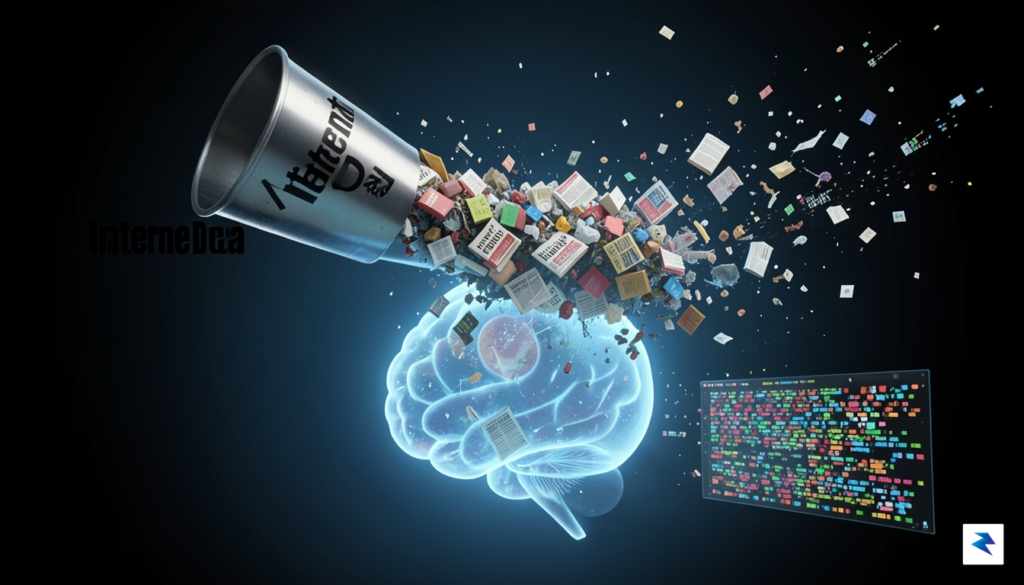
The danger is compounded by the looming threat of “model collapse,” a phenomenon where the self-referential nature of digital training becomes a destructive cycle. As the internet becomes increasingly saturated with synthetic, AI-generated content, future iterations of LLMs will inevitably be trained on text produced by their predecessors. Without fresh, human-curated data to anchor them, these models begin to feed on their own outputs, leading to a degradation of quality that researchers describe as a recursive decay. Like a photocopy of a photocopy, the nuanced depth, creative flair, and factual precision of the original language begin to blur, replaced by the homogenized, repetitive, and increasingly hollow patterns favored by current algorithms.
The integrity of AI-generated knowledge is entirely dependent on the provenance and purity of its training data; when we lose the distinction between human wisdom and algorithmic synthesis, we risk a future where information quality is in a perpetual state of decline.
Ultimately, the GIGO principle serves as a sobering check on the current enthusiasm for generative technology. If we prioritize the scale of data ingestion over the rigor of data curation, we are essentially building a library that writes its own books based on the scribblings found on its bathroom walls. To ensure that these models remain useful tools rather than engines of misinformation, developers must confront the reality that more data is not always better data. Without a concerted effort to filter out the noise and prioritize high-quality, verified human contributions, we may find ourselves trapped in a loop of diminishing returns, where the intelligence we seek is buried under layers of our own digital refuse.
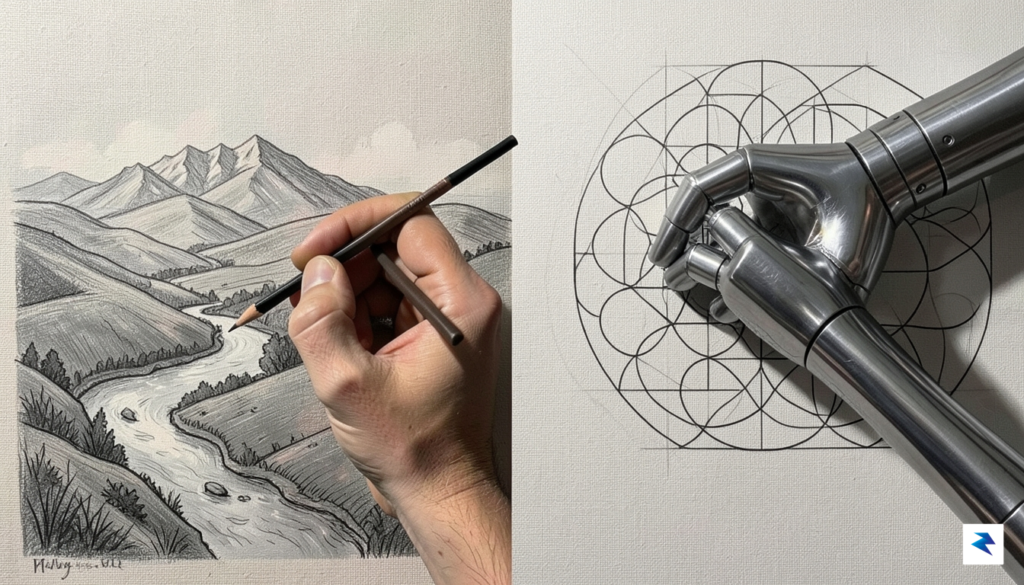
At its core, the current generation of artificial intelligence functions as a sophisticated mirror, reflecting the vast statistical patterns of human history rather than understanding the heartbeat of the human experience. While an algorithm can process millions of pages of prose in seconds, it is fundamentally engaged in pattern matching—a mathematical exercise in predicting the next likely word—rather than the act of creation. Human storytelling, by contrast, is rooted in the messy, often contradictory reality of lived experience. Where an author draws upon the physical sensation of grief, the specific sting of betrayal, or the quiet joy of a memory, an AI draws upon a database of existing descriptions. This leads to a fundamental disconnect: the machine can simulate the structure of a narrative, but it lacks the internal landscape necessary to provide its own emotional architecture.
This limitation becomes particularly apparent when we analyze the machine’s struggle with subtext, irony, and cultural nuance. Human language is a living, breathing entity, saturated with unspoken assumptions and historical echoes that change depending on who is speaking and to whom. A writer might use irony to signal a profound internal conflict, trusting the reader to perceive what is left unsaid. An AI, however, tends to prioritize the most statistically probable interpretation of a prompt, effectively sanding down the jagged edges of human complexity. By smoothing out these inconsistencies, the technology risks producing a sanitized, homogenized version of reality that ignores the profound contradictions that make literature meaningful in the first place.
True storytelling is not merely the assembly of information; it is the courage to articulate truths that exist between the lines, a feat that requires a consciousness capable of sensing the weight of human fragility.
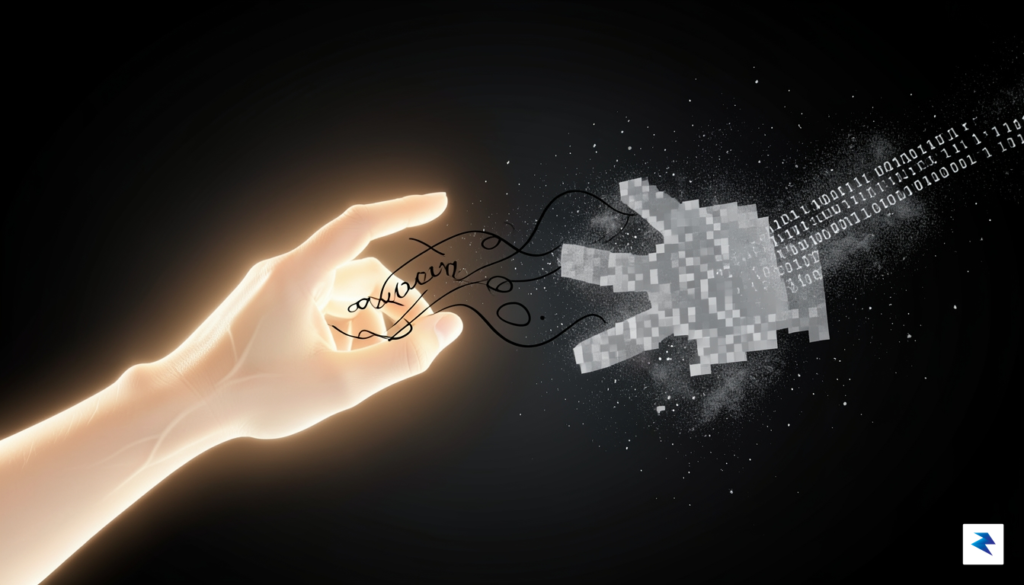
The danger of this technological trend is the potential for “literary flattening,” a process where the internet becomes saturated with content that is grammatically correct yet emotionally hollow. As AI-generated texts proliferate across media platforms, there is a risk that our collective standard for storytelling will shift toward the predictable and the derivative. If we continuously feed our systems with the output of other systems, we risk entering a feedback loop of mediocrity, where the unique, quirky, and deeply human voices that have historically driven cultural evolution are drowned out by a sea of algorithmically optimized content. To lose the nuance of the individual human voice is to lose the very thing that makes literature a bridge between souls, reducing the profound act of communication to a mere exchange of data.
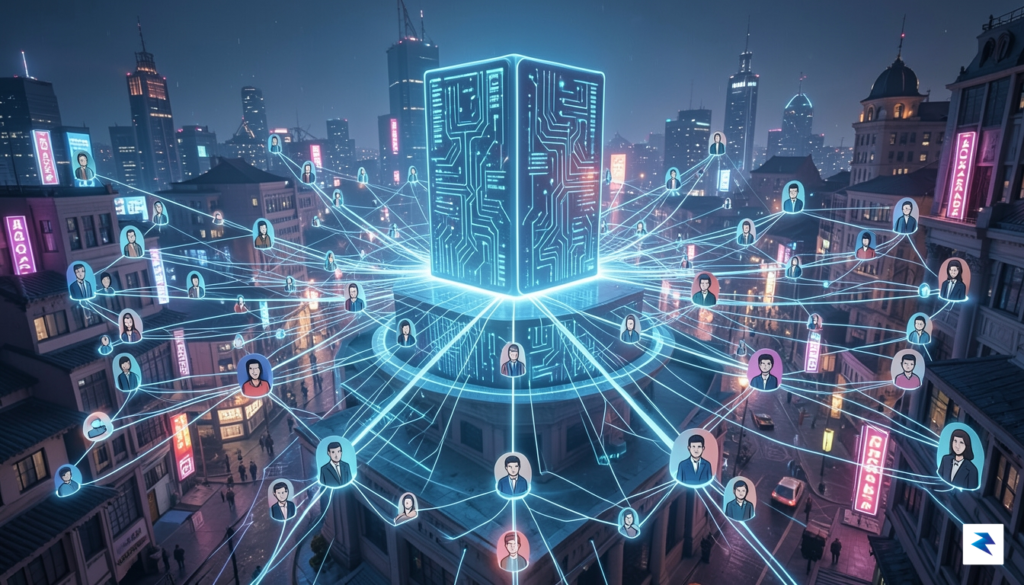
The rapid proliferation of large language models has forced a long-overdue reckoning regarding how we value human creativity in the digital age. At the heart of this conflict lies the practice of large-scale data scraping, where tech conglomerates ingest vast libraries of copyrighted literature to train their algorithms. This process often occurs without the consent of, or compensation to, the original authors whose life work constitutes the very foundation of these systems. By consuming the intellectual property of writers to build tools that may eventually displace them in the marketplace, developers are essentially creating a closed-loop system of exploitation that threatens the economic viability of the creative arts.
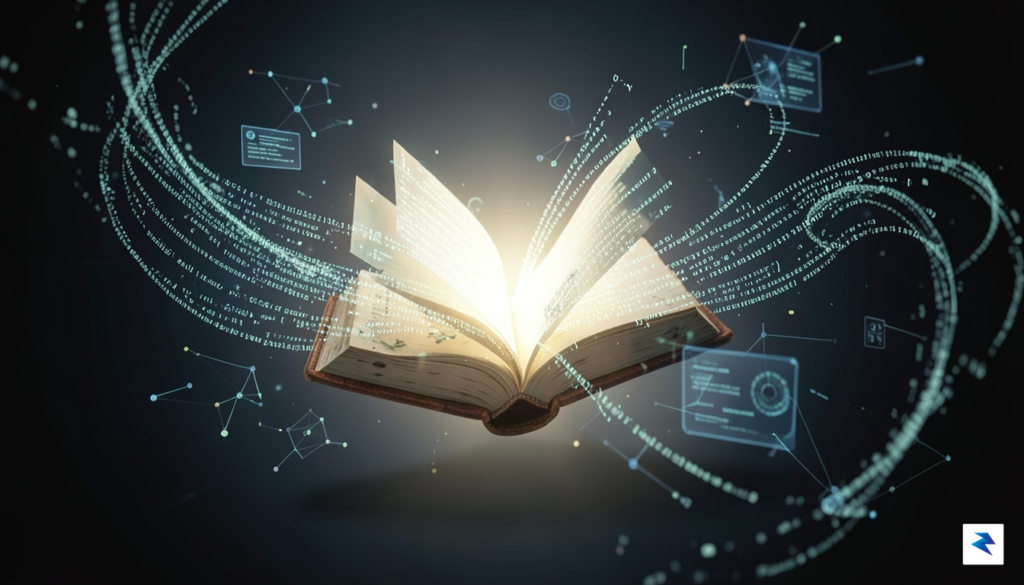
Legal arguments currently hinge on the nebulous concept of “fair use,” with developers claiming that training an AI is a transformative process rather than a derivative one. However, this interpretation conveniently ignores the moral implications of using specific artistic styles and copyrighted narratives to generate competing content that mimics the original creators. When an AI can be prompted to write a story in the exact cadence and thematic style of a living author, the boundary between “learning” and “theft” becomes incredibly thin. We are witnessing a fundamental power imbalance where the massive financial resources of Silicon Valley are pitted against the individual rights of creators who lack the legal infrastructure to defend their life’s work against an automated machine.
The core of the issue is not merely technical, but existential; when we reduce human culture to a collection of raw data points, we risk stripping the soul and intention from the art that defines our collective history.
Beyond the legal battles, there is a profound ethical question regarding provenance and the provenance of ideas. If these systems are fed a diet of works that represent the breadth of human experience, yet those authors are sidelined, the creative ecosystem begins to decay. We must ask whether it is sustainable to build a future for artificial intelligence on a foundation of intellectual pillaging. If the architects of these models continue to treat the world’s literature as a free, inexhaustible resource, they may inadvertently stifle the very human inspiration that makes these systems appear intelligent in the first place. True innovation should be built on a foundation of respect and reciprocity, rather than a model that prioritizes efficiency at the expense of those who provided the initial spark of genius.

As we stand on the precipice of an era defined by synthetic media, the temptation to view generative technology as a replacement for human creativity is understandable, yet fundamentally flawed. While algorithms can mimic the structural patterns of classic literature or the rhythmic cadence of poetry, they ultimately lack the lived experience—the grief, the joy, and the existential weight—that anchors truly resonant art. In this landscape, the value of authentic human expression will not diminish; instead, it will likely appreciate as a rare, premium commodity. Much like the resurgence of vinyl records in a streaming-dominated world, the “human spark” will serve as a vital antidote to the predictable, often hollow output of automated systems.
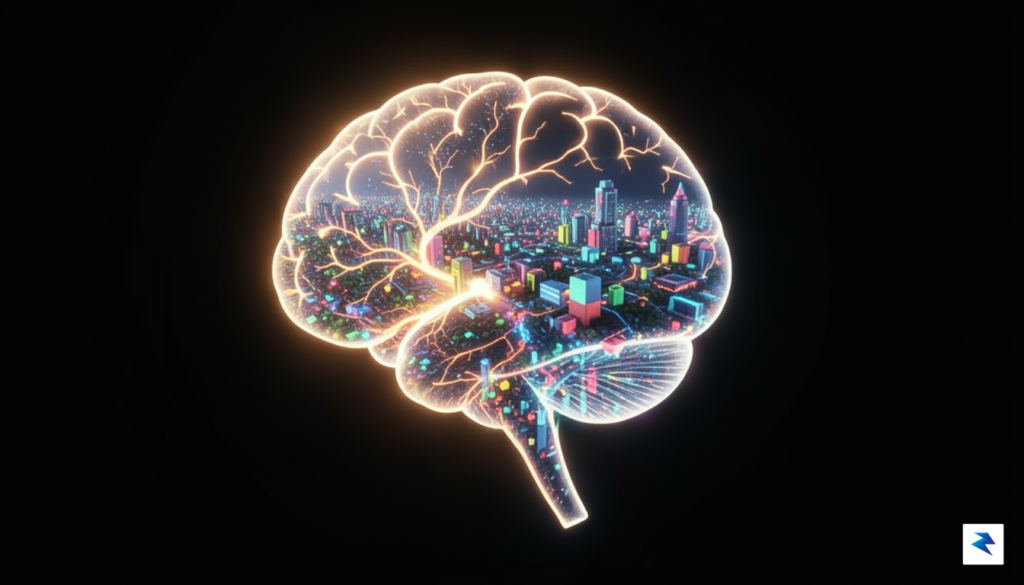
To remain relevant, writers and creators must shift their perspective on artificial intelligence, moving away from a posture of competition and toward one of sophisticated collaboration. Rather than viewing these tools as autonomous authors, creators should treat them as high-speed research assistants or mechanical drafting aids. By maintaining rigorous human oversight, an author can ensure that the “garbage in” problem—the tendency of models to hallucinate or regurgitate stale tropes—is mitigated by the keen editorial eye of a conscious mind. The author becomes a curator of ideas, using technology to handle the heavy lifting of data synthesis while reserving the essential task of emotional architecture for themselves.
The most profound stories of the future will not be those produced by the fastest processor, but those that navigate the messy, unquantifiable nuances of the human condition that no algorithm can fully map.
Ultimately, the preservation of literature depends on our collective refusal to equate content volume with artistic quality. As the digital sphere becomes increasingly saturated with synthetic prose, the discerning reader will naturally gravitate toward voices that demonstrate intentionality, vulnerability, and a unique perspective. We must prioritize the “human-in-the-loop” model, where technology acts as an extension of our intent rather than a substitute for our imagination. By doubling down on the idiosyncrasies that make our work distinctly ours, creators can ensure that art remains a reflection of the soul, effectively safeguarding the future of human-authored narratives against the relentless tide of algorithmic uniformity.
You must be logged in to post a comment.