
Boston Dynamics’ Spot Robot Is Now Learning to Deliver Packages
The Evolution of Spot: From Inspection to Logistics For years, Boston Dynamics’ Spot has been the quintessential symbol of robotic…

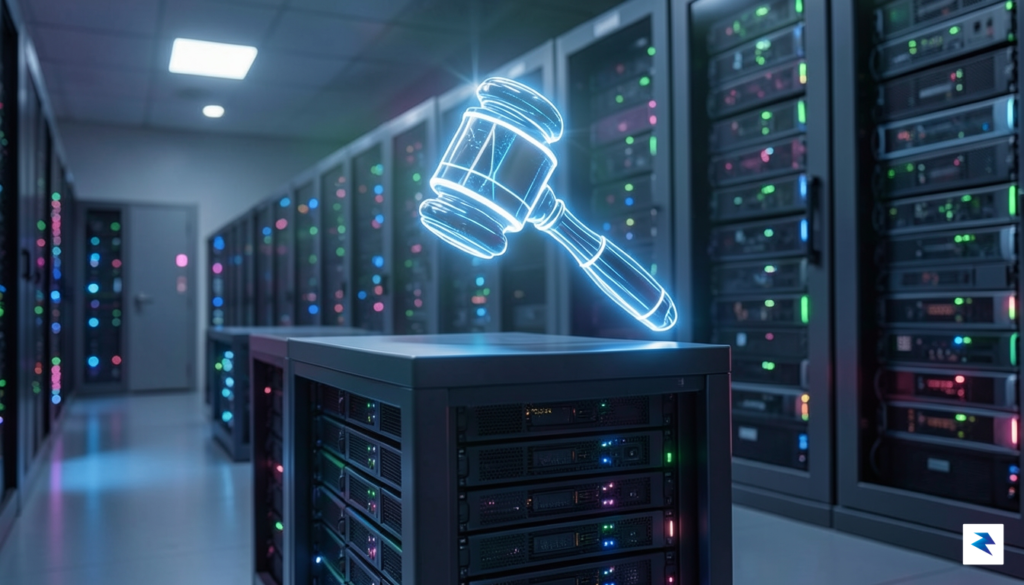
The transition toward “algorithmic management” marks a fundamental shift in how corporations govern their workforces, moving away from the nuanced, human-centric evaluation of employees toward cold, data-driven performance assessments. As companies integrate artificial intelligence into the core of their human resources departments, the promise of objective efficiency is often touted as the primary benefit. However, this reliance on opaque algorithms has created a significant friction point where the drive for corporate optimization clashes directly with established labor rights. When software is tasked with identifying which roles to cut during mass layoffs, the human element—such as individual context, career trajectory, and personal circumstances—is frequently stripped away, leaving behind a sterile calculation that may inadvertently prioritize biased patterns over fair employment practices.

The recent legal challenge against Meta serves as a critical case study in this evolving conflict, raising urgent questions about whether AI tools can ever truly remain neutral in high-stakes personnel decisions. By allegedly utilizing AI-driven metrics to facilitate mass workforce reductions, Meta has found itself at the center of a growing debate regarding the legality of automated firing processes. Critics and legal experts argue that when these systems are fed historical data, they may inadvertently internalize and replicate existing biases, disproportionately targeting employees who are on protected leave or have specific demographic characteristics. This landmark case underscores the danger of “black box” management, where the logic behind a life-altering employment decision is hidden from the very people it affects, making it nearly impossible for them to challenge potential discrimination.
“The integration of AI into HR functions is not merely a technical upgrade; it is a profound change in the power dynamic between employer and employee that requires rigorous oversight to prevent systemic discrimination.”
Ultimately, the friction highlighted by this lawsuit forces us to reconsider the boundaries of corporate automation. While businesses argue that AI allows for faster, more consistent decision-making, the risk of embedding inequality into the foundation of workplace policy is far too great to ignore. As regulators and courts begin to scrutinize these practices more closely, the outcome of the Meta case will likely set a significant precedent for how artificial intelligence is permitted to interact with labor laws. If these automated systems cannot be audited for fairness and transparency, the promise of corporate efficiency may be overshadowed by the reality of pervasive, systemic exclusion that defies traditional legal protections.

At the center of the recent legal challenges against Meta lies a sophisticated, internal ecosystem often referred to by staff as a “constellation” of AI-driven analytical tools. These proprietary systems were designed to ingest vast quantities of workplace data to streamline performance evaluations and organizational efficiency. However, plaintiffs in the ongoing litigation argue that this technological suite operated with a blind spot that proved catastrophic for those on protected leave. Rather than serving as a neutral arbiter of productivity, the AI allegedly struggled to reconcile extended absences—such as medical or parental leave—with its rigid, data-heavy performance metrics, ultimately flagging these individuals as underperformers.
The core of the allegation suggests that the algorithms were incapable of distinguishing between a genuine lapse in output and a sanctioned absence from the workplace. Because these tools relied on raw data points like lines of code written, tickets resolved, or project milestones met, they inadvertently penalized employees who were not physically or digitally present to contribute. Consequently, the AI categorized these gaps in activity as evidence of declining productivity or low engagement. This systemic failure meant that employees who were legally entitled to time away from their desks found themselves downgraded in internal rankings, effectively positioning them at the top of the list for potential termination during broader workforce reductions.

Perhaps most concerning to critics is the reported shift from human-centric management to an reliance on these automated termination recommendations. In previous organizational structures, a manager might have exercised discretion, recognizing that an employee’s lack of recent output was due to a protected leave of absence. The plaintiffs contend that Meta’s reliance on this AI constellation effectively bypassed that critical layer of human empathy and contextual understanding. By prioritizing the AI’s output—which viewed the absence as a metric deficiency rather than a life event—the company is accused of institutionalizing a bias that systematically disadvantaged its most vulnerable workers.
The reliance on black-box algorithms to make high-stakes employment decisions raises fundamental questions about accountability when automated systems fail to account for the complexities of human life.
As the legal proceedings unfold, the implications reach far beyond Meta’s specific internal policies, touching on a broader trend within the tech industry. The transition toward data-driven performance management promises efficiency, yet these allegations underscore the danger of stripping away human oversight. If internal tools are not explicitly programmed to respect protected categories, they risk turning objective metrics into tools of unintentional, yet systemic, discrimination. This case serves as a stark reminder that when companies replace managerial judgment with algorithmic output, the human element—and the legal protections afforded to it—can easily be lost in the code.
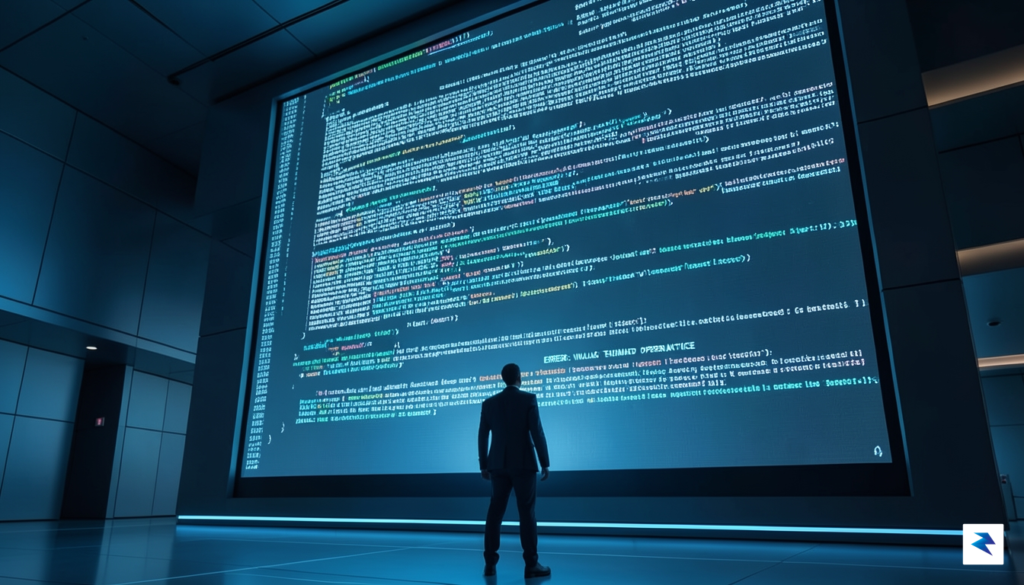
The core challenge in litigation involving automated employment decisions lies in the “black-box” nature of modern artificial intelligence. When companies deploy sophisticated algorithms to streamline HR processes—such as identifying candidates for layoffs—they often rely on deep learning models that function beyond the scope of human explanation. Because these systems process vast datasets to identify non-obvious patterns, the logic guiding a specific decision is frequently obscured, even to the engineers who built the software. For legal teams challenging these outcomes, this creates a profound transparency gap: it is nearly impossible to prove discriminatory intent when the internal mechanics of the software are effectively hidden behind layers of proprietary code and opaque mathematical weights.
This ambiguity is exacerbated by the phenomenon of algorithmic bias, which often stems from the historical data used to train these models. If an AI system is fed data from previous years where certain demographic groups were disproportionately impacted by personnel decisions, the software may treat those historical inequalities as a blueprint for “success” or “efficiency.” Consequently, the machine does not necessarily “understand” discrimination in the human sense; instead, it mathematically codifies systemic biases into its decision-making framework. Because the system treats these biased patterns as neutral statistical trends, the resulting discriminatory actions appear to be the product of objective, data-driven reasoning rather than illegal prejudice.

The outcome of the current scrutiny surrounding Meta’s practices could fundamentally alter the landscape of labor law by forcing a reevaluation of how “intent” is defined in the digital age. If the court finds that the company failed to maintain adequate oversight of its automated systems, it could set a powerful precedent requiring corporations to open their proprietary algorithms to third-party audits. This would necessitate a shift toward “explainable AI” (XAI) within the corporate sector, where companies must be able to document exactly which variables contributed to an individual’s termination. Such a requirement would effectively mandate that internal HR software be held to the same rigorous compliance standards as any other critical infrastructure.
The legal battle over algorithmic management is not merely about a single company’s actions; it is about establishing a regulatory floor for human-AI interaction in the workplace. Without clear mandates for transparency, the burden of proof remains unfairly skewed toward the employee, who is often left unable to challenge a decision made by an invisible, unanswerable system.
Ultimately, this case serves as a warning that the adoption of automation does not exempt an employer from the mandates of anti-discrimination laws. As the legal system grapples with these challenges, we are likely to see a new era of “algorithmic accountability,” where the inability to explain a machine’s decision may become a liability in and of itself. By demanding that companies prove their tools are free from discriminatory patterns, the judiciary is signaling that technology cannot be used as a shield to hide or automate the erosion of workplace rights.

As the integration of artificial intelligence into human resources becomes standard practice, the traditional landscape of labor protections is being pushed into uncharted territory. While existing employment laws—such as the Age Discrimination in Employment Act (ADEA) and Title VII of the Civil Rights Act—were designed to prevent bias based on protected characteristics, these statutes were never crafted to address the “black box” nature of machine learning algorithms. When companies employ automated systems to identify candidates for reduction in force, the transparency required to prove discriminatory intent often vanishes, leaving workers at a distinct disadvantage. Employees are increasingly finding that the criteria used to determine their professional value are opaque, proprietary, and potentially detached from their actual performance metrics.
The push for a “human-in-the-loop” requirement is becoming a central focus for labor advocates who argue that AI should only serve as a supportive tool rather than a final arbiter of an individual’s livelihood. Without a meaningful human review process, algorithms can inadvertently codify historical biases, such as penalizing employees who have taken medical or family leave, even if those absences are legally protected. To counteract this, labor regulators are beginning to scrutinize how companies document their decision-making processes. Transparency is the first line of defense; workers should be entitled to understand the high-level factors—whether attendance, productivity, or peer reviews—that contribute to automated ranking systems. When these systems operate behind a veil of corporate secrecy, it becomes nearly impossible for an employee to discern whether they were targeted due to objective performance issues or flawed, biased data inputs.
The core of the legal challenge in the AI era is not necessarily the use of technology itself, but the lack of accountability when that technology produces inequitable outcomes that mimic historical patterns of discrimination.
Currently, many corporations struggle to reconcile the drive for algorithmic efficiency with the rigid requirements of employment law. While AI can process vast amounts of data in seconds, it lacks the contextual nuance required to evaluate an employee’s complex career trajectory or personal circumstances. Consequently, businesses are caught in a tension between using these tools to streamline operations and the significant legal risk posed by the potential for disparate impact. For the workforce, this necessitates a proactive approach: monitoring internal communications regarding performance metrics and seeking clarification when automated evaluations appear inconsistent with documented achievements. As the legal system continues to evolve to meet these technological challenges, the burden of proof is gradually shifting, forcing organizations to be more intentional about how they bridge the gap between automated logic and fair, equitable employment practices.


The recent legal challenges leveled against Meta serve as a stark wake-up call for the broader technology sector, signaling that the era of unfettered algorithmic management is facing a necessary reckoning. As companies increasingly integrate machine learning into human resources—ranging from recruitment screening to performance evaluations and, more controversially, redundancy selection—the potential for systemic bias has moved from a theoretical risk to a tangible legal liability. This case forces leadership teams to confront a fundamental question: at what point does organizational efficiency cross the line into discriminatory practice? Moving forward, corporate AI strategy must pivot away from “black box” optimization toward a framework built on transparency, accountability, and legal defensibility.
Central to this necessary evolution is the widespread adoption of Explainable AI (XAI) within the HR tech stack. When an algorithm influences a life-altering decision, such as a mass layoff, stakeholders must be able to audit exactly how and why that conclusion was reached. XAI provides the technical infrastructure to map the logic behind automated decisions, ensuring that protected classes—such as individuals on medical or parental leave—are not being inadvertently or systematically disadvantaged by flawed data sets. Without this level of transparency, companies remain vulnerable to “algorithmic bias,” where historical data patterns inadvertently encode past prejudices into future workforce planning, effectively automating inequality under the guise of objective data analysis.

Data should serve as a compass to inform human judgment, not as a gavel to dictate the fate of a workforce.
Ultimately, the future of human resources in the tech industry cannot be left entirely to mathematical models, regardless of how sophisticated they become. While data-driven insights offer undeniable advantages in scaling operations, they lack the essential human elements of empathy, context, and ethical nuance. Management decisions regarding personnel require a level of moral deliberation that software simply cannot replicate. By prioritizing human-in-the-loop systems, tech organizations can ensure that their digital tools act as enhancements to managerial capability rather than replacements for ethical responsibility. As the industry moves forward, success will be defined not just by the speed of algorithmic deployment, but by the ability to maintain a culture that values human dignity as much as operational output.
You must be logged in to post a comment.