
Apple’s New Siri: How the iPhone Is Becoming an Intelligent Agent
The Evolution of Siri: From Voice Command to Intelligent Agent For more than a decade, the Siri experience was defined by a frustratingly…


For years, the artificial intelligence landscape was dominated by monolithic tech giants and well-funded foundation model labs focused primarily on scaling raw compute. However, the rapid ascent of Nous Research marks a pivotal departure from this paradigm. Originally established as a niche, community-driven collective of researchers and enthusiasts, the group has successfully pivoted from open-source experimentation to becoming a formidable commercial entity. By securing a $75 million funding round led by prominent firms like Robot Ventures and Union Square Ventures (USV), the company has officially signaled its intent to lead the next generation of artificial intelligence development, effectively moving the needle from academic curiosity to industrial-grade implementation.
The sheer scale of their reported $1.5 billion valuation serves as a powerful market indicator, highlighting a seismic shift in investor appetite. While the initial “gold rush” of the AI era was defined by pouring capital into general-purpose Large Language Models (LLMs), the market is now pivoting toward “agent-first” architectures. Investors are increasingly betting on companies that can move beyond simple text prediction to create autonomous systems capable of executing complex, multi-step workflows. Nous Research has positioned itself at the epicenter of this transformation, proving that their Hermes series of models offers the specialized reasoning capabilities required to turn AI from a passive assistant into an active, decision-making agent.

The move toward a $1.5 billion valuation for an agent-centric organization suggests that the industry is no longer satisfied with just “smarter” chatbots; it is demanding reliable digital workers.
This transition from a community-based research group to a high-valuation startup is not merely a financial milestone; it is a validation of the “open-weights” philosophy in the agentic space. By prioritizing accessibility and community feedback, Nous Research has managed to build a moat around its technology that is defined by utility rather than just parameter counts. As they move forward with this new influx of capital, the company is expected to sharpen its focus on creating robust, reliable agentic frameworks that can be integrated into enterprise environments. This evolution underscores a broader market reality: the future of AI will not be won by those who simply have the largest training clusters, but by those who can build the most efficient, goal-oriented agents capable of operating in the real world.

The technical foundation of the Hermes series represents a pivotal shift in how the open-source community perceives model fine-tuning. Unlike standard models that are often trained on massive, unfiltered datasets, the Hermes lineage is defined by a rigorous, quality-first approach to synthetic data curation. By prioritizing the structural integrity and logical consistency of the training data, Nous Research has managed to extract significantly higher utility from base models than many of their contemporaries. This philosophy centers on the belief that a smaller, meticulously curated dataset is exponentially more valuable than a vast, noisy one, allowing the models to achieve a level of precision that feels both intuitive and highly capable for complex, agentic tasks.

What truly distinguishes Hermes from raw base models is its specialized fine-tuning methodology, which emphasizes instruction-following and nuanced reasoning. While raw models are essentially predictive engines that guess the next token based on statistical probability, Hermes is engineered to act as a structured collaborator. Through advanced techniques like multi-turn conversation optimization and rigorous constraint adherence, the model develops a competitive moat: it reliably performs logical deduction and multi-step problem solving without devolving into the hallucinations that often plague generic counterparts. Developers have gravitated toward this series specifically because it bridges the gap between raw intelligence and actionable, reliable output.
The true power of the Hermes series lies not in the raw size of its parameter count, but in the sophisticated architecture of its reasoning patterns, which are explicitly designed to minimize logical drift during long-form task execution.
The impact of this approach on the open-source ecosystem cannot be overstated. By demonstrating that high-performance models can be democratized through superior data engineering, Nous Research has empowered individual developers and small startups to build agentic workflows that were previously locked behind the proprietary walls of tech giants. This accessibility has fostered a vibrant community of contributors who actively refine the Hermes framework, creating a virtuous cycle of improvement. As these models continue to evolve, they serve as a benchmark for how transparency, combined with a disciplined focus on fine-tuning, can disrupt the traditional hierarchy of artificial intelligence development, ultimately justifying the significant confidence the market has placed in their underlying architecture.

The massive valuation currently being discussed for Nous Research signals a pivotal pivot in the venture capital landscape: a decisive move away from the era of passive chatbots and toward the age of autonomous agentic systems. For the past two years, the industry has been obsessed with large language models that excel at drafting emails, summarizing meetings, and generating creative copy. However, investors have increasingly realized that while these “chat-first” interfaces are impressive, they remain constrained by the need for constant human supervision. The current investment thesis prioritizes agentic AI—systems capable of reasoning through complex workflows, chaining multiple actions together, and executing tasks from start to finish without needing a human to prompt every intermediate step.
This shift represents a fundamental change in how we define productivity software. Instead of viewing AI as a mere assistant that sits inside a text box, firms like Robot Ventures and USV are betting on a future where AI acts as an autonomous operator across the digital stack. An agentic model is designed to navigate software environments, interact with APIs, and make iterative decisions based on real-time feedback loops. This is the difference between a tool that tells you how to book a flight and a tool that actually logs into your account, compares prices, selects the best option, and completes the purchase on your behalf. By prioritizing this capability, investors are essentially betting on the commoditization of labor-intensive, multi-step digital processes.
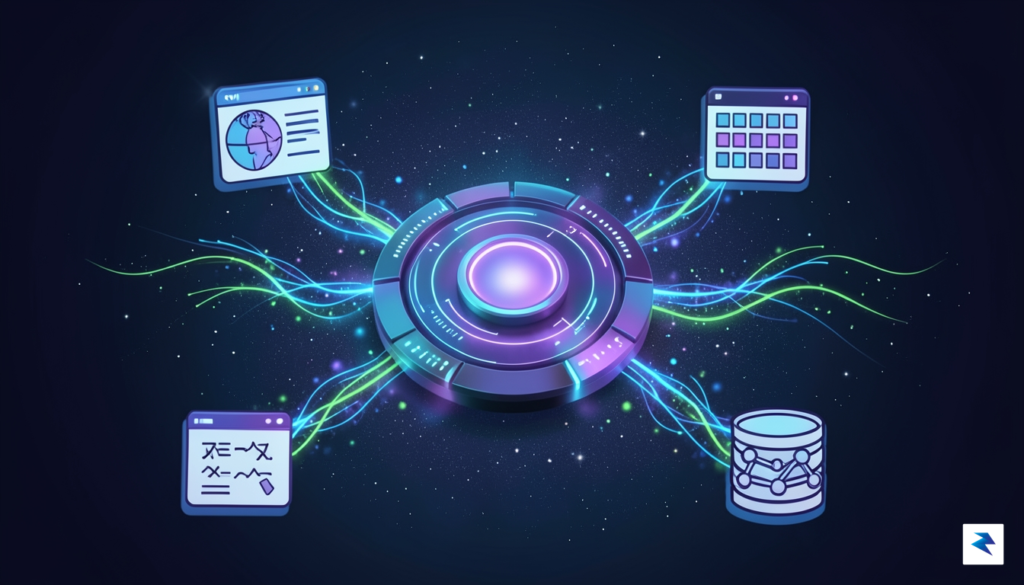
The logic behind this multi-billion dollar valuation is rooted in the belief that autonomous task execution offers a vastly higher value proposition than simple content generation. When a model generates text, it is a one-time utility; when a model executes a workflow, it becomes an infrastructure layer for the enterprise. Enterprises are not just looking for tools to speed up their writing; they are looking for engines that can automate entire departments. By investing in companies like Nous Research, venture capitalists are positioning themselves at the foundation of this new “doer” economy, where the software itself becomes an employee capable of managing complex, high-stakes operational tasks.
The transition from conversational AI to agentic AI marks the shift from software that simply talks to software that actually works.
Ultimately, the market is pricing in the expectation that autonomous agents will become the primary interface for the modern internet. As these agents become more reliable and capable of handling complex reasoning, the friction of performing digital tasks will drop toward zero. This evolution will likely redefine the software-as-a-service (SaaS) model, as businesses move from paying for seats and licenses to paying for outcomes and successful task completions. The $1.5 billion valuation isn’t just about the current capabilities of the Hermes model; it is an aggressive hedge on the inevitable future where AI systems function as the primary drivers of digital productivity.
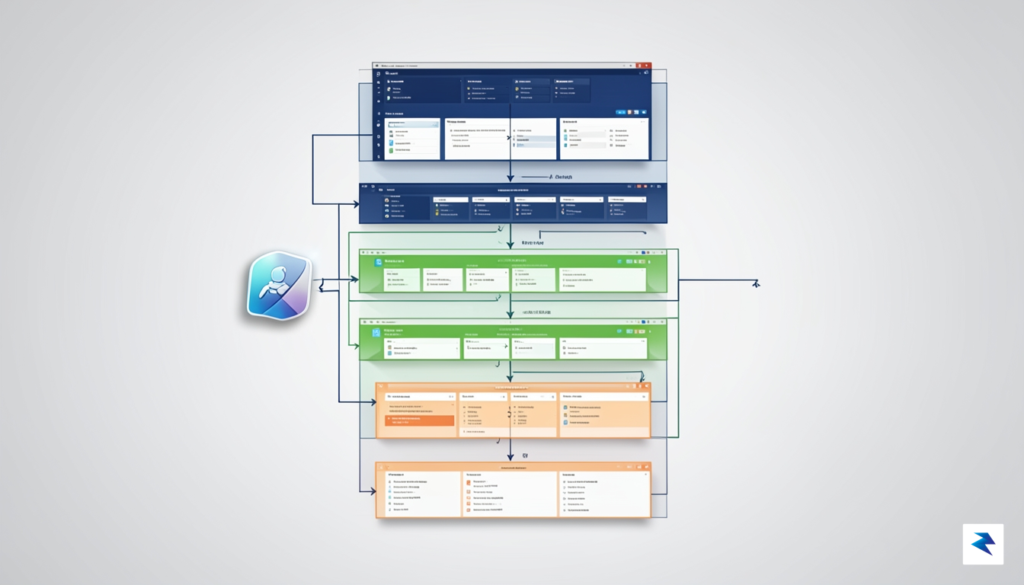
The core challenge for Nous Research is no longer merely about refining the parameters of large language models; it is about bridging the gap between raw intelligence and actionable, real-world utility. While the Hermes series has earned a reputation for being remarkably capable at reasoning and creative tasks, transitioning these models into autonomous agents requires a fundamental shift in architecture. The company is now moving toward building a comprehensive platform that enables models to move beyond simple chat interfaces and into the realm of persistent, goal-oriented workflows. By focusing on agentic infrastructure, Nous is positioning itself to solve the persistent “reliability gap” that often prevents businesses from deploying AI in mission-critical environments.
Reliability remains the most significant hurdle in this evolution. For an AI to function as an autonomous agent, it must demonstrate consistent performance in multi-step reasoning, where a single error in judgment can derail an entire automated process. Nous Research is addressing this by prioritizing robust tool-use capabilities, allowing their models to interact with external APIs, databases, and software environments with a higher degree of precision and safety. This shift necessitates a move toward rigorous guardrails and deterministic oversight, ensuring that when a Hermes-powered agent initiates a task—such as managing data pipelines or facilitating complex enterprise communications—it remains within the bounds of user-defined constraints.

True agentic capability is measured not by how well a model answers a prompt, but by how reliably it completes a multi-layered objective without human intervention.
Beyond the technical hurdles, the roadmap involves creating a developer-centric ecosystem where third-party creators can build, deploy, and monitor their own agents. This is where the true value of the $1.5 billion valuation becomes apparent; it provides the capital necessary to build the infrastructure layers that developers need to integrate autonomous workflows into existing enterprise stacks. If Nous Research can provide a reliable framework that handles context management, state persistence, and error recovery, they will effectively become the operating system for the next generation of automation. By empowering developers to craft specialized agents that can navigate complex software environments, the firm is moving toward a future where AI is not just an assistant, but a core component of digital operations.
Ultimately, the strategic roadmap centers on creating a seamless bridge between the fluidity of neural networks and the rigid requirements of enterprise software. As these agents become more sophisticated, they will likely move into sectors that require high levels of data integrity and security, such as legal documentation, supply chain management, and automated financial analysis. By focusing on the infrastructure that makes these interactions predictable and scalable, Nous Research is preparing to transition from an open-source research laboratory into an indispensable platform for the global AI economy.

The trajectory of Nous Research represents a distinct departure from the traditional “walled garden” model favored by dominant tech incumbents. While companies like OpenAI and Google have historically prioritized proprietary ecosystems, Nous has cultivated a reputation for open-research transparency, effectively crowdsourcing innovation by building a loyal community of developers. This “open-to-commercial” pivot is a high-stakes gamble; it requires the company to maintain its grassroots credibility while simultaneously scaling a business model robust enough to justify a $1.5 billion valuation. As they transition into a more commercially focused entity, the primary challenge will be balancing the community’s desire for accessible, lightweight agentic frameworks with the investor demand for proprietary, enterprise-grade capabilities.
The broader AI landscape remains a brutal theater of attrition, defined by astronomical compute costs and a fierce war for top-tier engineering talent. For Nous Research, the path forward is paved with significant capital requirements. As agentic AI—systems capable of autonomous reasoning and multi-step execution—becomes the new gold standard, the company will need to secure not just financial backing, but also stable access to massive GPU clusters. If they are to outpace well-funded rivals like Anthropic or Mistral, they must prove that their specific flavor of agentic architecture offers a tangible performance advantage that goes beyond mere hype, translating directly into reliable business outcomes for enterprise clients.

The true test for Nous Research over the next 18 months will not be the size of their balance sheet, but their ability to set the technical standard for how AI agents interact with the world.
Looking ahead, the next year and a half will be critical in determining whether Nous can cement itself as a foundational layer of the AI stack. Their growth strategy will likely hinge on three key pillars:
Ultimately, the company is entering a phase of maturation where the novelty of their research must give way to the stability of their infrastructure. While the $1.5 billion valuation provides a massive runway for experimentation, it also sets a high bar for performance. If Nous Research can successfully navigate the tension between its open-source roots and its newfound commercial ambitions, it stands to become one of the most influential architects of the next generation of autonomous digital agents.
You must be logged in to post a comment.