
Is Netflix Bringing Back Cable TV? The Future of Always-On Streaming
The Evolution of the Streaming Experience For over a decade, Netflix has been the undisputed architect of the on-demand revolution. By…

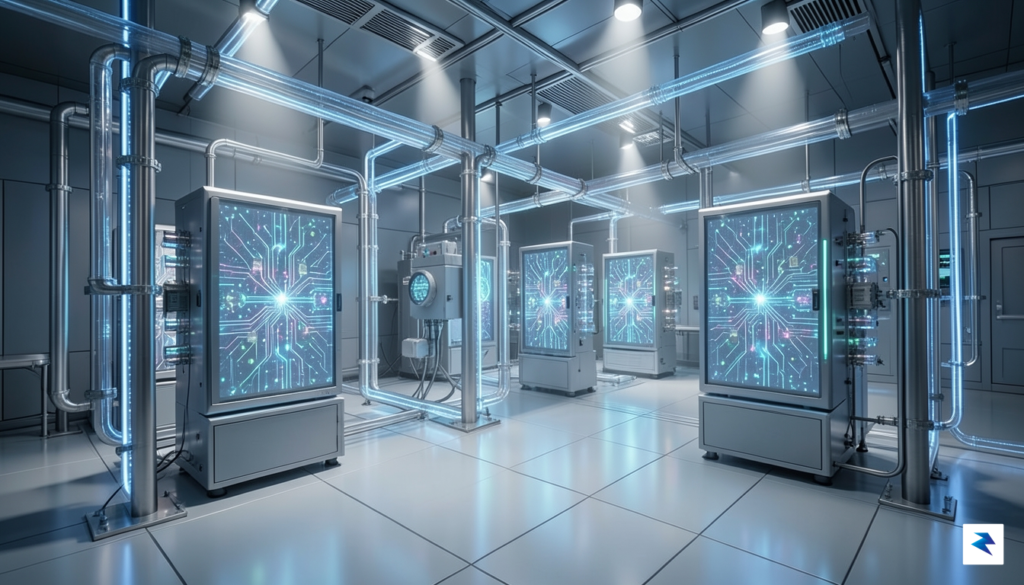
For the past several years, the quantum computing sector has been firmly entrenched in the era of Noisy Intermediate-Scale Quantum (NISQ) devices. During this phase, the primary metric of success has been the raw number of qubits a system can sustain. Industry leaders and academic institutions alike have engaged in a high-stakes race to reach higher qubit counts, operating under the assumption that scale is the sole prerequisite for achieving meaningful computational advantage. However, this focus on sheer quantity has largely ignored the persistent challenge of quantum decoherence, where the fragile state of qubits is easily disrupted by environmental noise, leading to rampant calculation errors.
The current industry trajectory—an obsession with building million-qubit systems—is increasingly viewed as both economically and technically unsustainable. While adding more qubits might look impressive on a roadmap, it often compounds the complexity of error correction exponentially. In existing architectures, a single “logical” qubit capable of performing reliable calculations requires thousands of “physical” qubits just to identify and correct the inevitable errors generated by hardware instability. Consequently, the industry has hit a wall where the energy, infrastructure, and cooling requirements needed to support millions of qubits create a logistical nightmare that threatens to stall progress toward commercial viability.
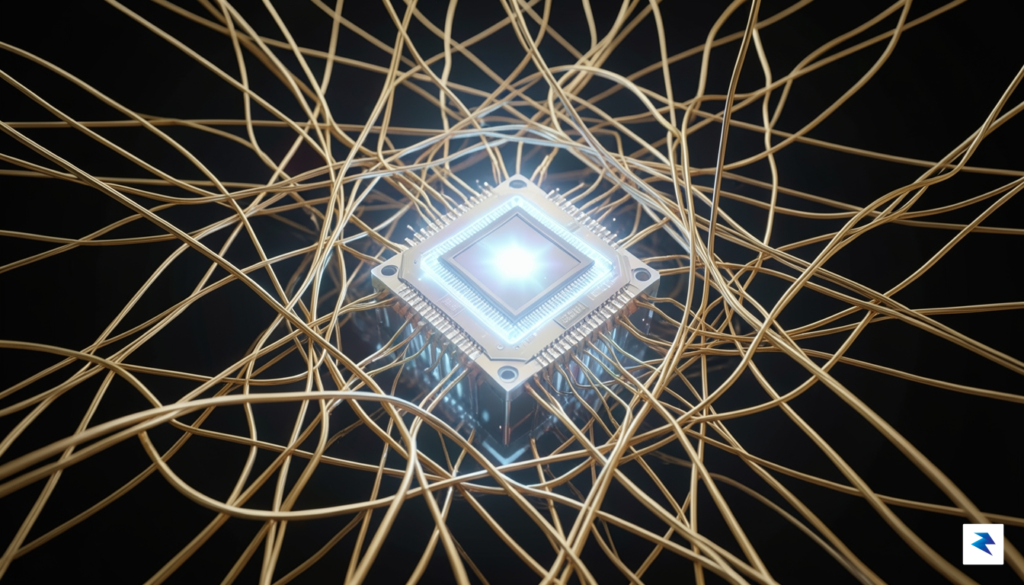
The fundamental problem with the “more is better” mentality is that it confuses capacity with utility. Even if an organization manages to link a million qubits together, the cumulative noise generated by that many components creates a computational environment so unstable that the error rate effectively nullifies the speed benefits of quantum mechanics. Without a fundamental shift in how qubits are engineered to maintain their state, these massive systems remain trapped in a cycle of constant calibration rather than productive computation. The industry has reached a plateau where brute-force scaling no longer yields a proportional increase in usable processing power.
The true breakthrough in quantum computing will not be found in the sheer volume of qubits, but in the efficiency and stability of the underlying hardware architecture.
By shifting the focus away from the million-qubit milestone and toward high-fidelity, high-coherence systems, developers can move past the current bottleneck. Relying on fewer, more robust qubits allows for a more streamlined approach to fault tolerance, significantly reducing the overhead required for error mitigation. This pivot recognizes that a smaller, optimized machine capable of high-precision operations is far more valuable than a massive, noisy system that cannot reliably sustain a complex algorithm. The future of the field depends on this transition from raw volume to architectural elegance, ensuring that quantum computers can finally move from experimental curiosities to engines of real-world problem solving.

The quantum computing landscape has long been defined by a “bigger is better” mentality, with major players racing to push qubit counts into the millions. However, Oratomic is fundamentally challenging this paradigm with the announcement of a massive $300 million funding round. By securing capital from heavyweight investors like ARCH Venture Partners and Khosla Ventures, the company is signaling a strategic pivot: they are prioritizing the development of a fully error-corrected, viable machine that requires only 20,000 qubits to function, rather than chasing the astronomical scale that has dominated the industry narrative for years.

This substantial infusion of capital serves as a powerful endorsement of Oratomic’s architectural philosophy, which emphasizes efficiency and practical utility over raw, unrefined scale. While the industry has often focused on the sheer quantity of qubits—many of which remain noisy and error-prone—Oratomic is concentrating on the quality and stability of their underlying hardware. By designing a system that reaches true computational viability at a lower, more manageable qubit threshold, they aim to bypass the massive engineering hurdles associated with maintaining coherent states across millions of individual quantum bits. This approach not only streamlines the path to commercialization but also addresses the critical challenge of error correction, which remains the single greatest bottleneck in quantum advancement.
The true measure of progress in quantum computing is not the total number of qubits, but the ability to execute complex, fault-tolerant algorithms reliably.
The involvement of firms like ARCH Venture Partners and Khosla Ventures is particularly significant, as these investors are renowned for their long-term commitment to deep-tech infrastructure that requires patience and high-level engineering precision. Their decision to back Oratomic suggests a growing consensus among institutional investors that the next phase of the quantum revolution will be won by those who can master qubit integration rather than those who simply accumulate them. By focusing on a lean, high-fidelity architecture, Oratomic is positioning itself to deliver a machine capable of solving real-world problems in drug discovery, material science, and cryptography much sooner than traditional roadmaps might suggest. This shift toward efficiency represents a more sustainable and scientifically rigorous strategy, marking a potential turning point in how the world approaches the construction of the first generation of truly useful quantum computers.
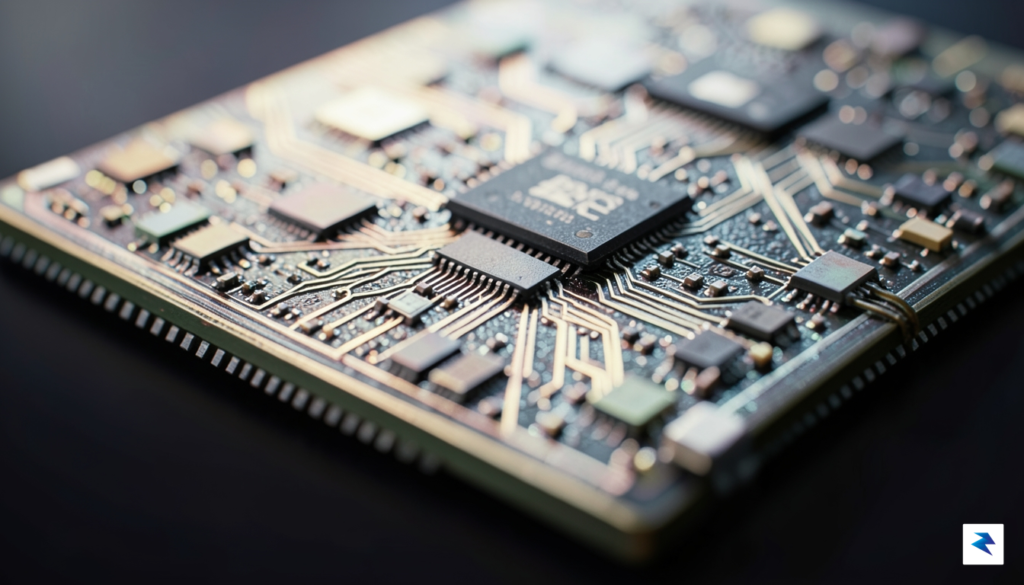
In the race toward quantum supremacy, the industry has long been obsessed with the sheer quantity of qubits, often chasing “millions of qubits” as the ultimate finish line. However, Oratomic is pivoting away from this brute-force approach, arguing that the true measure of success lies in architectural efficiency rather than raw scale. The fundamental challenge of quantum computing is not just creating qubits, but ensuring they remain stable enough to perform complex calculations. This is where the distinction between physical and logical qubits becomes critical. Physical qubits are notoriously fragile, prone to environmental interference that causes errors, while logical qubits act as a robust, error-corrected group of physical qubits working in unison to perform reliable computation.
Oratomic’s breakthrough hinges on the realization that if the underlying hardware is designed with high intrinsic fidelity, you do not need millions of noisy, unstable units to achieve fault tolerance. By refining their proprietary architecture to achieve lower error rates, they have identified 20,000 physical qubits as the “Goldilocks zone.” At this specific threshold, the system possesses enough overhead to implement advanced error correction protocols while maintaining a manageable footprint. This allows the machine to achieve the computational density required for real-world applications—such as molecular modeling or complex logistics optimization—without the astronomical cooling requirements and signal management nightmares that plague larger, less efficient prototypes.
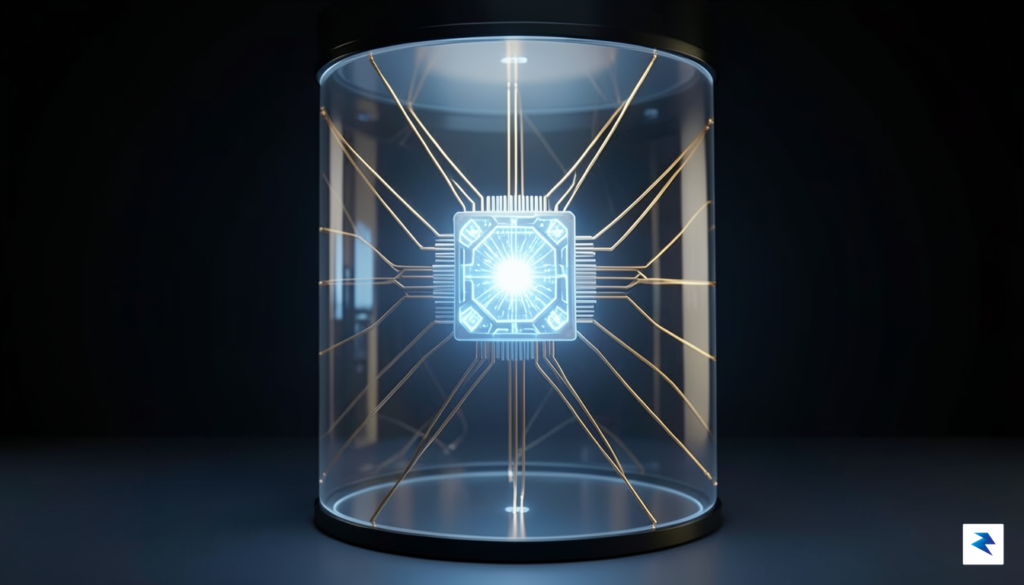
To put this in perspective, many competitors are currently trapped in a “scaling trap,” where adding more qubits introduces more noise, creating a vicious cycle that demands even more qubits just to correct the errors of the previous ones. Oratomic avoids this trap by focusing on the quality and connectivity of their 20,000 units. Their approach is analogous to moving from a massive, unreliable vacuum-tube mainframe to a modern, highly optimized microprocessor; it is not just about having more parts, but about making those parts work together with near-perfect synchronization.
The goal is not to build the biggest machine in the room, but to build the most functional one. By reaching fault tolerance at 20,000 qubits, we bypass the need for the gargantuan, impractical systems currently dominating the theoretical roadmap.
Ultimately, this strategic target of 20,000 qubits represents a major inflection point in quantum engineering. It shifts the narrative from a race for quantity to a pursuit of architectural elegance. If successful, Oratomic will have proven that a smaller, smarter machine can outperform a chaotic, massive array, effectively shortening the timeline for when quantum computers can finally move out of the lab and begin solving problems that are currently impossible for even the world’s most powerful classical supercomputers.

The recent infusion of capital into Oratomic signals a pivotal shift in the quantum computing paradigm, moving the industry away from the era of “noisy,” experimental hardware and toward a future defined by industrial-grade utility. By targeting a threshold of just 20,000 qubits—a fraction of the millions previously thought necessary for fault-tolerant machines—the company is effectively collapsing the timeline for commercial viability. This reduction in qubit overhead is not merely a technical milestone; it is a fundamental reconfiguration of the cost-benefit analysis that has long hindered enterprise adoption. When the barrier to entry is lowered from an impossible technical mountain to a manageable engineering objective, quantum technology transitions from an academic curiosity into a pragmatic tool for solving humanity’s most complex computational bottlenecks.

For industries such as material science and pharmaceutical research, this breakthrough represents a profound acceleration of the innovation cycle. Currently, scientists are forced to rely on classical supercomputers to simulate molecular interactions, which often leads to inaccurate approximations and years of costly laboratory testing. With a 20,000-qubit system, researchers could perform high-fidelity simulations of chemical catalysts and protein folding at a level of precision that is currently physically unattainable. This capability would enable the rapid discovery of next-generation battery chemistries for electric vehicles or the design of targeted therapeutics that could drastically shorten drug development lifecycles, ultimately saving billions in research and development costs while delivering life-saving solutions to the market at unprecedented speeds.
The transition from theoretical potential to tangible commercial application hinges on the efficiency of qubit utilization; by requiring fewer qubits to achieve fault tolerance, Oratomic is effectively opening the doors to a new era of industrial optimization.
Beyond the laboratory, the impact on global optimization and logistics will be equally transformative. Complex supply chains, financial risk modeling, and grid-wide energy distribution strategies suffer from “combinatorial explosions,” where the number of possible outcomes exceeds the capacity of classical processors to evaluate them in real-time. A scalable, 20,000-qubit system offers the power to navigate these vast solution spaces, enabling firms to optimize resources with a degree of efficiency that was previously unthinkable. As this technology matures, we can expect a ripple effect across the broader tech landscape, where enterprise-level quantum adoption becomes a competitive necessity rather than a futuristic luxury. By streamlining the hardware requirements, Oratomic is providing the catalyst that will finally allow businesses to translate the theoretical promise of quantum advantage into concrete, bottom-line growth.

The substantial infusion of $300 million into Oratomic signals a pivotal shift in the quantum computing sector, moving away from the “qubit arms race” toward a more nuanced philosophy of computational efficiency. By aiming for a functional machine powered by only 20,000 qubits, Oratomic is betting that architectural elegance—specifically through improved error correction and logical qubit density—will outperform the brute-force strategy of stacking millions of noisy, unstable physical qubits. This roadmap prioritizes the development of a fault-tolerant system that can execute complex algorithms without being crippled by its own decoherence, effectively creating a “quantum utility” that is both scalable and maintainable in a practical data center environment.

Incumbent tech giants and established quantum hardware players are likely to react to this pivot by accelerating their own error-correction research. While many industry leaders have previously staked their reputations on reaching massive qubit milestones, Oratomic’s aggressive efficiency target forces a re-evaluation of current industry standards. Competitors may now feel compelled to shift resources away from raw qubit scaling and toward the software stacks and control hardware necessary to stabilize smaller, more reliable clusters. This competitive friction is a healthy sign of a maturing industry, as it pushes the ecosystem to focus on the tangible, real-world utility that potential enterprise customers are actually demanding: stability, reliability, and clear return on investment.
The true metric of quantum success is no longer the raw volume of qubits, but the ability to perform sustained, error-corrected calculations that can solve intractable problems in material science, cryptography, and drug discovery.
Looking toward the horizon, the path to a 20,000-qubit machine is not without significant technical obstacles, including the need for breakthroughs in cryogenic engineering and signal processing. However, if Oratomic’s development cycle remains on track, we could witness the arrival of the first truly fault-tolerant quantum computers within the next decade. This timeline suggests that while we are still in the “pre-commercial” phase of quantum evolution, the transition to functional, production-grade machines is finally moving from the realm of academic theory into rigorous, capital-backed engineering. The coming years will be defined by which firms can best translate these complex physics experiments into the reliable, standardized architectures that will eventually form the backbone of the next generation of global computing infrastructure.
You must be logged in to post a comment.