
AI Goes Hollywood: What the Google-A24 Partnership Means for the Future of Film
The Convergence of Silicon Valley and Independent Cinema The long-standing relationship between Silicon Valley and the entertainment industry…


For years, Nouriel Roubini—famously dubbed “Dr. Doom” for his prescient warnings regarding the 2008 financial crisis—served as one of the most vocal and unrelenting critics of the cryptocurrency industry. His arguments were grounded in traditional economic principles, often dismissing Bitcoin and its decentralized counterparts as speculative bubbles devoid of intrinsic value, prone to illicit activity, and fundamentally inefficient. By labeling the entire ecosystem as a “Ponzi scheme,” he maintained a rigid barrier between the established financial order and the burgeoning world of digital assets. Yet, his recent pivot toward the launch of the “Technodollar,” a tokenized asset initiative, represents a profound evolution in his outlook that suggests a more sophisticated distinction between speculative mania and the structural transformation of global finance.

This shift in stance is not necessarily an admission of defeat regarding his past criticisms of volatile cryptocurrencies, but rather a reflection of the growing maturity within the blockchain space. Roubini appears to have recalibrated his focus from the “wild west” of decentralized tokens to the institutional utility of distributed ledger technology (DLT) when applied to regulated, real-world assets. By separating the speculative nature of volatile digital coins from the inherent efficiency of on-chain asset management, he is acknowledging that the underlying infrastructure of blockchain has reached a level of sophistication capable of servicing institutional-grade requirements. This nuance is crucial; it signals that while the “crypto-asset” class may still face skepticism, the “tokenization” of securities, commodities, and fiat currencies is viewed as a legitimate technological upgrade for the modern economy.
The transition from skepticism to adoption signifies a broader industry shift: the realization that blockchain is not just a mechanism for decentralized currency, but a powerful ledger for modernizing traditional capital markets.
Ultimately, this development underscores a broader trend where institutional interest is moving away from the speculative fervor of retail-driven tokens and toward the infrastructure that promises to lower costs, increase transparency, and improve settlement speeds. When a skeptic of Roubini’s caliber begins to leverage blockchain technology to create a “Technodollar,” it serves as a powerful testament to the fact that the industry is graduating from its experimental phase. By embracing tokenization, Roubini is effectively betting that the future of finance lies not in the rejection of traditional regulatory frameworks, but in their digitization and optimization through blockchain protocols. This strategic move highlights that the most enduring value in the digital asset space will likely be found in regulated, tangible utility rather than the high-volatility, high-risk assets that previously defined the narrative.

At its core, the Technodollar functions as a sophisticated bridge between the rigid stability of traditional fiat-backed securities and the fluid, programmable nature of distributed ledger technology (DLT). Unlike the highly speculative assets that have historically drawn the ire of market skeptics, this instrument is architected as a security-backed, stable financial vehicle. By creating a digital representation—or “tokenized” version—of underlying traditional financial instruments, the project seeks to strip away the volatility associated with decentralized finance while retaining the operational efficiencies of a blockchain-based ecosystem. This mechanism allows the asset to maintain a tether to real-world value, effectively acting as a hedge for institutional and retail participants who are wary of the erratic swings inherent in the broader cryptocurrency market.
The technical architecture relies on the inherent transparency of on-chain accounting, which provides a verifiable audit trail that legacy banking systems often struggle to replicate in real-time. Through tokenization, high-value financial instruments are decomposed into programmable units, enabling fractional ownership that was previously inaccessible to smaller investors. This shift democratizes access to institutional-grade assets while simultaneously ensuring that every token is backed by a tangible claim on a reserve of underlying securities. Because the ledger is immutable and publicly observable, participants no longer need to rely solely on the opaque assurances of centralized intermediaries; instead, they can verify the collateralization status of their holdings directly via the protocol.

Furthermore, the move toward 24/7 settlement capabilities represents the most significant departure from traditional market infrastructure. Conventional financial markets are frequently hamstrung by “T+2” settlement cycles and archaic banking hours, which create friction and liquidity traps during periods of global macroeconomic stress. By migrating these instruments to a DLT framework, the Technodollar facilitates near-instantaneous, atomic settlement, ensuring that capital is never unnecessarily tied up in transit. This constant liquidity, combined with the ability to program complex financial logic directly into the asset, positions the Technodollar as a foundational tool for a new era of digital finance. By merging the reliability of conservative monetary theory with the raw speed of decentralized rails, it aims to serve as a bedrock for stability in an increasingly unstable global economy.
The true innovation of the Technodollar lies not in the token itself, but in the removal of the structural latency that has defined the financial system for decades.
Ultimately, the intended function of this architecture is to provide a reliable store of value that can withstand the pressures of modern inflation and geopolitical uncertainty. By leveraging smart contracts to enforce compliance and reserve management, the system creates a self-regulating environment that minimizes human error and middleman interference. As this framework continues to mature, it could serve as a blueprint for how traditional institutional assets will inevitably transition to a digital-first standard, proving that even the most vocal critics of digital assets can find value in the underlying technological shift.
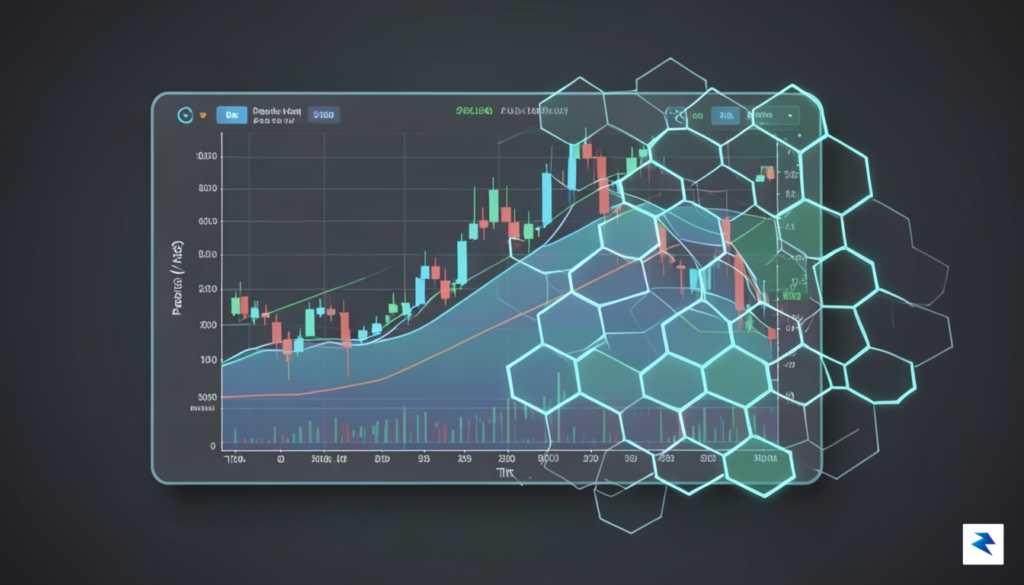
The integration of traditional exchange-traded funds (ETFs) into the blockchain ecosystem represents a pivotal shift in how institutional capital interacts with digital assets. By tethering tokenized products to well-established, Nasdaq-listed ETFs, developers are effectively building a bridge between the rigid, highly regulated infrastructure of legacy finance and the high-speed efficiency of on-chain distributed ledgers. This structural alignment ensures that the underlying asset is not merely a speculative digital token, but a regulated security that tracks real-world value, thereby mitigating the volatility and opacity often associated with purely decentralized crypto assets.
For institutional investors, the primary barrier to entering the blockchain space has historically been the lack of regulatory oversight and the perceived risk of asset custody. Listing these tokens alongside a Nasdaq-listed ETF provides an essential layer of institutional trust that decentralized protocols often struggle to replicate. Because these ETFs are subject to strict reporting requirements, audited financials, and regulatory scrutiny from agencies like the SEC, they offer a familiar framework for asset managers who must abide by fiduciary duties. When a tokenized asset is backed by an ETF, it essentially inherits that regulatory “stamp of approval,” allowing firms to participate in the tokenization boom without abandoning the compliance standards that define traditional capital markets.
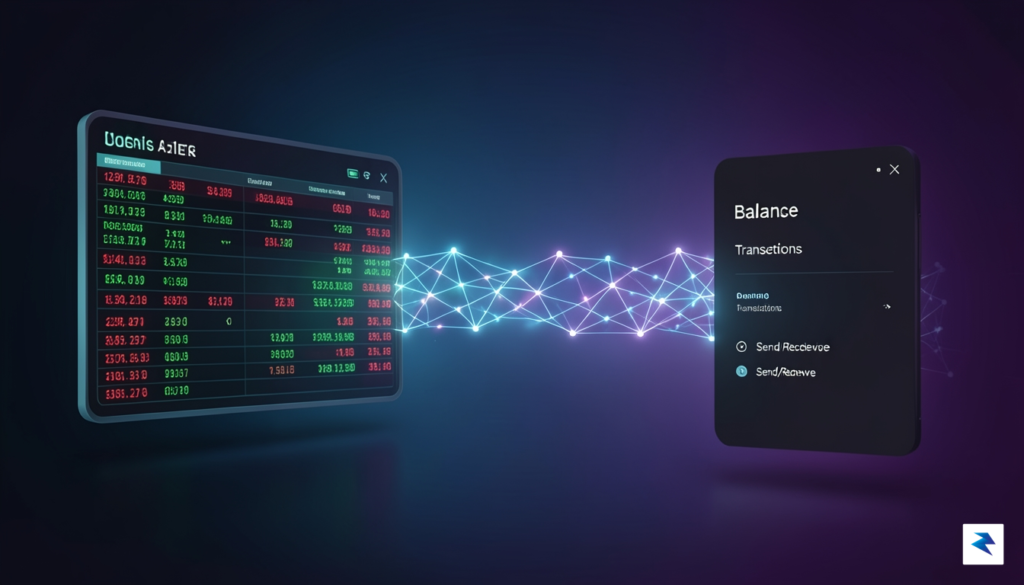
This hybrid model creates a distinct contrast to the “wild west” nature of many decentralized projects that operate without central oversight. While decentralized finance (DeFi) offers innovation through permissionless protocols, it frequently lacks the legal recourse and transparent governance that major institutional players require to deploy massive amounts of capital. By anchoring tokenization to Nasdaq-listed instruments, proponents are creating a “best-of-both-worlds” scenario: the liquidity, security, and legal protections of the public markets combined with the 24/7 settlement capabilities and global accessibility of blockchain technology.
The marriage of regulated ETFs and tokenized on-chain assets is not just a technological upgrade; it is a fundamental restructuring of market trust that brings institutional-grade oversight to the decentralized frontier.
Ultimately, this convergence serves as a catalyst for widespread adoption by reducing the friction associated with asset movement and settlement. As more traditional financial instruments find their way onto the blockchain, the line between “crypto” and “traditional finance” will continue to blur. This evolution ensures that the future of finance is not built on the displacement of existing systems, but rather on the strategic integration of legacy stability with the transformative, programmable nature of modern digital ledgers.

In an era defined by persistent macroeconomic volatility, geopolitical instability, and inflationary pressures, the traditional mechanisms for wealth preservation are increasingly showing their age. For decades, investors have relied on a cumbersome infrastructure of legacy banking, centralized custodians, and sluggish settlement layers that often take days—if not weeks—to process high-value transfers. When global crises strike, the inherent lack of liquidity in these archaic systems can become a significant liability, trapping capital exactly when it is needed most. Tokenization serves as a technological response to this systemic friction, effectively digitizing real-world assets to allow for the near-instantaneous movement of capital across borders and asset classes.
The primary advantage of shifting wealth into an on-chain format lies in the radical reduction of settlement times and intermediary costs. By utilizing distributed ledger technology, tokenized assets remove the need for the redundant verification steps that plague contemporary finance, where dozens of clearinghouses and intermediaries must reconcile ledgers. Because the blockchain acts as the single, immutable source of truth, the risk of human error or institutional insolvency is substantially mitigated. This transition toward programmatic custody means that wealth is no longer confined to the operating hours of traditional stock exchanges or central banks, but is instead accessible 24/7, providing investors with an unprecedented degree of agility in the face of shifting market sentiment.

Beyond mere efficiency, tokenization democratizes access to institutional-grade wealth preservation strategies that were previously restricted to the ultra-wealthy. Historically, high-quality hedges—such as commercial real estate, private equity, or precious metals—required significant capital outlays and complex legal structures to enter. Tokenization allows these massive, illiquid positions to be fractionalized into smaller, tradable digital units. Consequently, a global investor can now achieve a diversified portfolio of assets that are historically correlated to inflation resistance, regardless of their geographical location or starting capital. This inclusive architecture not only enhances individual portfolio resilience but also creates a more interconnected global market where liquidity can flow to where it is most valued.
Tokenization is not merely a trend; it is a fundamental re-engineering of the settlement layer that allows capital to respond with the speed of information rather than the speed of bureaucracy.
Ultimately, the pivot toward tokenized instruments represents a maturation of the digital asset space, moving away from purely speculative ventures toward functional, asset-backed utility. By grounding digital tokens in tangible, real-world value, investors can enjoy the benefits of blockchain-based security—such as cryptographic verification and self-custody—without sacrificing the stability of traditional assets. As global investors continue to seek alternatives to the aging financial plumbing of the 20th century, the adoption of tokenized wealth will likely become a cornerstone of modern risk management, ensuring that capital remains both secure and liquid during times of profound economic uncertainty.

The entry of a staunch critic like Nouriel Roubini into the tokenization space serves as a watershed moment that signals the irreversible maturation of blockchain technology. For years, the financial establishment viewed distributed ledger technology with skepticism, often dismissing it as a volatile novelty. However, the pivot toward “on-chain” assets by seasoned economists and traditional institutional players suggests that the industry is moving past the experimental phase and into a period of deep, structural integration. This domino effect is likely to accelerate, as the entry of high-profile skeptics into the ecosystem provides a level of legitimacy that reassures risk-averse institutional investors, effectively lowering the barrier to entry for the wider global financial market.

Over the next decade, we can expect the boundary between “crypto” and “traditional finance” to fade until it becomes virtually indistinguishable. As major banks and central institutions begin to leverage tokenization for real-world assets—such as treasury bills, commodities, and real estate—the underlying infrastructure of the global economy will likely shift toward 24/7, high-speed settlement cycles. This transition promises to eliminate the friction inherent in antiquated clearing systems, ultimately creating a more liquid, transparent, and efficient marketplace. The trajectory is clear: blockchain is evolving from a disruptive “alternative” into the foundational layer of modern financial plumbing.
True innovation in finance occurs not when we replace existing institutions, but when we fundamentally upgrade the rails upon which they operate to favor accessibility and speed.
However, this transition will not be without its challenges, particularly regarding the delicate balance between decentralization and regulatory oversight. While the promise of blockchain lies in its permissionless nature, institutional adoption requires a framework that guarantees investor protection, anti-money laundering compliance, and legal recourse. The future of the industry will likely be defined by “hybrid” models, where the efficiency of on-chain execution coexists with the stability provided by established regulatory guardrails. Achieving this equilibrium is essential for long-term growth; if handled correctly, it will ensure that the financial system remains both open to innovation and resilient against the systemic risks that have plagued legacy markets for generations.
You must be logged in to post a comment.