Could New Jersey’s New Robotaxi Law Effectively Ban Tesla?
The Camera-Only Philosophy vs. Redundancy The world of autonomous vehicles is currently split by a fundamental philosophical debate regarding…

Securing a staggering $1 billion in fresh capital, SambaNova Systems has effectively cemented its status as a titan in the semiconductor industry. This latest funding round, which has pushed the company’s valuation to a remarkable $11 billion, represents far more than just a balance sheet boost; it acts as a definitive statement on the long-term viability of proprietary AI hardware. By successfully closing such a massive infusion of cash just five months after its previous major round, the company has signaled to the market that it is no longer just a participant in the AI gold rush, but a critical architect of the infrastructure required to sustain it.
The speed and scale of this valuation jump are particularly noteworthy when viewed through the lens of recent industry speculation. Only a short time ago, the tech world was buzzing with rumors that Intel—a legacy giant struggling to maintain its footing in the era of generative AI—might be eyeing SambaNova as a potential acquisition target. Instead of ceding control to an incumbent, SambaNova’s management has chosen to double down on its independence. This decision suggests that the company is confident its specialized architecture, which is designed to handle the massive memory demands of large language models more efficiently than general-purpose GPUs, possesses a value proposition that far outweighs the benefits of being absorbed into a larger corporate structure.

Investor confidence in SambaNova has surged despite a notoriously difficult macro-economic environment that has forced many other high-growth tech startups to trim their sails. While venture capital has generally tightened its grip across the broader technology sector, the appetite for companies building the “picks and shovels” of the AI revolution remains insatiable. Investors are looking past short-term volatility to identify firms that provide a tangible performance edge in processing power. SambaNova’s ability to attract such significant capital implies that institutional backers believe the company has successfully bridged the gap between experimental research and scalable, enterprise-grade deployment.
The $1 billion injection serves as a clear indicator that the market is prioritizing specialized AI infrastructure over general-purpose silicon as the primary engine for the next decade of computing.
Ultimately, this funding trajectory highlights a fundamental shift in how the tech industry perceives the infrastructure layer. As AI models grow increasingly complex and computationally expensive, the demand for hardware that is specifically optimized for model training and inference will only intensify. SambaNova is positioning itself not merely as a hardware manufacturer, but as a holistic provider of the deep-tech stack necessary for future innovation. By maintaining this rapid growth momentum, the company is effectively challenging the current market status quo and setting a high bar for competitors who must now prove they can offer similar levels of efficiency and scalability in an increasingly crowded marketplace.

The traditional reliance on general-purpose graphics processing units (GPUs) has served the industry well during the early experimentation phase of generative AI, but that model is hitting a clear ceiling. As enterprises move from prototype to production, the limitations of standard hardware—namely high latency, massive energy requirements, and rigid software stacks—are becoming significant roadblocks to scalability. SambaNova’s pivot toward a full-stack philosophy represents a departure from the “one-size-fits-all” approach, focusing instead on a unified design where the silicon is fundamentally engineered to speak the same language as the software running on top of it.
At the core of this strategy is the SN40L chip, which operates on a reconfigurable dataflow architecture rather than the fixed-function logic found in conventional processors. By co-designing the hardware and software layers, SambaNova minimizes the data bottlenecks that typically plague large language model (LLM) inference. In standard setups, data must constantly be moved between memory and processing cores, which creates a significant drag on performance; by contrast, SambaNova’s architecture keeps data closer to the compute, drastically reducing the latency that makes real-time AI interactions sluggish. This efficiency is not merely an incremental improvement; it is a fundamental shift in how compute resources are allocated to meet the massive parameter requirements of modern foundation models.
The true test of enterprise AI is not how fast a model can train, but how efficiently it can deliver accurate, low-latency responses at a scale that doesn’t break the company’s power budget.
Furthermore, the economic implications of this specialization are profound. While a standard GPU might excel at a wide range of graphical and mathematical tasks, it often suffers from “overhead bloat” when tasked with the specific, highly specialized demands of LLMs. SambaNova’s approach strips away that unnecessary complexity, allowing organizations to achieve higher throughput with significantly lower power consumption. As electricity costs and the physical footprint of data centers become primary concerns for corporate IT departments, the ability to do more work with fewer chips is a massive competitive advantage. By optimizing for the specific way LLMs process tokens, SambaNova is positioning itself to be the engine room for the next generation of industrial AI, providing the reliability and speed that general-purpose hardware simply cannot guarantee at the enterprise level.
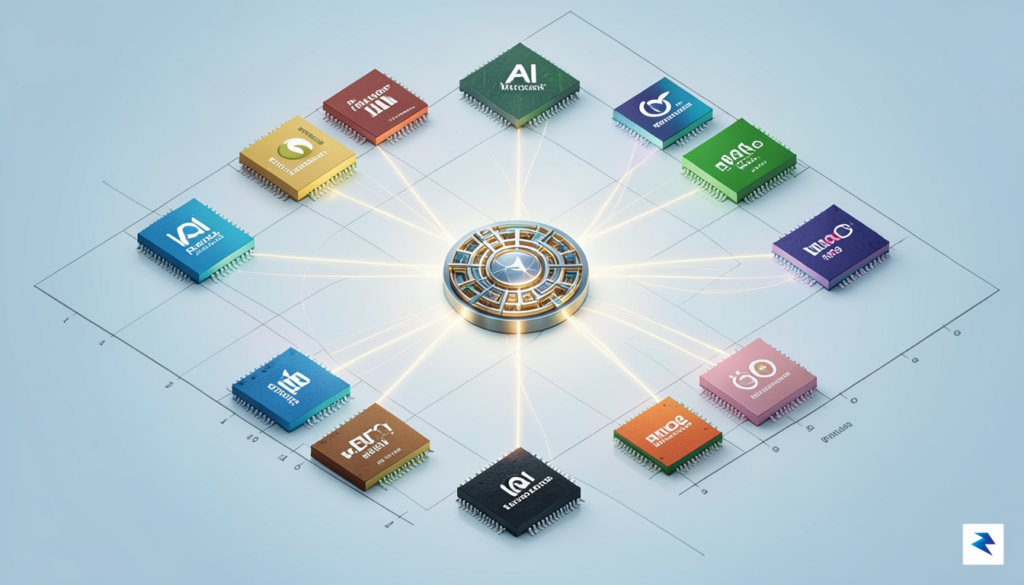
The semiconductor arena is currently defined by the overwhelming gravity of industry behemoths like Nvidia and Intel, companies that have spent decades entrenching their hardware in the very foundations of global computing. Nvidia, in particular, has built an almost impenetrable fortress around its CUDA software ecosystem, making it the default choice for researchers and enterprises alike. However, SambaNova’s recent $1 billion funding round signals that the market is beginning to tire of a “one-size-fits-all” approach to artificial intelligence. By choosing to remain independent rather than bowing to the acquisition rumors that swirled around Intel earlier this year, SambaNova is effectively betting that specialized, custom-built AI infrastructure will ultimately outperform the generalized architectures offered by the incumbents.
Remaining independent is a high-stakes gamble that carries both significant risks and transformative rewards. While an acquisition by a legacy player like Intel might have provided an immediate, comfortable exit for investors, it would have likely stifled the very innovation that makes SambaNova a unique player in the current landscape. By opting to stay the course, the company preserves its agility, allowing it to iterate on its DataScale architecture without being bogged down by the bureaucratic friction of a massive, multi-product corporation. This autonomy is essential for their mission to provide bespoke AI solutions that can handle the massive, complex models that are becoming the standard for modern enterprise applications.
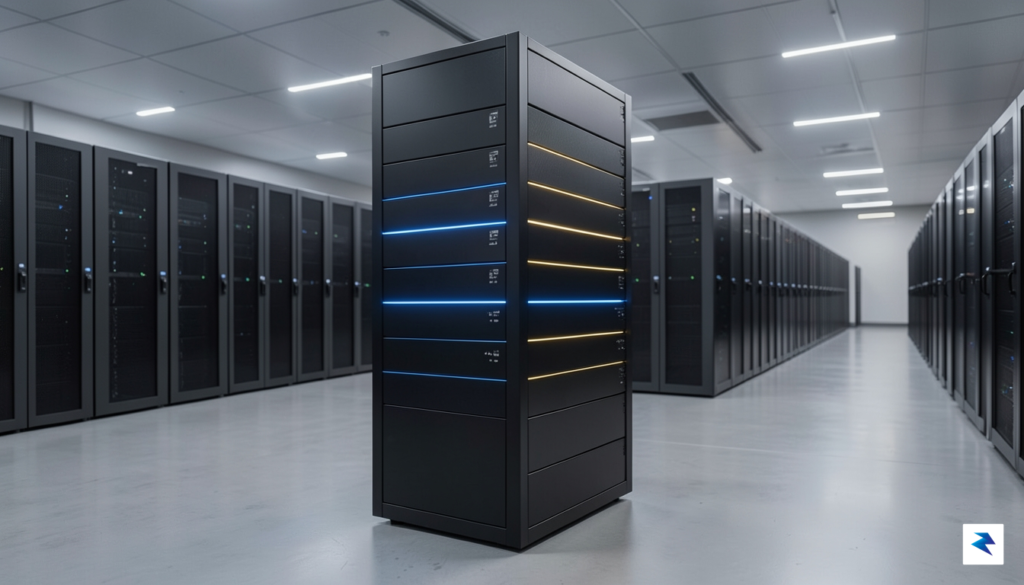
The core difference between SambaNova and the status quo lies in how they address the bottlenecks of AI compute. While Nvidia dominates through sheer volume and a pervasive software moat, SambaNova focuses on reconfigurable dataflow architectures that optimize the movement of data rather than just raw clock speed. This distinction is critical for companies training massive Large Language Models (LLMs) where memory bandwidth and data efficiency often become the primary constraints. By positioning themselves as a specialized alternative, SambaNova is not necessarily trying to replace every Nvidia chip in existence; rather, they are carving out a niche as the go-to provider for organizations that require high-performance, cost-effective inference and training for massive, proprietary models.
The decision to refuse acquisition offers serves as a clear declaration: SambaNova believes that the future of AI hardware belongs to companies that can design vertically integrated, specialized systems rather than those reliant on the legacy infrastructure of the previous computing era.
Ultimately, the challenge for SambaNova is to scale their production and ecosystem adoption fast enough to remain relevant in a market that moves at breakneck speed. Competing against titans requires not only superior hardware performance but also a developer experience that is frictionless enough to lure engineers away from the comfort of CUDA. If they can continue to secure capital at these valuations, they gain the runway necessary to build that ecosystem, potentially shifting the balance of power from general-purpose GPU computing toward a new, more efficient paradigm of dedicated AI hardware. The coming years will reveal whether this independence proves to be their greatest strategic advantage or a perilous path in an industry where consolidation is often the norm.

Securing a $1 billion investment is far more than a mere validation of SambaNova’s current market standing; it represents a massive strategic war chest designed to fuel an aggressive expansion in both hardware innovation and market accessibility. With this capital injection, the company is positioned to dramatically accelerate its research and development pipeline, specifically targeting the creation of next-generation silicon architectures that can handle the exponentially growing demands of large-scale generative AI models. By doubling down on proprietary chip designs, SambaNova aims to maintain its competitive edge against industry titans by delivering superior performance-per-watt metrics, which are essential for sustainable data center operations.
Beyond the physical hardware, a significant portion of these funds is earmarked for aggressive talent acquisition and the cultivation of strategic global data center partnerships. To stay at the forefront of the artificial intelligence revolution, the company must attract the brightest minds in semiconductor engineering and machine learning software. By strengthening its workforce and expanding its physical footprint, SambaNova is signaling to the global market that it is ready to support the infrastructure needs of the world’s largest enterprises as they move from pilot projects to full-scale AI deployment.

While cutting-edge hardware provides the raw power, the true differentiator for SambaNova in the enterprise sector is the SambaNova Suite. This software layer is designed to demystify complex AI workflows, allowing teams that lack deep technical expertise in machine learning to leverage powerful language models effectively. By abstracting away the underlying hardware complexities, the suite ensures that enterprises can focus on data security, regulatory compliance, and business outcomes rather than the intricate engineering required to maintain high-performance clusters.
The core of SambaNova’s strategy is not just creating a faster chip, but creating a more usable ecosystem that allows non-technical enterprise teams to turn raw data into actionable intelligence without compromising on safety or performance.
In the current landscape, where data privacy and sovereignty are paramount, the ability to deploy enterprise-grade AI securely remains the single biggest hurdle for most organizations. By investing heavily in the software ecosystem, SambaNova is effectively lowering the barrier to entry for corporations that have been hesitant to adopt AI due to its traditionally high technical overhead. This approach not only broadens their customer base but also cements their position as a critical partner for businesses looking to integrate intelligent automation into their core daily operations.

The massive capital injection into SambaNova signals a pivotal transition in the artificial intelligence landscape: the market is finally moving beyond the novelty of large language models and into the grueling, high-stakes era of industrial-scale implementation. For years, the AI narrative was dominated by software breakthroughs and conversational capability, but the spotlight has now shifted toward the physical infrastructure required to make these tools reliable, secure, and economically viable for the Fortune 500. By securing an $11 billion valuation, SambaNova is positioning itself as the backbone for enterprises that can no longer rely on general-purpose processors to handle the complex, data-heavy demands of private AI environments.
This shift represents a fundamental realization among corporate leaders that “good enough” hardware is no longer sufficient to maintain a competitive advantage. As companies move from experimental pilot programs to full-scale production, they are encountering the “AI deployment gap”—the disconnect between wanting to deploy powerful models and having the efficient, dedicated silicon to run them without incurring astronomical cloud costs. The success of independent, full-stack chipmakers suggests that the next phase of the AI gold rush will be defined by specialized performance. Organizations are increasingly willing to pay a premium for hardware that offers lower latency, superior energy efficiency, and tighter integration with proprietary internal data sets.

The winners of the next decade will not necessarily be the companies with the most data, but those with the most efficient engines to process it.
Looking ahead over the next 24 months, we should expect a significant diversification of the hardware landscape as the dominance of traditional GPU manufacturers is challenged by these specialized innovators. The tech ecosystem is likely to experience a decoupling where enterprises prioritize sovereignty and performance over off-the-shelf, one-size-fits-all solutions. This trend will force traditional tech giants to either pivot their strategies toward more vertical-specific hardware or risk losing ground to agile disruptors who are building chips from the ground up specifically for enterprise-grade workloads.
Ultimately, this funding round is a strong indicator that the industry is entering a more mature, infrastructure-heavy cycle. As the hype surrounding consumer-facing chatbots begins to settle, the real value creation will occur in the background, driven by specialized silicon that turns raw data into actionable enterprise intelligence. Companies that invest in this foundational layer today are essentially building the digital factories of the future, ensuring they have the technical resilience to scale their AI initiatives without being held hostage by limited, generic compute resources.
You must be logged in to post a comment.