
BlackRock and JPMorgan Join Forces to Revolutionize UK Financial Markets
The New Frontier: UK Financial Markets and Tokenization At its core, asset tokenization represents the digital transformation of real-world…


For years, SBI Holdings has been a trailblazer in the Japanese financial sector, consistently exploring how distributed ledger technology could revolutionize traditional banking and securities trading. Initially, the firm focused its efforts on private, permissioned enterprise blockchains—a common choice for major institutions seeking to balance innovation with strict regulatory compliance and centralized control. However, these legacy systems frequently encountered bottlenecks, struggling to handle the high volume of transactions required for real-time financial products. As the landscape of digital assets evolved, SBI recognized that the constraints of these siloed environments were becoming a barrier to global scalability and liquidity, prompting a necessary reevaluation of their underlying infrastructure strategy.
The transition toward Solana represents a departure from these limited enterprise architectures, favoring a public, high-performance network that can mirror the speed of traditional financial markets. Solana’s unique architecture, characterized by its Proof-of-History consensus mechanism and massive throughput capabilities, offers the low-latency environment that institutional finance demands. Unlike older blockchains that often suffer from congestion and exorbitant transaction fees, Solana provides a seamless experience for tokenizing real-world assets and managing stablecoin issuance at scale. By leveraging this efficiency, SBI is positioning itself to provide institutional-grade financial services that remain responsive even during periods of extreme market volatility, ensuring that their digital offerings remain competitive on a global stage.

This strategic pivot is best exemplified by the establishment of the SBI Solana Global joint venture, a collaboration designed to bridge the gap between traditional banking infrastructure and the decentralized future. Through this partnership, SBI is not merely experimenting with blockchain; they are actively building the plumbing for a new tokenized financial ecosystem. By aligning with a network that prioritizes speed and cost-effectiveness, the company is demonstrating a clear understanding that the future of institutional finance relies on interoperability and accessibility. This move marks a significant milestone, suggesting that major financial conglomerates are increasingly comfortable embracing public blockchain networks to deliver the next generation of financial products, provided the underlying technology can meet the rigorous demands of institutional reliability and performance.
The decision to pivot to Solana underscores a fundamental shift in institutional strategy: prioritizing high-throughput, low-latency public networks over restrictive private chains to achieve the scale necessary for mass-market financial adoption.
Ultimately, the move reflects a broader realization that the financial industry cannot remain isolated from the broader blockchain ecosystem if it hopes to remain relevant. By integrating with a network as robust and developer-friendly as Solana, SBI Holdings is effectively future-proofing its operations. This transition allows them to move beyond the limitations of legacy enterprise systems, enabling the issuance of stablecoins and tokenized assets that can interact seamlessly with global digital markets. As these initiatives continue to mature, they will likely serve as a blueprint for other global financial institutions looking to modernize their infrastructure through public blockchain integration.
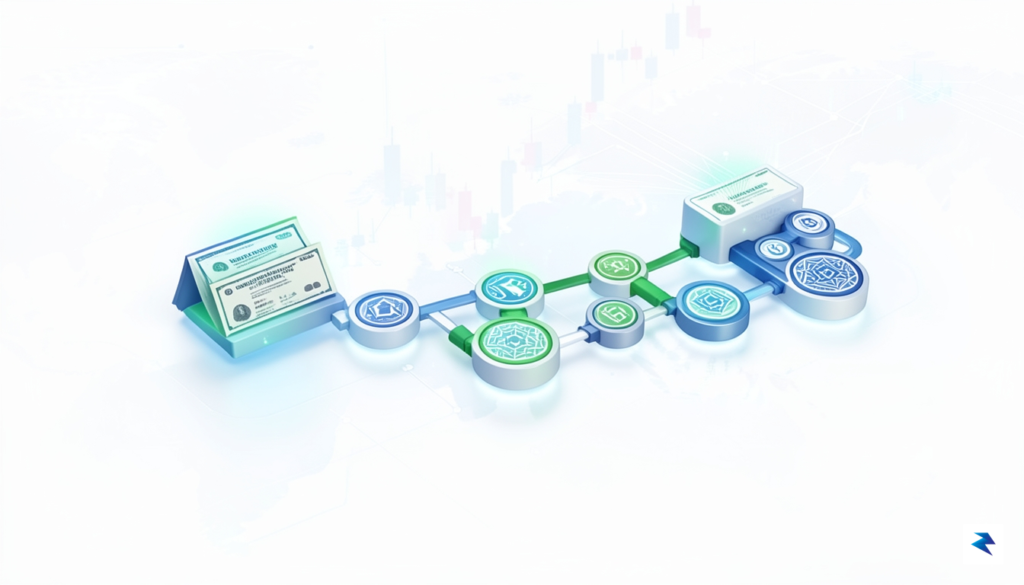
At its core, institutional tokenization represents the bridge between legacy financial systems and the programmable efficiency of distributed ledger technology. Unlike retail-focused cryptocurrency projects that often prioritize decentralization above all else, institutional tokenization operates within a strictly regulated framework where identity verification, legal compliance, and asset backing are non-negotiable prerequisites. By converting traditional financial instruments—such as bonds, real estate, or private equity—into digital tokens, entities like SBI Holdings are effectively digitizing the “source of truth” for ownership, allowing for a level of operational agility that paper-based systems simply cannot match.

The primary advantage of this shift lies in the transformation of fragmented, illiquid markets into highly efficient, tradable ecosystems. In the traditional financial world, settling a transaction can take days due to clearinghouses and intermediary manual processes. Tokenization enables 24/7 automated settlement, drastically reducing counterparty risk and freeing up capital that would otherwise be trapped in transit. Furthermore, fractional ownership allows large-scale institutional assets to be subdivided into smaller, accessible units, democratizing investment opportunities while maintaining the rigorous oversight expected by financial regulators.
Tokenization is not merely a technological upgrade; it is a fundamental shift in how value is recorded, transferred, and governed in the global economy, moving us away from siloed ledgers toward a unified, real-time financial infrastructure.
To operate at this scale, security measures must move beyond standard encryption to include institutional-grade custody solutions, multi-signature governance, and smart contract auditing. This is where the choice of blockchain architecture becomes critical. Solana’s high-performance, monolithic structure provides the sub-second finality necessary for high-frequency financial operations, ensuring that once a transaction is recorded, it is virtually irreversible and immediately verifiable. By leveraging Solana’s unique Proof-of-History consensus mechanism, SBI Holdings can achieve the throughput required for enterprise-grade stablecoin issuance and tokenized asset management without the bottlenecks often associated with legacy blockchains.
Ultimately, the transition toward these high-speed networks allows institutions to provide transparency to their clients in real-time. By utilizing an immutable ledger, every movement of a tokenized asset can be tracked, audited, and reconciled instantly. This creates a feedback loop of trust that replaces the opaque, slow-moving audit trails of the past, setting a new gold standard for transparency in the financial services sector as it continues its inevitable migration onto the blockchain.
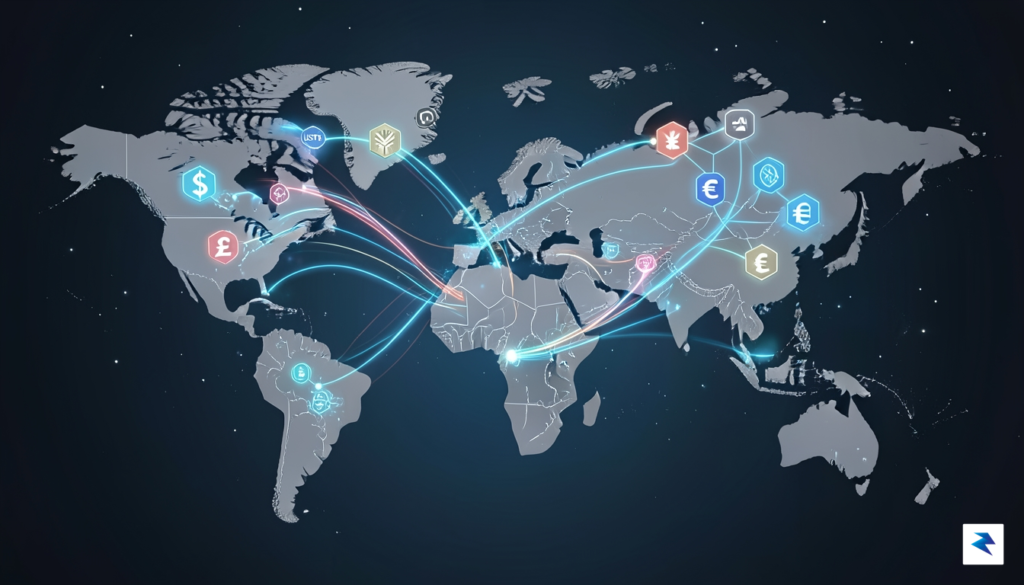
Stablecoins serve as the vital connective tissue between legacy fiat currency systems and the burgeoning decentralized finance ecosystem. By leveraging the Solana blockchain, SBI Holdings is positioning itself to bypass the archaic bottlenecks of the traditional correspondent banking system, which often relies on a convoluted web of intermediaries that inflate costs and delay settlement times. Unlike the SWIFT network, which can keep capital in limbo for days due to manual reconciliations and time-zone discrepancies, stablecoins issued on a high-performance ledger allow for near-instantaneous global value transfer. This shift represents a fundamental upgrade in how liquidity is managed, moving from slow, batch-processed messaging to a model of atomic settlement where the movement of the asset is the settlement itself.

The decision to deploy these assets on a Layer-1 network like Solana, rather than opting for a Layer-2 scaling solution, highlights a strategic focus on native integration and raw performance. While Layer-2 solutions offer impressive scalability, they often introduce additional complexity regarding liquidity fragmentation and bridge security. By anchoring directly to Solana’s high-throughput base layer, SBI ensures that their stablecoins benefit from the network’s inherent speed and low-latency finality without the risks associated with cross-chain interoperability. This architectural choice is essential for institutional-grade stability, providing a unified liquidity pool that can handle massive volumes of cross-border remittances without the congestion typically seen on older, proof-of-work alternatives.
The integration of stablecoins into institutional payment rails is not merely a technological upgrade; it is a fundamental reconfiguration of capital efficiency that reduces the friction of global trade.
Operating within Japan’s sophisticated regulatory framework, SBI Holdings must navigate stringent requirements regarding reserve transparency and issuer accountability. Japanese authorities have set a global benchmark for stablecoin oversight, mandating that issuers maintain high-quality liquid assets to back every token in circulation. This regulatory rigor provides a layer of trust that is currently missing from many offshore, unregulated stablecoin projects, making SBI’s initiative particularly attractive to risk-averse financial institutions. By meeting these high standards, SBI is effectively legitimizing the use of programmable money for enterprise-level operations, signaling to the broader market that compliant, blockchain-native finance is not only viable but inevitable.
Ultimately, the most significant impact of this initiative will be felt by the end-user, who stands to gain from drastically reduced transaction costs. Traditional cross-border transfers often involve hidden fees, currency conversion markups, and multiple middleman charges that erode the value of the principal amount. By streamlining the payment pipeline through Solana, SBI Holdings can offer a more transparent and cost-effective alternative. As these efficiencies filter through the financial system, we can expect a ripple effect where smaller, frequent international payments—previously unviable due to high overhead—become routine, unlocking new economic opportunities for businesses and consumers alike.

The direct inclusion of the Solana Foundation in SBI Holdings’ ambitious blockchain initiative marks a pivotal moment, transforming what might otherwise be perceived as a regional pilot into a significant global benchmark for institutional blockchain adoption. This isn’t merely a collaboration with a technology provider; it’s a deep strategic alignment with the very stewards of the Solana ecosystem. Such a partnership signals a robust commitment not only to the technical execution of tokenization and stablecoin issuance but also to the long-term health, security, and global interoperability of the underlying blockchain infrastructure itself.
At its core, the Solana Foundation serves as a critical nexus for ecosystem development, providing essential technical expertise, fostering innovation, and ensuring the network’s foundational robustness. Its involvement in the SBI venture means direct access to core development teams and a commitment to maintaining a high standard of performance, security, and scalability—attributes indispensable for regulated financial services. The Foundation’s role extends to guiding best practices for smart contract development, ensuring network upgrades are seamless, and championing the broader adoption of Solana’s high-throughput, low-latency architecture across diverse applications. This hands-on approach ensures that the infrastructure remains cutting-edge and capable of handling the stringent demands of global finance.
Furthermore, the Solana Foundation’s direct endorsement and active participation act as a powerful validator, significantly bolstering institutional confidence in Solana as a viable and future-proof platform. For traditional financial institutions, often cautious about emerging technologies, seeing a formal, well-governed entity like the Solana Foundation at the helm provides immense reassurance regarding stability and longevity. This strategic partnership effectively de-risks the exploration phase for other major players, signaling that Solana is not just a promising technology but a mature ecosystem with dedicated oversight and a clear roadmap for enterprise-grade applications. It essentially provides a blueprint and a stamp of approval that can accelerate broader institutional interest and subsequent adoption across the financial landscape.
Crucially, this partnership underscores the importance of decentralized network governance in building enduring trust, especially within highly regulated financial sectors. The Solana Foundation, while acting as a central coordinating body for ecosystem growth, operates within the broader context of Solana’s decentralized network, ensuring that the infrastructure remains resilient, censorship-resistant, and aligned with community-driven principles. This balance between centralized guidance and decentralized execution is vital for achieving global compliance standards and assuring financial institutions that their digital assets will reside on an infrastructure that is both innovative and incredibly stable against single points of failure. Such an arrangement is key to fostering the kind of long-term reliability and transparency that underpins global financial systems.
In essence, the Solana Foundation’s deep involvement transcends a mere technical collaboration; it transforms SBI’s initiative into a potential global standard-setter for tokenization and stablecoin issuance on public blockchains. By marrying SBI’s financial acumen with the Foundation’s dedication to ecosystem integrity and growth, this partnership lays a robust foundation for broader institutional engagement with decentralized finance. It is a clear statement that the future of global finance will increasingly leverage high-performance, secure, and credibly governed blockchain networks, with Solana poised to play a leading role in this transformative shift.

The transition toward blockchain-based financial systems is rarely a matter of technological capability alone; rather, the true bottleneck has always been the complex, often opaque regulatory frameworks that govern institutional finance. In Japan, the Financial Services Agency (FSA) has taken a measured, deliberate approach to crypto-assets, prioritizing investor protection and anti-money laundering protocols above rapid, unchecked expansion. SBI Holdings’ strategic pivot to Solana is not merely a technical choice for speed or throughput; it is a calculated effort to operate within these rigorous guardrails. By aligning its tokenization and stablecoin infrastructure with the Japanese government’s evolving stance on digital assets, SBI is positioning itself as a bridge between traditional banking stability and the agility of decentralized ledger technology.

Adopting a “compliance-first” architecture is essential for any institution looking to bridge the gap between legacy systems and the future of decentralized finance. This approach involves embedding regulatory requirements—such as KYC (Know Your Customer) and AML (Anti-Money Laundering) checks—directly into the smart contracts and token protocols from the outset. Rather than attempting to force existing blockchain protocols to conform to retrofitted legal standards, SBI is leveraging the high-performance nature of Solana to build a framework where compliance is automated and immutable. This methodology transforms regulatory friction from a barrier to entry into a competitive advantage, ensuring that every transaction remains transparent and verifiable in the eyes of domestic and international regulators.
The integration of institutional-grade compliance into blockchain architecture is the single most important catalyst for moving crypto assets from a niche speculative tool into the foundational layer of the global monetary system.
Looking ahead toward 2030, this initiative serves as a litmus test for how global banking norms will shift in the coming decade. As Japan continues to refine its legislative framework for stablecoins, the success of SBI’s partnership with Solana could provide a blueprint for other G7 nations to follow. If regulators can witness a secure, compliant, and highly efficient tokenization platform operating at scale, it will likely accelerate the adoption of central bank digital currencies (CBDCs) and institutional tokenized deposits. Ultimately, SBI’s gamble is not just about a single network; it is about establishing a precedent where innovation does not sacrifice compliance, thereby creating a sustainable ecosystem that can withstand the scrutiny of the world’s most demanding financial authorities.
You must be logged in to post a comment.