
Microsoft Retools Windows 11 Search: A Move Toward a Cleaner Experience
The Shift Toward a Cleaner Windows Experience For years, users have watched the Windows search interface gradually evolve from a precise,…


In the high-stakes arena of artificial intelligence, few companies have managed to capture the market’s imagination as swiftly as PixVerse. By securing a staggering $439 million in its latest funding round, the startup has vaulted into the “unicorn” club with a valuation exceeding $2 billion, signaling a definitive shift in the investment landscape. This massive influx of capital is not merely a reflection of investor enthusiasm; it is a strategic acknowledgment that the battleground of generative AI is moving beyond text-based models and static images. As venture capital firms pivot their focus toward more complex, computationally demanding architectures, PixVerse has effectively positioned itself at the epicenter of a new creative revolution.

The significance of this milestone becomes clear when viewed against the broader backdrop of current venture capital trends. While the initial wave of the AI boom was defined by the rapid adoption of Large Language Models (LLMs), the industry has reached a point of saturation where innovation is measured by capability depth rather than mere existence. Video generation is widely considered the “next frontier” because it demands a far more sophisticated understanding of physics, temporal consistency, and narrative structure than a simple chatbot. PixVerse has managed to bridge the gap between abstract technical potential and tangible, high-fidelity results, effectively outperforming older industry benchmarks that struggled to maintain coherence in longer sequences.
“The valuation of PixVerse is a clear signal that the market is no longer satisfied with simple AI-generated text; we are entering the era of cinematic synthesis, where the barrier between human imagination and digital output is becoming increasingly porous.”
To understand why this funding is so transformative, one must look at the competitive landscape. Whereas previous entrants in the video generation space often faced criticism for jittery frames or nonsensical visual artifacts, PixVerse has leaned heavily into fine-tuning the temporal stability of its outputs. Their rapid ascent highlights a growing preference among institutional investors for startups that can demonstrate immediate utility across professional workflows, such as film production, advertising, and gaming. By successfully scaling their infrastructure to support high-definition video synthesis, they have set a new performance standard that forces incumbents to accelerate their development timelines or risk obsolescence. This $439 million injection ensures that PixVerse has the runway to not only sustain this momentum but to aggressively expand its model’s capabilities, firmly cementing its status as a foundational pillar in the future of visual content creation.

Securing nearly half a billion dollars is far more than a simple financial triumph; it represents a powerful declaration of intent from PixVerse. This substantial capital injection, totaling an impressive $439 million, underscores the company’s ambitious vision to not only solidify its position but also aggressively expand its leadership in the burgeoning AI video generation market. In an arena that is rapidly becoming more crowded and competitive, this funding provides the critical resources needed to strategically outpace rivals and set new benchmarks for innovation and capability. It is a clear signal that PixVerse is committed to long-term growth and sustained technological advancement, leveraging this investment to build a more robust and future-proof operation.
A significant portion of this fresh capital is earmarked for dramatically scaling PixVerse’s compute infrastructure, which forms the very backbone of its AI operations. This investment will primarily target the acquisition and deployment of advanced GPU clusters, essential for handling the immense computational demands of real-time video generation, complex model training, and high-fidelity rendering. By bolstering its hardware capabilities, PixVerse aims to significantly reduce processing times, enhance the quality and realism of its AI-generated content, and support an ever-expanding suite of sophisticated features, ensuring a seamless and powerful experience for its growing user base. Such robust infrastructure is paramount for maintaining a competitive edge and delivering cutting-edge solutions in a resource-intensive field.
Beyond hardware, a substantial investment will also flow into pioneering research and development efforts, which are indispensable for any company operating at the forefront of generative AI. This R&D focus will enable PixVerse to push the boundaries of what’s possible in AI video, exploring novel algorithms for greater visual fidelity, developing more intuitive user interfaces, and enhancing the emotional depth and narrative coherence of generated content. Dedicated teams will be tasked with improving model accuracy, reducing latency, and creating entirely new creative tools that empower users with unprecedented capabilities. This continuous pursuit of innovation is crucial for staying ahead in a rapidly evolving technological landscape and consistently delivering groundbreaking features that truly differentiate PixVerse.
However, technology alone is insufficient to drive truly transformative change; therefore, a critical allocation of funds is dedicated to securing and nurturing elite global talent. PixVerse plans to aggressively expand its team, recruiting top-tier AI researchers, machine learning engineers, software developers, and product specialists from around the world. Attracting these brilliant minds is paramount for solving the intricate challenges inherent in advanced AI development, fostering a culture of innovation, and translating cutting-edge research into practical, user-friendly applications. This strategic recruitment drive ensures that the company not only has the best tools but also the most capable individuals to wield them effectively and creatively, driving both technological and artistic breakthroughs.
Ultimately, the synergy between robust compute infrastructure, continuous research and development, and an expanded pool of exceptional talent will serve as the primary engine for PixVerse’s future growth. This comprehensive investment strategy is designed to accelerate the company’s ability to innovate faster, deliver higher quality products, and expand its market reach. By strategically deploying its newly acquired capital across these vital areas, PixVerse is not just building a product; it is cultivating an ecosystem poised to redefine the landscape of digital content creation, empowering creators and businesses with unparalleled generative AI capabilities. The future of AI video, driven by such foundational investments, promises to be more dynamic and accessible than ever before, setting a new standard for creative potential.

At the heart of PixVerse’s recent breakthrough lies a fundamental shift from standard diffusion models to a more robust “world model” architecture. While traditional video AI often treats each frame as a standalone puzzle piece—leading to the infamous “jitter” or morphing shapes that have plagued early generative efforts—a world model operates with an internal, simulated understanding of physical reality. By training on vast datasets that encapsulate the laws of motion, lighting, and spatial depth, this system doesn’t just predict the next set of pixels; it predicts how an object should behave within a three-dimensional environment. This distinction is the difference between a system that merely mimics visual patterns and one that respects the underlying structure of the physical world.
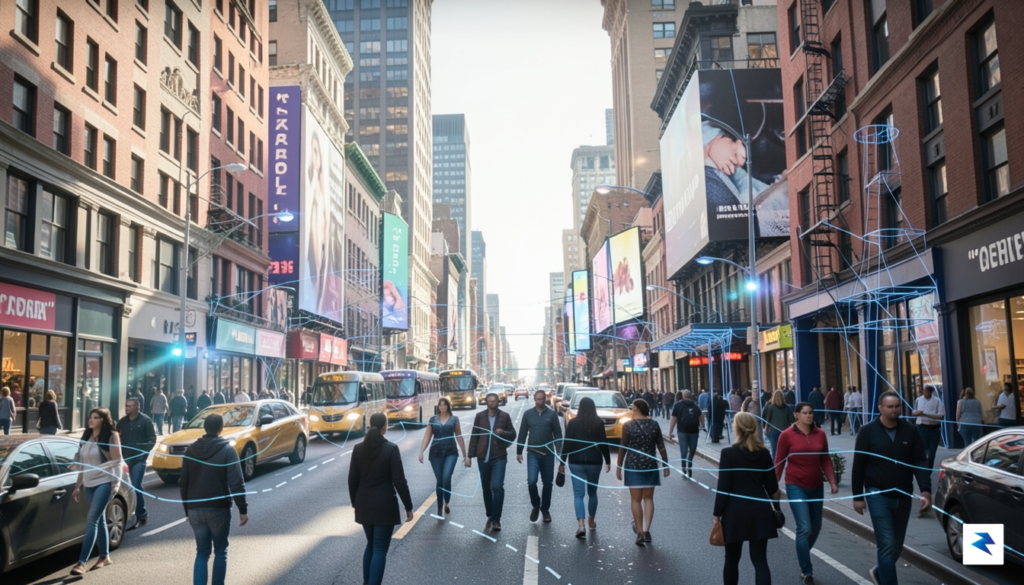
The primary advantage of this approach is its superior grasp of spatial and temporal consistency. In legacy generative models, if a character walked behind a tree, the AI would frequently lose track of that character’s identity or position once they emerged on the other side. PixVerse’s world model effectively maintains a “memory” of the scene’s geometry, ensuring that shadows remain anchored to their light sources and that objects moving through the frame do not randomly change size or texture. By enforcing these physical constraints during the rendering process, the technology significantly reduces the common “AI artifacts”—such as melting limbs or flickering backgrounds—that typically break immersion in long-form video content.
The leap to a true world model transforms AI from a basic image-generation tool into a sophisticated physics engine capable of maintaining narrative coherence over minutes rather than seconds.
Furthermore, this architecture allows for a more granular level of control over complex scenes. Instead of relying on randomized noise to fill in the gaps between frames, the model utilizes a predictive framework that understands cause and effect within a virtual space. For creators, this means that camera movements feel more organic and less like a series of disjointed slides. As the system continues to evolve, the ability to simulate high-fidelity physics will likely become the industry standard for everything from professional film pre-visualization to interactive virtual environments. By closing the gap between generative synthesis and deterministic physics, PixVerse is positioning itself to handle the rigorous demands of cinematic storytelling, where even the slightest break in visual logic can ruin the audience’s suspension of disbelief.

The generative video landscape has rapidly evolved from a niche experimental field into a high-stakes arena dominated by well-funded heavyweights. With PixVerse securing a massive $439 million investment and pushing its valuation past the $2 billion mark, the startup has effectively signaled that it is no longer just a challenger—it is a primary contender. While OpenAI’s Sora stunned the world with its cinematic fidelity and temporal consistency, and Runway’s Gen-3 continues to be the gold standard for creative control and professional pipelines, PixVerse is carving out a unique space by balancing high-end architectural efficiency with aggressive democratization. The battle for market dominance is no longer just about who can produce the most realistic pixels; it is about who can build the most reliable bridge between raw creative intent and studio-grade output.
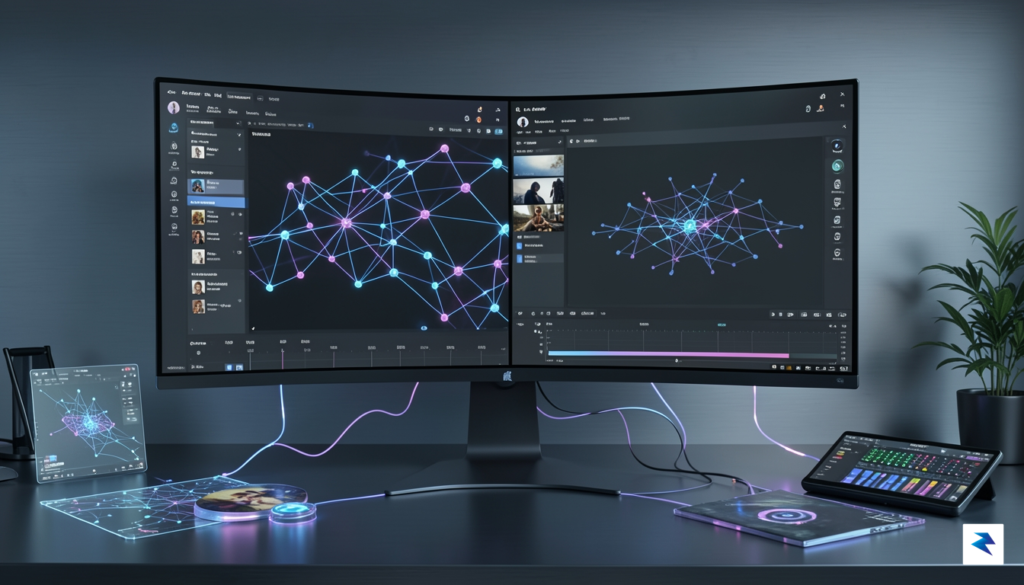
A significant part of the competitive tension lies in how these companies handle the underlying “world models” that dictate how AI understands physics and motion. OpenAI has leaned heavily into the concept of a universal simulator, aiming for a degree of physical accuracy that borders on reality, which often requires immense computational overhead. In contrast, PixVerse has focused on a more modular architectural approach, prioritizing the speed of iteration and the accessibility of high-quality generation for creators who may not have access to enterprise-grade supercomputers. By optimizing its diffusion models to be both lightweight and expressive, PixVerse is betting that the winning product won’t necessarily be the one that is the most technically complex, but the one that integrates most seamlessly into the daily workflows of independent filmmakers, social media creators, and marketing professionals.
The core of the generative video war is shifting: as model quality hits a plateau of “near-perfection,” the competitive moat will be built on user experience, latency, and the depth of creative control tools.
To truly challenge Runway’s established lead, PixVerse must continue to prove that its tools offer more than just “text-to-video” magic; they must offer precision. Runway has successfully maintained its dominance by providing creators with granular control—such as motion brushes, camera controls, and temporal consistency tools—that allow for deliberate storytelling rather than random generation. PixVerse’s recent funding suggests they are preparing to scale these exact capabilities. If they can successfully pair their architectural efficiency with a suite of professional-grade editing features, they will likely lure away users who find current incumbents too expensive or too cumbersome to integrate into rapid-turnaround projects. The race is now firmly centered on efficiency, and with $439 million in the bank, PixVerse has the runway to turn that efficiency into a dominant ecosystem.

With a fresh infusion of $439 million, PixVerse is moving aggressively to transition from a burgeoning startup into a global powerhouse in the generative AI video sector. The company’s strategic roadmap prioritizes rapid geographic expansion, aiming to establish localized operations and data centers across North America, Europe, and Asia to better serve an increasingly diverse user base. By planting these roots internationally, PixVerse hopes to reduce latency, improve localized language support, and navigate the fragmented regulatory landscapes that govern digital content in different jurisdictions. However, this push into new markets is not merely a logistical challenge; it requires a sophisticated approach to data privacy, ensuring that the company remains fully compliant with stringent frameworks like the GDPR in Europe and evolving AI governance models elsewhere.
As PixVerse scales its operations, the leadership team recognizes that the true measure of their success will lie in their ability to balance rapid innovation with uncompromising ethical standards. The power of generative video tools carries inherent risks, particularly regarding the potential for deepfakes, the spread of misinformation, and the unauthorized use of intellectual property. To address these concerns, the startup is heavily investing in robust safety infrastructure, including advanced provenance tracking and automated content moderation systems designed to detect and block malicious outputs. These safeguards are being integrated directly into the core model architecture, ensuring that ethical guardrails are a foundational element of the technology rather than an afterthought.
“Our mission is to empower human creativity, but that empowerment is hollow without a bedrock of trust and safety,” the company noted in a recent internal strategy briefing regarding their deployment of new integrity-focused AI protocols.

Furthermore, PixVerse is actively engaging with policy experts and academic institutions to refine their ethical frameworks, ensuring they remain ahead of the curve as synthetic media becomes more indistinguishable from reality. This proactive stance on safety serves a dual purpose: it protects the public from potential misuse while simultaneously building the institutional trust required for long-term commercial partnerships with media conglomerates and advertising agencies. By prioritizing transparency and accountability, the company aims to set a new industry benchmark, proving that rapid valuation growth and responsible AI development can—and must—coexist to ensure a sustainable future for the entire generative media ecosystem.
You must be logged in to post a comment.