
Spider Venom: The Breakthrough Weapon Against Varroa Mites
The Varroa Mite Crisis: A Threat to Global Pollination The Varroa destructor mite is far more than a simple external parasite; it is the…


The periodic warming of the equatorial Pacific Ocean, known as El Niño, has long been a natural rhythm of our planet’s climate. However, the climate crisis is fundamentally altering this cycle, pushing it into a dangerous new territory characterized by the emergence of “super” El Niño events. Meteorologically defined by sea surface temperatures that soar significantly above the long-term average, these intense episodes act as a force multiplier for global instability. Unlike standard cycles, a super El Niño releases an unprecedented amount of heat into the atmosphere, causing global average temperatures to spike in a manner that disrupts the delicate balance of our weather systems across every continent.
Historically, these events have acted as grim harbingers of ecological and economic collapse. During the powerful 1997-1998 and 2015-2016 events, the world witnessed a cascading series of disasters: prolonged droughts decimated agricultural yields in sub-Saharan Africa, while torrential flooding devastated infrastructure across South America and Southeast Asia. These events do not merely shift weather patterns; they fundamentally rewrite the rules of survival for vulnerable populations. As these super events occur with greater frequency, the window for recovery between them is shrinking, leaving ecosystems—such as coral reefs and rainforests—trapped in a permanent state of trauma and degradation.
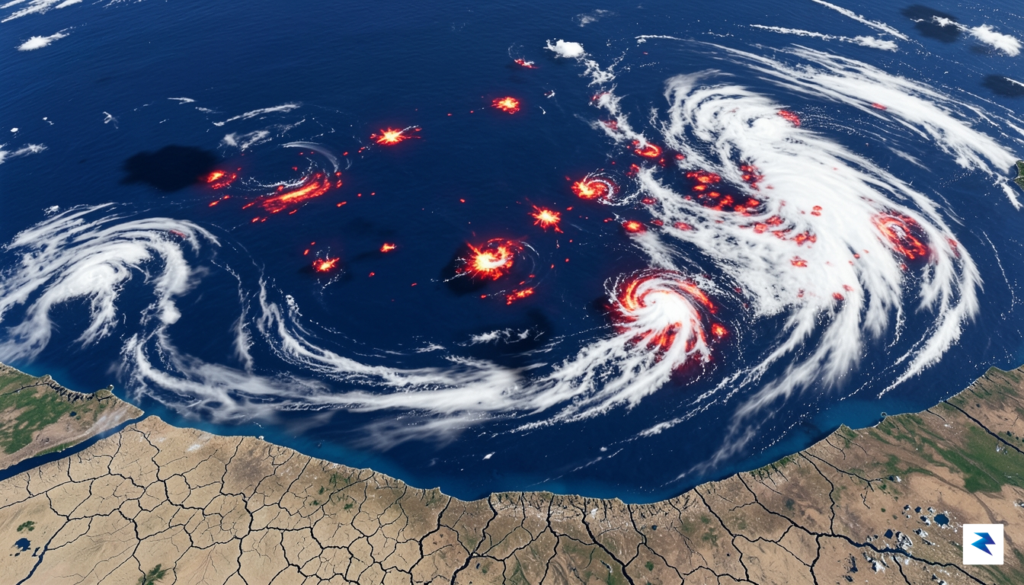
The current reality is that our existing climate mitigation strategies, primarily focused on long-term carbon sequestration and gradual energy transitions, are proving insufficient against the immediate, high-intensity shocks brought on by these warming spikes. While reducing greenhouse gas emissions remains the moral and scientific imperative for long-term stability, it does not provide the short-term cooling required to prevent the catastrophic tipping points triggered by a super El Niño. We are essentially playing a game of catch-up while the atmospheric baseline continues to shift toward a warmer, more volatile state.
The danger of a super El Niño lies not just in the heat itself, but in its ability to push already strained agricultural and social systems past their breaking points, turning localized climate events into global crises of food security and human safety.
Because the oceans are absorbing the vast majority of the heat trapped by human-induced emissions, the Pacific acts as a thermal battery, periodically dumping that energy into our weather systems. This reality forces us to confront an uncomfortable truth: even if we achieved net-zero emissions tomorrow, the heat already stored in our oceans would continue to fuel extreme El Niño events for decades to come. Consequently, the necessity of exploring “emergency” cooling measures, such as solar radiation management or dimming the sun, has moved from the realm of science fiction into the heart of urgent, high-stakes policy discussions.

At its core, solar geoengineering—often referred to as Solar Radiation Management (SRM)—represents a radical departure from traditional climate mitigation strategies like carbon capture and storage. While carbon removal aims to address the root cause of global warming by scrubbing greenhouse gases from the atmosphere, SRM focuses on the symptoms by modulating the amount of sunlight that reaches the Earth’s surface. The primary proposal within this field is stratospheric aerosol injection, a process that involves releasing reflective particles into the upper atmosphere to mimic the cooling effects naturally produced by large volcanic eruptions. By creating a thin, reflective veil, scientists believe we could bounce a small percentage of incoming solar radiation back into space, thereby inducing a temporary, artificial cooling effect to offset the thermal energy trapped by rising greenhouse gas concentrations.

The historical precedent for this technology is found in the Earth’s own geological record. When Mount Pinatubo erupted in 1991, it ejected millions of tons of sulfur dioxide into the stratosphere, creating a global haze that lowered the Earth’s average temperature by approximately 0.5 degrees Celsius for over a year. This event provided scientists with a real-world, albeit unintentional, experiment that validated the physical mechanism behind aerosol cooling. However, moving from a volcanic event to a deliberate, global-scale human intervention is a monumental leap that carries profound risks. The scientific community remains deeply divided, not necessarily on the physics of whether such a technique would cool the planet, but on the potential for catastrophic, unintended consequences. These range from the disruption of global precipitation patterns—potentially devastating agriculture in monsoon-dependent regions—to the risk of “termination shock,” a scenario where the sudden cessation of geoengineering causes global temperatures to spike upward at an unprecedented, lethal rate.
Solar geoengineering is not a substitute for cutting emissions, but rather a high-stakes emergency measure that could potentially buy humanity more time to transition to a net-zero future.
Today, the discussion surrounding SRM has shifted from the fringes of science fiction into the halls of serious academic and policy discourse. Research organizations and climate institutes are now modeling these interventions to understand how they might interact with extreme weather events, such as the intense heat and hydrological shifts brought on by El Niño cycles. While the feasibility of deploying such a system remains uncertain due to technological, ethical, and geopolitical hurdles, the consensus is shifting toward the idea that we must at least understand the risks and rewards of these tools. As the climate crisis accelerates, SRM is being framed less as a “silver bullet” and more as an emergency brake—a controversial, yet potentially necessary, mechanism to be studied with extreme caution as we face the prospect of irreversible ecological tipping points.
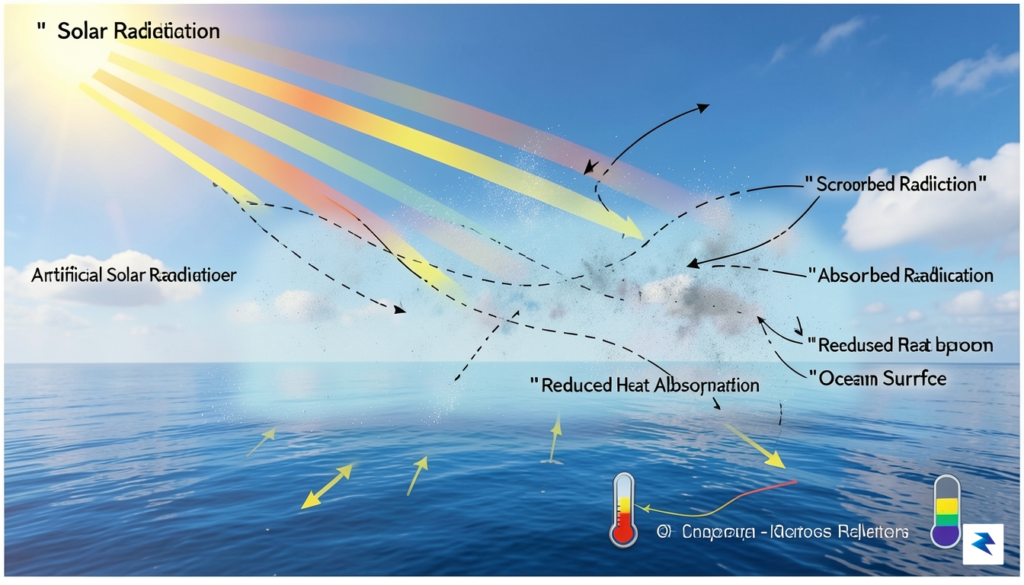
At the heart of the proposal to mitigate El Niño lies the concept of stratospheric aerosol injection, a form of solar geoengineering designed to mimic the natural cooling effects observed after massive volcanic eruptions. By strategically dispersing reflective particles—such as sulfur dioxide—into the upper atmosphere, scientists aim to increase the Earth’s planetary albedo. This process effectively bounces a small, controlled fraction of incoming solar radiation back into space before it can reach the troposphere. By reducing the net radiative forcing that reaches the surface, we can theoretically dampen the excessive thermal energy that typically accumulates in the tropical Pacific Ocean, which serves as the primary engine driving El Niño-driven climate extremes.

The mechanics of this intervention are deeply rooted in the physics of sea-surface temperature regulation. During a developing El Niño, the weakening of trade winds allows warm surface waters in the western Pacific to migrate eastward, creating a massive pool of heat that alters global weather patterns. By lowering the amount of solar energy absorbed by these vast ocean expanses, geoengineering could theoretically counteract the warming trends that feed this cycle. Essentially, if we can reduce the intensity of the solar input, we may be able to lower the sea-surface temperature anomalies that characterize a super El Niño, thereby preventing the atmosphere from reaching the critical thermal thresholds that trigger catastrophic droughts, storms, and heatwaves.
The goal is not to stop the natural phenomenon entirely, but to “turn down the thermostat” just enough to prevent the most dangerous temperature spikes that threaten global food security and infrastructure.
Furthermore, this targeted approach relies on the precise timing of aerosol deployment to interrupt the thermal buildup before it cascades into a global crisis. Researchers are utilizing sophisticated climate models to map how radiative cooling in the Pacific specifically influences the Walker Circulation—the system of air currents that governs these oceanic shifts. If the injection is calibrated correctly, it could dampen the thermal engine of El Niño without causing unintended regional disruptions. While the scientific community remains cautious about the complexities of global climate systems, the potential to “take the edge off” an incoming super El Niño represents a significant, albeit controversial, frontier in our efforts to manage the risks of a rapidly warming planet.

While the prospect of artificially cooling the planet to mitigate the catastrophic impacts of El Niño offers a tempting technological fix, the global climate is an incredibly complex, interconnected system where unintended consequences are nearly inevitable. Deploying stratospheric aerosol injection—the primary method proposed for “dimming the sun”—carries the looming threat of what experts call termination shock. This phenomenon describes a scenario where, should the solar-shielding project be suddenly halted due to geopolitical conflict, technological failure, or economic instability, the trapped greenhouse gases would cause temperatures to spike upward at an unprecedented, rapid rate. Such an abrupt transition would leave ecosystems and human societies with virtually no time to adapt, potentially resulting in even greater devastation than the warming we are currently fighting to slow.
Beyond the systemic risk of termination, we must grapple with the reality that cooling the planet is not a uniform process. Regional climate patterns are dictated by delicate heat gradients between land, ocean, and the atmosphere; artificially altering the amount of solar radiation reaching these surfaces could catastrophically disrupt vital hydrologic cycles. For instance, many climate models suggest that a global dimming strategy could significantly weaken the South Asian monsoon. Since this seasonal rainfall is the lifeblood for the agriculture of billions of people, any reduction in its intensity could trigger widespread crop failures, severe food insecurity, and massive humanitarian crises, effectively trading a global thermal crisis for a regional survival emergency.

Furthermore, our current climate modeling capabilities face significant limitations when it comes to predicting how these interventions would play out on a localized scale. While we can estimate the global average temperature change with a degree of confidence, the specific, granular effects on rainfall, wind patterns, and storm tracks remain shrouded in uncertainty. Science simply lacks the high-resolution data necessary to guarantee that a cooling effort intended to curb El Niño’s heat in one region won’t inadvertently cause severe droughts or floods in another. This “regional gamble” is arguably the greatest hurdle to solar geoengineering, as it pits the collective survival of the planet against the immediate, tangible safety of vulnerable populations in the Global South.
The core danger of manipulating our climate lies in the difference between global averages and regional realities; we cannot assume that a cooler planet will be a universally stable or prosperous one.
Ultimately, the conversation around solar intervention must move beyond the allure of quick climate relief and confront these profound scientific uncertainties. Without robust international oversight and a much deeper understanding of localized climate sensitivities, we risk initiating a planetary-scale experiment from which there is no easy exit strategy. While cooling the Earth might seem like a logical counter-measure to the extreme heat of a Super El Niño, the complexity of our atmosphere demands that we remain acutely aware of the potential to trade one set of environmental risks for another, far more unpredictable set of disasters.

While the prospect of deploying stratospheric aerosol injection to mitigate the catastrophic impacts of a super El Niño is technically compelling, it opens a Pandora’s box of ethical and geopolitical complications. The central concern, often referred to as the “moral hazard,” suggests that the mere promise of a technological “quick fix” could inadvertently dilute the political and social will to pursue the primary, necessary goal: the aggressive reduction of global carbon emissions. If nations perceive that they can simply dim the sun to temporarily mask the symptoms of a warming planet, the urgency to transition away from fossil fuels may dissipate, potentially locking humanity into a perpetual, high-stakes reliance on artificial cooling methods that come with their own unpredictable side effects.

Beyond the moral hazard, the governance of such a planetary-scale intervention presents a daunting geopolitical hurdle. Who, exactly, holds the “thermostat” for the entire world? If a single nation or a private entity were to act unilaterally, they could trigger profound shifts in regional weather patterns, potentially saving one country from a heatwave while simultaneously inducing catastrophic droughts or floods in another. This lack of centralized authority invites the danger of “climate imperialism,” where the interests of the powerful might be prioritized over the survival of vulnerable, less-developed nations. Without robust, inclusive international frameworks, the potential for conflict over environmental sovereignty is immense, as the global atmosphere is a shared resource that defies traditional borders.
The core of the dilemma lies not in the physics of cooling the planet, but in the lack of a global consensus on who has the moral authority to alter the shared environment for all of humanity.
To navigate this minefield, the international community must prioritize the creation of transparent, science-based governance structures before any field experiments or deployments are considered. This involves more than just drafting treaties; it requires active participation from the Global South and marginalized communities who stand to lose the most from climate mismanagement. We must address several critical pillars of international cooperation to prevent the weaponization or misuse of geoengineering technologies:
Ultimately, the decision to dim the sun cannot be treated as a purely engineering challenge to be solved by scientists in a lab. It is a profound, collective decision that touches upon the sovereignty of every nation and the safety of every ecosystem. If we are to consider such a drastic intervention, we must do so with the understanding that we are tinkering with the life-support systems of our planet, and any mistake could prove far more costly than the climate phenomena we are attempting to tame.

As we navigate an era defined by record-breaking heat and increasingly volatile weather patterns, the prospect of solar geoengineering presents a profound dilemma. While the ability to dim the sun—even temporarily—could theoretically blunt the sharpest edges of extreme phenomena like super El Niño events, we must remain grounded in the reality that such interventions are not a cure for our planet’s underlying ailment. Relying on technological fixes to mask the symptoms of a warming climate risks creating a dangerous sense of complacency, potentially stalling the urgent transition away from fossil fuels. Consequently, solar radiation management must be viewed not as a permanent policy pillar, but as a high-stakes, emergency contingency plan that carries significant, poorly understood systemic risks.
The core of our strategy must remain steadfastly anchored in aggressive, global decarbonization. Reducing the concentration of greenhouse gases in our atmosphere is the only mechanism that directly addresses the root cause of our climate instability. Mitigation is not merely an environmental goal; it is a fundamental requirement for long-term survival. Any conversation regarding geoengineering must be framed within this context: these speculative tools should never be positioned as a replacement for the hard work of transforming our energy, transportation, and industrial systems. If we allow ourselves to view the sun-dimming concept as an “easy out,” we invite catastrophic consequences, including the potential for “termination shock,” where a sudden cessation of geoengineering could cause global temperatures to spike at a rate far faster than the biosphere can adapt.

The pursuit of solar geoengineering is a testament to human ingenuity, but it is also a reminder of our limitations. We cannot engineer our way out of a crisis caused by systemic imbalance without first correcting the imbalance itself.
Moving forward, the international community must foster a rigorous, transparent, and inclusive scientific inquiry into all potential climate solutions, including the controversial field of solar radiation management. This research must be governed by strict ethical frameworks that ensure any experimentation or large-scale deployment is subject to global consensus and oversight. We need to understand the unintended consequences—such as shifts in monsoon patterns or disruptions to agricultural yields—that might arise from altering the planet’s albedo. By prioritizing transparency and international cooperation, we can evaluate these technologies with the caution they deserve, ensuring that our pursuit of stability does not accidentally trigger new, unforeseen disasters.
Ultimately, a multi-layered strategy is our best hope for a resilient future. This approach demands that we treat emission reduction as the non-negotiable priority while simultaneously developing a sophisticated understanding of climate intervention technologies. By balancing our focus between deep-rooted systemic change and prudent, science-led contingency planning, we can better safeguard the planet against the escalating risks of a warming world. We must remain vigilant, recognizing that while the clouds of uncertainty are gathering, the path toward a stable climate remains paved with the concrete, immediate actions we take today to lower our global footprint.
You must be logged in to post a comment.