
The Best Robotic Pool Cleaners of 2026: A Comprehensive Buyer’s Guide
The Evolution of Autonomous Pool Maintenance For decades, the ritual of pool ownership was inextricably linked to the grueling physical labor…

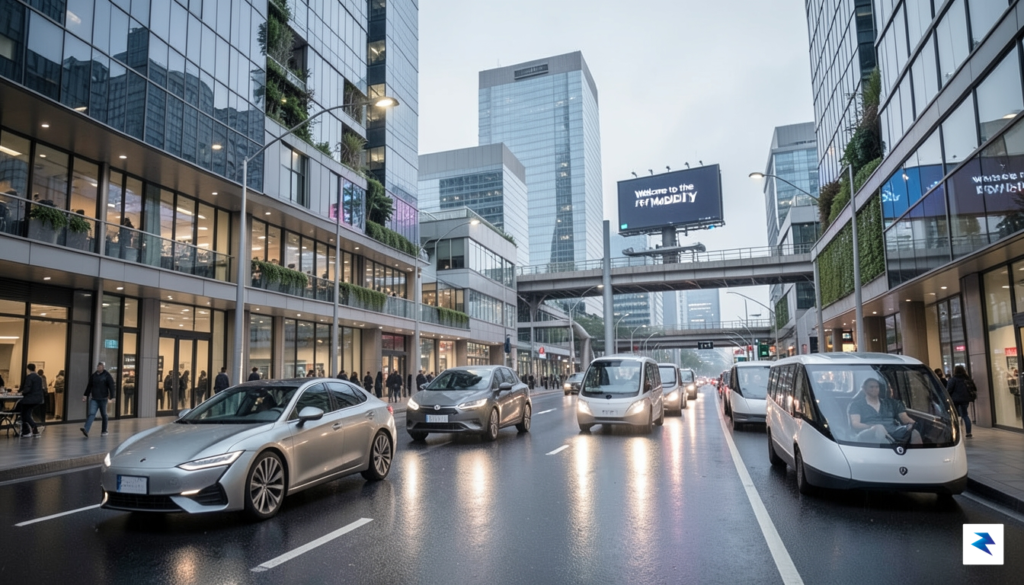
For years, Uber stood as the undisputed poster child for the “move fast and break things” approach to autonomous vehicle (AV) development. Through its Advanced Technologies Group (ATG), the company aggressively poured billions into proprietary hardware, software, and testing, aiming to replace human drivers with machine intelligence as quickly as humanly possible. However, the trajectory of this ambition shifted dramatically following high-profile setbacks and a realization that the capital intensity of full-stack AV development was unsustainable for a platform-based business model. Today, Uber has pivoted from being a direct manufacturer of autonomous fleets to a strategic orchestrator of third-party partnerships, signaling a fundamental change in how the company views the race toward a driverless future.
This strategic pivot is not merely a retreat from manufacturing; it is a calculated evolution in how the company wields regulatory influence to maintain its market dominance. By distancing itself from the direct engineering challenges of building an AV stack, Uber has repositioned itself as the essential gateway for any autonomous operator hoping to achieve commercial scale. Consequently, the company’s current lobbying efforts have shifted toward advocating for regulatory frameworks that emphasize rigorous safety certifications, liability clarity, and standardized operational requirements. While these goals are often framed as public-facing safety initiatives, they inadvertently create high barriers to entry that can slow the pace of smaller, more agile competitors who lack Uber’s massive infrastructure and regulatory experience.

The core conflict now lies in the tension between the push for rapid innovation and the demand for a stable, highly regulated deployment environment. Uber understands that if autonomous technology matures too quickly in an unregulated or fragmented market, it risks losing control over the very ecosystem it relies on to sustain its massive network of rideshare requests. By championing comprehensive, uniform safety policies at the state and federal levels, Uber effectively forces developers to spend more time navigating bureaucracy than iterating on software updates. This shift highlights a modern paradox: the company that once sought to outrun the law now recognizes that controlling the speed of the law is the most effective way to secure its own future in an era of machine-driven mobility.
The transition from a developer of autonomous hardware to a platform aggregator marks a significant shift in the power dynamics of the gig economy, turning regulatory compliance into a competitive weapon.
Ultimately, this approach represents a sophisticated form of risk management. By advocating for a slower, more deliberate rollout of autonomous vehicles, Uber is insulating its core business from the potential volatility of early-stage, accident-prone deployments. While the public rhetoric remains centered on safety and reliability, the underlying objective is to ensure that when fully autonomous fleets do arrive, they arrive on terms that reinforce Uber’s status as the indispensable intermediary. In doing so, the company is effectively putting the brakes on a race it no longer feels compelled to win by sheer speed alone, opting instead to win by dictating the rules of the track.

Uber has masterfully cultivated a narrative that positions its recent policy lobbying efforts as a crusade for fairness and open competition. By framing its legislative agenda as an “anti-monopoly” stance, the company suggests that current regulatory frameworks surrounding autonomous vehicles (AVs) could inadvertently create “walled gardens” dominated by a handful of tech giants. According to Uber, their goal is to ensure that the infrastructure supporting self-driving cars remains interoperable and accessible to a wide array of service providers. However, beneath this surface-level appeal to market equity lies a more calculated strategic maneuver: by advocating for specific standards that complicate the rapid, proprietary deployment of AVs, Uber effectively buys itself the time necessary to solidify its own platform dominance.

The core of Uber’s argument centers on the necessity of “open-access” mandates, which would effectively force AV developers to share certain operational data and integrate with third-party ride-hailing platforms. On the surface, this sounds like a victory for smaller startups that lack the massive capital required to build both the software stack and the consumer-facing app. Yet, critics argue that these policies act as a double-edged sword. While they might prevent a single manufacturer from achieving total market control, they also impose significant administrative and technical burdens on emerging companies. For a small startup operating on a lean budget, the cost of complying with rigid, government-mandated interoperability standards can be far more prohibitive than the cost of innovation itself, effectively slowing the entire industry’s momentum to a pace that Uber can comfortably match.
The irony of Uber’s position is that it uses the rhetoric of competition to advocate for regulations that may ultimately stifle the very innovation it claims to protect.
When we look closely at the implications of these lobbying efforts, it becomes clear that Uber’s strategy is less about preventing monopolies and more about managing the transition to an autonomous future on their own terms. By leveraging their existing massive network of drivers and riders, Uber is essentially attempting to force the autonomous industry to graft itself onto their existing ecosystem. Smaller startups, which would prefer to disrupt the status quo by launching independent, specialized services, find themselves caught in a regulatory trap. These lobbying efforts ensure that no competitor can easily leapfrog Uber by launching a superior, closed-loop autonomous system. In effect, Uber is using the language of anti-monopoly to build a moat around their business, ensuring that if and when autonomous vehicles become the standard, they remain the essential gatekeeper between the technology and the consumer.

The race to redefine urban mobility is not confined to the sterile environments of Silicon Valley software labs; rather, the most consequential battles are currently being waged in the mahogany-paneled halls of state capitols and the crowded committee rooms of Washington, D.C. While the public often focuses on the technological hurdles of sensor fusion and machine learning, Uber is quietly maneuvering through a complex web of legislative channels to ensure that the deployment of autonomous vehicles (AVs) aligns perfectly with its market dominance. By engaging in high-level lobbying efforts, the company is effectively shaping the rules of the road before the technology even reaches widespread maturity, turning the legal framework into a strategic moat that keeps potential disruptors at bay.
The current regulatory landscape is defined by a tense tug-of-war between federal oversight and state-level control. At the federal level, agencies like the National Highway Traffic Safety Administration (NHTSA) strive to establish uniform safety standards that would allow for a cohesive national rollout of autonomous fleets. However, Uber has frequently found that the chaos of a fragmented regulatory environment—where every state has its own patchwork of requirements, licensing, and insurance mandates—actually serves its bottom line. By leveraging its existing scale and deep-pocketed government affairs teams, Uber can navigate these local complexities far more effectively than smaller, newer startups. Consequently, the company often lobbies for state-specific policies that create a high barrier to entry, effectively slowing down the pace of overall adoption in favor of a controlled, predictable rollout that favors established incumbents.

Uber’s influence is most visible in its tactical support for policies that favor incremental progress over rapid, industry-wide disruption. Instead of pushing for a singular, rapid federal mandate that might open the floodgates for smaller competitors, Uber often advocates for state-by-state pilot programs that require significant capital, extensive safety reporting, and complex legal partnerships. This strategy serves a dual purpose: it builds trust with cautious regulators while simultaneously creating a “compliance wall” that smaller firms struggle to climb. By advocating for these specific regulatory hurdles, Uber ensures that the transition to autonomy remains a slow, expensive, and heavily vetted process that keeps the company’s massive gig-economy infrastructure relevant for as long as possible.
The true power of Uber’s legislative strategy lies not in stopping autonomous technology, but in ensuring that the pace of its arrival is dictated by those who already own the marketplace.
Ultimately, this legislative maneuvering demonstrates a sophisticated understanding of how policy can be used as a competitive weapon. By engaging with both state legislatures and federal committees, Uber is not merely reacting to the law; it is actively authoring the conditions under which autonomous transportation will eventually exist. Whether this approach is viewed as a necessary safety precaution or a calculated attempt to stifle competition, one thing is certain: the future of transportation will be as much a product of legal strategy as it is of computer code. As these debates continue, the company remains positioned to control the transition, ensuring that when the driverless revolution finally arrives, it does so on their terms.

While Uber’s recent strategic pivots suggest a more measured approach to self-driving technology, the industry-wide repercussions of these policies could be profound. By advocating for stringent regulatory frameworks and standardized safety benchmarks, the company may inadvertently construct a “moat” that favors established incumbents over agile newcomers. When the barrier to entry becomes defined by exhaustive compliance audits and massive capital expenditure requirements, smaller startups—the historical engine of innovation in robotics and AI—may find themselves unable to survive the “valley of death” between prototype and commercialization. Consequently, this creates a chilling effect on the venture capital ecosystem, as investors become increasingly hesitant to fund early-stage AV companies that lack the legal and financial resources to navigate such a complex regulatory landscape.
The economic burden of these compliance-heavy policies cannot be overstated. When safety testing protocols become overly prescriptive rather than performance-based, the cost of development skyrockets, forcing many firms to abandon their efforts entirely. This consolidation of the market into the hands of a few well-capitalized giants essentially grants them the power to dictate the pace of technological advancement. By slowing down the collective progress of the industry, Uber gains the breathing room necessary to build its own autonomous infrastructure more sustainably, free from the pressure of competing against a dozen hyper-innovative rivals. This is not merely a competitive tactic; it is a fundamental shift in how the industry evolves, moving from a rapid, open-source-leaning experimental phase to a controlled, corporate-led rollout.

The risk of institutionalizing slow-motion progress is that we may lose the very disruptive spirit that brought autonomous vehicles from science fiction to reality in the first place.
Ultimately, these strategies risk extending the timeline for widespread autonomous adoption by years, if not decades. While proponents argue that safety must always be the paramount concern, there is a delicate balance to be struck between necessary oversight and market-strangling bureaucracy. If the industry becomes too locked in a cycle of litigation and regulatory defense, the technological breakthroughs that could solve urban congestion and road safety will be stifled. By prioritizing a stable, controlled environment over the chaotic, rapid-fire iteration typical of the tech sector, we may find that the “long-term” future of autonomous driving becomes significantly more expensive and less accessible for the average consumer than originally envisioned.

The strategic recalibration of Uber’s autonomous vehicle ambitions represents a pivotal shift in the ride-hailing landscape, signaling that the industry is finally moving past the era of unbridled hype. By tempering the aggressive push toward a fully driverless fleet, Uber is acknowledging the immense technical, regulatory, and economic hurdles that remain. For consumers, this means the promise of ubiquitous robotaxis roaming city streets is likely further off than the marketing campaigns of the late 2010s suggested. Instead of a rapid, industry-wide replacement of human drivers, we are seeing a more pragmatic, incremental approach where autonomy is integrated into existing networks only when it proves to be both safe and economically viable.

This cooling of expectations is not necessarily a failure; rather, it acts as a necessary market correction that protects the long-term sustainability of the platform. If companies like Uber were to force a premature transition to autonomous vehicles, they would likely face catastrophic operational costs and public trust issues stemming from inevitable safety lapses. By prioritizing partnerships with established autonomous tech developers—rather than attempting to build everything in-house—Uber is leveraging the expertise of specialists while maintaining its core focus on the logistics of moving people. This strategy ensures that the ride-hailing giant remains a nimble intermediary, capable of adapting to whichever technology ultimately proves to be the most reliable and efficient, rather than being tethered to a single, proprietary system that might become obsolete.
The path to a driverless future is no longer a sprint toward total automation, but a cautious navigation through the complexities of urban safety, consumer demand, and regulatory oversight.
Ultimately, the impact on the industry will be defined by a prolonged hybrid phase where human-led rides and autonomous services coexist in a delicate balance. For the average passenger, this transition will likely manifest as a gradual introduction of autonomous features in specific, geofenced areas before seeing any widespread rollout. While some enthusiasts may view this cautious pace as a hindrance to progress, it is ultimately a pragmatic concession to the reality that moving humans requires a level of accountability that algorithms are still learning to master. As the industry matures, the focus will shift from the sheer novelty of driverless technology to the value proposition of safety and reliability, ensuring that when the autonomous revolution truly arrives, it does so on a foundation built for the long haul.
You must be logged in to post a comment.