
Why Greylock Capped Its $1.5B Fund to Prioritize Founder Success
The Strategic Shift: Why Greylock Chose Discipline Over Scale In an industry often characterized by an insatiable drive for expansion, where…
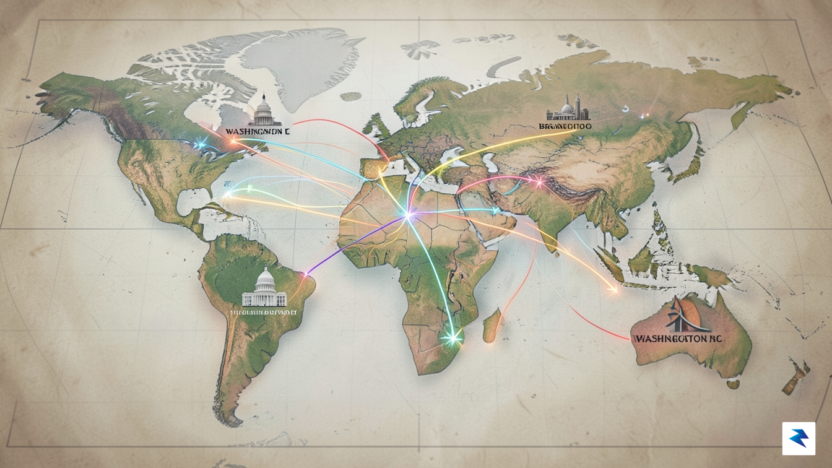

The Trump administration’s recent announcement regarding a fresh round of tariffs on Brazilian imports represents a sharp departure from the recent status quo, signaling a significant pivot in bilateral trade relations. By targeting specific industrial and agricultural goods, the White House is doubling down on a protectionist strategy intended to correct what officials characterize as long-standing imbalances in the global marketplace. This policy shift is not merely an isolated bureaucratic adjustment; rather, it is a deliberate maneuver designed to leverage the economic might of the United States to secure more favorable terms for domestic producers. As these measures take effect, the move sets the stage for a period of intensive and likely complex negotiations between two of the Western Hemisphere’s largest economies, both of which are now grappling with the immediate fallout of these changing trade barriers.
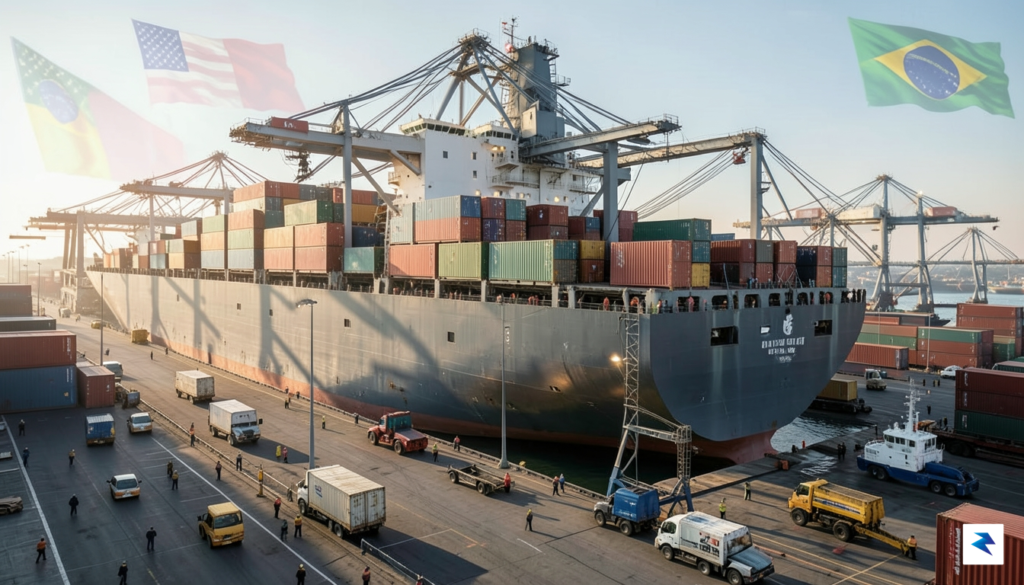
At the core of this policy is the administration’s “America First” trade agenda, which prioritizes the reduction of trade deficits and the protection of domestic manufacturing from foreign competition. The administration has explicitly cited “unfair trade practices” as the primary justification for these new tariffs, pointing to instances where they claim Brazil has engaged in currency manipulation and provided state-level subsidies that artificially lower the price of their exports. Unlike previous trade agreements, which often focused on the gradual liberalization of markets and the lowering of barriers through multilateral cooperation, this current approach favors unilateral action as a tool of economic diplomacy. By imposing these duties, the administration is effectively signaling that it is prepared to dismantle established trade norms whenever it perceives that domestic industries are being undercut by foreign entities operating under different regulatory standards.
The imposition of these tariffs serves as a clear message: the current administration is willing to risk short-term economic friction to achieve long-term restructuring of global supply chains that they believe favor foreign interests over American workers.
The timeline for the implementation of these tariffs is aggressive, with the administration aiming to have the new fee structures fully operational within the coming quarter. This swift rollout is intended to minimize the window for market speculation and force both domestic importers and international partners to adapt to the new reality immediately. Industry analysts remain divided on the potential outcomes of this strategy; while supporters argue that it provides necessary breathing room for American companies to regain market share, critics warn that such protectionist measures could trigger retaliatory actions from Brazil. Such a cycle of escalation would not only affect the specific sectors targeted today but could also spill over into broader diplomatic relations, complicating future cooperation on issues ranging from environmental policy to regional security.

At the center of the administration’s decision to impose new tariffs on Brazil is a calculated effort to recalibrate what Washington characterizes as a distorted playing field. For years, the White House has signaled a departure from traditional “free trade” idealism, favoring a “fair trade” doctrine that prioritizes the health of domestic manufacturing and agricultural sectors. By leveling these duties, policymakers are essentially arguing that the current global economic framework allows foreign nations to leverage state-backed advantages that systematically disadvantage American workers. This move is framed not merely as a protectionist barrier, but as a necessary corrective measure to reclaim national economic sovereignty in an era where global supply chains have often prioritized cost-cutting at the expense of industrial stability.

The administration’s grievances are particularly focused on specific sectors, including steel, aluminum, and certain agricultural commodities, where Brazil has historically maintained a strong competitive footprint. Officials argue that Brazilian firms benefit from indirect government subsidies and regulatory environments that effectively lower production costs, allowing them to undercut American competitors on price. Furthermore, there is deep-seated concern regarding currency valuation; the White House has repeatedly suggested that if a partner nation’s currency is artificially suppressed or weakened, it grants their exports an unfair discount in the international market. From the perspective of U.S. trade representatives, these practices constitute a form of economic aggression that necessitates a firm, reciprocal response to ensure that American producers are not forced to compete against state-sponsored artificial advantages.
“Trade policy is not just about the flow of goods; it is about the structural integrity of our domestic economy and ensuring that no nation can exploit global systems to the detriment of our own industrial base.”
Ultimately, this approach reflects a broader ideological pivot toward economic nationalism. By actively intervening through tariffs, the administration is asserting that the government has a fundamental duty to defend domestic interests when international norms fail to prevent market distortions. While critics often highlight the potential for retaliatory measures or increased costs for local consumers, the administration remains firm in its position. They contend that the long-term cost of allowing these “unfair” practices to continue unchecked far outweighs the immediate market volatility. By signaling a willingness to disrupt established trade relationships, the White House is setting a clear precedent: future market access for Brazilian goods will be strictly conditional on a demonstrated commitment to what the U.S. defines as a balanced and transparent exchange of value.

The path to implementing new trade restrictions, such as the recently announced tariffs on Brazil, is often paved with intricate legal challenges and a history of judicial scrutiny. Administrations frequently navigate a complex legal landscape, where previous attempts to impose similar trade measures have met significant hurdles, sometimes even being struck down by the highest court. This backdrop of past legal battles has evidently shaped the current administration’s strategy, leading to a deliberate recalibration of its approach to ensure these new tariffs withstand potential litigation and achieve their intended economic and diplomatic goals.
Indeed, the legal history surrounding presidential authority to impose trade restrictions provides crucial context. Prior efforts by various administrations to enact broad trade measures have, in certain instances, faced robust opposition and subsequent invalidation by the Supreme Court. These past rulings often hinged on interpretations of congressional intent, the scope of delegated authority, or the constitutional limits of executive power, particularly when trade actions veered into areas traditionally reserved for legislative oversight. Such precedents underscored the need for any new tariff imposition to be meticulously framed within existing statutory frameworks, lest it fall afoul of judicial review and be deemed an overreach of executive authority.
In light of this intricate legal past, the administration has demonstrably pivoted its strategy, now leveraging specific executive authorities designed to bypass many of the judicial hurdles encountered previously. This shift involves a careful selection of statutory bases that grant the President considerable discretion in matters of national security or economic emergency. By invoking provisions like Section 232 of the Trade Expansion Act of 1962, which permits tariffs based on national security concerns, or other statutes related to international economic powers, the administration aims to insulate its actions from the kind of merits-based judicial review that proved problematic in the past. This strategic choice is not merely procedural; it reflects a deep understanding of the legal vulnerabilities of earlier approaches.
The legal mechanisms currently being employed are designed for resilience against anticipated challenges. Rather than relying on broader, potentially more ambiguous grants of power, the administration is focusing on specific legislative language that courts have traditionally interpreted as granting significant deference to the executive branch. This means that potential litigation is less likely to question the substance or wisdom of the tariffs themselves, and more likely to scrutinize whether the administration followed the correct procedures and articulated a plausible connection to the invoked statutory authority. For instance, demonstrating a link between Brazilian imports and U.S. national security, however broadly defined, can be a potent shield against legal challenges, shifting the burden of proof onto those who would seek to overturn the tariffs.
Ultimately, this strategic evolution marks a significant development in administrative law and the execution of trade policy. It highlights a deliberate move away from reliance on potentially contentious interpretations of general presidential authority towards a more precise and legally fortified invocation of specific, narrowly tailored statutory powers. This approach aims to minimize the risk of judicial intervention, thereby granting the executive branch greater autonomy in shaping international trade relations and enforcing its vision of economic fairness and national interest, even as it navigates the complex interplay between executive action, legislative intent, and judicial oversight.


The imposition of new tariffs on Brazilian commodities introduces a classic case of cost-push inflation that will inevitably filter down to the American consumer. When the cost of importing raw materials—such as specialty steel, processed agricultural goods, or timber—increases due to government-mandated duties, domestic manufacturers are forced to absorb these expenses or pass them along to the end-user. As these production costs climb, the final price tags on everything from household appliances to food products will likely see an upward trend, effectively functioning as a hidden tax on the average household budget. While proponents of these trade barriers argue that they protect domestic industries, the reality is that complex global supply chains often mean that higher import costs weaken the purchasing power of the very citizens these policies intend to support.

For mid-sized businesses, the landscape becomes particularly treacherous. Unlike massive multinational corporations that possess the leverage to diversify their supply chains or negotiate long-term contracts with alternative suppliers, mid-sized firms often operate on thinner margins and have less flexibility. These companies frequently rely on specific, high-quality inputs from Brazil that cannot be easily sourced elsewhere at a competitive price point. Consequently, these businesses must navigate a difficult choice: they can either slash their profit margins to maintain stable pricing, which jeopardizes their long-term growth and hiring capacity, or they can increase prices, potentially losing market share to competitors who may have more robust supply chain contingencies in place.
The economic fallout is not contained within U.S. borders; Brazil is highly likely to respond with retaliatory measures, targeting key American exports to protect its own domestic interests. This tit-for-tat dynamic creates a cycle of economic friction that can destabilize long-standing trade partnerships. If Brazil chooses to levy tariffs on American machinery, technology, or refined fuels, the damage to U.S. exporters could be significant, creating a ripple effect that touches high-tech sectors and agricultural exporters alike.
The core danger of protectionist trade policy lies in the potential for a feedback loop; by raising barriers, nations often invite reciprocal measures that shrink the overall volume of global trade, leading to inefficiency and higher costs for everyone involved.
Ultimately, while short-term protectionist gains might provide a temporary boost to specific domestic sectors, they often come at the expense of long-term economic stability. By disrupting established trade flows, these tariffs create market uncertainty, which typically discourages private investment and complicates long-range corporate planning. Whether this shift will yield the desired industrial revitalization or merely burden consumers and businesses with higher costs remains the central question facing the current trade climate. As the situation evolves, stakeholders on both sides of the equator will need to remain agile, as the cost of this policy shift is measured not just in dollars, but in the efficiency of the globalized economy.
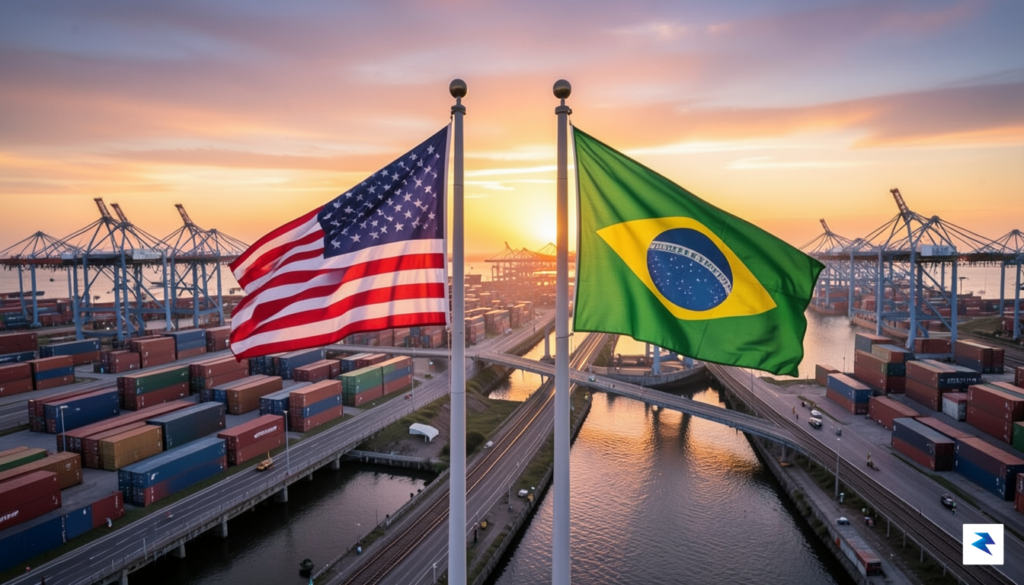
The implementation of these new tariffs represents more than just a fiscal adjustment; it signals a pivotal stress test for the long-standing U.S.-Brazil partnership. As both nations grapple with the realities of domestic protectionism and the need to defend local industries, the risk of a protracted trade dispute looms larger than ever. Whether this friction evolves into a structural decoupling or remains a temporary diplomatic hurdle will depend heavily on the appetite for de-escalation in both Washington and Brasília. If these measures are met with retaliatory cycles, we could see a regression in the collaborative spirit that has historically defined the Western Hemisphere’s two largest economies.
In the face of these mounting tensions, international arbitrating bodies like the World Trade Organization (WTO) are likely to become the primary stage for formal grievances. While the WTO provides a structured mechanism for dispute settlement, the process is notoriously sluggish, often leaving businesses in a state of indefinite uncertainty. Relying solely on legalistic frameworks may prove insufficient if the underlying political motivations for these tariffs remain unaddressed. Consequently, the burden falls on bilateral diplomacy to act as a buffer, preventing the current administrative friction from calcifying into a permanent barrier to growth.
The future of U.S.-Brazil commercial relations hinges not on the immediate collection of duties, but on the ability of both administrations to establish a transparent, high-level dialogue that prioritizes long-term economic integration over short-term political posturing.
Looking ahead, the potential for a new, comprehensive negotiation cycle remains the most viable path toward stability. By initiating a formal framework for a modernized trade deal, both countries could effectively trade the current hostile environment for a more predictable regulatory landscape. Such an agreement would need to address the specific grievances fueling these tariffs while simultaneously fostering cooperation in emerging sectors like green energy, technology, and sustainable agriculture. This shift would require significant political courage, as both leaders would need to explain the benefits of compromise to domestic constituencies that are increasingly wary of global competition.
Ultimately, the trajectory of this relationship will be defined by the clarity and frequency of communication between the two governments. Without a proactive strategy to manage these commercial disputes, both nations risk drifting toward a total breakdown in diplomatic cooperation, which would inevitably harm the private sector and diminish their collective influence on the global stage. If they can move toward a “diplomatic off-ramp,” they may find that this period of instability serves as a catalyst for a more robust and resilient economic framework, one that is better equipped to withstand the unpredictable winds of international trade policy.
You must be logged in to post a comment.