
Choosing the Best Public DNS Resolver: A Privacy Guide
Understanding the Role of DNS Resolvers in Internet Privacy Every time you type a web address into your browser, you are initiating a silent,…


The reliability of a PostgreSQL database is fundamentally tethered to its ability to recover from catastrophic failure. At the heart of this resilience lies the Write-Ahead Log (WAL), a sequential record of every change made to the database state. Archiving these logs is not merely a best practice; it is a critical safeguard that ensures point-in-time recovery and data durability. As organizations scale their PostgreSQL deployments to handle petabytes of information, traditional manual scripts and legacy backup utilities have struggled to keep pace. The sheer volume of data generated in high-throughput environments necessitates a specialized approach to continuous archiving, where backup agents must perform efficiently without imposing a heavy performance tax on the underlying database engine.
For many years, the industry relied on foundational tools like WAL-E, which pioneered the concept of streaming backups directly to cloud object storage. While transformative at the time, WAL-E eventually reached the limits of its architectural design, leading to the creation of WAL-G. By leveraging modern cloud APIs and parallel processing, WAL-G established itself as the gold standard for PostgreSQL backups, offering significantly faster throughput and better compression ratios. However, even as WAL-G solved many of the latency bottlenecks that plagued its predecessors, the underlying language constraints of its implementation began to surface as a new hurdle. Managing memory consumption and concurrency in a high-scale environment requires a level of low-level control that interpreted or garbage-collected languages often struggle to provide consistently.
The evolution of backup infrastructure is defined by the transition from simple file-copying scripts to intelligent, cloud-native agents that treat the Write-Ahead Log as a live, streaming entity rather than a static backup file.
The shift toward modern, cloud-native infrastructure has exposed significant pain points in legacy backup tooling, particularly regarding resource overhead. As clusters grow, the memory footprint of backup agents can become unpredictable, occasionally competing with the database itself for precious system resources. Furthermore, the complexity of modern cloud storage protocols requires robust, thread-safe implementations to ensure that backups remain consistent under heavy network load. Developers are increasingly finding that the safety and performance guarantees provided by systems-level languages are essential for building the next generation of data protection tools. By moving away from legacy abstractions and embracing the memory safety and zero-cost abstractions inherent in modern systems programming, the community is looking toward a future where backups are not just a necessary chore, but a high-performance component of the database architecture.

As we look toward the future, the integration of performance-oriented languages into the backup ecosystem represents a maturation of PostgreSQL administration. It is no longer enough for a tool to simply move data from point A to point B; it must do so with extreme precision, minimal latency, and an unwavering commitment to data integrity. The ongoing transition toward newer, more efficient implementations suggests that the community is prioritizing long-term sustainability over short-term convenience. By addressing these architectural limitations today, database administrators can ensure that their backup infrastructure remains resilient, scalable, and fully capable of meeting the demands of the next decade of data growth.
In the realm of systems programming, where performance and reliability are paramount, the choice of language holds significant weight. For critical infrastructure software, especially tools designed to safeguard invaluable data like PostgreSQL backups, the technical rationale behind a language selection must be robust. Rust has rapidly ascended as the premier choice in this domain, offering a unique and compelling combination of memory safety, concurrency, and bare-metal performance that is increasingly indispensable for modern applications. This transition isn’t merely about adopting a new trend; it’s a strategic move to engineer more resilient, efficient, and predictable backup solutions.
One of Rust’s most heralded features, and a cornerstone of its appeal for high-stakes applications, is its unparalleled memory safety guarantees. Unlike languages such as C or C++, which rely on manual memory management, Rust employs an innovative ownership system enforced at compile time. This system rigorously tracks how memory is used throughout a program, preventing common and dangerous bugs like null pointer dereferences, use-after-free errors, and data races—issues that can lead to crashes, security vulnerabilities, or silent data corruption. By eliminating these entire classes of bugs before the code even runs, Rust drastically reduces the likelihood of catastrophic failures in a backup utility, ensuring that the process of safeguarding your data is itself safeguarded against low-level programming errors.
Beyond safety, the execution model of Rust offers a distinct advantage, particularly when contrasted with languages like Go, which often employ a garbage collector (GC). While Go’s GC simplifies development and is suitable for many applications, it introduces unpredictable pauses as the runtime periodically stops program execution to reclaim unused memory. For applications handling high-throughput I/O operations, such as processing continuous streams of PostgreSQL Write-Ahead Log (WAL) data, these GC pauses can be detrimental. They introduce latency spikes, reduce overall throughput, and make it challenging to achieve consistent performance benchmarks. Rust, conversely, operates without a runtime garbage collector. It leverages a concept known as Resource Acquisition Is Initialization (RAII), where resources are deterministically released as they go out of scope, granting developers precise, predictable control over memory allocation and hardware resources. This allows for maximum utilization of CPU and memory, ensuring that WAL processing can occur with minimal overhead and consistent, low latency, which is crucial for maintaining backup windows and recovery point objectives.
Furthermore, Rust’s philosophy of “zero-cost abstractions” plays a pivotal role in its suitability for efficiently processing large WAL streams. This principle means that high-level programming constructs—like iterators for processing collections, or the powerful Option and Result enums for error handling—do not incur any runtime performance penalty. Developers can write expressive, safe, and idiomatic Rust code that provides significant ergonomic benefits, yet compiles down to machine code that is as performant and efficient as hand-optimized C or assembly. When dealing with gigabytes or even terabytes of sequential data, such as transaction logs, this capability allows for sophisticated data parsing, transformation, and transmission logic to be implemented without introducing performance bottlenecks that might otherwise arise from the language’s own runtime. The result is a backup utility that can handle massive data volumes with remarkable speed and reliability, making the most of available hardware resources without compromise.
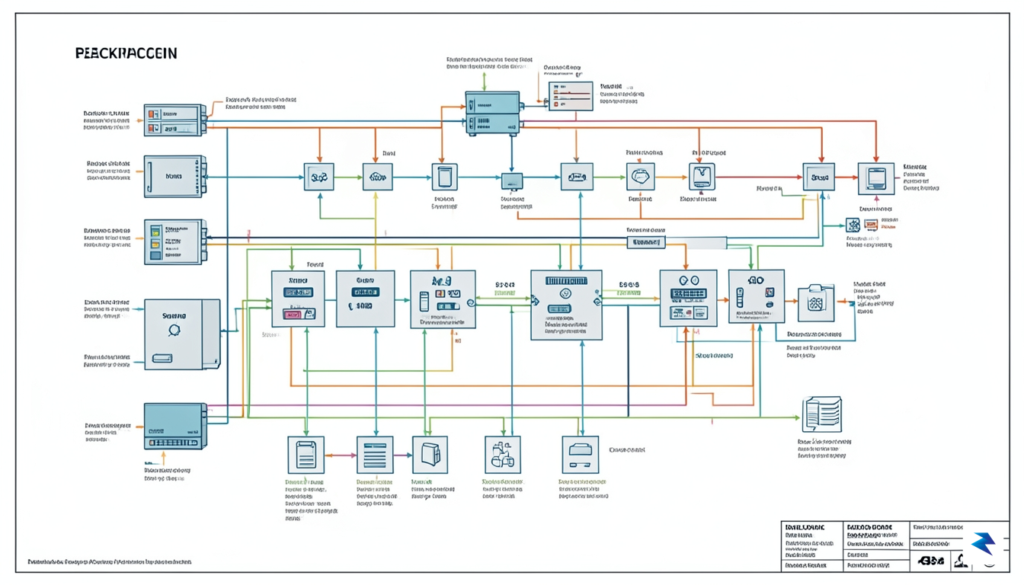
WAL-RUS represents a significant leap forward in PostgreSQL backup solutions, moving beyond a mere language port to establish a fundamentally re-architected system. Its design ethos, deeply rooted in Rust’s strengths, aims to redefine reliability and efficiency in database recovery strategies, offering a more robust and maintainable alternative to existing solutions.
One of the most striking aspects of WAL-RUS’s architecture is its highly modular design, a direct outcome of leveraging Rust’s powerful type system and ownership model. This approach encourages the creation of distinct, self-contained components, each responsible for a specific aspect of the backup pipeline—from data ingestion and compression to encryption and interaction with various object storage backends. Such clear separation of concerns not only makes the codebase significantly easier to understand and maintain but also isolates potential issues, preventing a problem in one module from cascading throughout the entire system. Consequently, developers can reason about individual parts with greater confidence, leading to fewer bugs and a more stable application overall, ultimately simplifying future feature development and bug fixes.
Beyond structural clarity, WAL-RUS introduces a sophisticated approach to maximizing throughput, particularly evident in its handling of parallel uploads to object storage. Rather than processing data sequentially, the system ingeniously fragments the backup stream into manageable chunks, which are then concurrently compressed, encrypted, and dispatched to the chosen cloud storage provider. This parallelization is powered by Rust’s asynchronous programming capabilities, notably through frameworks like Tokio, which allow for efficient, non-blocking I/O operations. By fully utilizing available CPU cores and network bandwidth, WAL-RUS dramatically reduces backup windows, transforming what could be hours of downtime for large databases into a swift and seamless operation, thereby enhancing operational efficiency and minimizing recovery point objectives (RPOs).

Perhaps where WAL-RUS truly shines, however, is in its unwavering commitment to error handling and fault tolerance, a cornerstone of any robust backup solution. Rust’s explicit Result enum compels developers to meticulously consider every potential failure point, eliminating entire classes of common programming errors often found in languages with less rigorous error management. This proactive approach translates into a system that is inherently more resilient; for instance, transient network glitches or storage API rate limits are met with intelligent retry mechanisms and exponential back-offs, rather than abrupt failures that halt the entire process. Furthermore, the modular architecture ensures that if one component encounters an unrecoverable error, it can often be isolated and handled gracefully without compromising the integrity of the entire backup process, safeguarding your critical PostgreSQL data even under challenging and unpredictable conditions.
In essence, the architectural choices underpinning WAL-RUS—its modularity, intelligent parallelization, and robust error handling—converge to create a backup tool that is not only supremely performant but also exceptionally dependable, setting a new standard for PostgreSQL data protection.
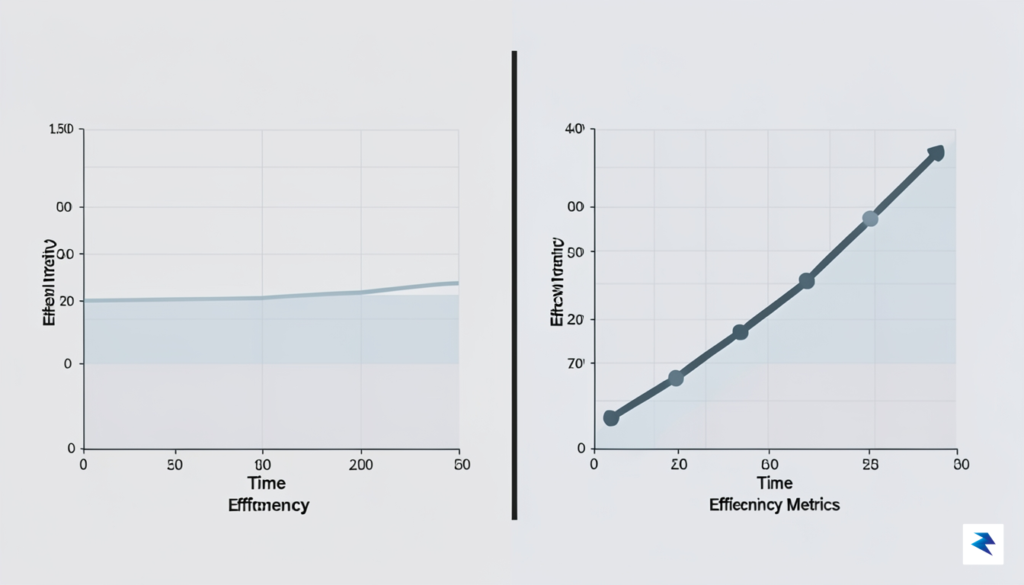
For database administrators managing petabyte-scale environments, the efficiency of a backup utility is not merely a technical preference; it is a critical operational requirement. The transition to WAL-RUS represents a paradigm shift in how PostgreSQL instances handle data archival, primarily due to the memory safety and zero-cost abstractions inherent in the Rust programming language. By eliminating the garbage collection overhead that often plagues runtime-heavy languages, WAL-RUS maintains a remarkably stable and lean memory footprint even when processing hundreds of concurrent WAL segments. This consistency allows administrators to allocate fewer system resources to backup tasks, ensuring that the primary database process retains the majority of the host’s available RAM for query caching and execution.
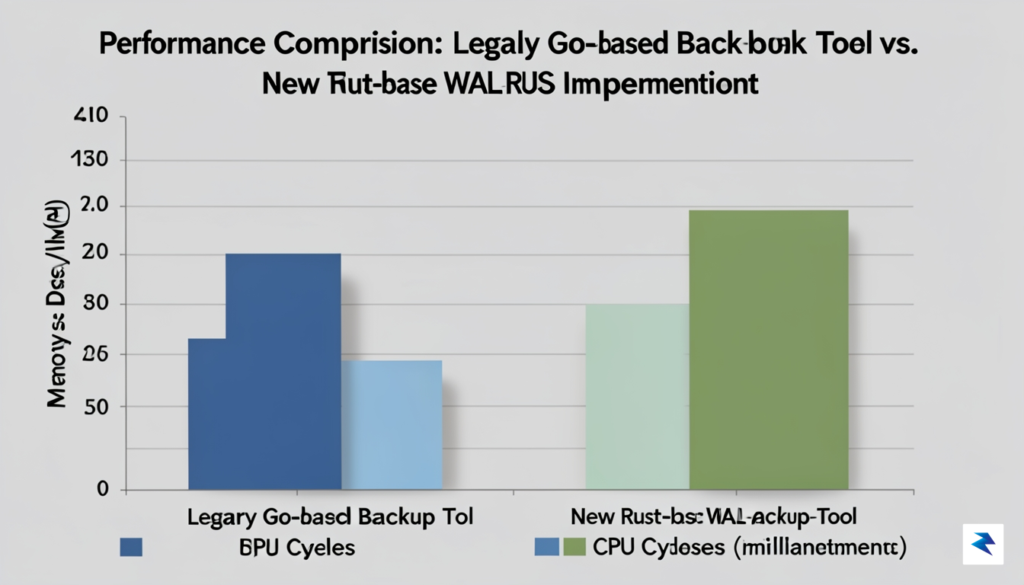
Beyond memory management, the CPU efficiency gains observed during peak backup windows are equally compelling. During high-throughput periods—such as during a full base backup or a rapid sequence of WAL archiving—WAL-RUS demonstrates a significantly lower CPU utilization profile compared to its predecessors. Because Rust compiles directly to efficient machine code without a heavy runtime, the tool minimizes context switching and CPU spikes that can otherwise introduce latency into the database’s primary workload. This reduction in overhead means that backup cycles no longer act as a performance tax on the database, allowing for more aggressive backup schedules without compromising the end-user experience or query performance during peak traffic hours.
The integration of Rust’s asynchronous I/O primitives allows WAL-RUS to saturate network pipes more effectively while maintaining lower overhead, effectively turning idle bandwidth into reliable, rapid data protection.
The impact of this rewrite extends deeply into network utilization, where optimized I/O operations play a pivotal role. WAL-RUS utilizes advanced non-blocking I/O patterns that allow the utility to saturate available network bandwidth more intelligently without overwhelming the system’s kernel buffers. By meticulously managing the data stream and reducing the number of syscalls required for network communication, the tool ensures that data is pushed to cloud storage endpoints or local repositories with minimal latency. This precision ensures that even in highly constrained network environments, WAL-RUS can maintain consistent throughput, effectively reducing the time-to-completion for large-scale operations while maintaining a predictable impact on the infrastructure’s overall network fabric.
Ultimately, the move to a Rust-native architecture proves that language choice is a fundamental component of infrastructure scaling. By prioritizing low-level performance and resource predictability, WAL-RUS provides a robust foundation for modern PostgreSQL operations, allowing teams to scale their storage requirements without linearly increasing their operational costs. The result is a backup ecosystem that is not only faster but fundamentally more sustainable, providing the reliability required for mission-critical database environments.

Transitioning core infrastructure components, especially something as critical as your PostgreSQL backup system, demands meticulous planning and a phased approach. While WAL-RUS offers compelling advantages in performance and reliability due to its Rust foundation, its successful adoption in a live production environment hinges on careful execution. The goal is to integrate this powerful new tool seamlessly, ensuring that security, consistency, and, most importantly, backup integrity remain absolutely uncompromised throughout the migration process. This section will guide you through the practical steps and considerations necessary for a smooth and confident deployment, safeguarding your valuable data every step of the way.
Adopting a new backup solution requires more than just installing software; it necessitates a strategic overhaul of your backup workflow. A structured checklist helps mitigate risks and ensures every critical aspect is addressed. Begin by thoroughly understanding your current backup strategy, including recovery point objectives (RPO), recovery time objectives (RTO), and existing retention policies. This baseline knowledge is crucial for comparing and validating WAL-RUS’s performance and capabilities.
archive_command to execute *both* your old archiving method and WAL-RUS’s archiving simultaneously for a defined period. This “dual-write” approach ensures continuous protection while building confidence in WAL-RUS.archive_command to use WAL-RUS exclusively.Key Takeaway: Never compromise your current backup strategy until the new one has proven its reliability through rigorous testing and successful restores in a production-like environment. Parallel operation is your safety net.
The robustness of WAL-RUS is inherently linked to the security and efficiency of your chosen object storage backend, whether it’s Amazon S3, Google Cloud Storage (GCS), or an S3-compatible service. Proper configuration here is paramount for both data integrity and cost management. Always begin by creating a dedicated storage bucket or a specific prefix within an existing bucket solely for WAL-RUS backups. This segmentation simplifies management, enforces clear access controls, and prevents accidental data deletion.
For security, adhere to the principle of least privilege when configuring IAM policies (AWS) or service accounts (GCP). Grant WAL-RUS only the necessary permissions: `s3:PutObject`, `s3:GetObject`, `s3:ListBucket`, and `s3:DeleteObject` for its specific bucket/prefix. Avoid granting root or overly permissive access. Furthermore, consider enabling versioning

The emergence and rapid adoption of projects like WAL-RUS represent far more than just a technical rewrite; they signify a profound evolutionary step in the landscape of database reliability tooling. Historically, many critical operational tools were built on a foundation of older, often less performant languages, sometimes due to legacy constraints or simply the prevailing ecosystem at the time. WAL-RUS, by leveraging Rust, isn’t just seeking marginal gains; it’s fundamentally redefining what’s possible in terms of speed, memory safety, and concurrent processing for PostgreSQL backup and recovery. This move towards highly optimized, language-specific utilities directly targets the most pressing operational bottlenecks that database administrators and developers face daily, promising a significant uplift in overall system stability and efficiency.
This trend towards specialized, high-performance tooling has far-reaching implications for the entire open-source ecosystem, particularly within the PostgreSQL community. The success of WAL-RUS serves as a powerful testament to the value of rewriting established tools in modern, performance-oriented languages like Rust, inspiring other developers to re-evaluate existing solutions. It encourages a deeper dive into the specific pain points of database operations, fostering an environment where bespoke, meticulously crafted tools can thrive. This isn’t about replacing every existing utility, but rather about strategically identifying core components where performance and reliability are paramount and then investing in their optimization with the best available technologies. Such initiatives not only deliver superior functionality but also attract new talent and foster vibrant communities around these cutting-edge projects.
Looking ahead, this shift signals an exciting future for database reliability engineering. We can anticipate a continued proliferation of specialized tools, perhaps addressing other critical areas such as advanced monitoring agents, sophisticated replication managers, or even highly optimized utilities for complex data migrations and schema changes. The emphasis will increasingly be on tools that provide not just functionality, but also provable guarantees of safety, efficiency, and predictable behavior under load. Imagine a future where every component of your database’s lifecycle management—from provisioning to disaster recovery—is handled by a suite of perfectly tuned, language-optimized utilities, each excelling at its specific task. This specialized approach allows for greater innovation, as developers can focus on solving specific problems with the most appropriate technological stack.
Ultimately, this movement towards tools like WAL-RUS represents a profound win for long-term data durability and operational confidence. By addressing the fundamental challenges of data integrity and availability with such precision and performance, these specialized utilities significantly reduce the margin for error during critical operations like backups and recoveries. Faster, more reliable backups mean quicker recovery times, minimizing potential data loss and reducing costly downtime. Furthermore, the inherent safety features of languages like Rust contribute directly to fewer bugs and greater predictability, reinforcing the foundation upon which entire data infrastructures are built.
This paradigm shift ensures that as data volumes grow and demands intensify, the underlying tools responsible for safeguarding that data are not just keeping pace, but actively setting new benchmarks for robustness and efficiency.
[IMAGE: A detailed illustration of a robust, modern database architecture with various specialized tools represented as gears, specifically highlighting data backup and recovery processes as fast and
You must be logged in to post a comment.