
Meta Pulls Controversial AI Feature from Instagram After User Backlash
The Rise and Fall of the Instagram AI Feature Recently, Instagram users witnessed a swift and significant reversal from Meta as a newly…
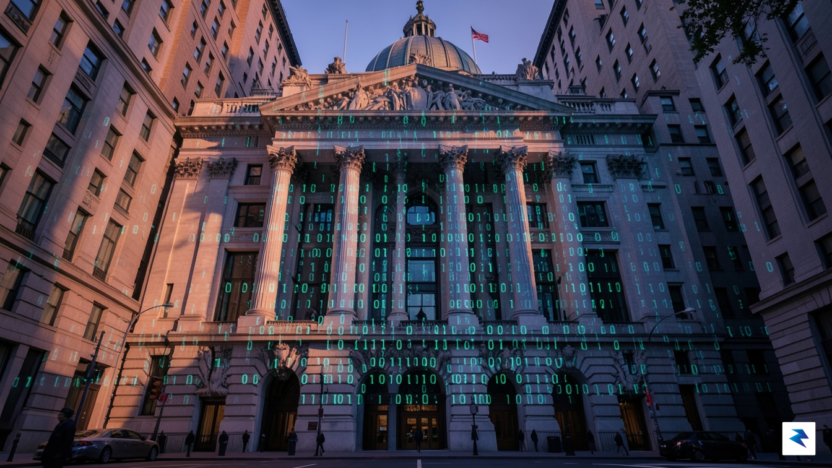

For years, prediction markets existed primarily as niche experiments—digital playgrounds for hobbyists and political enthusiasts seeking to monetize their foresight. However, the landscape shifted dramatically as platforms like Polymarket matured, transforming from curiosities into sophisticated data engines capable of capturing real-time human sentiment. Institutional traders, always on the hunt for an informational edge, began to recognize that these decentralized platforms offered something traditional financial indicators could not: a dynamic, high-stakes barometer for future events. By incentivizing participants to put capital behind their convictions, these markets effectively strip away the bias often found in public opinion polling, replacing hypothetical posturing with the cold, hard reality of financial risk.
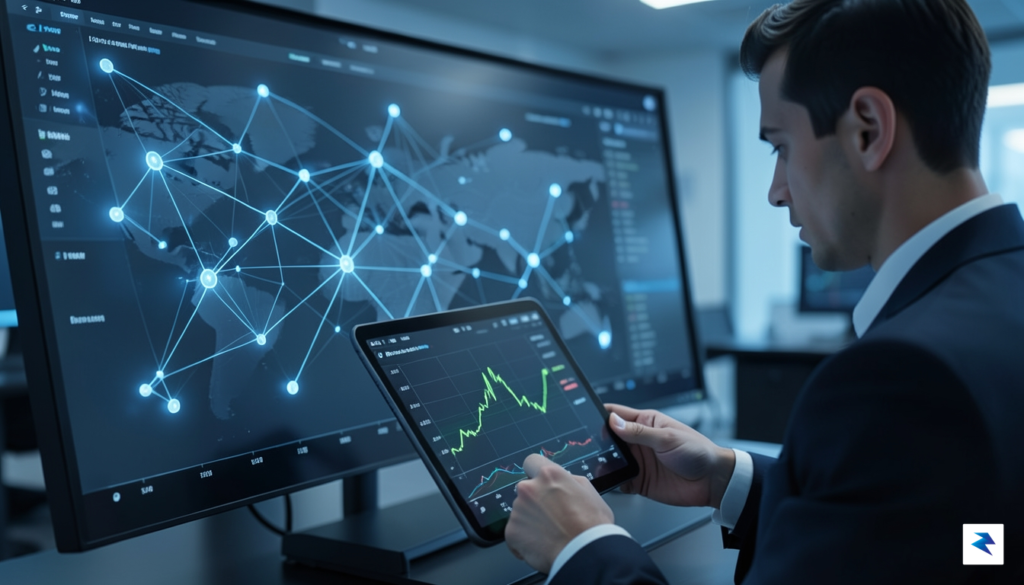
The appeal for financial professionals lies in the distinct mechanism of the “wisdom of the crowd.” Unlike standard surveys, which can be skewed by respondent fatigue or social desirability bias, prediction markets demand that participants weigh their predictions against their own bankrolls. This creates a powerful filtering effect where the most informed actors—those with the most to gain or lose—tend to have the greatest influence on the market price. Consequently, seasoned traders began integrating these platforms into their quantitative workflows, treating the fluctuations in odds as a leading indicator for geopolitical shifts, central bank policy adjustments, and electoral outcomes that often precede traditional economic data releases.
The core strength of a prediction market is its ability to aggregate disparate pieces of information into a single, actionable probability metric, making it a uniquely efficient tool for measuring collective intelligence in an era of extreme uncertainty.
As these platforms gained institutional traction, they evolved into essential tools for stress-testing portfolios against black-swan events. In the high-stakes world of modern finance, where information asymmetry is the primary driver of alpha, the transparency and liquidity of prediction markets provide a unique vantage point. Traders are no longer just looking at spreadsheets and earnings reports; they are analyzing the collective pulse of thousands of active participants who are constantly recalibrating their expectations based on the latest news flow. This shift has turned what was once seen as a speculative gamble into a legitimate, if unconventional, component of institutional market sentiment analysis, setting the stage for a new era where financial forecasting is driven as much by crowdsourced probability as it is by traditional economic modeling.

The recent shift in policy at firms like Goldman Sachs represents a calculated defensive maneuver against the rapidly evolving landscape of decentralized prediction markets. As these platforms gain mainstream traction, institutional leaders have identified a fundamental disconnect between the high-stakes, data-driven environment of professional finance and the speculative, often opaque nature of betting on geopolitical or economic outcomes. For a major investment bank, the primary concern is not merely the potential for financial loss, but the blurring of lines between legitimate risk management and amateur gambling. By prohibiting employees from engaging with these sites, firms are asserting that their staff’s intellectual output and market influence must remain strictly within the confines of regulated, professional trading desks.
From an internal risk management perspective, the distinction between professional trading and prediction market participation is critical. When a Goldman Sachs employee executes a trade, it is subject to rigorous oversight, strict reporting requirements, and compliance with fiduciary duties that protect the firm and its clients. In contrast, prediction markets often operate in a regulatory gray area where the underlying incentives can be wildly unpredictable. If an employee were to leverage proprietary information or even appear to be trading on non-public insights within these platforms, it could trigger catastrophic legal scrutiny. Consequently, firms are viewing these markets as a form of “shadow trading” that poses an unacceptable risk to their internal controls and audit trails.

Beyond the technical compliance risks, there is a profound concern regarding reputational damage. Wall Street institutions are acutely sensitive to how their brand is perceived by regulators and the public, especially in an era of heightened political polarization. If an employee were linked to a controversial betting scandal or caught wagering on sensitive public policy outcomes, the subsequent headlines would inevitably drag the firm’s name into the mud. Executives are rightfully worried that their institution could be accused of market manipulation or ethical lapses, even if the employee acted entirely as an individual.
The core of the issue lies in the perception of integrity; firms are prioritizing the preservation of their professional reputation over the potential for individual employees to explore new, albeit risky, avenues of market engagement.
Ultimately, these new restrictions reflect a broader trend of banks tightening their grip on the digital footprints of their workforce. The move is a signal to the industry that while financial institutions are interested in innovation, they are unwilling to sacrifice stability for the sake of participating in experimental, high-risk betting platforms. By drawing this hard line in the sand, firms like Goldman Sachs are reinforcing a culture of traditional professionalism, ensuring that the boundary between personal speculation and institutional conduct remains firmly intact.

For major investment banks, the rise of prediction markets represents a precarious intersection of speculative technology and rigid financial law. While these platforms often market themselves as “wisdom of the crowds” engines, regulators view them through a far more skeptical lens. The primary concern is the potential for information asymmetry that mirrors traditional insider trading. When high-level financial professionals engage in markets that bet on political outcomes, regulatory policy, or macroeconomic shifts, they risk utilizing non-public information gleaned from their institutional roles. Because these prediction platforms often lack the robust surveillance mechanisms of the New York Stock Exchange, the risk of “shadow trading”—where insiders exploit confidential corporate knowledge to profit in external, less-regulated markets—becomes a significant liability for firms that are already under the watchful eyes of the SEC and the CFTC.

Furthermore, the regulatory challenges extend deep into the technical infrastructure of these platforms, specifically regarding Anti-Money Laundering (AML) and Know-Your-Customer (KYC) standards. Investment banks operate under stringent global mandates to verify the source of funds and the identity of participants to prevent illicit financial activities. Many decentralized or experimental prediction markets, however, operate with varying levels of anonymity that do not meet the rigorous compliance standards required of a Tier-1 financial institution. By allowing employees to participate in such environments, a firm could inadvertently facilitate the commingling of personal assets with opaque, potentially non-compliant digital ecosystems, thereby exposing the parent organization to massive fines and reputational damage that could take years to mitigate.
The legal reality is that a firm’s internal compliance policy serves as a necessary barrier against the unpredictable nature of federal enforcement actions.
Ultimately, the blanket bans implemented by firms like Goldman Sachs and others are not merely about moral posturing; they are a defensive strategy against the inevitable legal fallout of market manipulation. Regulators have expressed mounting concern that large-scale trading in prediction markets could be used to manipulate public perception or provide a distorted view of market sentiment that influences broader financial instruments. If a bank’s employee were caught attempting to move the needle on a prediction market to influence a correlated security, the resulting investigation would likely trigger a comprehensive audit of the firm’s entire compliance apparatus. Consequently, by strictly prohibiting participation, these institutions are effectively drawing a hard line in the sand, choosing to forgo the potential profits of these platforms rather than risk the catastrophic regulatory scrutiny that would follow even a single instance of perceived manipulation.

The friction currently unfolding between Wall Street’s traditional giants and the rise of decentralized prediction markets is far more than a simple dispute over compliance protocols. At its heart, this conflict represents a collision between two fundamentally incompatible philosophies: the Silicon Valley-inspired ethos of move fast and break things and the deeply entrenched, risk-averse institutionalism of global finance. While blockchain-based markets pride themselves on radical transparency—where every transaction is recorded on an immutable ledger and sentiment is quantified in real-time—traditional banking relies on layers of opacity, internal committees, and curated data flows. For the institutional banker, the unpredictability and “wild west” nature of these platforms feel less like a modern trading tool and more like an existential threat to the reputation and stability that firms have cultivated for over a century.
This divide is further exacerbated by a widening generational chasm within the workforce. Younger traders and analysts, who have grown up in a digital-native environment, increasingly view prediction markets as a superior, meritocratic way to gauge geopolitical and economic outcomes. To them, the democratization of information offered by these decentralized platforms is a logical evolution of market efficiency. Conversely, senior leadership—steeped in decades of regulatory scrutiny and fiduciary responsibility—perceives these platforms as speculative hazards that prioritize noise over nuance. The older guard fears that allowing employees to bet on events through unverified, unregulated channels undermines the professionalism that the industry relies on to maintain trust with global regulators and high-net-worth clients.

The fundamental disagreement isn’t merely about the legality of a wager; it is about how we define the boundaries of professional conduct in a world where the speed of information has outpaced the speed of internal policy-making.
This crackdown also reveals a deeper anxiety regarding employee retention and firm culture. When a bank restricts access to the tools that its most innovative employees find intuitive, it risks signaling that it is out of touch with the future of financial technology. If a firm’s culture becomes defined by what it prohibits rather than what it empowers, it risks a “brain drain” to more agile fintech companies or decentralized autonomous organizations (DAOs). However, banks must also contend with the reality that, in the eyes of a regulator, an employee’s behavior—even when acting on a personal trading platform—can be viewed as an extension of the firm’s institutional risk profile. Consequently, the ban is not just a defensive measure against market volatility, but a strategic attempt to preserve a cohesive corporate identity in an era where the definition of a “trader” is rapidly disintegrating.

The recent crackdown on employee participation in prediction markets marks a pivotal moment for the intersection of decentralized technology and traditional finance. As major institutions tighten their grip on internal compliance, these platforms are being pushed further into the periphery, creating a growing divide between grassroots predictive intelligence and institutional data gathering. If the industry continues to treat these markets as compliance liabilities rather than analytical assets, we may see a bifurcation in how market sentiment is measured. The long-term trajectory suggests that unless these platforms can prove they operate within rigorous, transparent regulatory frameworks, they will likely remain “forbidden frontiers” rather than becoming the primary forecasting tools their proponents envisioned.

There is, however, a compelling case for the evolution of institutional-grade prediction markets that operate under strict oversight. If financial authorities were to establish a sandbox environment where such markets could function with audited, transparent ledgers, they could theoretically become a gold standard for gauging public sentiment and geopolitical risk. This would require a fundamental shift in how firms view predictive data; instead of fearing the volatility of decentralized betting, they would need to embrace the aggregate wisdom of the crowd as a legitimate input for risk management. Should this transition occur, we might see the rise of permissioned, firm-wide forecasting platforms that replace informal trading with structured, compliant data streams.
The future of market analysis will likely hinge on the tension between the raw, unfiltered insights provided by prediction markets and the corporate mandate for absolute risk mitigation.
Ultimately, the finance sector is facing a profound trade-off between rapid innovation and the necessity of corporate safety. While individual traders continue to push the boundaries of what these markets can predict—ranging from election outcomes to central bank interest rate decisions—the firms that employ these individuals are prioritizing the protection of their reputations and the minimization of regulatory exposure. This creates a cycle where the most talented analysts are effectively barred from contributing their expertise to public models, potentially stifling the growth of predictive accuracy across the board. The next decade will define whether this cooling effect is merely a temporary reaction to volatility or a permanent closing of the door on a new, data-rich frontier of financial forecasting.
You must be logged in to post a comment.