
The Hidden Climate Cost of the AI Revolution
The AI Paradox: Balancing Innovation with Sustainability The rapid ascent of generative AI has transformed the tech industry into a…
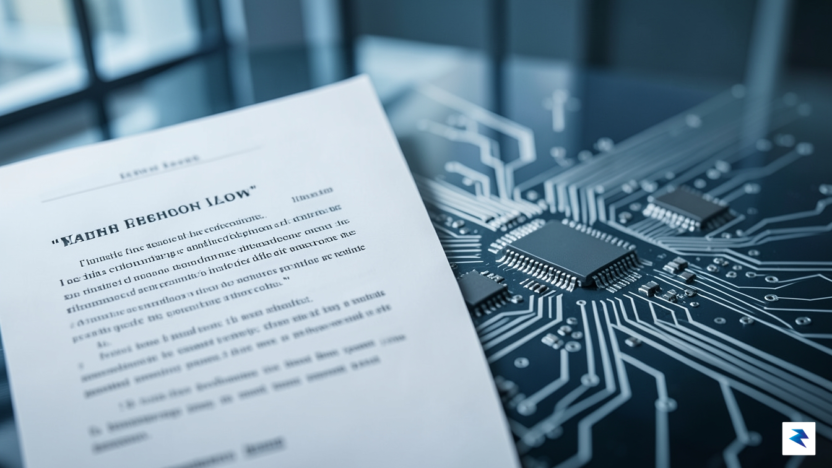

Apple has formally escalated its concerns into a full-blown legal battle against OpenAI, filing a comprehensive lawsuit that alleges a systematic and calculated pattern of intellectual property theft. At the heart of the complaint is the accusation that OpenAI has misappropriated Apple’s highly confidential hardware secrets. This alleged theft, Apple claims, was not an accidental or isolated incident, but rather a deliberate strategy to bolster OpenAI’s own nascent yet ambitious hardware development initiatives. The lawsuit paints a picture of a competitor leveraging stolen innovations to accelerate its roadmap and gain an unfair advantage in a fiercely competitive technological landscape, fundamentally undermining the principles of fair play in innovation.
Apple’s filing meticulously outlines several instances where it believes OpenAI accessed and utilized proprietary information crucial to its hardware endeavors. These alleged trade secrets encompass a wide array of confidential data, from detailed schematics and manufacturing processes to internal research methodologies and design specifications for unreleased hardware components. In the realm of hardware research and development, a trade secret can include anything that provides a competitive edge and is not generally known outside the company, such as unique battery chemistries, custom chip architectures, advanced thermal management solutions, or sophisticated sensor designs. Apple’s legal team is asserting that these specific confidential details, painstakingly developed over years and representing significant investment, were improperly acquired and exploited by OpenAI, directly impacting their burgeoning hardware projects.
While the exact timeline of the alleged theft remains a critical point of contention, Apple’s lawsuit suggests a pattern of misappropriation that aligns with OpenAI’s increasing interest and public statements regarding hardware development. The complaint implies that the unauthorized access and utilization of these secrets intensified as OpenAI began to pivot more aggressively towards integrating its artificial intelligence models with custom hardware solutions, moving beyond purely software offerings. Apple’s investigative efforts likely involved forensic analysis of data logs, internal communications, and potentially even reverse engineering of OpenAI’s publicly discussed hardware prototypes to identify alarming similarities with its own proprietary designs. The legal documents will undoubtedly delve into the specific dates and methods through which this sensitive information is believed to have been siphoned off, forming a crucial part of the evidentiary basis for their claims.
To protect its invaluable intellectual property, Apple is primarily invoking trade secret law, which is specifically designed to safeguard confidential business information that provides a competitive advantage. The lawsuit seeks significant monetary damages for past infringements and, crucially, asks for comprehensive injunctive relief. Injunctive relief would legally compel OpenAI to cease any further use or dissemination of the allegedly stolen secrets, effectively halting their progress on any hardware initiatives built upon Apple’s innovations and potentially forcing a complete redesign. Furthermore, Apple may also pursue claims under unfair competition statutes, arguing that OpenAI’s actions constitute a breach of ethical business practices and have unlawfully undermined Apple’s market position. This multi-pronged legal approach underscores the severity of the alleged theft and Apple’s unwavering determination to defend its technological supremacy.

The recent lawsuit involving Apple and OpenAI, while specific in its allegations of stolen hardware secrets, shines a spotlight on a far broader, systemic challenge inherent to Silicon Valley: the continuous, high-stakes migration of top-tier talent between competing tech giants. This ‘revolving door’ culture, where engineers, designers, and executives frequently move between companies, has long been a double-edged sword. On one hand, it fuels innovation through the cross-pollination of ideas and experiences; on the other, it creates an enduring tension over what constitutes an individual’s personal skill set versus a company’s closely guarded intellectual property.
At the heart of these disputes lies a fundamental difficulty: distinguishing between an engineer’s invaluable general expertise—their accumulated knowledge, problem-solving abilities, and broad industry experience—and the specific, proprietary trade secrets belonging to their former employer. When a highly skilled hardware engineer, steeped in the intricacies of designing cutting-edge components, transitions from an established titan like Apple to an agile AI startup such as OpenAI, the lines inevitably blur. Their new role undoubtedly benefits from their deep understanding of hardware capabilities and limitations, knowledge refined over years at a leading-edge firm. The question then becomes whether this constitutes a natural progression of their career or an illicit transfer of protected information.
This ambiguity is precisely where non-compete agreements and other legal instruments attempt to draw boundaries, though often with mixed success. These agreements aim to safeguard intellectual property by restricting where and how former employees can work, but their enforceability varies significantly by jurisdiction and often raises complex ethical questions about an individual’s right to pursue their chosen career path. The challenge for companies like Apple isn’t just proving that an engineer possesses valuable knowledge, but demonstrating unequivocally that specific, identifiable trade secrets were either deliberately taken, disclosed, or are inherently impossible to separate from the individual’s ‘general’ experience in their new role. This often leads to protracted, costly legal battles, highlighting the immense difficulty in policing the intangible asset of human knowledge in a fast-evolving industry.
The pressures of high-stakes recruiting further complicate this landscape, impacting corporate culture and the very nature of innovation. Companies are locked in a relentless battle for the brightest minds, offering lucrative packages and exciting new challenges that entice talent to move. This competitive environment, while driving up salaries and benefits for engineers, also forces companies to implement ever more stringent internal security measures and IP protection protocols. While essential for safeguarding investments, an overly restrictive environment can inadvertently stifle the collaborative spirit and free exchange of ideas that are often crucial for groundbreaking innovation. The constant threat of litigation can create an atmosphere of suspicion, potentially limiting internal discussions or making employees hesitant to share their full breadth of knowledge for fear of future legal repercussions, thus paradoxically slowing down the very innovation it seeks to protect.
Ultimately, the ongoing struggle to define and protect intellectual property in an era of fluid talent movement will continue to shape the tech landscape. As the lines between hardware, software, and artificial intelligence increasingly converge, the legal and ethical quandaries surrounding engineers migrating between specialized sectors will only intensify. This systemic challenge demands not just legal clarity but also a careful re-evaluation of how companies foster innovation while respecting both their own proprietary assets and the fundamental career aspirations of their invaluable human capital. The outcome of cases like Apple’s against OpenAI will undoubtedly set precedents, but the underlying tension is a permanent feature of the dynamic, talent-driven world of technology.

Perhaps the most surprising and strategically intriguing aspect of Apple’s recent legal action against OpenAI is the explicit inclusion of IO Products, the hardware startup founded by none other than Apple’s legendary former Chief Design Officer, Jony Ive. Ive, a figure synonymous with Apple’s most iconic designs, from the iMac to the iPhone, left the company in 2019 to establish his design firm, LoveFrom, which subsequently launched IO Products. His new venture’s sudden appearance as a defendant in this high-stakes intellectual property dispute adds a profound layer of complexity and speculation, suggesting Apple’s concerns extend far beyond a simple AI model’s training data.
Jony Ive’s legacy at Apple is virtually unparalleled, defined by a minimalist aesthetic and a relentless pursuit of user-centric design that transformed not just technology but also consumer expectations globally. He was the creative force behind products that defined an era, meticulously crafting the physical forms and user interfaces that made Apple devices beloved and revolutionary. His departure marked the end of an era, but his influence on Apple’s design philosophy remains indelible. Therefore, any perceived collaboration or strategic alignment between Ive’s current endeavors and a competitor like OpenAI would understandably raise red flags within Cupertino, particularly if it touches upon the very hardware innovation and design principles that Ive himself helped cultivate at Apple.
The alleged bridge between OpenAI’s ambitious artificial intelligence goals and IO Products’ hardware design philosophy is where the narrative becomes particularly compelling. OpenAI, at the forefront of AI development, is increasingly exploring how its advanced models can manifest in physical forms, moving beyond purely software-based applications. This often necessitates bespoke hardware solutions, designed from the ground up to integrate seamlessly with AI capabilities, optimize performance, and deliver novel user experiences. Given Jony Ive’s unparalleled expertise in crafting intuitive, groundbreaking hardware, a potential partnership with OpenAI could be seen as a formidable threat, capable of developing an integrated AI-hardware ecosystem that directly challenges Apple’s tightly controlled product strategy. Apple’s lawsuit seems to imply that such a collaboration might leverage design principles or even specific hardware “secrets” that originated within its own walls.
From a strategic legal standpoint, the naming of IO Products as a defendant is a calculated move by Apple. It elevates the lawsuit from a standard intellectual property battle into a broader assertion of control over the future of integrated technology, particularly at the intersection of AI and hardware. By drawing a direct connection to its former design guru, Apple might be attempting to prevent the emergence of a rival ecosystem that benefits from Ive’s intimate knowledge of Apple’s design processes and ethos. This move also complicates OpenAI’s defense, suggesting a more elaborate alleged scheme involving not just AI model training, but also the potential for hardware development informed by proprietary insights. It underscores the immense value Apple places on its integrated hardware and software approach, and its determination to protect it from any perceived encroachment, especially from those with a deep historical connection to its core innovations.
Ultimately, the inclusion of Jony Ive’s startup transforms this legal battle into more than just an AI copyright dispute. It crafts a narrative of a potential “supergroup” alliance forming in the tech world, combining cutting-edge AI with world-class hardware design, and raises profound questions about the boundaries of intellectual property, trade secrets, and competitive innovation. This development adds significant weight to Apple’s claims, implying a comprehensive effort to leverage insights that extend beyond readily available data, reaching into the very blueprint of how innovative hardware is conceived and executed.

The current legal confrontation between Apple and OpenAI signals a profound transformation in the artificial intelligence sector: the aggressive transition toward vertical integration. For years, the industry operated under a clear division of labor where software giants relied on third-party silicon providers to power their innovations. However, as the computational demands of large language models have surged, software-first companies are increasingly viewing custom hardware as the only viable path to achieving efficiency, performance, and autonomy. This lawsuit serves as a stark reminder that as these two worlds collide, the intellectual property governing chip architecture and hardware design has become the most valuable currency in the tech ecosystem.
Transitioning from software development to hardware engineering is notoriously difficult, primarily because the physical constraints of silicon design leave little room for the “move fast and break things” philosophy common in code production. While software can be patched and updated over the air, a hardware defect can cost hundreds of millions of dollars and set back an entire product roadmap by years. Because of these stakes, AI companies often attempt to bypass the slow, expensive process of organic hardware development by poaching veteran talent from established giants like Apple. This practice has created a volatile hiring landscape where the boundary between legitimate knowledge transfer and the misappropriation of trade secrets has become dangerously blurred.

The immediate result of this litigation will likely be a “chilling effect” on talent acquisition across Silicon Valley. Companies will be forced to implement more rigorous non-compete enforcement and forensic monitoring of departing employees to ensure that proprietary design methodologies do not migrate to competitors. Consequently, the industry may see a slowdown in the cross-pollination of ideas that previously fueled rapid hardware advancements. While this might protect the competitive advantage of incumbent tech giants, it could simultaneously stifle the agility of startups that rely on hiring experienced engineers to bridge the gap between AI software and custom silicon.
The legal battle over hardware secrets marks the end of the “wild west” era of AI talent mobility, ushering in a period of intense intellectual property protectionism that will redefine how AI hardware is built and scaled.
Looking ahead, this dispute could force a strategic shift toward more formalized industry collaborations. Rather than risking high-stakes litigation, AI companies may begin to favor strategic partnerships or licensing agreements with traditional semiconductor manufacturers, treating hardware as a co-developed asset rather than a closely guarded secret stolen in the dark. Ultimately, if the industry is to continue its rapid pace of innovation, it must find a way to navigate these legal minefields without sacrificing the open exchange of technical talent that has historically been the lifeblood of technological progress. The outcome of this case will likely serve as a foundational precedent for how the next generation of AI-integrated hardware is governed, litigated, and ultimately brought to market.
At the heart of this legal confrontation lies a fundamental tension between the sanctity of intellectual property and the fluid, often collaborative nature of modern technological development. Apple’s position rests on the assertion that its proprietary hardware architecture—the result of billions of dollars in R&D and years of iterative engineering—has been misappropriated to give OpenAI an unfair advantage. From this perspective, the lawsuit is a necessary act of corporate defense, aimed at preventing the erosion of trade secrets that define Apple’s competitive moat. If major tech firms cannot protect their unique hardware designs from being funneled into competitors’ AI infrastructure, the incentive to invest in groundbreaking, high-risk hardware innovation could diminish significantly, potentially stifling the very progress that keeps the industry moving forward.
Conversely, the defense or surrounding industry observers might argue that this litigation represents a strategic attempt by an incumbent giant to exert control over a rapidly shifting landscape. In the world of AI, hardware and software are increasingly intertwined, and the lines of “secret” design can become blurred when talent moves between firms and open-source standards gain traction. OpenAI and its supporters might posit that what Apple labels as theft is, in reality, the natural trajectory of competitive evolution. By aggressively litigating these claims, Apple risks setting a precedent that could chill cross-industry collaboration and discourage the mobility of top-tier engineering talent, which has historically been the lifeblood of Silicon Valley’s innovation cycle.
The outcome of this case will likely serve as a litmus test for how courts define the boundary between “proprietary innovation” and “industry-standard evolution” in the age of artificial intelligence.
This case also forces a deeper conversation about the future of tech competition. If the courts rule in favor of Apple, it may usher in a more litigious era where hardware specifications are guarded with extreme secrecy, potentially creating isolated silos that hinder the interoperability required for the next generation of AI. On the other hand, a ruling for OpenAI could signal that hardware designs are increasingly viewed as commoditized inputs, forcing incumbents like Apple to shift their focus even more rapidly toward software-defined differentiation. Ultimately, the industry must find a delicate balance; it must protect the investments of original creators without creating a legal environment that allows market leaders to use the courts as a weapon to hinder the next wave of disruptive challengers.

As the legal battle unfolds, the implications will ripple far beyond these two companies. Regulators and industry analysts are watching closely to see if this dispute leads to clearer guidelines regarding the transfer of technical knowledge between entities. Whether this is viewed as a clear-cut case of corporate espionage or an aggressive maneuver to stifle competition, the final judgment will undoubtedly reshape how Silicon Valley treats its most guarded technological assets for years to come.
You must be logged in to post a comment.