Is the Late-Night Talk Show Moving to YouTube for Good?
The Evolution of Late-Night Talk For nearly half a century, the late-night talk show stood as the undisputed cultural heartbeat of American…

If you have spent any time recently shopping for a new smartphone, a sleek ultrabook, or the latest gaming console, you have likely noticed a jarring discrepancy between your expectations and the price tags staring back at you. We have officially moved past the era where hardware prices remained relatively static or even saw incremental decreases due to economies of scale. What was once a predictable cycle of diminishing costs for increasing performance has been shattered, replaced by a relentless climb in Manufacturer’s Suggested Retail Prices (MSRPs) that shows no sign of cooling down. This isn’t merely a temporary fluctuation; we are witnessing a fundamental shift in the economics of personal technology where the “price plateau” we once took for granted has been permanently dismantled.
It is tempting to dismiss these upward trends as simple corporate profiteering, but the reality is significantly more complex and structural. While companies are certainly protective of their margins, they are operating within a global ecosystem that is currently facing a “perfect storm” of logistical and economic pressures. The transition from the pandemic-era supply chain chaos to today’s reality of geopolitical instability, localized trade wars, and the rising cost of rare earth mineral extraction has fundamentally altered the baseline cost of production. Manufacturers are no longer just absorbing these expenses; they are passing them on to the consumer as the cost of keeping high-end innovation alive in a world of limited resources.
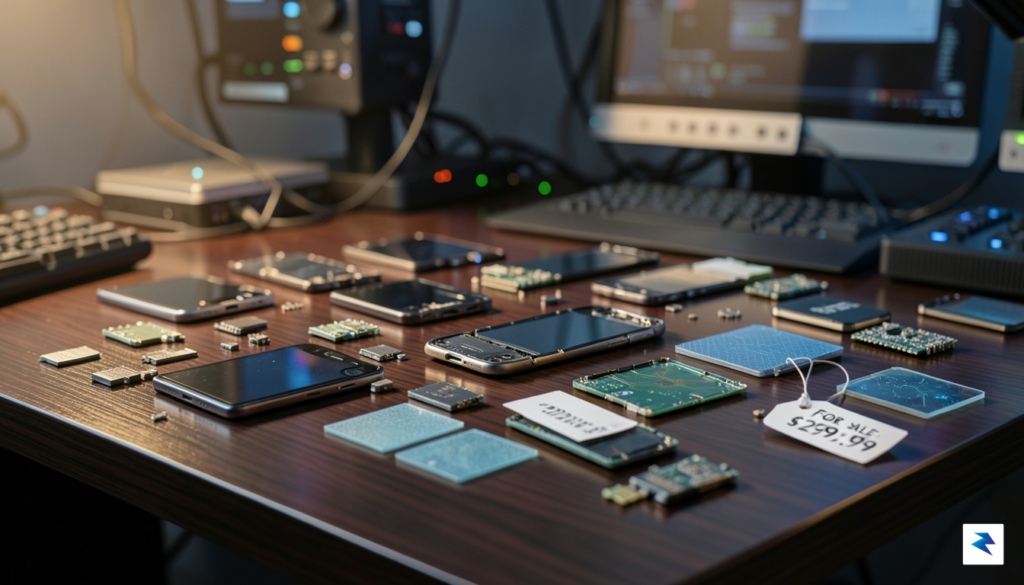
The era of “cheap tech” was largely built on a fragile foundation of optimized global logistics and low-cost labor that is no longer sustainable in the current geopolitical climate.
Furthermore, the nature of the hardware itself has changed, contributing to a higher entry barrier. Today’s devices are packed with increasingly complex components, such as sophisticated neural engines for artificial intelligence, advanced thermal management systems, and high-density battery arrays that require expensive, specialized manufacturing processes. When you purchase a flagship gadget today, you are paying for a level of miniaturization and computational power that was considered science fiction just a decade ago. As these technologies migrate from the bleeding edge to the mainstream, the underlying costs of R&D and specialized fabrication mean that the floor for what constitutes a “standard” device has been lifted significantly. Consequently, consumers are finding that even mid-range options are inching toward the price points that used to define the absolute top of the market, signaling a new, more expensive normal for the entire industry.

The recent surge in artificial intelligence development has triggered a seismic shift in how the world’s most advanced semiconductor foundries allocate their limited manufacturing capacity. Historically, chip production was balanced across a diverse ecosystem of products, ranging from budget-friendly smartphones to high-end laptops and automotive sensors. However, the insatiable demand for powerful GPUs—specifically those designed to train and run massive large language models—has fundamentally disrupted this equilibrium. Tech giants are currently engaged in an unprecedented arms race to secure computing power, effectively turning data center hardware into the industry’s most coveted commodity.

Because these enterprise-grade AI chips offer significantly higher profit margins than the processors found in everyday consumer electronics, semiconductor manufacturers are prioritizing their production schedules accordingly. When a foundry has to choose between printing thousands of complex, high-margin AI accelerators and a similar volume of consumer-grade chips, the business logic overwhelmingly favors the former. Consequently, the production lines that once churned out affordable components for tablets, smart home devices, and mid-range laptops are being repurposed or sidelined to accommodate the massive wafers required for AI infrastructure.
The cost of innovation in the cloud is being paid in the form of reduced availability and increased retail prices for the devices sitting on your desk.
This redirection of resources creates a cascading effect that hits the average consumer where it hurts most: the wallet. When the global supply of silicon is constrained by the sheer volume of AI hardware being produced, the basic laws of supply and demand dictate that the cost of manufacturing for all remaining products must rise. Manufacturers are no longer just absorbing these increased costs; instead, they are passing the burden of expensive, scarce manufacturing capacity directly to the end user. This is why we are seeing a trend where even entry-level gadgets are receiving price hikes, as companies struggle to compete for the limited factory “real estate” left over after the AI giants have taken their share.
Ultimately, the “AI infrastructure tax” is becoming an unavoidable reality for anyone looking to upgrade their tech. As long as the gold rush for artificial intelligence continues to dominate the priorities of major foundries, the availability of components for standard consumer electronics will remain under pressure. For the buyer, this means that your next gadget purchase will likely be more expensive than its predecessor, not necessarily because the device has gained revolutionary new features, but because it is competing for space in a world where silicon is increasingly reserved for the machines that power the future of generative intelligence.

While the semiconductor shortage grabbed the headlines, the reality is that the silicon inside your smartphone is only one piece of a much larger, more fragile puzzle. For decades, the tech industry operated on a just-in-time manufacturing model, prioritizing extreme efficiency and minimal inventory to keep costs low. However, that hyper-optimized approach has proven disastrous in an era of global instability. Manufacturers are now pivoting toward a just-in-case strategy, which involves stockpiling vast amounts of components and raw materials. While this shift adds a necessary layer of resilience to the supply chain, it also ties up massive amounts of capital and requires expensive warehousing, costs that inevitably get passed down to the consumer at the checkout counter.
Beyond internal inventory management, the global map of production is undergoing a profound and costly redesign. We are witnessing a transition from hyper-centralized manufacturing—often reliant on singular, low-cost regions—toward a model of regionalization. This move, often described as “de-risking,” is designed to protect companies from localized lockdowns, natural disasters, or sudden political shifts. Yet, moving production to more stable regions often means operating in labor markets where wages and safety standards are higher. While this shift arguably leads to a more sustainable and ethical supply chain, it also necessitates higher product pricing to cover the increased overhead of building infrastructure in new territories.

The final sticker price of your next gadget is also being squeezed by the volatile intersection of energy costs and logistical hurdles. Shipping remains a significant expense; the cost of transporting goods across oceans has remained elevated compared to pre-pandemic levels due to rising fuel prices and complex geopolitical tensions that force cargo ships to take longer, less efficient routes. Furthermore, the push for green energy and carbon neutrality, while vital for the planet, has introduced new compliance costs for manufacturers. Factories must now invest heavily in sustainable power and supply chain transparency, all of which contribute to the upward pressure on hardware margins.
The era of cheap, disposable electronics was built on a fragile, globalized foundation that prioritized speed over security. As that foundation shifts toward resilience, we must prepare for a marketplace where stability is a premium feature.
Ultimately, these pressures are not temporary blips that will resolve once the market “cools off.” Instead, they represent a permanent structural change in how our devices are conceived, built, and transported. As companies navigate the delicate balance between international trade policies, localized labor laws, and the rising cost of raw materials, the era of steadily declining electronics prices appears to be drawing to a close. Consumers are now paying not just for the technology itself, but for the complex, secure, and increasingly regionalized web of logistics required to get that technology into their hands.

For over a decade, consumers grew accustomed to the predictable rhythm of the “tech cycle,” where flagship devices would be quickly superseded by cheaper, faster models. This era of hyper-commoditization, driven by aggressive mass-market scaling, is rapidly dissolving. We are currently witnessing a shift toward what can be described as a “knockout round” of hardware pricing, where manufacturers are no longer fighting for the lowest common denominator. Instead, the industry is pivoting away from the race to the bottom, effectively signaling that the days of inexpensive, rapidly depreciating gadgets are likely behind us for good.

Brands are increasingly justifying these steeper price tags by moving beyond raw specifications and focusing heavily on the “ecosystem value proposition.” Hardware is no longer sold as a standalone slab of silicon; it is now marketed as a portal to sophisticated software services, deep AI integration, and multi-year support cycles. By extending the life of a device through long-term security updates and feature drops, companies are attempting to normalize higher upfront costs. They argue that if a device remains relevant and functional for five years instead of two, the total cost of ownership remains manageable, even if the initial sticker price is significantly higher than what we saw in the past.
The transition from a volume-based sales strategy to a value-based model suggests that manufacturers are prioritizing profitability per unit over sheer market share, fundamentally changing the economics of personal technology.
This structural change also brings the concept of modularity and repairability into the spotlight. As consumers balk at rising costs, they are demanding devices that don’t become obsolete the moment a battery degrades or a screen cracks. While this shift toward longevity seems consumer-friendly, it reinforces the new reality: hardware is becoming an investment rather than a disposable commodity. Consequently, the average consumer is being forced into a much longer replacement cycle. This slower churn is not merely a temporary reaction to inflation or supply chain volatility; it is a calculated pivot by the industry to sustain growth in a saturated market where everyone already owns a smartphone, a laptop, and a tablet.
Ultimately, the premium pricing we see today is likely a permanent fixture of the landscape. As R&D costs for specialized processors and advanced software ecosystems climb, the “cheap tech” of yesteryear becomes impossible to replicate. We are entering a future where devices are curated, long-lasting, and significantly more expensive, effectively ending the era of the disposable gadget and placing the burden of longevity squarely on the consumer’s willingness to pay a premium for quality.

The era of mindless annual upgrades is rapidly coming to a close, not just because of rising price tags, but because the marginal gains between device generations have become increasingly negligible. To combat these rising costs, consumers must adopt a more calculated approach to their digital inventory. The most effective strategy starts with a shift in perspective: stop viewing electronics as disposable fashion items and start treating them as long-term investments. By shifting your focus toward devices with robust long-term software support—often evidenced by manufacturers promising five or more years of security updates—you can effectively amortize the cost of your purchase over a much longer lifecycle, making that steep initial price tag far easier to justify.
One of the smartest ways to bypass the “early adopter tax” is to embrace the one-generation-behind rule. In almost every category, from flagship smartphones to high-end laptops, the previous year’s model remains a top-tier performer that lacks only the most superficial bells and whistles. When a new iteration launches, retailers and secondary markets are often flooded with the outgoing model at significant discounts. By waiting just twelve months, you can secure hardware that is still highly capable and fully supported by current software standards, often saving hundreds of dollars in the process. This strategy allows you to enjoy premium quality without subsidizing the heavy marketing budgets associated with brand-new product launches.

Beyond choosing the right device, how you maintain it is equally critical. The Right to Repair movement has gained significant momentum, and savvy consumers should prioritize brands that offer accessible parts, official service manuals, and modular designs. Before committing to a purchase, research whether a battery or screen replacement is a feasible DIY project or if it requires a prohibitively expensive trip to a manufacturer-authorized center. Choosing hardware that allows for simple repairs can extend the usable life of your device by several years, preventing you from being forced into an upgrade simply because a single component reached its end of life.
True value is found not in the lowest purchase price, but in the lowest cost-per-day over the entire lifespan of the device.
Finally, it is essential to cultivate the discipline to distinguish between a functional necessity and a luxury upgrade. Before hitting the “buy” button, ask yourself if your current device is actually failing to meet your needs or if you are simply reacting to the dopamine hit of new feature announcements. If your existing smartphone handles your daily tasks with ease and your laptop still runs your necessary software, the most financially responsible decision is almost always to wait. By resisting the urge to chase the latest hardware, you not only insulate yourself from the current inflationary environment but also build a more sustainable habit that prioritizes utility over status.
You must be logged in to post a comment.