
Leveling Up Together: How Gaming Became Our Best Family Ritual
Bridging the Generational Gap Through Shared Gameplay For many years, video games were relegated to the stereotype of a solitary, dimly lit…


The prevailing narrative in artificial intelligence often suggests that bigger is always better. We have grown accustomed to the era of gargantuan, general-purpose models like GPT-4, which are designed to summarize literature, write code, and engage in casual conversation across virtually any topic. However, when these massive architectures are applied to niche scientific disciplines—such as seismology—they frequently encounter a “knowledge ceiling.” Generalist models are trained on the vast, noisy expanse of the open internet, which provides a broad vocabulary but often lacks the rigorous, high-fidelity precision required to interpret the subtle, non-textual patterns embedded in geological sensor data. In the realm of earthquake detection, a model that can write a poem about a tremor is far less valuable than one that can distinguish between the background noise of a bustling city and the distinct, high-frequency signature of a developing tectonic rupture.
This realization has sparked a quiet revolution: the rise of Small Language Models (SLMs). Unlike their massive counterparts, SLMs are architected for surgical focus, prioritizing depth of understanding within a specific domain over breadth of general knowledge. By restricting the scope of the model to seismic waveforms and geophysical datasets, we can achieve a higher density of relevant information per parameter. This transition is not merely about saving computational resources; it is about eliminating the “hallucination” risk that often plagues general models when they are forced to speculate on complex scientific phenomena for which they have no foundational expertise.

A common shortcut in AI development is fine-tuning—taking a pre-existing general model and “teaching” it a new subject. While this approach is efficient for tasks like customer service chatbots, it is often inadequate for deep scientific inquiry. When you fine-tune an existing model, you are essentially trying to patch a new layer of logic onto a foundation built for human language, not physics. By contrast, training a model from absolute scratch allows us to define the architectural “vocabulary” of the system based entirely on seismic principles. Every parameter in a 113M-parameter model built from the ground up is optimized specifically for waveform analysis, resulting in a system that is not only more accurate but also drastically more efficient to deploy in real-time, resource-constrained field environments.
The true power of AI in science lies not in its ability to mimic human conversation, but in its capacity to perceive signals that remain invisible to conventional statistical methods.
Ultimately, the future of earth science does not rely on building ever-larger digital brains that try to know everything; it relies on building specialized, lean architectures that know one thing perfectly. By moving away from the “one-size-fits-all” mentality, we open the door to a new generation of scientific tools that are faster, more transparent, and significantly more reliable. When we strip away the bloat of general-purpose training, we aren’t just creating a smaller model—we are creating a sharper lens through which to view the volatile, shifting movements of our planet.

In the world of artificial intelligence, there is an often-repeated misconception that bigger is always better. While massive models with hundreds of billions of parameters dominate the headlines, they frequently bring prohibitive hardware requirements and sluggish inference speeds that make them impractical for real-time geophysical monitoring. By intentionally constraining this earthquake-focused model to a 113-million parameter footprint, the project pivots away from brute-force scale and toward architectural precision. This specific parameter count serves as a “sweet spot,” providing enough representational capacity to capture the complex, non-linear signatures of seismic waves while remaining lean enough to operate on standard research-grade hardware.
The decision to build at this scale is rooted in the practical realities of earthquake detection, where latency is literally a matter of life and safety. Larger models often suffer from high computational overhead, meaning the time it takes to process a single seismic stream could be the difference between an early warning and a missed window of opportunity. A 113M-parameter model allows for rapid inference, enabling the system to evaluate incoming raw waveform data in near real-time without requiring a supercomputing cluster. This accessibility is vital for individual researchers and local observatories that need high-performance tools without the astronomical energy costs or the need for enterprise-level GPU infrastructure.
Efficiency is not just about saving electricity; it is about democratizing access to advanced diagnostic tools that were previously locked behind the gates of massive corporate labs.
Furthermore, structural complexity is frequently a double-edged sword in machine learning. When a model is too large for its specific task, it risks “overfitting” to noise rather than learning the foundational physics of seismic activity. By carefully tuning the depth and width of this model, we ensure that the architecture is perfectly aligned with the signal-to-noise ratios typically found in seismograms. This creates a focused, high-fidelity instrument that treats earthquake detection as a specialized craft rather than a general-purpose language task. The result is a system that is not only faster and cheaper to run but also more robust when confronted with the unique, messy, and often unpredictable data streams that characterize real-world seismic events.
Ultimately, this approach demonstrates that thoughtful design choices can outperform sheer volume. By prioritizing architectural efficiency, we have created a tool that behaves like a scalpel rather than a sledgehammer. This 113M-parameter model proves that when you understand the underlying domain—in this case, the mechanics of how the Earth moves—you can achieve state-of-the-art results with a fraction of the computational weight typically expected in modern AI development.
The foundational challenge in building a seismic transformer lies in the fundamental mismatch between the physical world and digital architecture. Seismic sensors do not record discrete words or clear-cut images; they capture a high-frequency, continuous stream of ground velocity measurements that are inherently noisy and prone to environmental interference. To bridge this gap, the raw waveform data must undergo a rigorous transformation process, converting chaotic analog vibrations into a structured, numerical language that a 113M-parameter model can parse. This process begins with data ingestion, where we ingest vast archives of historical seismic records, ensuring that every signal is normalized to a standard sampling rate to maintain temporal consistency across different global monitoring stations.

Once the raw data is ingested, it must be cleansed to remove non-tectonic artifacts. Earthquakes are often buried under a barrage of “noise”—the subtle vibrations caused by ocean waves, industrial machinery, or even passing traffic. We apply a series of bandpass filters to isolate the specific frequency bands where tectonic energy resides, effectively stripping away the background hum that would otherwise confuse the model. This cleaning phase is critical; a transformer is only as reliable as the clarity of its input. By normalizing amplitudes and removing erratic signal spikes, we ensure that the model focuses exclusively on the distinct physical signatures of seismic ruptures rather than noise-induced anomalies.
The core of the architecture lies in the quantization of motion: by discretizing the waveform into a sequence of tokens, we allow the transformer to apply the same self-attention mechanisms that power modern language translation to the prediction of geological events.
The final and most innovative step is the tokenization strategy, which treats segments of a waveform much like sub-words in a natural language processing model. We employ a technique that segments the continuous signal into discrete temporal windows, which are then mapped into a high-dimensional vector space. Each “token” in our vocabulary represents a specific pattern of wave motion—a brief snapshot of P-waves, S-waves, or surface wave characteristics. By converting these segments into a sequence of indices, we create a structure that the transformer can analyze to identify relationships between distant points in time. This sequence-based approach allows the model to “read” the ground movement, effectively learning the grammar of an earthquake as it evolves from a subtle tremor into a full-scale rupture.

Training a large language model on human text is a luxury of abundance, relying on the near-infinite expanse of the internet to provide billions of tokens for the machine to digest. In contrast, developing a specialized seismic model from scratch forces researchers into a landscape defined by scarcity. Unlike general-purpose AI, which can “hallucinate” plausible-sounding sentences by predicting the next probable word, a seismic model must adhere to the unforgiving constraints of geophysical reality. We cannot simply scrape a billion seismic waveforms from the web; high-quality, labeled earthquake data is notoriously difficult to curate, requiring years of meticulous observation from global monitoring networks and precise verification by seismologists. This scarcity means that every single data point carries immense weight, and the model must learn to extract meaningful features from a fraction of the information typically used to train commercial chatbots.
When you start from scratch, you lose the safety net of transfer learning—the process where a model begins with a foundational understanding of language structures and logic before being fine-tuned for a specific task. Without these pre-trained weights, the model begins its life in a state of complete ignorance regarding the fundamental physics of seismic activity. This necessitates an incredibly delicate approach to hyperparameter tuning, as the model’s internal architecture must be optimized to interpret complex, high-frequency oscillations rather than grammatical syntax. If the learning rate is too aggressive, the model may fail to capture the subtle nuances of P-wave and S-wave arrivals, essentially “skipping” the very physics it needs to master. Consequently, the training process becomes a high-stakes balancing act where we must carefully weigh data normalization, sequence length, and model depth to ensure the AI doesn’t just memorize noise, but actually learns to differentiate seismic events from environmental background interference.
The challenge lies not in the volume of data, but in the integrity of the signal; in seismic modeling, a single misplaced label can create a feedback loop of error that standard language models never have to reconcile.
Furthermore, the fundamental difference between human language and seismic signals poses a unique architectural hurdle. Language is discrete and follows established symbolic structures, whereas seismic waveforms are continuous, chaotic, and deeply embedded with environmental context. Training a 113M-parameter model to navigate these time-series signals requires us to reinvent how the model “pays attention” to incoming data. While traditional Transformer architectures are designed to focus on the relationships between words, our model had to be re-engineered to focus on the temporal correlations within seismic windows. This technical pivot is essential because, in the world of geophysics, missing the temporal relationship between two distinct waveform segments is not just a minor error—it is a total failure of detection. By tackling these hurdles head-on, we are not just building a classifier; we are teaching a machine the language of the Earth itself.
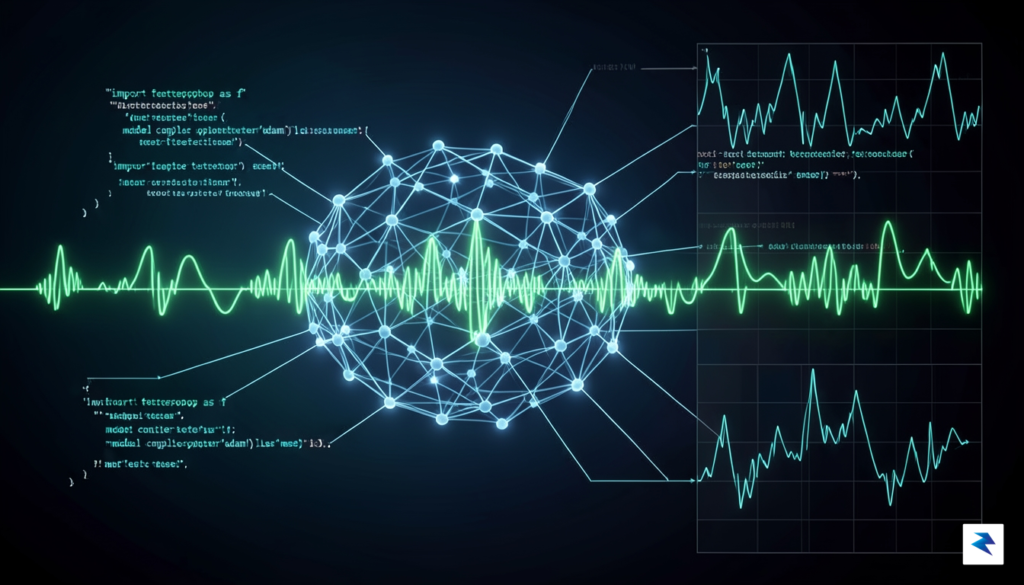
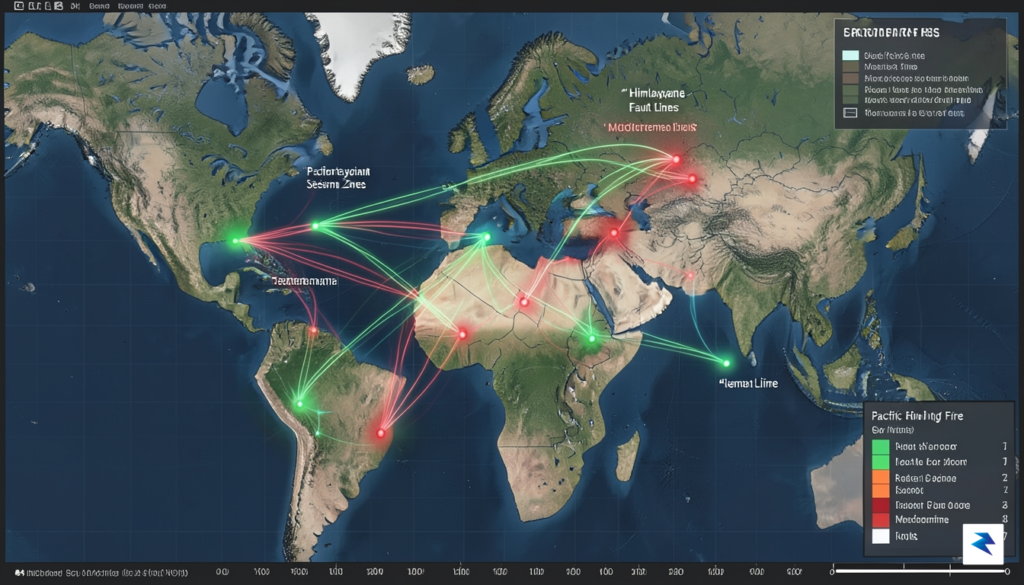
The true power of a 113-million-parameter model lies in its ability to transcend the limitations of traditional, cloud-centric seismology. Currently, most earthquake detection systems rely on transmitting raw waveform data from remote sensors to centralized servers, a process that introduces significant latency—often several precious seconds during which every millisecond matters for public safety alerts. By deploying this lightweight architecture directly at the “edge,” we move the intelligence from the data center to the sensor itself. This shift enables instantaneous local processing, allowing the hardware to distinguish between seismic noise and a genuine tectonic event the moment the ground begins to shift, rather than waiting for a round-trip signal back to a regional hub.
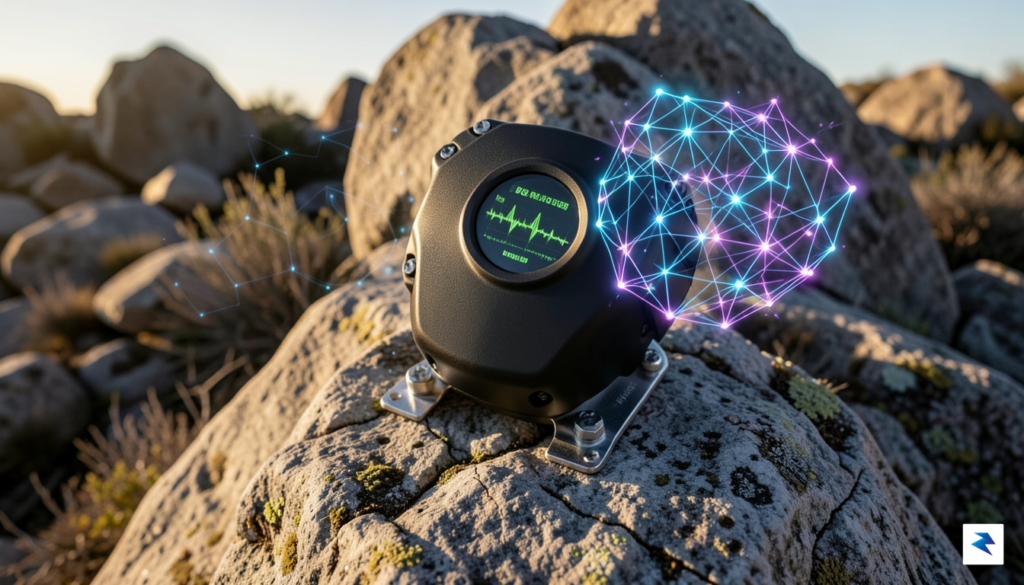
When compared to legacy statistical methods—which typically rely on short-term versus long-term average (STA/LTA) algorithms—this deep learning approach offers a massive leap in precision. While traditional algorithms are prone to false positives triggered by environmental noise like heavy traffic, construction, or even localized weather patterns, a trained LLM can interpret the complex, nuanced patterns inherent in seismic signals. Because the model has been trained on a massive corpus of geological data from scratch, it functions as a highly sophisticated pattern recognition engine. It doesn’t just see a spike in amplitude; it understands the specific signature of P-waves and S-waves, effectively filtering out the “chatter” of the modern world to provide a more reliable, nuanced detection output.
The integration of edge-based AI into our existing geophysical infrastructure represents a paradigm shift: we are moving from reactive monitoring to proactive, autonomous detection systems that can save lives through speed alone.
Looking toward the future, the roadmap for this technology involves a phased integration into existing disaster response frameworks. The immediate goal is to embed these models into low-power field devices, ensuring they can operate for months or years on battery or solar power without needing constant connectivity. As the model gains maturity, we anticipate it will be integrated into the back-end of national early-warning systems, acting as a secondary verification layer that can trigger automated shutdowns for critical infrastructure—such as high-speed trains, power grids, and gas pipelines—before the most damaging shaking arrives. By shrinking the footprint of the AI without sacrificing the depth of its inference capabilities, we are not just improving seismology; we are effectively buying time for communities to prepare for the unexpected.
Embarking on the journey to train a specialized large language model (LLM) from the ground up requires more than just raw computational power; it demands a shift in how we approach domain-specific data. By utilizing frameworks like Andrej Karpathy’s nanoGPT, developers can demystify the “black box” of AI training and tailor architectures specifically for the nuances of scientific literature. The primary takeaway for the developer community is that you do not need billions of parameters to achieve meaningful results in a niche field. Instead, focusing on the quality and integrity of your training corpus—in this case, vast archives of seismological data and geological research—is the most effective way to ensure the model learns the underlying physics rather than just superficial patterns.
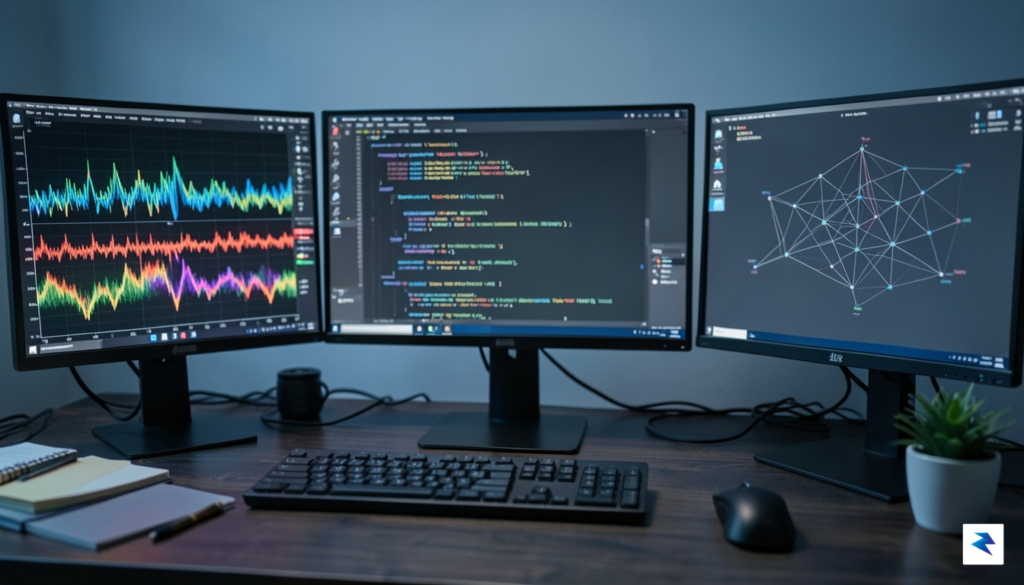
For those looking to replicate this success, the technical path involves rigorous data preprocessing and a commitment to iterative testing. Scientific datasets are rarely “model-ready,” often requiring extensive cleaning to strip away non-essential metadata and noise that could otherwise derail the training process. I recommend establishing a robust pipeline early on that prioritizes data tokenization efficiency, as this will significantly impact how well your model interprets specialized terminology. It is equally important to monitor loss curves closely during the early stages; these logs are not just metrics but a narrative of how your model is beginning to perceive the fundamental concepts of your chosen scientific domain.
The true value of a custom-trained model lies not in its ability to mimic human speech, but in its potential to act as a specialized analytical engine that can sift through decades of scientific research at superhuman speeds.
Beyond the technical architecture, there is a profound necessity for open science practices within the developer community. When researchers share their ‘from-scratch’ training logs, including both the successful benchmarks and the inevitable failed experiments, they provide a roadmap for others to follow, effectively accelerating the pace of innovation across the industry. By documenting the hyperparameters, the specific hardware configurations used, and the challenges encountered during tokenization, you transform your project from an isolated effort into a foundational resource. Embracing transparency in your methodology—even when the results are imperfect—fosters a culture of collaborative learning that is essential for bridging the gap between cutting-edge machine learning and the practical, often messy, realities of scientific discovery.
nanoGPT to focus your efforts on architectural customization rather than reinventing the wheel.You must be logged in to post a comment.