Mastering Your Glucose: 5 Smartwatch Settings for Better Health Tracking
The Importance of Contextual Glucose Monitoring The evolution of wearable technology has fundamentally altered the landscape of diabetes…

The landscape of artificial intelligence is shifting under our feet at a pace that makes yesterday’s breakthroughs feel like legacy technology. While the industry is obsessed with clever marketing slogans and abstract performance benchmarks, the true measure of these models is no longer found in how well they can summarize a poem or generate a witty email. Instead, the real battlefield has moved to the integrated development environment. As we march toward the promise of AGI, the most critical test for any large language model is its ability to turn vague requirements into functional, maintainable, and bug-free application code.
For too long, we have relied on static benchmark tests to gauge model intelligence, yet these standardized tests often fail to capture the nuance of real-world software engineering. A model might score in the 99th percentile on a coding theory exam, only to collapse when tasked with integrating a complex third-party API or debugging a race condition in a multi-threaded architecture. Theoretical knowledge is a far cry from the practical application of building software, which requires context awareness, structural foresight, and the ability to troubleshoot cascading errors. Because of this gap, empirical evidence derived from actual “build-offs” provides a much clearer picture of which tools are genuinely ready to assist in professional-grade development.

To move past the hype, we decided to put the heavyweights of the current generation—Grok 4.5, GPT-5.5, and the latest iteration of Claude—to the ultimate stress test. We provided each model with the exact same set of technical specifications and project requirements, forcing them to navigate the same hurdles, constraints, and edge cases that a human developer would encounter in a production environment. By stripping away the abstraction layers, we aimed to answer a fundamental question: when the code actually needs to compile and run, which model exhibits the most reliable logic and the cleanest architectural intuition?
The true test of an LLM isn’t just its capacity for creative output, but its reliability in the high-stakes, unforgiving environment of production-grade code development.
This comparative analysis is designed to move beyond the marketing fluff that often accompanies new model releases. Throughout the following sections, we will dissect how these titans handle architectural design, error handling, and the iterative process of refinement. Whether you are a lead engineer looking to optimize your workflow or an aspiring builder navigating the AI-assisted landscape, these findings will provide the clarity you need to determine which model deserves a place in your toolkit. The era of blindly trusting promotional benchmarks is over; it is time to look at the cold, hard logic behind the code.
To ensure that our comparison of Grok 4.5, GPT-5.5, and Claude remains scientifically rigorous and beyond reproach, we established a strictly controlled experimental framework. We treated each model as a software engineer tasked with building a complex, full-stack project from the ground up: a real-time collaborative task management application. This application required a robust PostgreSQL database integration, a secure RESTful API layer, and a highly responsive React-based front end. By forcing each model to handle state management, asynchronous data fetching, and user authentication simultaneously, we were able to observe how they navigate the architectural bottlenecks that typically trip up AI assistants in real-world professional environments.
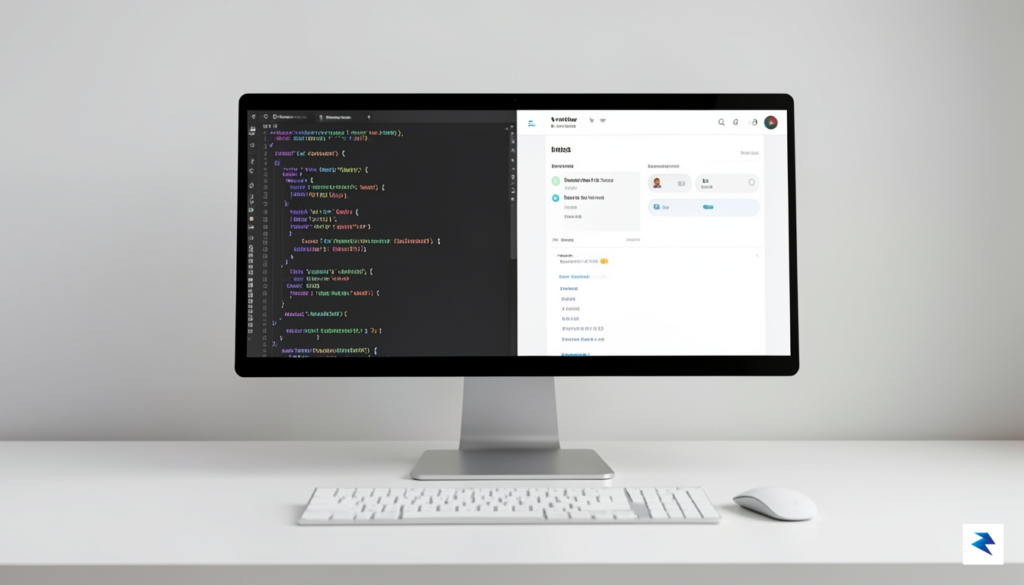
Fairness was at the core of our “level playing field” approach. We provided every model with the exact same system prompt, which outlined the core business logic, the required tech stack, and the specific security constraints. To prevent any single model from gaining an advantage through excessive context injection, we capped the initial input at a standard token limit, forcing them to rely on their internal training rather than extensive external documentation. Furthermore, we standardized the evaluation environment by running all generated code through the same automated test suite. This allowed us to measure not just the syntactical correctness of the code, but its functional viability under pressure.
The goal was not to see which model could generate the most code, but which could architect the most maintainable and secure solution under identical constraints.
We also implemented a strict “zero-hand-holding” policy during the generation phase. Each AI was given a single pass to produce the entire codebase, including the schema definitions and the UI component library. If a model provided code that failed to compile or ignored a specific constraint—such as implementing JWT-based authentication—it was penalized according to a transparent scoring rubric. This methodology effectively stripped away the “chatty” nature of these tools, focusing our analysis entirely on their ability to reason through complex engineering requirements without human intervention or iterative debugging prompts. By standardizing these variables, we ensure that the performance differences observed are truly reflective of the models’ underlying reasoning capabilities and architectural proficiency.
When evaluating the core reasoning capabilities of these models, the divergence in their architectural philosophies becomes immediately apparent. Grok 4.5 leans heavily into a raw, high-velocity approach, prioritizing immediate functional output over long-term structural elegance. Its code tends to be monolithic, favoring direct implementation of logic flows that are easy to parse but occasionally difficult to scale. While this makes for rapid prototyping, it creates a specific type of technical debt where future refactoring might be required to decouple tightly bound components.
Conversely, GPT-5.5 demonstrates a distinct preference for established design patterns, frequently defaulting to industry-standard architectures like Model-View-Controller (MVC) or clean hexagonal structures. It excels at anticipating state management needs early in the development lifecycle, often wrapping core business logic in modular interfaces before writing a single line of implementation code. This predictive style of coding acts as a safeguard against technical debt, ensuring that as the application grows, the underlying state transitions remain predictable and testable.

Claude approaches the challenge with a focus on functional purity and immutability, which fundamentally shifts how it handles state management. Rather than relying on mutable global variables or complex object-oriented hierarchies, Claude tends to build systems that utilize pure functions and reactive data streams. This leads to a codebase that is remarkably resilient to edge-case bugs, as the flow of data is strictly controlled and traceable. However, this level of abstraction can sometimes introduce a steeper learning curve for developers who prefer more traditional imperative programming styles.
The primary differentiator across these models is not just their ability to write syntax, but their philosophical approach to managing complexity: Grok optimizes for speed, GPT-5.5 for structural convention, and Claude for functional stability.
Ultimately, the way each model handles technical debt is a reflection of its underlying training priorities. Grok’s “get it working” mentality is ideal for MVPs, yet it requires a developer to be vigilant about long-term maintenance. GPT-5.5 acts more like a senior architect, enforcing standards that prevent structural decay but sometimes over-engineering simple features. Meanwhile, Claude’s reliance on functional paradigms creates high-quality, maintainable codebases that are arguably the most robust against regressions, provided the maintainer understands the functional paradigm it employs.
When evaluating the output of these three heavyweights, it becomes immediately apparent that code generation is no longer just about functional logic; it is fundamentally about the user experience. While all three models successfully scaffolded the requested applications, the divergence in their approach to frontend implementation was stark. We tasked each model with building a dashboard interface using React and Tailwind CSS, specifically demanding a mobile-first responsive layout. Claude demonstrated a nuanced understanding of modern component architecture, consistently producing modular, clean code that prioritized readability and logical separation of concerns. In contrast, while GPT-5.5 provided highly performant CSS, it occasionally struggled with container hierarchy, leading to minor alignment issues that required manual intervention to fix.
The adherence to stylistic constraints also revealed significant differences in “hallucinatory CSS”—the tendency of an AI to invent non-existent utility classes or assume pre-defined global styles that do not exist in a standard environment. Grok 4.5 exhibited a surprising level of rigor here, strictly adhering to the provided design system documentation without deviating into proprietary or broken syntax. Where other models sometimes attempted to “guess” a design pattern based on outdated web trends, Grok maintained a professional, minimalist aesthetic that felt genuinely enterprise-ready. However, GPT-5.5 excelled in interactive elements; its handling of state management for complex UI components like dropdowns and modals was remarkably intuitive, reducing the amount of boilerplate code we had to write to make the interface feel “alive.”
The true test of a coding model is not just whether the interface renders, but how gracefully it responds to the constraints of a modern, fluid design system.
Beyond simple syntax, the integration of frameworks like React was handled with varying degrees of maturity. Claude opted for hooks-based patterns that are currently the industry standard, ensuring that the code was not just functional but also maintainable for long-term development. GPT-5.5 leaned heavily into modern utility-first paradigms, producing highly efficient Tailwind snippets that significantly reduced the total lines of CSS. Grok 4.5, meanwhile, focused on accessibility, consistently including ARIA labels and semantic HTML tags that the other models occasionally overlooked. Ultimately, the choice between these models for frontend tasks depends on your specific priority: whether that is the strict adherence to design specifications, the complexity of interactive states, or the foundational quality of the markup itself.

In the world of professional software development, the initial code generation is merely the prologue to the real work: debugging. When we pushed our three contenders to iterate on their own outputs, we quickly discovered that their ability to handle “I found an error” feedback varied drastically. A model that writes brilliant code on the first attempt is impressive, but a model that can surgically address a logic flaw after being fed a cryptic error message is indispensable. We subjected each model to a rigorous cycle of feedback, intentionally providing both vague frustration—such as “this doesn’t work as expected”—and precise, copy-pasted stack traces to see how they navigated the narrowing path toward a functional build.
Grok 4.5, GPT-5.5, and Claude each demonstrated distinct personalities when confronted with a broken application. GPT-5.5 tended to be highly conversational, often explaining the *why* behind the error before suggesting a patch. It excelled when provided with specific stack traces, showing an almost uncanny ability to pinpoint the exact line of configuration that triggered an exception. However, when the feedback was vague, GPT-5.5 occasionally fell into a loop of over-optimizing unnecessary components rather than addressing the core logic gap. In contrast, Claude displayed a remarkable degree of caution; it would often rewrite larger blocks of code to ensure architectural integrity, which prevented “spaghetti” fixes but occasionally introduced new, minor regressions in unrelated modules.
The true test of a coding AI isn’t its first draft, but its patience and accuracy during the fourth or fifth iteration of a complex debugging loop.
The most fascinating divergence appeared when we presented the models with intentionally misleading or cryptic error messages. Grok 4.5 stood out for its refusal to blindly accept user input as gospel. Instead of blindly applying a patch that might break the app further, Grok would frequently run a mental “sanity check,” asking clarifying questions about the environment or asking for the specific output logs. This analytical skepticism acted as a guardrail, preventing the model from hallucinating a fix for an error that didn’t actually exist in the code base. While this made the debugging process feel slower, it resulted in much more robust, production-ready code that was less prone to the “fix-one-break-two” cycle that often plagues rapid AI development.
Ultimately, the efficiency of these models during the refinement phase hinges on their context window management and their ability to maintain intent across multiple turns. While GPT-5.5 remains the king of rapid, specific-error resolution, Claude is the superior architect when the codebase requires a structural refactor to resolve a persistent bug. Grok 4.5 occupies a unique middle ground, acting more like a senior engineer who insists on debugging the developer’s assumptions before touching the code. Developers who prefer speed will likely gravitate toward GPT-5.5, but those working on complex, multi-layered applications will find the deliberate, cautious approach of the other two models to be a significant asset in reducing long-term technical debt.

After putting Grok 4.5, GPT-5.5, and Claude through a grueling gauntlet of full-stack application development, it is clear that there is no single “god-tier” model that dominates every aspect of the software development lifecycle. Each LLM brings a distinct personality and architectural bias to the table, making the choice of tool highly dependent on your specific engineering goals. While GPT-5.5 often demonstrates superior reasoning for complex algorithmic structures, Claude consistently maintains a cleaner, more readable codebase that requires less refactoring. Meanwhile, Grok 4.5 continues to impress with its aggressive, high-speed iteration capabilities, making it a formidable contender for those who prioritize velocity over exhaustive documentation.

To help you navigate these differences, we have synthesized our findings into a strategic breakdown of where each model shines brightest. Rather than treating these models as interchangeable commodities, treat them as specialized team members:
The ideal development workflow is not about picking one model and sticking to it; it is about knowing when to switch tools based on the current stage of your project.
Ultimately, your decision should be dictated by the specific “pain point” of your current development phase. If you are in the brainstorming or experimentation phase, leverage the raw speed of Grok. As you move into the production-hardening phase, transitioning your complex modules over to GPT-5.5 will provide the stability and rigorous verification you need. Finally, for the polish and refinement phase, Claude’s ability to generate clean, readable, and well-structured code will save your team dozens of hours in technical debt. By orchestrating these models according to their unique strengths, you can build software that is not only faster to deploy but also significantly higher in quality.
You must be logged in to post a comment.