Google Photos Unveils AI Video Remix: Transform Your Clips with Cinematic Magic
Introduction: The Evolution of Mobile Video Editing In an era where nearly every pocket holds a high-definition camera, the sheer volume of…


The financial markets are currently witnessing a profound realignment of capital, a phenomenon often described by analysts as a classic “rotation trade.” For the past few years, speculative liquidity flowed freely into the digital asset ecosystem, driven by the promise of decentralized finance and the allure of high-beta returns. However, the macroeconomic environment has tightened significantly, marked by persistent interest rate pressures and a renewed focus on corporate fundamentals. As institutional investors reassess their risk appetite, they are increasingly pivoting away from the inherent volatility of crypto markets in favor of the tangible, productivity-driven growth potential promised by artificial intelligence. This shift is not merely a preference for one asset class over another; it is a strategic migration toward sectors that demonstrate immediate, scalable utility in the global economy.

Liquidity is a finite resource, and in an era where capital is no longer “cheap,” investors are forced to make binary choices about where to allocate their funds. The blockchain space, while innovative, has struggled to move beyond cyclical retail-driven narratives, often finding itself hampered by regulatory uncertainty and a lack of consistent, institutional-grade adoption. In contrast, artificial intelligence has moved from a theoretical buzzword to the primary driver of corporate earnings, with massive infrastructure investments fueling a new industrial revolution. As two blockbuster AI-focused initial public offerings loom on the horizon, the market is bracing for a significant concentration of capital. These IPOs represent the maturation of the AI sector, providing the kind of liquid, equity-based exposure that large-scale institutional portfolios require to satisfy fiduciary mandates.
The transition of capital from crypto to AI highlights a broader market maturation: institutional players are no longer chasing speculative hype cycles but are instead doubling down on infrastructure that promises to reshape global productivity and enterprise efficiency.
This evolving landscape suggests that crypto may be losing its competitive edge as the premier destination for risk-on capital. While digital assets continue to offer a unique hedge against traditional currency devaluation, they have yet to produce the kind of undeniable, broad-spectrum industrial utility that AI commands today. Consequently, as the public markets prepare for these high-profile tech entries, the opportunity cost of holding volatile digital assets is becoming increasingly clear. Investors are recognizing that while blockchain technology remains a critical piece of future financial infrastructure, the immediate “alpha” and growth potential are currently concentrated within the data centers and large-language model developers that form the backbone of the AI boom. This capital rotation could leave crypto in a period of extended consolidation, forced to wait for a new catalyst that can bridge the gap between speculative interest and genuine, long-term institutional reliance.

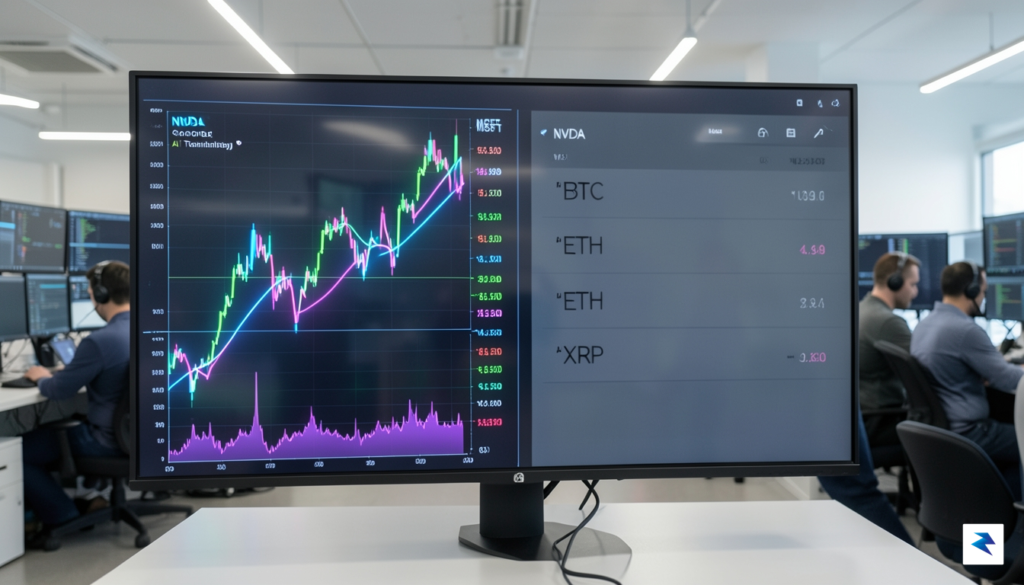
The impending public listings of two major artificial intelligence juggernauts are being framed by financial analysts as a watershed moment for global capital markets. Unlike the speculative fervor that defined the early days of crypto assets, these upcoming IPOs are rooted in tangible, revenue-generating technological infrastructure that enterprise clients are already deploying at scale. Because these companies represent the “picks and shovels” of the generative AI revolution, they are attracting a level of institutional interest that suggests a decisive pivot away from decentralized finance. Investors are no longer merely chasing the high-risk, high-reward potential of digital tokens; instead, they are seeking the perceived safety and long-term durability of AI-driven productivity gains.

This massive reallocation of capital creates a significant liquidity vacuum that could leave the crypto ecosystem struggling for relevance. When institutional giants—pension funds, sovereign wealth funds, and massive hedge funds—prepare to deploy billions into an IPO, they are effectively locking up capital that might have otherwise flowed into the volatile crypto markets. This is not just a temporary shift in sentiment; it is a fundamental redirection of liquidity toward assets that offer clear regulatory frameworks, transparent earnings reports, and direct integration into the global supply chain.
The sheer scale of these AI IPOs acts as a gravitational force, pulling institutional liquidity away from speculative digital assets and toward companies that promise to redefine corporate profitability.
Furthermore, these companies embody the transition from AI as a theoretical concept to AI as a practical, real-world utility. For the average investor, this is a compelling narrative: backing the software and hardware providers that power everything from automated logistics to advanced healthcare diagnostics. As billions of dollars are absorbed into these new equity offerings, the crypto space faces an uphill battle to prove its own utility. If the digital asset industry cannot offer a similarly compelling “real-world” application that matches the immediate impact of these AI giants, it risks being relegated to the periphery of the institutional investment landscape for the foreseeable future. The market is clearly signaling that, in this economic climate, utility and revenue-backed growth command a premium that speculative tokens currently cannot match.

At the heart of the institutional shift toward artificial intelligence lies a fundamental divergence in how capital allocators perceive value, risk, and long-term sustainability. While crypto assets have often been marketed through the lens of decentralization and future disruption, they remain plagued by a perception of high speculative volatility and opaque tokenomics. In contrast, the current wave of AI-driven enterprises presents a narrative grounded in tangible productivity gains, immediate cost reductions, and verifiable revenue streams. For a portfolio manager at a pension fund or a large asset management firm, the promise of AI—which directly enhances corporate margins and streamlines complex operations—is far easier to justify to stakeholders than the speculative nature of digital assets, which often lack a clear, immediate utility for traditional businesses.

Regulatory clarity represents perhaps the most significant hurdle for the crypto industry, yet it is precisely where AI finds its strongest foothold. Institutional investors are inherently risk-averse; they require a predictable legal framework to deploy capital at scale. The current regulatory environment surrounding crypto, characterized by ongoing enforcement actions and a lack of standardized classification, creates a level of “compliance risk” that many institutional boards find unacceptable. Conversely, AI companies—often backed by established tech giants or operating within existing corporate legal structures—offer a level of transparency and predictability that aligns with traditional fiduciary duties. This allows institutions to calculate risk-adjusted returns with much greater precision, a luxury that remains elusive in the nascent and often turbulent crypto markets.
The institutional preference for AI is not necessarily a rejection of blockchain technology, but rather a preference for investment vehicles that mirror the operational stability and revenue predictability found in traditional, high-growth industrial sectors.
Furthermore, the utility value of AI is increasingly becoming a core pillar of modern enterprise strategy rather than an abstract speculative theory. When an organization integrates AI, the result is measurable: faster software development, automated customer support, and optimized supply chain logistics. This creates an immediate, bottom-line impact that institutional investors can track through quarterly earnings reports. Because crypto projects frequently struggle to articulate a comparable “value-add” that does not rely on token price appreciation, they are increasingly being viewed as high-risk, speculative bets rather than foundational infrastructure. As long as AI continues to deliver on its promise of efficiency and productivity, it will likely remain the primary destination for institutional capital seeking growth in the tech sector.

While the looming wave of artificial intelligence IPOs has undeniably captured the lion’s share of institutional capital, it would be premature to declare the end of the digital asset era. Market sentiment is often reflexive, functioning more like a pendulum than a linear path; as investors sprint toward the high-growth potential of AI infrastructure, they are inherently creating a valuation vacuum elsewhere. Crypto, despite its recent period of relative stagnation, continues to serve a distinct purpose as a decentralized hedge. Unlike AI companies, which are largely tethered to traditional corporate governance and centralized data silos, blockchain networks offer a permissionless alternative for value storage and sovereign ownership that remains uncorrelated to the broader tech equity market.
Furthermore, the narrative of “AI versus crypto” overlooks the burgeoning potential for a technological convergence. Many industry analysts argue that these two sectors are not necessarily competing for the same soul of the financial system, but rather represent complementary layers of the next internet iteration. We are already seeing the emergence of decentralized physical infrastructure networks (DePIN) and AI-integrated blockchain protocols that utilize smart contracts to manage autonomous agent transactions. By leveraging blockchain for verifiable data provenance and AI for computational efficiency, the two industries could eventually form a symbiotic ecosystem that solves the “black box” transparency issues currently plaguing large-scale machine learning models.

The current rotation of capital is likely a cyclical rebalancing rather than a permanent departure from decentralized finance, as investors seek to diversify risk across both speculative innovation and long-term utility.
Ultimately, the concern regarding an “AI bubble” may prove to be the strongest catalyst for a crypto resurgence. Historically, when tech-heavy equity markets face a correction due to over-extended price-to-earnings ratios, institutional portfolios often rotate back into assets that provide a hedge against fiat devaluation and central bank policy. If the massive capital inflows into AI IPOs fail to yield immediate, tangible returns, or if regulatory scrutiny intensifies over data privacy concerns, blockchain assets are positioned to absorb that displaced capital. Rather than being left behind, the crypto market is merely biding its time, waiting for the inevitable moment when the market remembers the intrinsic value of censorship-resistant, decentralized financial architecture.
For the average investor, the current market climate presents a delicate balancing act: how to capture the explosive potential of artificial intelligence without abandoning the decentralized promise of digital assets. When blockbuster IPOs for foundational AI companies dominate the headlines, it is tempting to aggressively rotate capital into these high-growth sectors. However, the most prudent strategy involves viewing these shifts through the lens of risk-adjusted returns rather than simple trend-chasing. Investors should establish a core-satellite portfolio framework, where the majority of assets are held in diversified, long-term holdings, while a smaller, controlled portion is allocated toward high-velocity thematic bets. By strictly capping the percentage of your portfolio dedicated to speculative “hype” sectors, you create a defensive buffer that prevents market volatility from undermining your entire financial foundation.

Maintaining a balanced portfolio requires more than just initial asset allocation; it demands the discipline of periodic rebalancing. When AI-focused stocks surge, they often grow to represent a disproportionate share of your total holdings, inadvertently increasing your beta—or market sensitivity—to a single sector. To counteract this, investors should set predefined “rebalancing triggers” based on percentage deviations rather than emotional reactions to daily news cycles. For example, if a specific sector exceeds its intended allocation by 5% or more, consider trimming those positions to lock in gains and reinvesting the proceeds into undervalued assets, whether they be established crypto protocols or traditional equities. This systematic approach forces you to adhere to a “sell high, buy low” mentality, preventing the common trap of becoming over-exposed to a sector just as it reaches a cycle peak.
True long-term conviction is not about clinging to an asset regardless of market conditions; it is about having a well-defined thesis that survives the noise of short-term volatility.
Ultimately, the challenge lies in distinguishing between transient speculation and genuine technological paradigm shifts. While AI and crypto both represent generational leaps in computing and finance, they operate on different maturity timelines. Investors must cultivate a mindset that values durability over immediate price action. Instead of rotating out of crypto every time a new AI unicorn prepares for an IPO, look for areas where these two technologies might converge or provide complementary utility. By maintaining a diversified stance, you ensure that your portfolio remains resilient, allowing you to benefit from the growth of artificial intelligence without being left vulnerable if the initial market excitement undergoes a necessary correction. Focus on the underlying fundamentals of your chosen assets, and remember that patience is often the greatest competitive advantage in a high-velocity market.
You must be logged in to post a comment.