
John Deere and the Right to Repair: What the FTC Settlement Means for Farmers
The Evolution of the Right to Repair Movement For generations, the American farmer was defined by an intimate, hands-on relationship with…

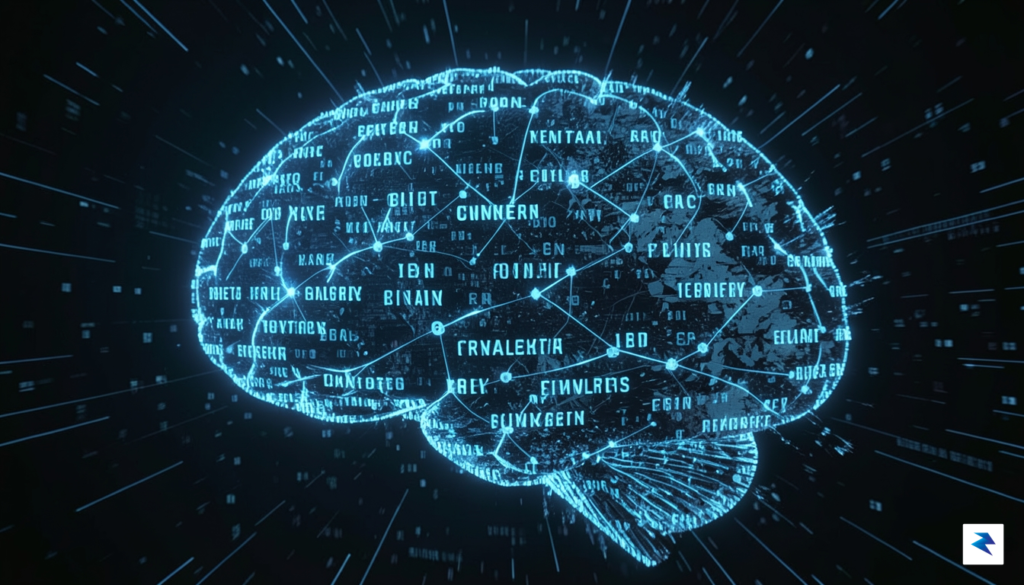
Large Language Models (LLMs) have undeniably revolutionized how we interact with technology, demonstrating an astonishing ability to generate coherent, contextually relevant, and even creative text. They can write essays, answer complex questions, and even engage in nuanced conversations, often mimicking human communication so effectively that it’s easy to mistake their output for genuine understanding. However, beneath this impressive linguistic facade lies a fundamental limitation: LLMs, in their current form, are essentially sophisticated pattern-matching machines. They operate by predicting the most probable next word in a sequence based on the immense datasets they’ve been trained on, creating what researchers sometimes colloquially refer to as “stochastic parrots” – brilliant at mimicking speech, but lacking true comprehension.
The core issue stems from the nature of their training data. LLMs are fed colossal amounts of text from the internet, encompassing books, articles, websites, and dialogues. From this vast sea of information, they learn statistical relationships between words and phrases. They discover that when certain words appear, others are likely to follow. This enables them to construct grammatically correct and semantically plausible sentences, but it doesn’t equip them with an internal model of the world. They can describe the laws of physics if those laws are written down in their training data, but they don’t actually understand gravity in the way a child does by dropping a ball, or friction by pushing a toy car across different surfaces.
Consequently, predicting the next word, however accurately, is not equivalent to understanding the causal fabric of reality. Humans acquire knowledge through a rich tapestry of sensory experiences, motor interactions, and social contexts, constantly forming and refining mental models of how the world works. We learn that if we push an object off a table, it will fall due to gravity; if we apply too much force, something might break. This kind of experiential, physical knowledge is entirely absent from text-only datasets. The internet, while incredibly broad in its coverage of human thought and expression, provides a static, two-dimensional representation of a dynamic, three-dimensional world. It describes outcomes but rarely offers the interactive feedback loops crucial for developing true causal reasoning.
This reliance on static textual data means that LLMs struggle significantly with counterfactual reasoning and genuine problem-solving in novel physical scenarios. They can infer correlations from the sheer volume of text they process – for example, that “rain” is often followed by “wet ground” – but they don’t grasp the underlying causal mechanism. If presented with a situation not explicitly described in their training data, such as how to stack irregular objects without them toppling over, an LLM would likely falter. Their knowledge is confined to the patterns observed in past descriptions, rather than a generative understanding that allows them to simulate and predict physical interactions in real-time. This profound gap between linguistic proficiency and experiential world-modeling represents a significant ceiling for their development towards Artificial General Intelligence (AGI).
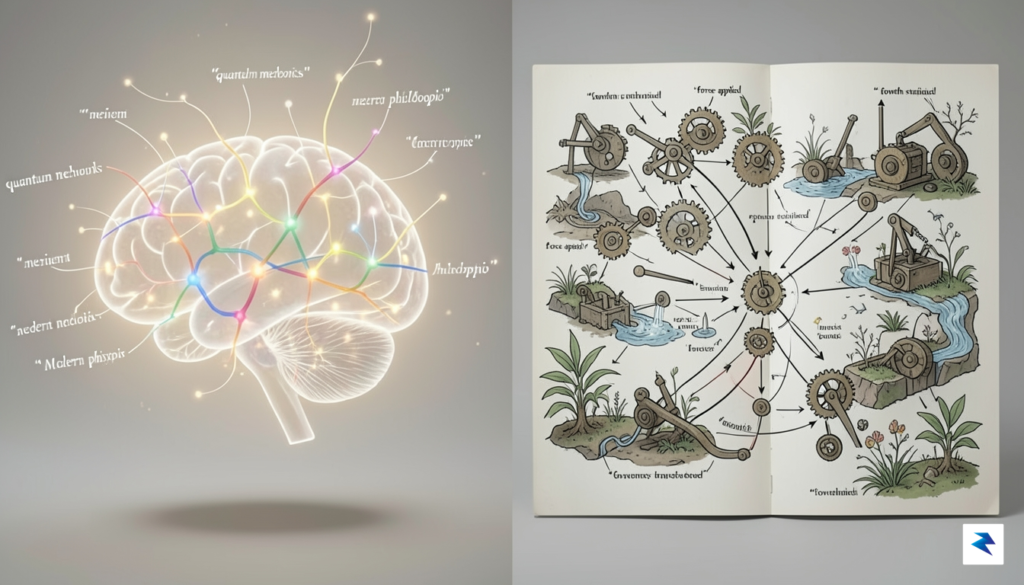
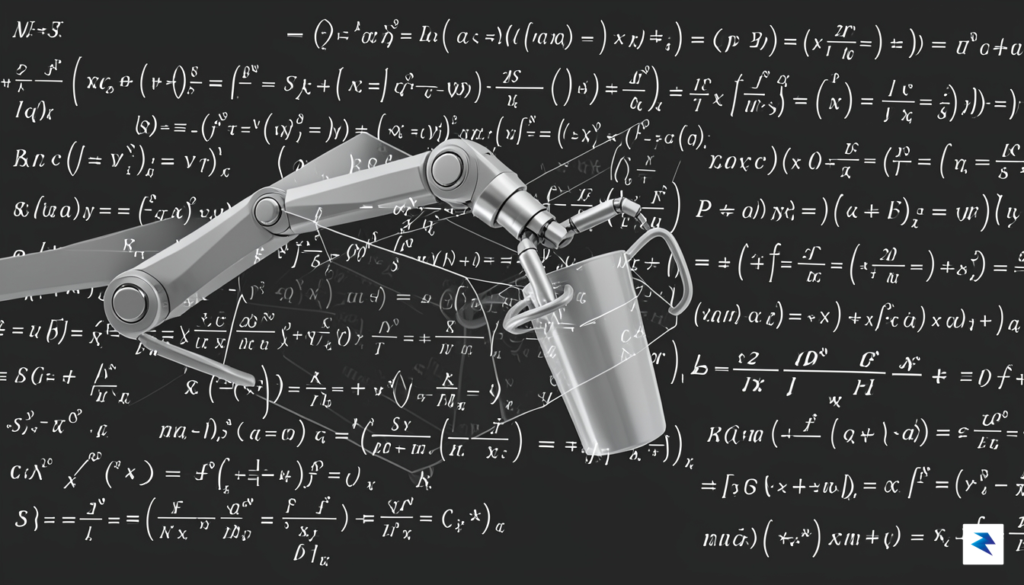
At their core, Large Language Models are masters of linguistic probability, predicting the next likely token in a sequence based on vast amounts of ingested text. While this allows them to write convincing prose or explain complex physics formulas with startling accuracy, it does not mean they actually understand the physical reality those formulas describe. There is a profound, structural gap between the syntactic fluency of a model and the semantic grasp of physical causality. An LLM can detail the exact trajectory of a falling apple according to Newtonian laws, yet it lacks the internal mental map required to predict what happens when that apple hits a table, rolls off the edge, and shatters on the floor. It treats the event as a sequence of words rather than a chain of physical consequences.
This deficit becomes painfully apparent when we examine concepts like object permanence and common-sense physics. Humans develop an intuitive physics engine in infancy; we learn that if an object is hidden behind a curtain, it does not cease to exist, and that pushing a glass off a ledge will inevitably result in a mess. Current models, by contrast, live in a static, non-spatial vacuum where language is the only reality. They struggle with spatial reasoning because they have never navigated a room, held a tool, or experienced the resistance of a solid object. Their “knowledge” of the world is purely correlational, built on the assumption that if two words appear together frequently, they must share a conceptual bond. However, in the real world, cause and effect are not mere word associations; they are rigid, non-negotiable laws that operate regardless of how we describe them.
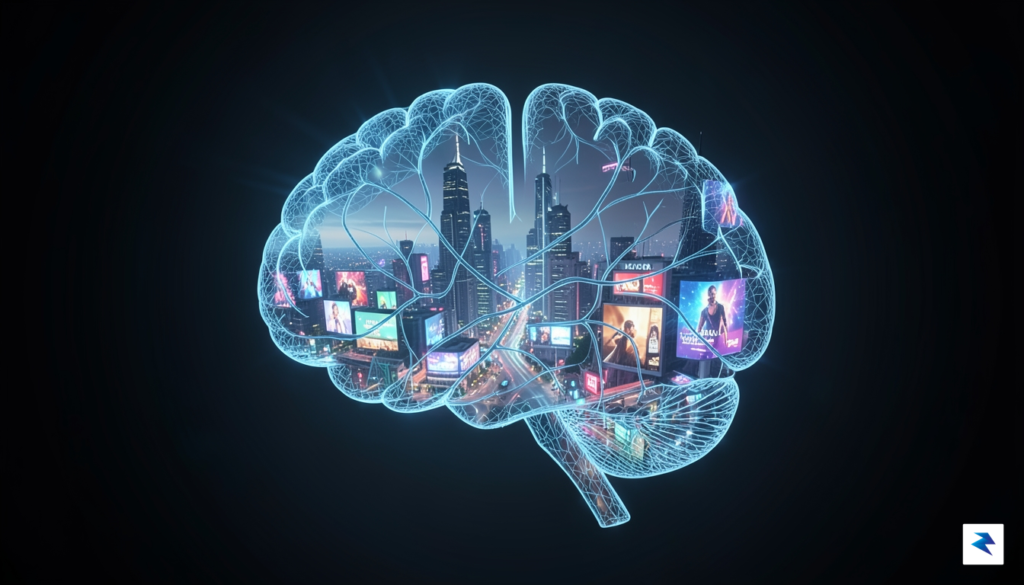
True intelligence is not defined by how well an agent can summarize the laws of motion, but by how accurately it can navigate the entropy of a physical environment.
The failure of modern AI to grasp these basic principles highlights the limitations of training solely on the internet. Language is a compressed, symbolic abstraction of human experience, not the experience itself. When a model reads a description of a door opening, it processes the syntax of the movement, but it fails to account for the spatial constraints—the hinges, the arc of the swing, or the potential for collision. By moving training data into the interactive, high-fidelity environments of video games, we are finally forcing machines to move beyond mere linguistic prediction. In a game engine, the model must contend with gravity, friction, and persistence; it must learn that actions have consequences that ripple through a three-dimensional space. Only by bridging the chasm between text and tactile interaction can we move from models that simply mimic human speech to agents that truly comprehend the world they inhabit.
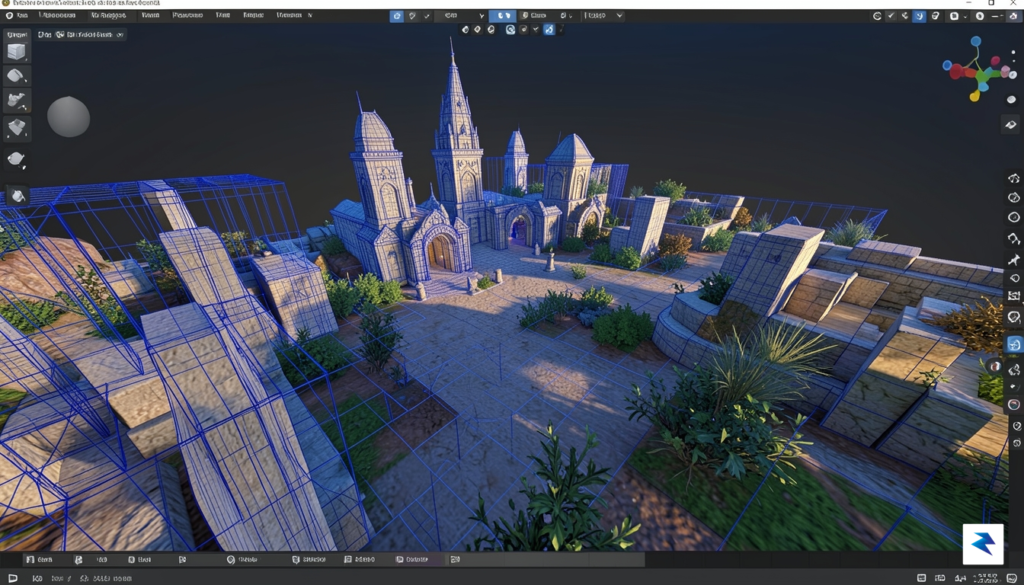
For years, the gold standard for training artificial intelligence was the sheer volume of the internet. By scraping billions of pages of human-generated text, researchers successfully taught models how to mimic patterns of logic and language. However, this approach is fundamentally limited by the inherent chaos of the web. Internet data is riddled with misinformation, conflicting viewpoints, and a lack of grounding in the physical world. In contrast, modern game engines like Unreal or Unity offer a pristine, high-fidelity alternative: a playground where the laws of physics are not just suggested, but strictly enforced.
When an AI learns from a video game, it is not merely processing symbols on a screen; it is navigating a structured environment governed by consistent, immutable rules. Unlike static text, which describes a world without inhabiting it, a game engine operates in continuous time-steps. Every frame provides an opportunity for the agent to observe cause and effect in real-time. If an AI pushes a crate in a virtual space, it experiences the immediate, predictable consequence of that action according to the engine’s physics solver. This creates a “ground truth” that is impossible to extract from the fragmented, often contradictory nature of human internet posts.
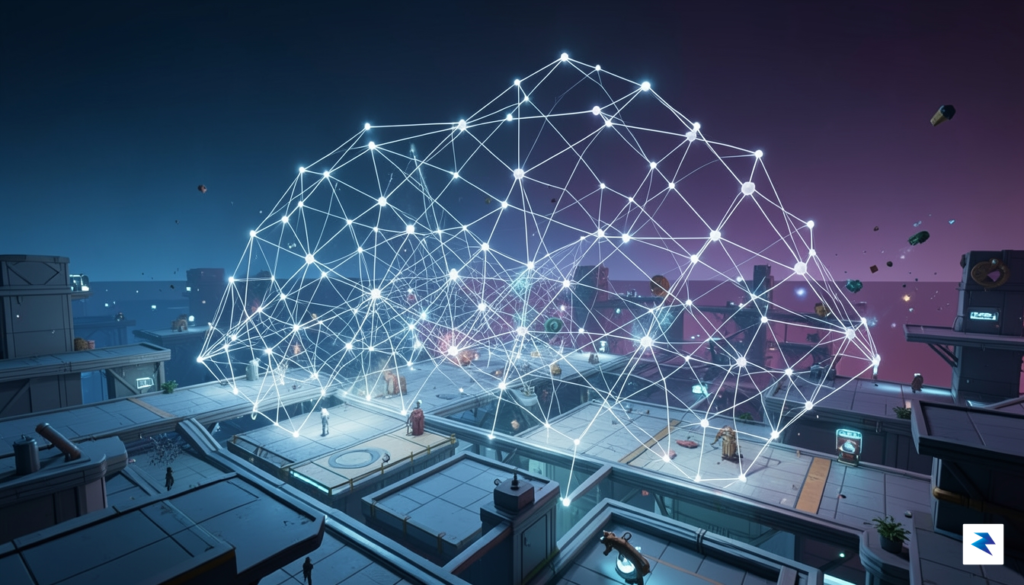
By shifting from static datasets to interactive simulations, we move from teaching an AI how to describe the world to teaching it how to exist within one.
The true power of this methodology lies in the ability to facilitate infinite, safe experimentation. In the real world, testing autonomous navigation or robotic interaction is slow, expensive, and potentially dangerous. Within the confines of a game engine, developers can generate thousands of unique scenarios in the blink of an eye, allowing the AI to fail millions of times without consequence. This capability accelerates the learning curve exponentially, as the agent can refine its understanding of gravity, spatial relationships, and object permanence through rapid-fire iterations.
Furthermore, these virtual environments solve the problem of data scarcity. By procedurally generating infinite variations of a scene—altering lighting, textures, and geometry—researchers can provide their models with a diversity of experience that the internet simply cannot match. This creates a robust foundation for Artificial General Intelligence (AGI), as the system learns to generalize its knowledge across different contexts rather than merely memorizing patterns found in a training set. As we continue to push the boundaries of what these systems can achieve, it is becoming increasingly clear that the path to a truly intelligent machine lies not in reading about the world, but in playing in it.
The challenge of transitioning artificial intelligence from a static, text-based environment to the chaotic unpredictability of the physical world is often referred to as the “Sim2Real” gap. For years, researchers relied on static datasets or simplistic simulations, but these environments lacked the dynamic complexity required to teach a machine how to navigate space. Video games, however, offer a unique solution; they are high-fidelity, interactive, and governed by consistent physics engines that mirror the cause-and-effect nature of our own reality. By training AI agents within these virtual playgrounds, developers are effectively teaching machines to perceive depth, momentum, and spatial relationships before they ever set foot in a physical laboratory.
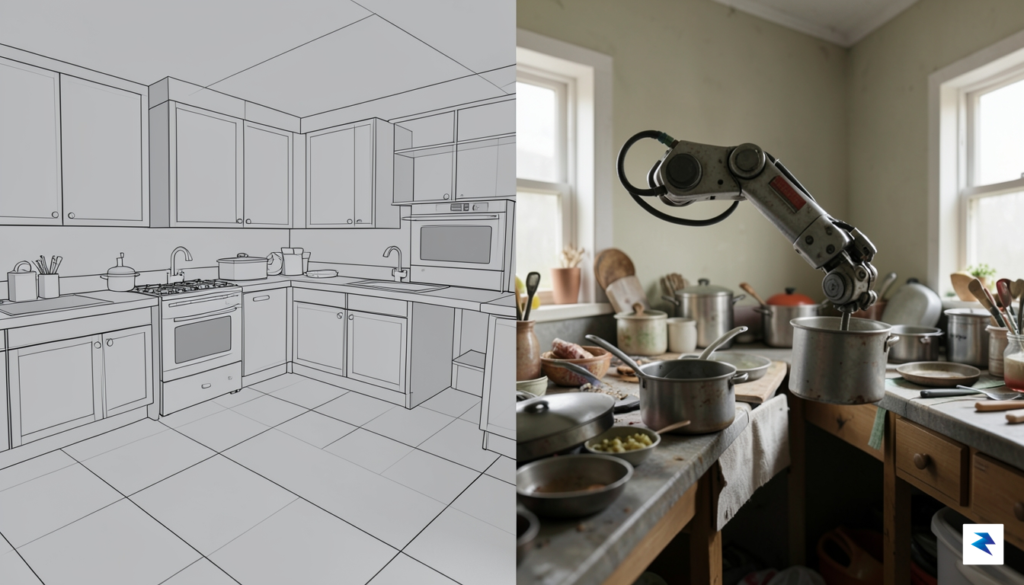
When an AI learns to move through a three-dimensional game world, it internalizes the fundamental rules of geometry and movement that are essential for physical navigation. Unlike reading a paragraph about how an object falls, an agent in a game must calculate gravity, collision, and trajectory in real-time to succeed. This immersive exposure forces the system to develop a sense of “spatial common sense,” allowing it to understand that if a wall obstructs a path in the game, it must navigate around it rather than attempting to pass through. By repeatedly encountering these obstacles in a simulated environment, the AI builds an internal map of physical possibilities, which serves as a foundational blueprint for how it will eventually interact with real-world furniture, doorways, and moving human beings.
Training in a virtual environment allows an AI to experience thousands of hours of environmental interaction in a fraction of the time it would take to train a physical robot, all while removing the risk of costly hardware damage.
Furthermore, the interactivity of video games provides a richer dataset than any static image library could offer. Because games are reactive, they teach the AI about consequences; if an agent performs an incorrect action, the game state changes immediately to reflect that failure. This creates a loop of rapid iteration where the machine can experiment with different physical maneuvers—such as grasping an object or balancing on a platform—without the constraints of high-stakes, real-world testing. As these agents refine their decision-making processes within the synthetic world, they gradually lose their reliance on programmed instructions and begin to develop a form of intuitive intelligence. This transition ensures that when the AI is finally deployed to control a physical drone or an autonomous vehicle, it already possesses a robust understanding of how to interpret visual input and translate it into fluid, intelligent physical movement.

The quest for artificial general intelligence (AGI) has long been tethered to the vast, static archives of the internet, where models learn to predict the next word in a sequence. While this approach has birthed impressive linguistic capabilities, it remains fundamentally limited by the absence of physical context and causal reasoning. By shifting the focus toward video game environments, researchers are effectively trading the flat, abstract library of human text for a dynamic, rule-based sandbox. This transition prioritizes the development of “general intuition”—the ability for an agent to observe a complex, three-dimensional environment, predict the outcomes of its actions, and navigate unforeseen obstacles with the same fluid adaptability as a human player.

As we look toward the next decade, the most promising path forward lies in hybrid architectures that synthesize linguistic prowess with spatial intelligence. Imagine an AI that not only understands the abstract definition of a tool, such as a hammer, but has also spent thousands of simulated hours navigating physics-based environments where it must learn to grip, swing, and apply force to achieve a task. By integrating Large Language Models (LLMs) with 3D simulation engines, we are creating a new generation of agents that move beyond the limitations of “chatbots” that merely mimic human discourse. These agents are being trained to perceive the “why” behind the “what,” fostering a deeper, more intuitive grasp of cause and effect that cannot be extracted from static datasets alone.
The true milestone for AGI will not be measured by the eloquence of a generated essay, but by the ability of an agent to reliably operate within the messy, unpredictable reality of the physical world.
Ultimately, this evolution represents a fundamental shift in how we define intelligence in machines. We are moving away from an era of passive information processing and into an era of active experimentation. When an AI learns through a video game, it is essentially running a continuous series of experiments where the consequences of failure are safe, yet the lessons learned are rigorous and transferable. If an agent can master the mechanics of a complex virtual world—learning to negotiate terrain, manage resources, and anticipate the behavior of other entities—it possesses the foundational skills required to act as a genuine agent in our daily lives. The future of AGI will not be defined by those who can simply write the most convincing prose, but by those who can actually execute tasks, solve physical problems, and navigate the complexities of our world with purpose and precision.
You must be logged in to post a comment.