
GhostLock: The 15-Year-Old Linux Kernel Vulnerability You Need to Know About
Understanding the GhostLock Vulnerability At its core, GhostLock is a sophisticated stack-based Use-After-Free (UAF) vulnerability that has…
The landscape of Silicon Valley has been irrevocably altered by a bombshell legal filing that pits two of the industry’s most formidable entities against one another. Apple has formally initiated litigation against OpenAI, leveling serious accusations of trade secret misappropriation that strike at the very heart of the modern artificial intelligence race. At the center of this dispute is the allegation that a cadre of former Apple engineers, who recently transitioned to key roles within OpenAI, walked away with sensitive, proprietary data concerning the internal architecture of Apple’s specialized AI frameworks. This move, according to Apple’s legal team, was not merely a case of talent migration, but a calculated effort to siphon years of intensive research and development into the hands of a direct competitor.
The implications of this lawsuit extend far beyond the walls of a courtroom, acting as a definitive marker of the cutthroat environment currently defining the generative AI sector. For years, Apple has maintained a reputation for meticulous, closed-loop development, guarding its software and hardware secrets with almost legendary intensity. By accusing OpenAI of leveraging stolen intellectual property to accelerate its own progress, Apple is signaling that it will no longer tolerate the “brain drain” that has become characteristic of the AI arms race. The stakes here are existential; both companies are locked in a high-stakes battle for dominance in a market where a single breakthrough in neural network efficiency or data processing architecture can translate into billions of dollars in market capitalization and years of competitive advantage.
This legal confrontation serves as a stark reminder that in the hyper-accelerated world of artificial intelligence, intellectual property is the most valuable currency, and its protection has become the primary battleground for industry titans.
Furthermore, the industry is bracing for the fallout, as this case threatens to reshape how major tech companies handle employee mobility and non-compete concerns moving forward. If Apple can substantiate its claims, it could fundamentally disrupt OpenAI’s development roadmap and set a significant legal precedent for how proprietary AI research is treated during high-profile hiring sprees. The tech community is now watching with bated breath, as the outcome of this litigation will likely dictate the boundaries of innovation and ethics in an era where the line between “inspired development” and “corporate espionage” is becoming increasingly blurred. The clash is no longer just about who has the best chatbot or the most advanced model; it is about the sanctity of corporate intelligence in an age where information is the ultimate competitive edge.
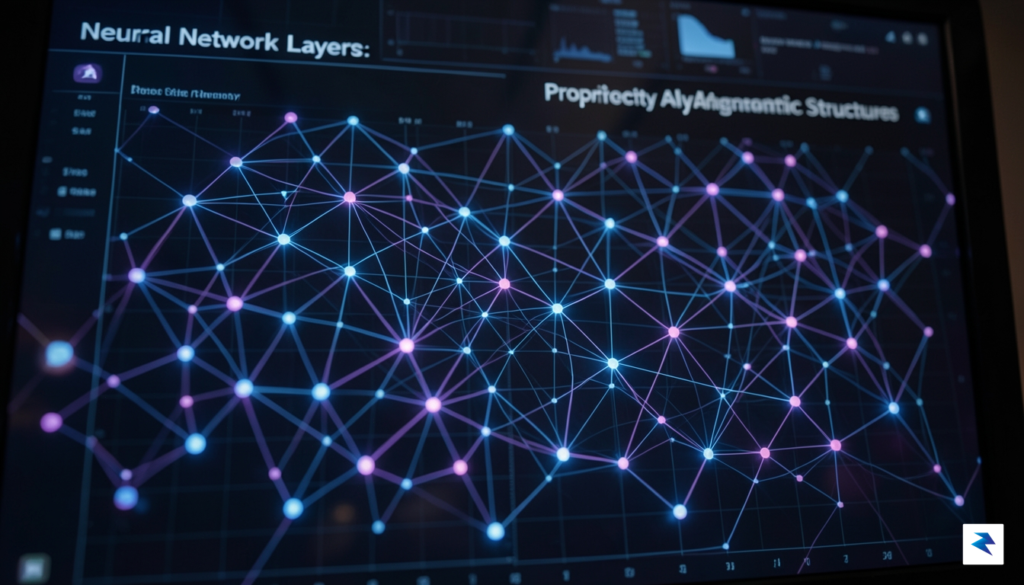
To understand the gravity of Apple’s legal action, one must first recognize that in the realm of artificial intelligence, a company’s competitive advantage is rarely defined by a single, flashy user interface. Instead, it is built upon a foundation of “trade secrets”—proprietary information that derives independent economic value from not being generally known. In the context of large language models (LLMs), these secrets represent the secret sauce of innovation: the specific methodologies for cleaning massive datasets, the fine-tuned architecture configurations that allow a model to run on mobile hardware, and the internal privacy frameworks that ensure user data remains secure during training. Unlike patents, which require public disclosure in exchange for protection, trade secrets remain guarded within the company’s digital vaults, making their unauthorized extraction a catastrophic loss of intellectual property.

Apple’s allegations specifically target the “how” behind their AI prowess, which is arguably more valuable than the “what” that consumers experience on their iPhones. The company claims that the ex-employees in question accessed highly sensitive data training pipelines, which are the sophisticated automated systems used to ingest, curate, and filter the trillions of data points necessary for training a state-of-the-art model. If a competitor were to acquire these specific pipelines, they could potentially bypass months, or even years, of trial-and-error experimentation, effectively leapfrogging the development cycle. Furthermore, the alleged theft reportedly touches upon proprietary model architecture efficiency—the mathematical optimizations that allow an AI to generate coherent text with minimal latency and lower energy consumption. This is the holy grail of modern AI development: the ability to deploy powerful models without exhausting a device’s battery or computing resources.
The true value of these trade secrets lies in the years of iterative research and the unique “recipe” for model alignment that separates a functional AI from a market-leading one.
It is vital to contrast these technical secrets with the public-facing features users interact with every day. While a user might see a new text-summarization tool or a refined voice assistant, they remain blissfully unaware of the complex internal infrastructure powering those experiences. The trade secrets at the center of this dispute are the very blueprints of that engine. By allegedly compromising Apple’s internal privacy frameworks—the specialized protocols designed to strip sensitive information from training sets without degrading model quality—the defendants may have exposed the exact methods Apple uses to satisfy its rigorous commitment to user privacy. If these methods were to become public or fall into the hands of a competitor, it would not only undermine Apple’s unique market position but also threaten the integrity of its long-term strategy to integrate AI safely into the consumer ecosystem.

The tech industry, particularly the high-stakes world of artificial intelligence, is renowned for its “revolving door” culture, where top talent frequently moves between competing firms. This constant flux is often seen as a natural byproduct of innovation, with engineers and researchers seeking new challenges, better opportunities, or a chance to work on groundbreaking projects. However, this fluid movement creates an inherent tension: where does an individual’s professional growth and accumulated expertise end, and the unauthorized transfer of proprietary information begin? Companies invest billions in research and development, and the intellectual capital of their employees is often their most valuable asset, leading to a delicate balance between fostering innovation and protecting trade secrets.
This dynamic environment introduces significant legal complexities, particularly regarding the obligations employees carry when transitioning to a direct competitor. While non-compete agreements are common tools used by companies to restrict former employees from working for rivals for a specified period, their enforceability varies widely by jurisdiction and can be difficult to uphold, especially in states like California. Regardless of non-compete clauses, employees are generally bound by common law and statutory duties to protect their former employer’s trade secrets and confidential information. This means that even without a formal agreement, an employee cannot simply walk out the door with blueprints, code, customer lists, or any other proprietary data, nor can they leverage knowledge gained under specific secrecy requirements for the benefit of a new employer. The line between general skill sets and protected intellectual property is often blurry, making these cases inherently challenging to litigate.
Apple’s recent lawsuit against OpenAI, alleging that former employees stole trade secrets, casts a spotlight directly onto this contentious area. It raises questions about whether this legal action is primarily a broad “warning shot” aimed at deterring other employees from taking proprietary knowledge with them when they leave, or if it is a highly targeted effort to recover specific, high-value assets believed to have been illicitly transferred. Given Apple’s reputation for fiercely protecting its intellectual property and its deep investments in AI, it’s plausible that this is a meticulously calculated move to safeguard critical advancements. The outcome could set a significant precedent for how major tech companies approach talent mobility and trade secret protection in the rapidly evolving AI landscape.
A central challenge in such litigation lies in proving the “theft” of knowledge versus the natural acquisition of expertise. In the realm of AI, much of an employee’s value lies in their understanding of complex algorithms, model architectures, training methodologies, and strategic insights—knowledge that is often intangible and resides within their minds, rather than being a distinct, physical document. Differentiating between an individual’s enhanced skill set, developed over years of experience, and deliberately misappropriated confidential information is incredibly difficult for courts. Plaintiffs must typically demonstrate not only that specific trade secrets existed, but also that reasonable measures were taken to protect them, and that the former employee actually used or disclosed them improperly. This often involves deep dives into digital forensics, witness testimonies, and expert analysis, making these cases protracted and costly for all parties involved.
Ultimately, the legal battle initiated by Apple serves as a potent reminder of the high stakes involved when talent moves between Silicon Valley powerhouses. It underscores the ongoing tension between an individual’s right to pursue career advancement and a company’s imperative to protect its competitive edge. The resolution of this case will undoubtedly influence future employment practices, non-disclosure agreements, and the broader legal framework governing intellectual property in the fast-paced, innovation-driven AI sector, forcing both employers and employees to re-evaluate the boundaries of professional conduct and corporate loyalty.

This high-stakes legal confrontation represents a definitive turning point for the generative AI sector, signaling that the era of aggressive talent poaching and rapid, unchecked knowledge transfer is likely coming to an end. By taking legal action against former employees accused of misappropriating trade secrets, Apple is effectively drawing a line in the sand that will force other industry titans to re-evaluate their own internal security protocols. The ripple effects of this litigation will almost certainly manifest as a chilling effect on the fluid movement of talent that has defined Silicon Valley for decades. As companies become increasingly protective of their proprietary architectures and training data, the open-source spirit that initially fueled much of the AI boom may find itself stifled by a fortress-like approach to corporate intellectual property.
The immediate consequence for the labor market will be a significant tightening of contractual obligations and hiring practices. We can expect to see a surge in the implementation of more draconian non-disclosure agreements (NDAs) and non-compete clauses, even in jurisdictions where such agreements were previously considered weak or unenforceable. Companies will likely move toward more restrictive “clean room” environments, where engineers are siloed from broader project insights to prevent the accidental or intentional migration of trade secrets. This shift suggests that the days of engineers easily transitioning between OpenAI, Google, Apple, and Anthropic with their expertise in tow are being replaced by a more litigious landscape where every move is scrutinized for potential legal exposure.

Furthermore, this lawsuit adds a layer of complexity to the investment landscape for OpenAI and its peers. Investors, who have been pouring billions into generative AI startups with the expectation of exponential growth and disruptive potential, must now factor in the “litigation risk” associated with rapid scaling. When a company is perceived as building its foundation on the intellectual property of competitors, it invites not only lawsuits but also heightened regulatory scrutiny from government bodies concerned about fair competition. This increased oversight could lead to more conservative funding rounds and a greater emphasis on due diligence regarding how AI models are actually developed.
The outcome of this legal battle will likely set a lasting precedent for how AI companies define “proprietary knowledge,” potentially forcing the industry to move away from the “move fast and break things” philosophy toward a more cautious, legally vetted model of development.
Ultimately, the industry is transitioning from a period of wild-west experimentation into a more mature, guarded phase where intellectual property is treated with the same severity as physical assets. While this may slow the breakneck pace of AI innovation in the short term, it serves as a necessary maturation process. By codifying what constitutes a stolen trade secret in the context of neural networks and training sets, the courts will eventually provide a clearer rulebook for how innovation can proceed without violating the rights of the companies that invested heavily in the initial research. For developers, researchers, and investors alike, the message is clear: the cost of cutting corners is becoming far too high to ignore.

As this high-stakes legal confrontation unfolds, the technology sector finds itself at a critical crossroads regarding intellectual property and the mobility of human talent. The potential outcomes of this litigation—ranging from a quiet, out-of-court settlement that imposes restrictive non-compete clauses to a landmark trial that sets a legal standard for AI development—will likely dictate how companies manage their proprietary algorithms for years to come. If the case proceeds to a full trial, it could force a public reckoning with how “trade secrets” are defined in the era of generative AI, where the lines between individual genius and corporate-owned innovation are increasingly blurred. Should the charges be dropped or settled, we might see a shift toward more aggressive internal security measures, effectively walling off talent to prevent the kind of cross-pollination that has historically driven Silicon Valley’s rapid advancement.
The long-term impact on the relationship between Apple and OpenAI remains equally uncertain, yet it is almost guaranteed to chill the collaborative potential that once seemed inevitable. Apple has historically guarded its “walled garden” with immense intensity, and this lawsuit serves as a definitive signal that they view their AI architecture as a crown jewel that must be defended at all costs. Consequently, the industry may see a move toward a more fragmented landscape, where companies become increasingly hesitant to engage in partnerships or talent acquisitions for fear of future litigation. This defensive posture could paradoxically slow down the broader development of artificial intelligence, as the free flow of ideas becomes secondary to the protection of internal data silos.
Ultimately, the resolution of this dispute will force the industry to confront an uncomfortable question: how do we balance the imperative of corporate security with the necessity of an open exchange of ideas? Technological progress does not happen in a vacuum, and the movement of experts between firms has long been the engine of breakthroughs that benefit the entire consumer base. Without a clear legal framework that protects both the rights of the innovator and the investments of the creator, we risk entering an era of stagnation.
The outcome of this legal battle will likely serve as a foundational precedent, forcing tech giants to choose between aggressive, litigation-heavy protectionism and a more collaborative, albeit riskier, model of AI growth.
As we look toward a more regulated future, it is clear that the status quo is unsustainable. Whether through new legislation or industry-wide standards for data handling, the “Wild West” days of AI talent migration are likely coming to an end. Policymakers and industry leaders must now work together to create a system that fosters competition without stifling the very ingenuity that makes the tech industry thrive. Failing to find this equilibrium could mean that the next great technological leap is buried under a mountain of legal briefs rather than being brought to the world to see.
You must be logged in to post a comment.