
John Deere and the FTC: What the Right-to-Repair Ruling Means for Farmers
The Evolution of the Right-to-Repair Movement For decades, the agricultural industry operated on a simple premise: if you bought a tractor,…


At its core, GhostLock is a sophisticated stack-based Use-After-Free (UAF) vulnerability that has quietly resided within the Linux kernel for more than a decade and a half. To understand the gravity of this discovery, one must first grasp the nature of a stack-based UAF: it occurs when a program continues to use a pointer to a memory location on the “stack”—the area of memory that stores temporary variables for active function calls—even after that memory has been deallocated or freed. Because the stack is constantly reused as functions are called and return, this leftover pointer can be tricked into referencing new, unrelated data. In the hands of a malicious actor, this flaw allows for the corruption of kernel memory, potentially leading to unauthorized privilege escalation or full system compromise.
The 15-year timeline of GhostLock is perhaps its most unsettling characteristic. For over a decade, this vulnerability has been hiding in plain sight, embedded deep within the foundational architecture of the Linux operating system. This is not merely a modern oversight; it is a legacy issue that predates many of the security mitigations currently standard in kernel development. The fact that GhostLock remained undetected through countless kernel updates, audits, and security patches underscores the extreme difficulty of maintaining a codebase as vast and complex as Linux. It serves as a stark reminder that even the most scrutinized open-source projects can harbor deep-seated structural flaws that escape notice for generations.

The persistence of GhostLock highlights a systemic challenge within the open-source ecosystem: the “hidden debt” of legacy code. As the Linux kernel evolves to incorporate cutting-edge hardware support and new features, the underlying codebase often remains a patchwork of old and new implementations. When ancient, stable functions are modified or integrated with modern subsystems, they can inadvertently create new attack vectors that researchers might overlook because they assume the code is “battle-tested.” This vulnerability proves that time alone is not a sufficient guarantee of security; in fact, the longer a piece of code remains untouched, the more likely it is to become a liability as the environment around it shifts.
The discovery of GhostLock acts as a necessary wake-up call, emphasizing that security is not a static destination but a continuous process of rigorous auditing that must extend to the very foundations of our digital infrastructure.
Ultimately, GhostLock forces the development community to re-examine how we audit and maintain critical kernel components. It is not enough to simply add new security patches on top of existing layers; we must be willing to interrogate the oldest parts of the kernel with the same intensity as the newest features. This realization is pushing maintainers toward more aggressive refactoring and the adoption of modern memory-safe programming patterns. By acknowledging that vulnerabilities can survive for fifteen years, the Linux community is beginning to accept that the most dangerous threats may not be the ones on the horizon, but the ones that have been under our feet since the very beginning.
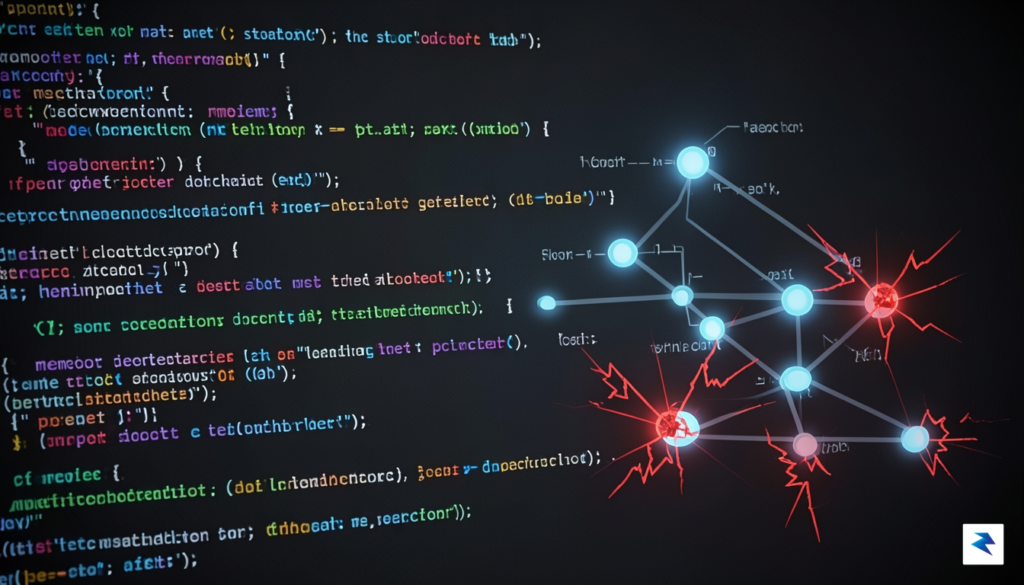
To understand the longevity of GhostLock, one must first visualize the Linux kernel’s stack—a LIFO (Last-In, First-Out) structure designed for rapid memory allocation. Unlike heap memory, which is dynamically requested and returned to the system via explicit calls, stack memory is managed automatically as functions are called and return. When a function executes, it reserves a “frame” on the stack for its local variables. The problem arises because the kernel assumes that once a function exits, that portion of the stack is effectively cleared. GhostLock exploits the fact that while the kernel logically “frees” this space, it does not physically sanitize the underlying data, leaving behind stale pointers that still reference addresses the kernel believes are now vacant.
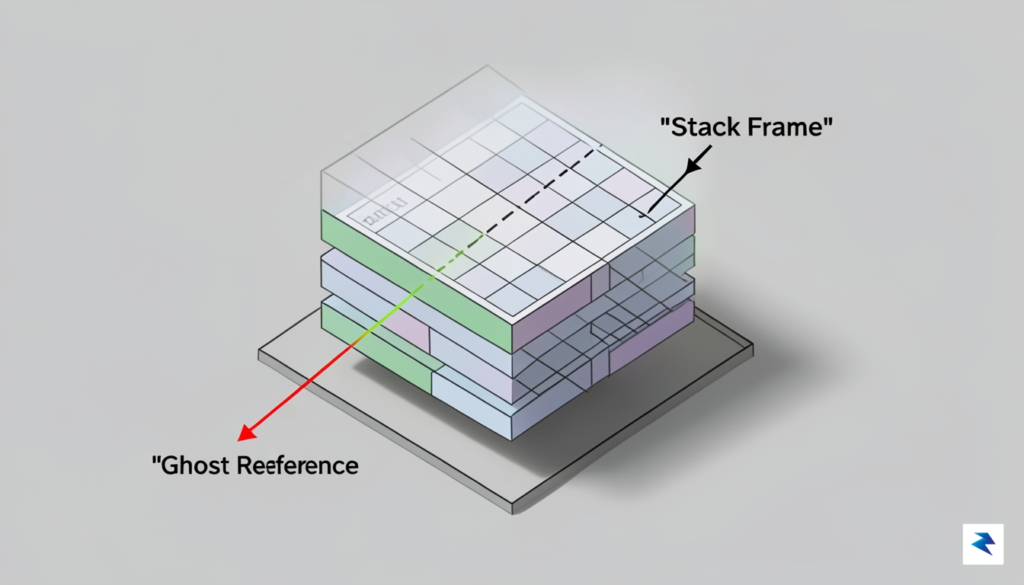
The core of the Use-After-Free (UAF) condition occurs when a process creates a reference to a local variable within a short-lived stack frame, but fails to nullify that reference before the function scope concludes. Typically, heap-based UAF vulnerabilities are easier to catch because the heap manager is a complex, centralized authority that can be instrumented or audited. In contrast, the stack is a high-speed, implicit workspace. Because GhostLock operates within these ephemeral frames, the pointer dereferencing happens in a blind spot of standard kernel memory protection. When a subsequent, unrelated kernel process claims that same stack memory, the original “ghost” pointer still perceives it as valid, allowing an attacker to read or overwrite memory that now belongs to a totally different execution context.
The genius—and the danger—of GhostLock lies in its ability to hide in plain sight; it does not corrupt the stack structure itself, but rather exploits the kernel’s implicit trust in the validity of its own internal pointers.
This vulnerability differs significantly from traditional heap corruption because there is no “allocation metadata” to tamper with. In a heap scenario, an attacker might try to overflow a buffer to reach a control structure; with GhostLock, the attacker merely waits for the kernel to recycle the memory address. By orchestrating the timing of these stack operations, a malicious actor can effectively “re-prime” the memory with controlled data. Once the stale pointer is dereferenced, the kernel unknowingly executes the attacker’s payload as if it were a legitimate, trusted kernel command. Because this logic flaw exists at the architecture level of how the kernel manages local variables, it bypassed traditional fuzzing tools for over a decade, leaving every major distribution vulnerable to the same fundamental oversight.

The longevity of GhostLock—a stack-based use-after-free (UAF) vulnerability that has persisted within the Linux kernel for a decade and a half—is a stark reminder that in software development, complexity is the ultimate shroud for security flaws. In a codebase consisting of tens of millions of lines, the sheer volume of logic makes “hidden in plain sight” a literal reality rather than a metaphorical one. Because GhostLock resided in an extremely obscure code path, it remained dormant through countless audits and refactoring efforts. These types of vulnerabilities often thrive in peripheral drivers or legacy subsystems that are rarely invoked during standard operation, effectively rendering them invisible to the automated testing suites that prioritize the most frequently used pathways of the kernel.
A significant factor in the oversight of this vulnerability is the historical gap in our defensive tooling. Fifteen years ago, the sophisticated dynamic analysis tools that we rely on today, such as KASAN (Kernel Address Sanitizer), were not yet integrated into the kernel’s development lifecycle. While modern developers now benefit from real-time memory error detection, code written in the late 2000s and early 2010s was largely subjected to manual code reviews and primitive static analysis. Consequently, a subtle race condition or a specific memory allocation pattern that triggers a UAF could easily slip past even the most diligent maintainers, as it does not present as a crash under typical runtime conditions.

The persistence of GhostLock illustrates that even the most robust open-source projects struggle with the “legacy debt” of aging, rarely touched, and highly intricate kernel subsystems.
Furthermore, the rapid pace of Linux kernel evolution creates a unique challenge for long-term maintenance. As new features are layered on top of older, foundational code, the original developers often move on, leaving behind “black box” functions that few dare to modify for fear of introducing regressions. This technical inertia meant that the vulnerable segment remained untouched for years; it was effectively fossilized code that no one had a compelling reason to rewrite. By the time security researchers began applying modern fuzzing techniques—which execute code paths in ways that humans and standard testing might never think to try—the vulnerability had already become a permanent, albeit quiet, fixture of the kernel’s architecture.
Ultimately, GhostLock serves as a sobering case study on the limitations of collective vigilance. Even within a project as transparent and globally scrutinized as Linux, the sheer scale of the kernel means that some corners remain dark for far too long. It highlights a critical reality for cybersecurity professionals: just because a piece of software is widely used and heavily audited does not mean it is free of catastrophic flaws. The transition from legacy code to modern, hardened infrastructure is an ongoing process, and GhostLock’s discovery serves as a reminder that the hunt for these “invisible” bugs is a race against the very complexity that allows them to thrive.

The discovery of GhostLock represents a sobering reality for the open-source ecosystem: a stack-use-after-free (UAF) vulnerability that has remained dormant within the Linux kernel for over fifteen years. Because this flaw resides deep within fundamental memory management routines, its reach is effectively universal, impacting every major distribution from Debian and Ubuntu to RHEL and Arch Linux. Unlike localized bugs that might only affect specific drivers or niche software packages, GhostLock exists at the very foundation of the operating system, meaning that no distribution is shielded by its reputation or security posture. This ubiquity transforms what might be viewed as a theoretical research curiosity into a high-priority threat that demands immediate remediation from system administrators across the globe.
At its core, the primary danger posed by GhostLock is the potential for full privilege escalation. By meticulously crafting an exploit that triggers the UAF state, an unprivileged user can manipulate kernel memory to gain root access. Once a malicious actor achieves this level of control, they can bypass standard permission models, disable logging mechanisms, and install persistent backdoors that are invisible to traditional security tools. In a real-world scenario, this vulnerability acts as the “skeleton key” for an attacker who has already gained a foothold on a system through a less privileged entry point, such as a compromised web application or a phishing-based shell. Because the kernel is responsible for enforcing the boundaries between users and processes, compromising it effectively invalidates every other security layer currently in place.

The risk profile for this vulnerability varies significantly between desktop environments and server infrastructures, yet both are critically exposed. For a desktop user, an exploit might be delivered via a malicious website or a compromised browser process, potentially leading to the theft of local credentials, encryption keys, or personal files. However, the stakes are exponentially higher in server environments, particularly those hosting cloud infrastructure or containerized workloads. In these high-density environments, a successful GhostLock exploit could allow an attacker to “break out” of a container, gaining unauthorized access to the host machine and, by extension, all other virtual machines or containers residing on the same physical hardware.
The persistence of GhostLock for over a decade serves as a stark reminder that even the most scrutinized open-source projects can harbor critical flaws for years, hidden in plain sight within the kernel’s complex memory handling logic.
System administrators must treat this threat as an urgent mandate for kernel updates. Relying on the assumption that a specific distribution is “more secure” is a dangerous fallacy when the underlying vulnerability is baked into the kernel architecture itself. Organizations should prioritize patching cycles that incorporate the latest kernel security updates and, where possible, implement additional kernel-level hardening techniques to mitigate the impact of UAF-style attacks. Ignoring this flaw—or assuming that a system is too obscure to be targeted—is a luxury that modern enterprises can no longer afford, especially as exploit chains for long-standing vulnerabilities like GhostLock become increasingly accessible to automated threat actors.

The discovery of a vulnerability as deeply embedded as GhostLock serves as a stark reminder that even the most robust open-source foundations require constant vigilance. For system administrators and developers, the immediate priority must be the prompt application of upstream kernel patches. Because this stack-based use-after-free (UAF) flaw affects nearly every Linux distribution released over the last decade and a half, relying on automated update scripts is no longer a luxury; it is a necessity. You should verify that your package managers are pointed toward official, hardened repositories and prioritize a reboot cycle to ensure that the patched kernel code is fully initialized in memory.
Beyond immediate patching, organizations must adopt a defense-in-depth posture by implementing kernel hardening flags. Modern kernels offer a variety of security features—such as KASLR (Kernel Address Space Layout Randomization), STRICT_KERNEL_RWX, and various stack-smashing protectors—that can significantly complicate the exploitation of UAF vulnerabilities. By enabling these features at compile time or through boot-time parameters, administrators can effectively break the primitives that attackers rely on to turn a UAF bug into functional code execution. Furthermore, utilizing Linux Security Modules (LSMs) like SELinux or AppArmor can act as a critical safety net, restricting the permissions of compromised processes even if an exploit manages to bypass initial memory protections.
The most effective defense against long-standing kernel flaws is a combination of rapid patching cycles and a hardened runtime environment that minimizes the potential impact of a successful memory corruption event.
Detecting anomalous kernel activity requires more than just standard log monitoring; it necessitates the implementation of specialized observability tools. Security teams should deploy eBPF-based monitoring solutions, such as Tetragon or Falco, which allow for deep introspection into kernel-level events and system calls. These tools are capable of identifying suspicious patterns—such as unauthorized modifications to kernel memory or unexpected execution flows—that often characterize an active exploit attempt against a UAF vulnerability. By setting up real-time alerts for these specific indicators, administrators can shift from a reactive patching stance to a proactive threat-hunting methodology.

Ultimately, the longevity of GhostLock underscores the critical importance of keeping up with distro-specific security advisories. Whether you are managing a small fleet of web servers or a massive enterprise cloud infrastructure, subscribing to official mailing lists and monitoring vulnerability databases (such as CVE trackers) is essential. Proactive maintenance is not merely about installing the latest software; it is about cultivating a security-first culture that treats kernel updates as the backbone of system integrity. By integrating these technical safeguards with rigorous monitoring, you can effectively neutralize the threat posed by this legacy vulnerability and ensure your systems remain resilient against future discoveries.
You must be logged in to post a comment.