
New York Courts Ban Smart Glasses: What You Need to Know
The New York Courtroom Policy Update Beginning July 20, the New York State judicial system is set to initiate a rigorous new policy that…

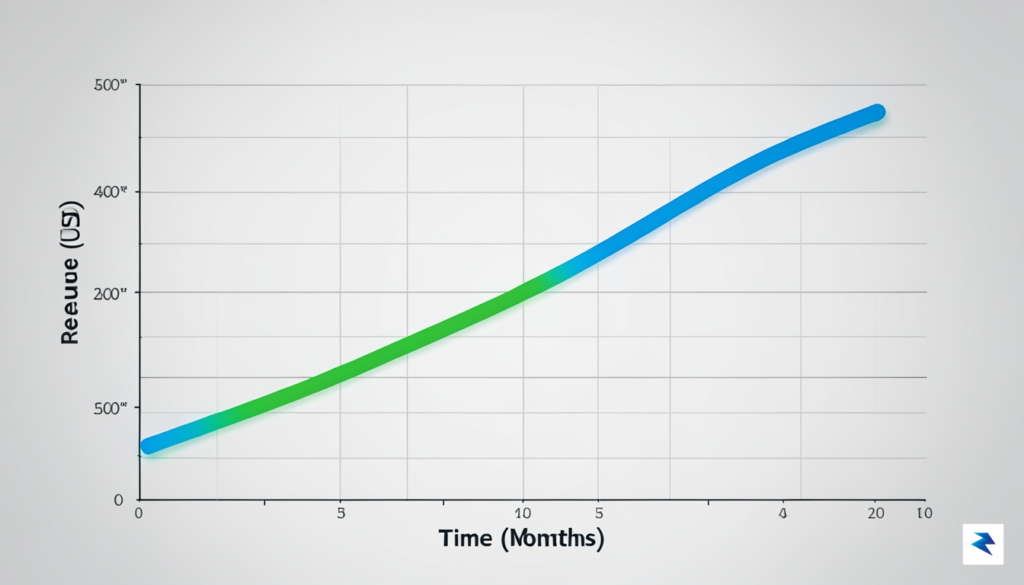
The current discourse surrounding Bitcoin’s trajectory toward the $300,000 to $500,000 mark by 2029 is fueled by a potent mixture of historical optimism and the inherent human desire for exponential wealth creation. For many market observers, these six-figure targets represent more than just numbers; they serve as a psychological benchmark, validating Bitcoin’s status as a premier global asset. This narrative is often reinforced by aggressive extrapolation models that map past bull cycles onto a future timeline, suggesting that because Bitcoin has historically achieved parabolic growth, it is destined to repeat that performance indefinitely. However, this simplistic view often overlooks the fundamental shift in the asset’s nature as it transitions from a speculative niche experiment into a core component of the global financial architecture.
While the allure of “moonshot” predictions is undeniable, the gap between hyperbolic growth models and current market reality is widening. As Bitcoin matures, its market capitalization has ballooned to levels where the sheer volume of capital required to sustain previous percentage-based growth rates becomes astronomically high. When analysts project a price of half a million dollars, they are implying a total market valuation that would necessitate an unprecedented influx of institutional liquidity, far exceeding the current pace of adoption. We are witnessing a fundamental decoupling of the asset from its early, volatile “startup” phase, moving instead toward a period of institutional maturity characterized by lower volatility and more incremental, albeit meaningful, price appreciation.

This transition marks the end of the era where rapid, unbridled surges were the standard expectation for every cycle. Instead of relying on the simplistic “number go up” logic of the past, we must evaluate Bitcoin’s future through the lens of supply-side constraints, global macroeconomic conditions, and the realities of regulatory integration. The following analysis aims to dismantle the speculative fervor surrounding these aggressive 2029 targets by examining why the underlying math of market cycles, liquidity, and diminishing returns suggests a more grounded outlook. By shifting our focus away from the siren song of astronomical price targets, we can better understand the real, sustainable value proposition that Bitcoin offers to the modern financial world.
The transition from a retail-driven speculative asset to an institutional-grade store of value necessitates a reassessment of growth expectations, moving away from hyperbolic cycles toward sustainable long-term integration.
Ultimately, the objective here is not to diminish Bitcoin’s long-term potential, but to inject a necessary degree of realism into the conversation. If we fail to account for the changing dynamics of market participation and the sheer scale required for such massive price movements, we risk miscalculating the asset’s true trajectory. By questioning the validity of these ambitious forecasts, we can move toward a more sophisticated understanding of how Bitcoin will likely behave as it cements its role in the global economy over the next decade.

The history of Bitcoin is often viewed through the lens of its most explosive bull markets, where early adopters saw percentage gains that defied traditional financial logic. However, characterizing future performance based on these early, hyper-growth phases ignores the fundamental reality of market maturation. As Bitcoin evolves from a niche speculative asset into a global institutionalized store of value, the capital required to move the price by a specific percentage grows at an exponential rate. This phenomenon is a classic manifestation of the law of large numbers: as a dataset or an asset’s valuation grows, the percentage change required to maintain the same velocity of growth becomes increasingly gargantuan.
In the early days, a modest influx of retail capital could trigger a triple-digit percentage rally because the total market capitalization was measured in the millions or low billions. Today, with a market cap reaching into the trillions, a price surge to $500,000 would require an unprecedented injection of liquidity—trillions of dollars in new capital—that far exceeds the historical inflows of previous cycles. We are effectively witnessing a structural transition where volatility is being dampened by the sheer weight of the asset’s size. While this provides long-term stability and legitimacy for institutional portfolios, it simultaneously acts as a mathematical anchor on the astronomical percentage gains that characterized Bitcoin’s formative years.
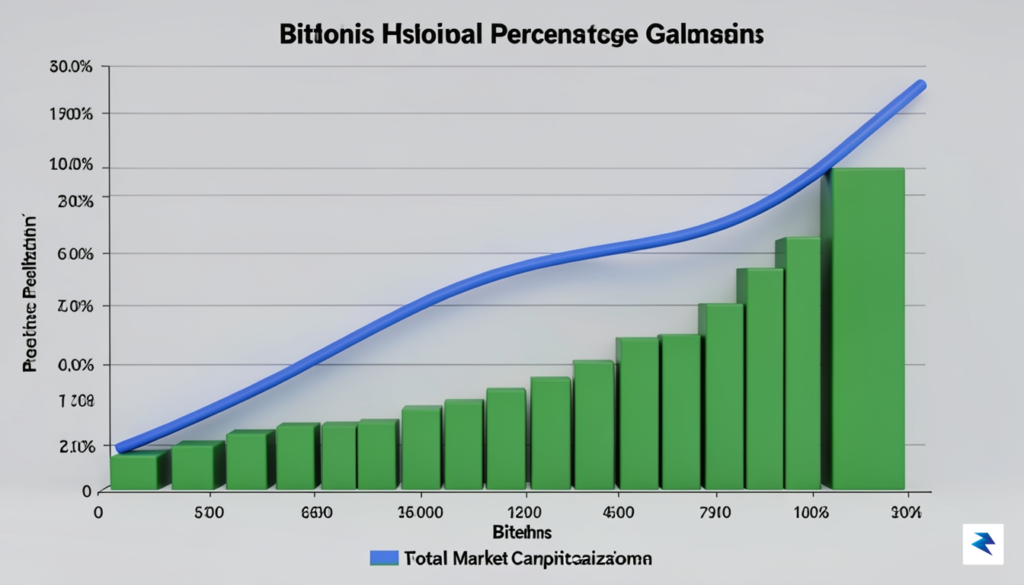
The evidence of this cooling trend is visible when comparing the ROI of each successive market cycle. During the 2013 cycle, Bitcoin saw an extraordinary peak-to-trough return, followed by a significantly smaller—though still impressive—percentage increase during the 2017 bull run, and an even more modest relative gain in 2021. This pattern is not an anomaly; it is the predictable outcome of an asset class moving from an “early majority” phase into institutional adoption. Each cycle now requires a progressively larger pool of buyers to achieve the same relative impact on the price, meaning that the “easy” exponential growth is likely a relic of the past.
The structural shift in market dynamics suggests that while Bitcoin may continue to appreciate, the era of consistent, massive percentage multipliers is being replaced by a phase of more moderate, albeit significant, capital accumulation.
Ultimately, investors hoping for a $500,000 price point by 2029 must account for the fact that every dollar added to Bitcoin’s market cap today has a fraction of the impact it had a decade ago. To believe in such aggressive targets is to assume that the influx of capital will not just continue, but will accelerate at a rate that defies the current trajectory of market saturation. Until we see a shift in global monetary velocity that dwarfs anything we have experienced thus far, the math suggests that Bitcoin’s growth curve is destined to flatten, favoring sustained value preservation over the hyper-volatile explosive growth of previous decades.

For years, the Bitcoin community viewed institutional adoption as the ultimate “holy grail,” a threshold that would finally validate the asset class and trigger a permanent ascent to astronomical price levels. However, as major financial entities and massive asset managers have integrated Bitcoin into their portfolios through ETFs and regulated custody solutions, the market dynamics have shifted in ways that many retail investors failed to anticipate. Institutional capital does not behave like the speculative, retail-driven liquidity that defined the explosive bull runs of 2017 and 2021. Instead, these professional players prioritize risk-adjusted returns and capital preservation over the high-octane volatility that historically pushed Bitcoin to record highs in short, intense bursts.
The introduction of sophisticated risk-management protocols serves as a powerful governor on Bitcoin’s price growth. When hedge funds, pension funds, and institutional desks enter the market, they bring with them algorithmic trading, hedging strategies, and a mandate for low correlation with traditional equity markets. Consequently, the “wild west” nature of Bitcoin is being replaced by a more controlled environment where sharp, parabolic spikes are often met with systematic profit-taking. While this institutional presence provides a fundamental “floor” for the asset, it also acts as a dampener on the extreme volatility that previously allowed for rapid, multi-hundred-percent gains within a single cycle. Institutional money is patient; it seeks the steady compounding of a long-term store of value rather than the fleeting gains of a speculative bubble.

Institutional capital seeks long-term compounding rather than rapid, parabolic gains, fundamentally altering the velocity at which Bitcoin moves through market cycles.
Furthermore, the structure of Bitcoin ETFs has fundamentally transformed how liquidity flows into the ecosystem. By channeling investment through regulated vehicles, capital is now managed by entities that operate under strict fiduciary duties, which inevitably leads to more cautious, measured accumulation strategies. Rather than the frenzied “fear of missing out” that characterized previous retail cycles, we are seeing a shift toward institutional dollar-cost averaging and portfolio rebalancing. This transition means that while Bitcoin may enjoy a higher degree of legitimacy and resilience against systemic shocks, it is increasingly tethered to the broader macroeconomic reality. Investors hoping for a straight line to $500,000 by 2029 must reconcile with the fact that the very liquidity meant to drive that growth is the same force currently working to smooth out the jagged edges of Bitcoin’s price history, effectively putting a ceiling on the explosive short-term momentum the market once knew.

To understand why Bitcoin’s parabolic trajectory might face significant gravity in the coming years, one must first recognize the unique macroeconomic “goldilocks” zone that defined the asset’s explosive growth over the last decade. From the aftermath of the 2008 financial crisis through the peak of the global pandemic response, the world existed in an era of unprecedented monetary stimulus. Central banks across the globe slashed interest rates to near-zero and engaged in massive quantitative easing, flooding the financial system with cheap capital. In this environment, risk-on assets—including technology stocks and cryptocurrencies—thrived as investors sought higher yields in a world where holding cash was effectively a losing proposition.
However, the financial landscape has undergone a tectonic shift. We are no longer living in the era of “easy money,” as central banks have pivoted toward a regime of higher-for-longer interest rates to combat persistent inflation. When the cost of borrowing rises, the speculative appetite that historically fueled Bitcoin’s rallies is naturally stifled. Capital that once flowed freely into high-risk digital assets is now being diverted into lower-risk, interest-bearing instruments like government bonds and high-yield savings accounts. This shift represents a fundamental change in market incentives: the “liquidity tide” that lifted all boats during the previous decade is not just receding; in many corners of the global economy, it is actively draining.

Furthermore, the fiscal environment today is markedly different from the post-2008 era. Governments are grappling with historic debt-to-GDP ratios, leaving them with far less room to maneuver should the economy stumble. Without the ability to simply print money to paper over structural weaknesses without risking runaway inflation, the “liquidity fuel” that catalyzed Bitcoin’s previous cycles is significantly diminished. While many proponents argue that Bitcoin serves as an independent hedge against currency debasement, the reality remains that its price action is still highly correlated with global M2 money supply growth. If that supply remains constrained by tight monetary policy, the mathematical bridge required to reach a $500,000 valuation becomes increasingly fragile.
The structural transition from a low-interest-rate regime to one of monetary tightening creates a “gravity” that speculative assets must overcome to reach new, record-breaking valuations.
Ultimately, the assumption that Bitcoin will inevitably reach half a million dollars by 2029 ignores the fact that market cycles are not isolated events; they are deeply tethered to the health and policy decisions of the broader financial ecosystem. Retail speculation, which requires excess disposable income and a sense of “fear of missing out” fueled by cheap leverage, cannot flourish in the same way it did when credit was virtually free. As we look toward the end of the decade, the primary hurdle for Bitcoin is not just adoption or code-based scarcity—it is the reality of a world that is finally learning to live with the true cost of money.

For years, the Stock-to-Flow (S2F) model served as the North Star for bullish Bitcoin forecasters, suggesting that because Bitcoin’s supply issuance is mathematically hard-capped and periodically halved, its price must inevitably ascend to astronomical heights. While this deterministic framework was useful during Bitcoin’s infancy, relying on it today ignores the fundamental reality that scarcity alone does not dictate market value. By treating Bitcoin as a static commodity driven solely by its supply-side schedule, analysts often overlook the intricate and unpredictable nature of global liquidity, macroeconomic cycles, and the diminishing marginal utility of each subsequent halving event.
The inherent limitation of these simplistic models lies in their refusal to integrate exogenous variables that define a mature asset class. As Bitcoin transitions from a speculative retail play into a cornerstone of institutional portfolios, its price performance is increasingly decoupled from its issuance schedule and more tethered to global capital flows. When interest rates rise or regulatory bodies introduce restrictive policies, the “scarcity premium” predicted by S2F models often evaporates, proving that supply-side constraints are only half of the valuation equation. True price discovery is a tug-of-war between the rigid code of the protocol and the fluid, often irrational, behavior of the global investor base.

The market is not a calculator; it is a complex ecosystem where demand-side factors—such as institutional adoption velocity and regulatory clarity—act as the primary engines of growth, often overriding the mathematical predictability of issuance schedules.
Furthermore, we must account for the changing nature of Bitcoin’s adoption curve. Early growth was fueled by ideological believers and speculative retail traders, but future appreciation requires a massive influx of capital from pension funds, sovereign wealth, and conservative corporate treasuries. These entities do not view Bitcoin through the lens of a Stock-to-Flow chart; they evaluate it based on its volatility, its custodial security, and its legal standing within the international financial system. Therefore, predicting a $500,000 price point by 2029 requires more than just a continuation of past supply trends. It demands a fundamental shift in how the world perceives digital sovereignty, which is a qualitative challenge that no mathematical model can accurately forecast.
Ultimately, the obsession with deterministic pricing models reflects a desire for certainty in a market defined by its inherent volatility. While the hard-capped supply of 21 million coins remains a powerful narrative for Bitcoin’s long-term value proposition, investors should be wary of models that promise specific future outcomes based solely on past issuance. Moving forward, a more robust valuation framework must prioritize the velocity of adoption, the evolution of global monetary policy, and the regulatory environment that will ultimately determine whether Bitcoin achieves the widespread integration necessary to reach such ambitious valuation targets.

While the allure of a parabolic surge toward half a million dollars is undoubtedly captivating, the reality of market mechanics suggests that such exponential growth becomes increasingly difficult as an asset class matures. When we strip away the speculative fervor and examine the necessary liquidity, global adoption rates, and macroeconomic shifts required to sustain such a valuation, the math often fails to support the most aggressive predictions. Investors should view these astronomical targets not as inevitable milestones, but as outliers that distract from the more fundamental, albeit slower, appreciation of Bitcoin as a global monetary asset.
Instead of chasing “moonshot” returns that depend on irrational exuberance, a more prudent strategy involves shifting the narrative toward wealth preservation and long-term utility. Bitcoin has evolved from a niche digital experiment into a recognized institutional-grade asset, meaning its price discovery process is now deeply tied to broader economic health, regulatory frameworks, and sovereign balance sheets. Rather than gambling on a five-year windfall, investors would be better served by focusing on Bitcoin’s capacity to act as a hedge against currency debasement and its role as a neutral, borderless store of value in an increasingly volatile world.

Realistic growth in the coming years will likely be characterized by institutional integration and a gradual reduction in volatility, rather than the explosive, vertical candles of the past. As Bitcoin transitions into its maturity phase, its performance will likely mirror that of other global reserve assets, albeit with a unique digital edge. This shift requires a change in mindset: moving away from the “get rich quick” mentality toward a patient, multi-cycle accumulation strategy. By anchoring expectations in economic reality rather than speculative hype, you can build a portfolio that remains resilient through market cycles, regardless of whether Bitcoin hits a specific price target by a arbitrary deadline.
The true strength of Bitcoin lies not in its ability to generate overnight wealth for early speculators, but in its endurance as an immutable, censorship-resistant asset that functions independently of traditional financial failures.
Ultimately, the goal for any serious investor should be to maintain exposure to Bitcoin’s long-term potential without succumbing to the anxiety of missing out on unrealistic price targets. Whether the price hits $150,000 or $300,000 by 2029 is secondary to the fact that the underlying network continues to grow more secure and decentralized with every passing day. By maintaining a balanced perspective, you protect your capital from the emotional volatility of the market and remain positioned to benefit from the steady, structural adoption of digital money on a global scale.
You must be logged in to post a comment.