
Will Bitcoin Hit $500,000 by 2029? Why the Math Says It May Fall Short
The Anatomy of Bitcoin's Price Projections The current discourse surrounding Bitcoin’s trajectory toward the $300,000 to $500,000 mark by…
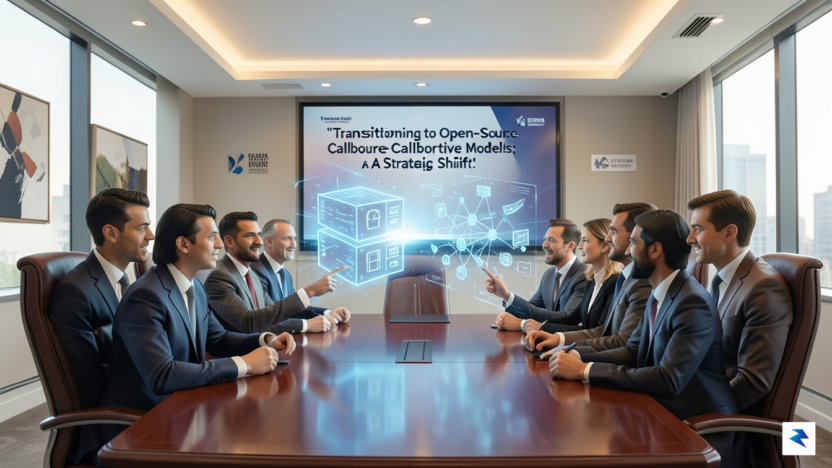

For the past two years, the corporate world has been locked in a gold rush, treating generative AI as a service to be consumed rather than an asset to be built. Companies have rushed to integrate proprietary models—often referred to as “black box” APIs—into their core workflows, essentially renting intelligence from a handful of dominant tech giants. While this approach provided a rapid entry point into the world of large language models, it has introduced a precarious dependency. By outsourcing the “brains” of their software to third-party providers like OpenAI or Anthropic, organizations are tethering their long-term operational success to the pricing models, usage policies, and strategic roadmaps of external entities.
This “renting” model presents a significant hurdle to enterprise stability and innovation. When a business relies exclusively on a proprietary API, they lose agency over the underlying infrastructure; they are subject to sudden rate limits, unexpected downtime, and the inevitable “black box” nature of models that offer no transparency into how data is processed or how decisions are made. Furthermore, the long-term cost of these subscriptions can become exponential as internal adoption grows. What initially seemed like a manageable operational expense quickly evolves into a massive, recurring overhead that offers no equity in the underlying technology. In essence, companies are paying a premium for a utility that they do not control, essentially treating a foundational piece of their tech stack as a temporary luxury rather than a permanent capability.

The maturation of the AI landscape is now forcing a strategic pivot toward what can be described as AI sovereignty. Much like the transition from on-premise servers to cloud infrastructure, and now toward a hybrid-cloud reality, businesses are realizing that AI must be treated as a foundational software asset—comparable to the proprietary codebases that define a company’s intellectual property. Owning one’s model does not necessarily mean reinventing the wheel from scratch, but rather leveraging the rapidly expanding ecosystem of open-source models to create tailored, self-hosted solutions. By taking control of the model weights and the inference environment, companies can ensure privacy, reduce latency, and insulate themselves from the whims of third-party vendors.
True digital sovereignty is achieved only when a company can replicate, modify, and host its own intelligence stack without relying on the permission or the infrastructure of a single dominant provider.
Moving toward an ownership model is ultimately about risk management and long-term viability. When an organization integrates open-source models into its own private cloud or on-premise infrastructure, it gains the freedom to iterate without seeking permission or fearing a sudden service deprecation. This shift signals a move away from the “AI-as-a-service” hype cycle and toward a more mature, infrastructure-first mindset. As the generative AI boom transitions into a period of practical application, the ability to control, audit, and optimize one’s own AI models will likely become the definitive competitive advantage for Fortune 500 companies in the coming decade.

For many organizations, the initial allure of integrating proprietary AI models via API was undeniable: it offered a frictionless path to state-of-the-art intelligence without the overhead of infrastructure management. However, as these deployments mature, the honeymoon phase is rapidly ending. Companies are discovering that renting AI is fundamentally different from owning it, leading to a precarious reliance on third-party providers that dictate the rules of the ecosystem. This dependency creates a dangerous “black box” scenario where businesses have no visibility into how models are updated, filtered, or altered. When a vendor unilaterally shifts the model’s behavior or modifies its output parameters, the enterprise is left scrambling to patch their downstream applications, often with little notice or recourse.
Beyond the technical opacity, the financial model of renting AI has proven to be deceptively volatile. While usage-based pricing might seem scalable at first, it often leads to unpredictable cost spikes as traffic grows or as providers adjust their token-pricing tiers. Unlike owning a model—where the infrastructure costs are largely deterministic—API costs are hostage to the vendor’s strategic shifts. Furthermore, the risk of sudden service deprecation poses a looming threat to business continuity. If a provider decides to sunset a specific model version or pivots their product roadmap, companies that have built their core business logic around that specific API are forced into an expensive and hurried migration, resulting in significant operational downtime.

True technical sovereignty in the age of AI requires the ability to audit, fine-tune, and host models in environments where the enterprise—not the vendor—maintains full control over the data lifecycle.
Perhaps the most significant limitation of the “renting” model is the erosion of competitive advantage through the loss of data ownership and customization. By relying on closed-source APIs, companies are essentially funneling their proprietary data into someone else’s engine, often with limited ability to truly fine-tune these models to the nuances of their specific industry or internal workflows. Because these proprietary systems are walled gardens, businesses cannot optimize the model for their unique latency requirements or security standards. Instead of building a durable, evolving asset that improves over time, they are merely leasing a generic utility. As the competitive landscape tightens, the organizations that will thrive are those that pivot toward open-source models, reclaiming the agency to iterate, debug, and tailor their AI infrastructure to their own specific long-term requirements.

For many enterprises, the initial allure of proprietary AI APIs—those “black box” services where you pay per token—was the ease of implementation. However, as businesses move beyond experimentation into mission-critical deployment, the limitations of renting intelligence have become glaringly apparent. By adopting open-source models hosted on private infrastructure, organizations are reclaiming their operational destiny. This shift is not merely about technical preference; it is a fundamental business strategy that prioritizes the long-term protection of intellectual property and the agility required to remain competitive in a rapidly evolving market.

When a company relies exclusively on external APIs, they are effectively leasing the core logic of their product. This creates a dangerous dependency where performance, pricing, and availability are subject to the whims of a third-party provider. In contrast, owning your model infrastructure allows for deep, surgical customization. When you host your own weights—whether using Llama 3, Mistral, or other open-weight architectures—you can fine-tune the model on your proprietary datasets. This level of specialization allows the AI to develop a nuanced understanding of your specific industry, internal workflows, and unique customer needs, resulting in a performance edge that generic, one-size-fits-all models simply cannot replicate.
True competitive advantage in the AI era comes from the ability to iterate faster than your competitors while keeping your specialized knowledge inside your own secure perimeter.
From a financial perspective, the transition from usage-based billing to infrastructure-based costs offers a much more predictable and scalable ROI. While API costs scale linearly—and often prohibitively—as your user base grows, hosting your own models allows for optimization at the hardware and inference level. By utilizing platforms like Hugging Face, engineering teams can implement techniques such as model quantization, distillation, and optimized inference engines like vLLM or TGI. These methods significantly reduce latency and compute overhead, ensuring that you are paying for the silicon you utilize rather than the inflated premiums of a proprietary middleman. This transition essentially converts a variable, unpredictable operational expense into a manageable capital and resource allocation.
Beyond the economics and performance metrics, ownership is a matter of governance and security. By keeping your models and your data within your own cloud environment or private data center, you eliminate the risks associated with transmitting sensitive information to external servers. This control ensures compliance with stringent data privacy regulations and prevents your proprietary inputs from being used to train the general models of your competitors. Ultimately, the move toward self-hosted, open-source AI is about ensuring that your company’s intelligence remains an asset that you own, nurture, and control, rather than a commodity you rent from someone else.

For too long, an outdated misconception has plagued the perception of open-source software within the enterprise: that it inherently lacks the security rigor of its proprietary counterparts. When it comes to advanced AI and machine learning models, this notion is not only inaccurate but increasingly counterproductive. Modern enterprises are discovering that open-source AI provides a robust, transparent, and ultimately more secure foundation for their most critical operations, particularly when compared to the opaque nature of proprietary AI APIs that require data to leave the company’s controlled environment.
The primary security advantage of open-source models stems from the ability to deploy them locally, whether on-premise within a company’s own data centers or within a dedicated private cloud infrastructure. This fundamental shift means that sensitive data — from customer records to proprietary business intelligence — never has to traverse the public internet to reach a third-party AI provider. By keeping data processing strictly within the company’s established perimeter, organizations gain unparalleled control over data residency and access. This localized deployment significantly mitigates the risks associated with data breaches, unauthorized access, and compliance violations that can arise when data is continuously streamed to and processed by external, black-box services.
Furthermore, the inherent transparency of open-source model architectures offers a distinct advantage in terms of auditing and risk management. Unlike proprietary solutions where the underlying code and training methodologies are closely guarded secrets, open-source models allow security teams to meticulously inspect every layer of the algorithm. This transparency enables a deeper understanding of potential vulnerabilities, biases, and data handling practices within the model itself. Enterprises can perform their own rigorous security audits, identify and patch weaknesses, and ensure that the AI system aligns perfectly with their internal security protocols and risk appetite. This level of scrutiny is simply impossible with closed-source APIs, which often operate as inscrutable black boxes.
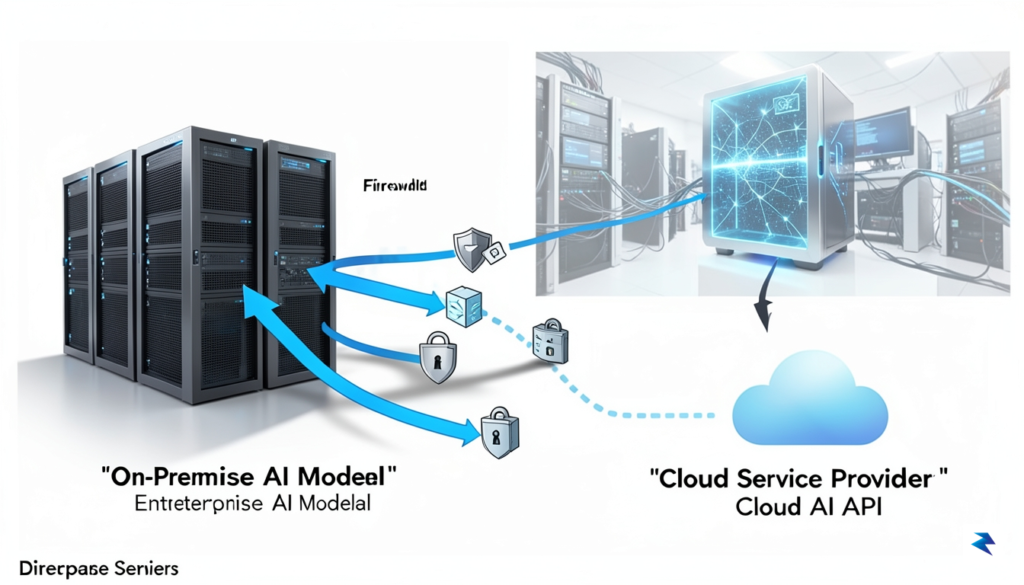
This internal control over AI infrastructure is absolutely critical for meeting stringent regulatory and compliance standards. Frameworks such as GDPR, HIPAA, SOC2, and various industry-specific regulations demand explicit control over how sensitive data is collected, processed, stored, and protected. When an organization utilizes a proprietary AI service, they inherently cede a significant portion of that control to a third party, creating complex data processing agreements and potential compliance gaps. By contrast, deploying open-source models internally empowers companies to dictate every aspect of data flow and processing, ensuring that all AI operations remain fully compliant with legal mandates. The ability to demonstrate full oversight and audit trails for AI-driven data processing is a game-changer for maintaining regulatory adherence and avoiding hefty penalties.
Ultimately, the narrative around open-source security is evolving. For the modern enterprise, it’s not about whether open source is “secure enough,” but rather recognizing that its transparency, customizability, and local deployability offer a superior pathway to robust security and comprehensive compliance. By internalizing AI capabilities with open-source models, companies are not just saving costs or gaining flexibility; they are fundamentally strengthening their data governance posture and insulating themselves from the inherent risks of relinquishing control over their most valuable asset: their data.

The trajectory of enterprise artificial intelligence is shifting away from the monolithic “black box” model toward a more modular, composable architecture. For years, businesses were forced to rely on a handful of proprietary APIs, effectively renting intelligence from a few dominant tech giants. However, as the market matures, we are witnessing a fundamental transition toward open-source frameworks that provide companies with greater autonomy and transparency. This evolution mirrors the early days of web development, where the industry moved from closed, proprietary stacks to the open, interoperable systems that power the modern internet today.
Platforms like Hugging Face have emerged as the central infrastructure—the “GitHub for AI”—that enables this transition. By providing a collaborative space where researchers and developers can share models, datasets, and best practices, these platforms have democratized access to state-of-the-art technology. This shift allows organizations to treat AI not as a static service they purchase, but as a customizable asset they own and refine. When a company can download, fine-tune, and host its own models, it gains the ability to align AI behavior with specific business logic, security requirements, and data privacy mandates that off-the-shelf APIs simply cannot accommodate.

Moving forward, the winning strategy for businesses will not be a binary choice between open or closed, but rather a sophisticated hybrid ecosystem. Companies will likely leverage large, open-source foundational models as their primary engines, customizing them for general-purpose tasks to ensure cost-efficiency and data sovereignty. Simultaneously, they will integrate specialized, niche proprietary tools for highly specific high-stakes applications where bespoke performance or managed compliance is critical. This “best-of-both-worlds” approach prevents vendor lock-in while maintaining the agility needed to swap out components as better models emerge.
The future belongs to organizations that view AI as a composable toolkit rather than a finished product. By building internal competencies now, teams can transition from mere API consumers to architects of their own intelligent infrastructure.
To prepare for this shift, engineering leadership must prioritize the cultivation of “AI fluency” within their ranks. This means moving beyond simple prompt engineering and investing in data pipelines, model orchestration, and MLOps capabilities. As the barrier to entry for hosting high-quality models continues to drop, the companies that thrive will be those that have integrated open-source flexibility into their core development lifecycle. By adopting this hybrid model today, businesses are not just buying technology—they are building a durable, scalable foundation that ensures they remain in control of their competitive edge for the long term.
You must be logged in to post a comment.