Windows 11 Update Control: How to Pause Updates for Up to 35 Days
Understanding the New Windows 11 Update Controls For years, Windows users have navigated a landscape defined by aggressive, often intrusive…


To understand why electricity prices are poised for a significant climb across 13 states, one must first look at the mechanism that keeps the lights on: the capacity auction. PJM Interconnection, which manages the massive power grid spanning from New Jersey to Illinois, conducts these auctions to ensure that there is enough generation capacity available to meet peak demand years into the future. Essentially, PJM pays power plants a premium to guarantee they will be ready and operational when the grid is most stressed, such as during extreme heatwaves or freezing winter storms. This “capacity market” acts as an insurance policy for the grid, ensuring that energy supply remains reliable even when the unexpected occurs.
The most recent auction results, however, have disrupted the status quo by yielding a staggering $6.3 billion increase in costs compared to previous years. This surge was primarily driven by a tightening supply of available power plants, coupled with a growing demand for electricity that is rapidly outpacing the current infrastructure’s capabilities. As older coal and gas plants are retired, the remaining supply must bid higher to compensate for the grid’s increased vulnerability. Furthermore, the massive proliferation of energy-hungry data centers—required to power the computational demands of artificial intelligence—has created a new, aggressive baseline for energy consumption that the current grid was not originally designed to support.

The $6.3 billion cost spike represents a fundamental shift in how the grid prices reliability: as demand from heavy industry and AI infrastructure grows, the cost of maintaining a “reserve” of power becomes exponentially more expensive for every ratepayer in the region.
Ultimately, these wholesale costs do not remain isolated within the energy market; they inevitably trickle down to the end consumer. When utility companies are forced to pay significantly more to secure their capacity through PJM, those expenses are passed on to residents and businesses via higher monthly utility bills. Because these capacity charges are a mandatory component of retail energy rates, consumers have little choice but to absorb the increase. While the auction ensures that the grid will remain stable and operational in the coming years, the price of that reliability is being reset to a significantly higher tier, marking a permanent shift in the cost of powering modern digital society.

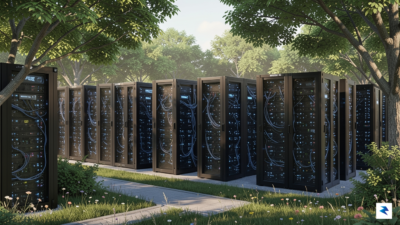
The digital revolution, once conceptualized as a weightless realm of clouds and virtual code, has developed a massive, iron-clad physical footprint that is fundamentally altering our relationship with energy. While the early internet era relied on modest server rooms, the modern age of artificial intelligence and expansive cloud computing demands an unprecedented level of industrial-scale power. Today’s hyperscale data centers are essentially the heavy manufacturing plants of the 21st century; however, unlike traditional factories that operated on predictable schedules, these facilities function as relentless, 24/7 engines of computation. The power-intensive nature of modern GPU clusters, which are required to train complex large language models, creates a persistent, high-voltage draw that exceeds the capacity of many localized utility grids.

To understand the scale of this shift, one must look at the evolution of energy consumption. Historically, energy-intensive sectors like steel smelting or automotive manufacturing were the primary drivers of industrial load. Yet, modern data centers have surpassed these sectors in density and operational intensity. As AI models become more sophisticated, the energy required to process a single query can be orders of magnitude higher than a traditional web search. This creates a phenomenon known as “load growth”—a sudden, concentrated surge in demand that utility providers did not anticipate when planning grid infrastructure decades ago. Our current electrical distribution systems were designed for a world of decentralized residential use and steady commercial growth, not for the sudden arrival of mega-facilities that consume as much electricity as small cities.
The rapid transition to AI-driven infrastructure has created a “load growth” crisis, where the pace of digital demand is currently outpacing the physical capacity of our aging electrical grid.
The consequences of this rapid expansion are beginning to ripple outward, affecting everything from local electricity rates to the stability of regional power networks. Because these data centers require consistent, uninterruptible power, they are increasingly competing directly with residential neighborhoods and small businesses for limited grid capacity. When a utility provider must upgrade a substation or install new transmission lines to accommodate a massive new data center, the financial burden of these infrastructure projects is often distributed across the broader ratepayer base. Consequently, the rapid ascent of AI is no longer just a technical trend confined to Silicon Valley boardrooms; it is becoming a tangible factor in the rising utility bills of everyday consumers who are essentially subsidizing the energy demands of the next generation of cloud infrastructure.

The rapid expansion of artificial intelligence and cloud computing infrastructure is creating a significant strain on regional power grids, transforming the energy landscape in 13 states. While the tech industry celebrates these massive investments, the financial burden of upgrading infrastructure and sourcing additional power is increasingly being passed down to the end user. For the average household, this means that energy expenses—a non-negotiable part of the monthly budget—are likely to rise as utility providers seek to recoup the multi-billion dollar costs associated with grid reinforcement. When power companies invest in new transmission lines and generation capacity to keep pace with data center demand, those capital expenditures are typically integrated into rate base increases, effectively socializing the cost of private sector growth across the general population.
Small business owners are particularly vulnerable to this shift, as energy costs represent a significant portion of their fixed overhead. Unlike large corporations that may have the leverage to negotiate private power purchase agreements or invest in on-site renewable energy, local retailers, restaurants, and service providers are often at the mercy of standard commercial utility rates. When electricity prices climb, these businesses face a difficult dilemma: absorb the higher costs and sacrifice profit margins, or pass the expense on to their customers. In a competitive market, raising prices can lead to a decline in foot traffic, potentially threatening the viability of small enterprises that are already operating on thin margins. Consequently, the inflationary pressure of rising energy costs acts as a silent tax, quietly eroding the purchasing power of both business owners and their local clientele.

The transition toward a high-compute economy is creating a structural shift in energy markets, where the necessity for reliable, high-capacity power is colliding with the limitations of existing infrastructure.
Utility commissions in the affected states are currently tasked with the delicate responsibility of balancing grid reliability with consumer affordability. These regulatory bodies must approve rate hikes while ensuring that energy remains accessible to low-income households, but the sheer scale of the investment required for data center integration makes this a daunting challenge. As these commissions deliberate, there is a growing concern regarding long-term rate volatility. If demand continues to outpace supply, the resulting competition for electricity could lead to unpredictable price spikes, particularly during peak usage periods. Ultimately, the economic ripple effect serves as a reminder that the digital revolution is not just a technological phenomenon; it is a physical, resource-intensive endeavor that carries real-world financial consequences for every citizen connected to the grid.
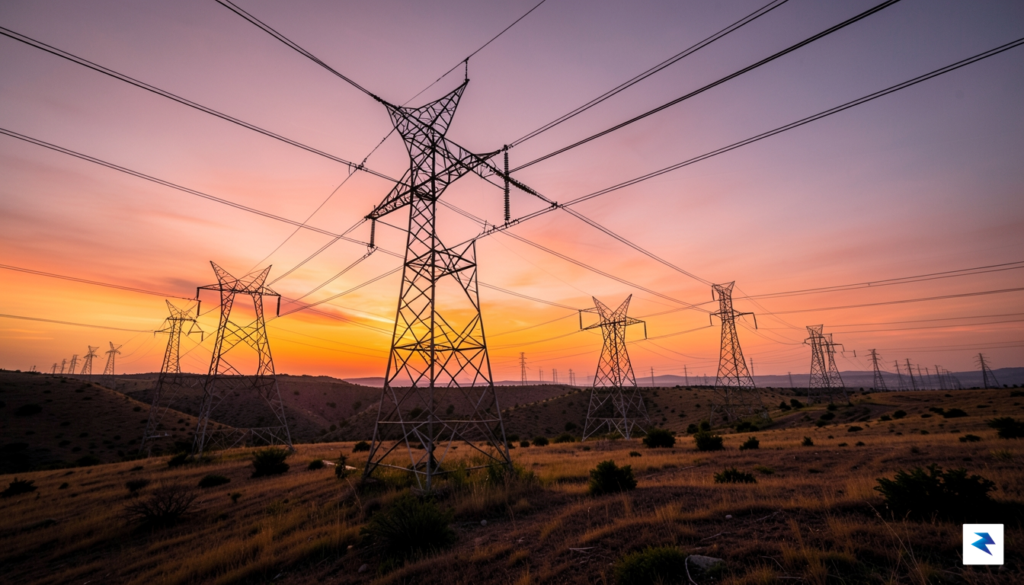
The central challenge currently facing the energy sector is not a lack of potential generation, but a profound mismatch in the timing and geography of power delivery. While data centers are being deployed at an unprecedented velocity to support the AI revolution, the physical grid—the intricate web of high-voltage transmission lines—is struggling to keep pace. Even if a utility can secure a new source of carbon-free energy, that power is useless if it cannot be physically transported to the server farms demanding it. Our current transmission infrastructure was largely designed for a different era of power consumption, and upgrading these aging lines involves navigating a labyrinth of regulatory hurdles, land-use disputes, and complex engineering mandates that often span years, if not decades.
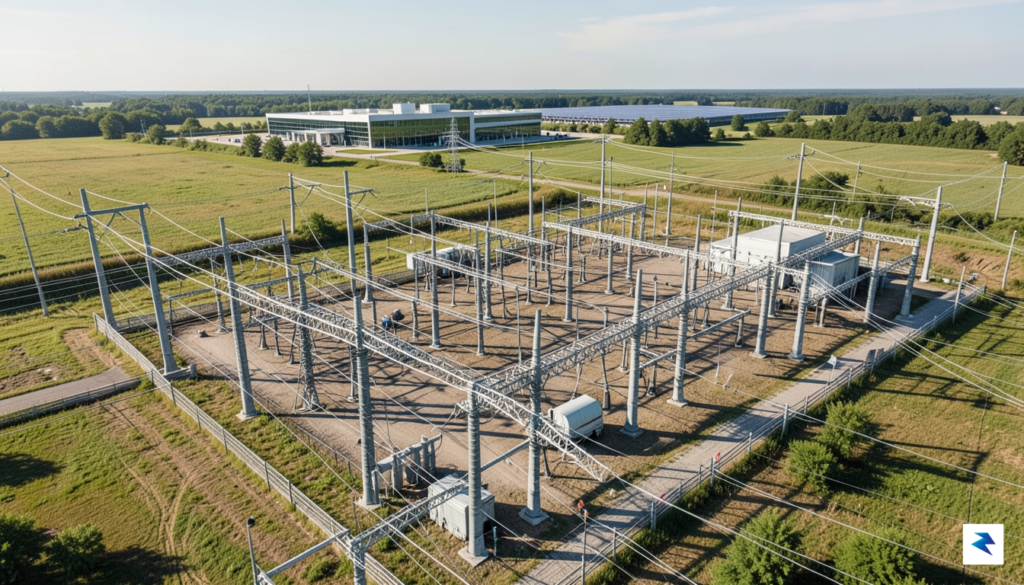
At the heart of this gridlock is the “interconnection queue,” a process that has become a significant bottleneck for energy developers. When a new power plant or energy storage project wants to plug into the PJM Interconnection—the regional transmission organization that manages the flow of electricity for much of the Eastern United States—it must undergo a rigorous, multi-stage study process. These studies evaluate how the new supply will impact grid stability and what local transmission upgrades are required to accommodate the load. Because the grid was not designed to handle these massive, concentrated spikes in demand from hyperscale data centers, almost every new project now requires expensive, time-consuming infrastructure reinforcements. This leads to a vicious cycle where projects sit in limbo for years, waiting for approval, while the costs of these necessary grid upgrades continue to climb.
The primary friction point is the delta between the digital speed of the tech industry and the geological speed of utility infrastructure development.
This conflict between rapid digital deployment and slow-moving physical energy infrastructure is creating significant upward pressure on electricity rates. When a utility is forced to invest billions in grid modernization to support a single massive data center hub, those costs are often socialized across the broader customer base. Furthermore, because the queue is so congested, developers are often forced to abandon projects or pay exorbitant premiums to expedite their connection, costs that are inevitably passed down to the end consumer. As we continue to prioritize the expansion of digital infrastructure, we must confront the reality that the physical grid is no longer just a passive utility; it has become the most constrained resource in the entire technology ecosystem. Without a fundamental shift in how we permit, finance, and build high-voltage transmission capacity, the energy bottlenecks will likely grow, leaving both grid operators and consumers to pay the price for a system that simply wasn’t built for the modern era.
The rapid expansion of the digital economy creates an urgent paradox: while we rely on data centers to power everything from global finance to artificial intelligence, the surging energy demand threatens to destabilize household electricity rates. To reconcile these competing interests, policymakers and utility providers must shift toward a model of collaborative grid management. One of the most promising regulatory responses involves the implementation of sophisticated demand-response programs. By incentivizing data center operators to throttle their energy consumption during peak grid stress—such as during extreme heatwaves or winter storms—utilities can prevent the need for expensive, dirty “peaker” plants that drive up costs for everyone. These programs, when paired with dynamic pricing models, encourage tech giants to shift non-essential computational workloads to times when renewable energy is abundant and grid demand is low.
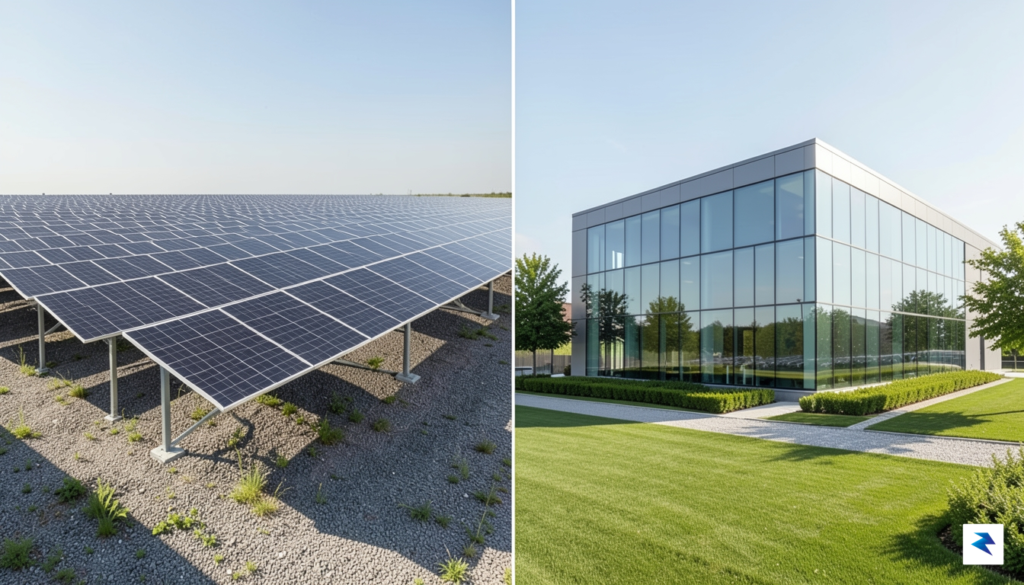
Beyond regulatory frameworks, the private sector is increasingly taking ownership of its footprint through direct investment in onsite power generation. We are entering an era where data centers are evolving from passive grid consumers into active energy hubs. Forward-thinking companies are exploring the deployment of small modular reactors (SMRs) and dedicated behind-the-meter solar arrays to provide consistent, carbon-free power without drawing from the public grid. By decoupling their energy needs from the local utility’s supply, these companies not only shield themselves from price volatility but also relieve the immense pressure on regional transmission infrastructure. This move toward energy autonomy represents a critical evolution in corporate responsibility, ensuring that the infrastructure required for the next generation of AI does not come at the expense of local community stability.
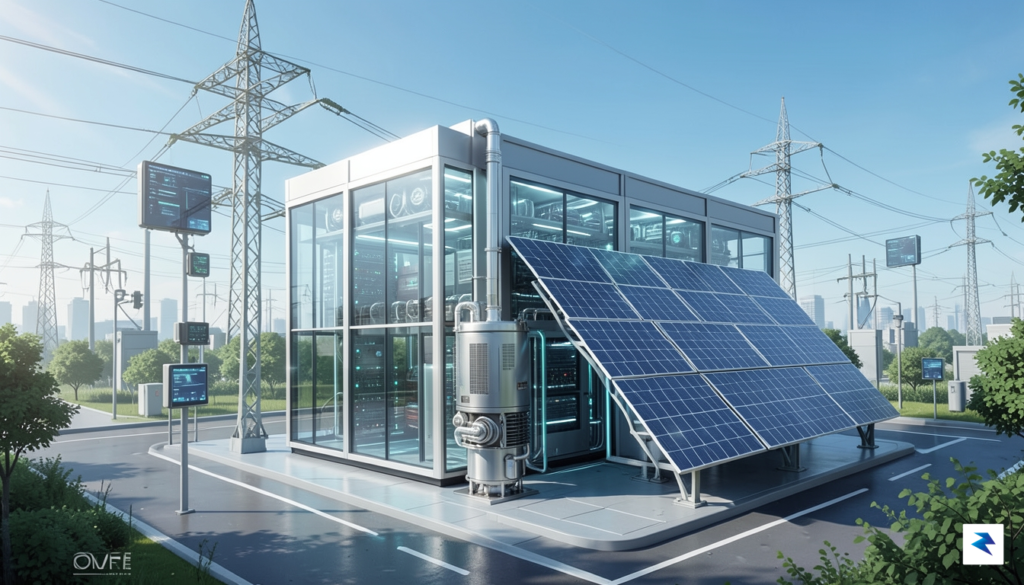
Ultimately, achieving this equilibrium requires a modernized grid that is as intelligent as the data it supports. Integrating artificial intelligence into grid management—a concept known as the “smart grid”—allows for real-time load balancing that can accommodate massive fluctuations in power demand. Policymakers must focus on streamlining the permitting process for high-voltage transmission lines while ensuring that the cost of these upgrades is distributed equitably rather than falling solely on residential ratepayers. As we navigate this transition, the overarching goal must be to incentivize technological innovation while safeguarding the affordability of the basic utilities upon which every household relies.
The future of our digital infrastructure depends on a symbiotic relationship between tech growth and energy resilience; we cannot support the former if we fail to invest in the latter.
The path forward is not found in restricting innovation, but in maturing our energy policy to reflect the realities of a digital-first world. By mandating transparency in load growth projections and fostering public-private partnerships in renewable energy development, we can ensure that the rise of AI acts as a catalyst for grid modernization rather than a drain on consumer wallets. If these policies are enacted with foresight, the digital transformation can coexist with, and even bolster, a more affordable and reliable energy future for all.
You must be logged in to post a comment.