
Why Oil Prices Are Fluctuating: Understanding the Latest Market Shifts
The Volatility of Oil Markets: Understanding Recent Price Fluctuations The global energy landscape is currently undergoing a period of…


For over a decade, the Food and Drug Administration (FDA) has grappled with the complex task of regulating a rapidly evolving nicotine market that often moves faster than federal oversight can manage. When electronic cigarettes first gained widespread popularity, the agency lacked clear jurisdiction, leading to an initial period of unchecked growth that saw thousands of flavored products flood the market. It was not until 2016 that the FDA finalized its “deeming rule,” officially bringing e-cigarettes under the regulatory umbrella of the Tobacco Control Act. Since then, the agency has been trapped in a precarious balancing act, attempting to reconcile the potential for vapes to serve as harm-reduction tools for adult smokers with the urgent need to curb a burgeoning youth vaping epidemic that has seen millions of adolescents exposed to nicotine.
The primary mechanism for this oversight is the Premarket Tobacco Product Application (PMTA) process, a rigorous scientific review designed to ensure that any new tobacco product is “appropriate for the protection of public health.” In theory, this process should filter out harmful or youth-appealing products; in practice, it has become a significant administrative bottleneck. Manufacturers are required to submit extensive clinical data, yet the sheer volume of applications—numbering in the millions—has overwhelmed the agency’s review capacity. This backlog has left the FDA in a state of regulatory purgatory, where products remain on shelves for years while pending decisions, creating a market environment defined by uncertainty and inconsistent enforcement.
The core of the legal conflict lies in the FDA’s reliance on “enforcement discretion,” a policy stance that allows the agency to prioritize certain violations over others.
This reliance on enforcement discretion has become the focal point of the current tension between public health advocates and federal regulators. Critics argue that by failing to issue swift, categorical denials for flavored products—which are widely understood to be the primary drivers of youth interest—the FDA is effectively allowing a “gray market” to persist. Public health groups contend that this inaction contradicts the spirit of the Tobacco Control Act, which mandates that the agency prevent products from entering the market unless they can prove they provide a net benefit to public health. As the legal battle unfolds, the FDA finds itself at a critical crossroads, forced to defend its discretionary choices while facing mounting pressure to demonstrate that its regulatory framework is not merely a bureaucratic hurdle, but a robust safeguard for the nation’s youth.

The decision to initiate legal action against the Food and Drug Administration (FDA) stems from a deep-seated frustration among leading public health organizations who believe the agency has essentially abandoned its oversight responsibilities. At the heart of this lawsuit is the argument that the FDA’s current approach to flavored e-cigarettes—specifically its failure to finalize marketing denials for thousands of pending applications—has created a legal gray area that manufacturers are exploiting to keep products on store shelves. Plaintiffs contend that by delaying these regulatory decisions, the agency has effectively granted a “de facto” authorization to products that have never undergone the rigorous public health review mandated by federal law. Consequently, these groups argue that the agency is in clear violation of the Tobacco Control Act, which requires the FDA to determine whether such products are “appropriate for the protection of the public health” before they reach the consumer market.

Central to the plaintiffs’ grievances is the assertion that this regulatory inertia is directly contributing to a persistent youth vaping epidemic. While the FDA has previously acknowledged the addictive risks posed by nicotine-heavy e-cigarettes, health advocates point out that the continued availability of fruit and candy-flavored vapes acts as a primary lure for middle and high school students. The lawsuit posits that the agency’s inconsistent enforcement strategy fails to account for the long-term developmental impacts on adolescent brain health. By allowing these products to remain in circulation, the plaintiffs argue, the FDA is prioritizing the commercial interests of the vaping industry over the well-being of the nation’s youth, thereby neglecting its primary mission to mitigate tobacco-related diseases.
The lawsuit aims to compel the FDA to fulfill its statutory obligations by establishing a definitive timeline for the review of all remaining e-cigarette applications, ensuring that products lacking scientific evidence of public health benefit are removed from the market permanently.
Ultimately, the objective of this litigation is to force a judicial intervention that mandates transparency and accountability. The public health groups are not merely seeking a symbolic victory; they are demanding a court-ordered enforcement plan that leaves no room for the bureaucratic delays that have characterized the FDA’s recent trajectory. By seeking this legal remedy, the plaintiffs hope to create a streamlined pathway for the removal of illicit, non-compliant devices, thereby creating a more robust regulatory environment. They maintain that if the agency is unwilling to proactively regulate these substances, the judiciary must step in to ensure that federal laws designed to protect public health are upheld with the urgency they require.

The regulatory landscape surrounding e-cigarettes is frequently presented as a purely scientific debate, yet this perspective ignores the massive machinery of corporate influence operating behind the scenes. While public health advocates emphasize the clinical data regarding nicotine addiction and long-term health risks, the e-cigarette industry has deployed a sophisticated lobbying apparatus designed to protect its market share. By hiring former high-level government officials and utilizing extensive political action committees, vape companies have effectively institutionalized their presence within the halls of federal agencies. This strategy ensures that industry voices are not merely external critics, but active participants in the informal dialogues that often precede formal policy announcements.
These direct lines of communication have created a persistent friction between public safety mandates and corporate economic interests. For instance, when the F.D.A. contemplates stricter enforcement on flavored products, industry executives often respond by leveraging their political capital to emphasize the potential economic fallout, including job losses and the disruption of small business supply chains. This pressure often manifests as prolonged meetings, requests for additional data, and the strategic positioning of “harm reduction” arguments that prioritize market access over the precautionary principle. Consequently, these interactions can turn straightforward regulatory decisions into protracted bureaucratic battles, often resulting in delayed enforcement timelines that allow prohibited products to linger on store shelves for years.

The tension between public health and profit is rarely settled in a courtroom alone; it is fundamentally shaped by the daily, behind-the-scenes negotiations that determine the speed and severity of federal oversight.
Ultimately, the impact of this corporate pressure is most visible in the inconsistent application of policy. When industry lobbyists successfully frame enforcement as an administrative overreach, they frequently find sympathetic ears among political leadership who are wary of the broader economic implications. This environment forces regulators to navigate a treacherous path, balancing the urgent demands of public health organizations against the well-funded, persistent lobbying of major tobacco and independent vape corporations. Because the regulatory process is not a vacuum, the delays seen in removing flavored e-cigarettes from the market serve as a stark reminder that in the realm of federal policy, access and influence are often just as decisive as the scientific evidence presented by public health experts.

While regulatory debates continue to unfold within the halls of Washington, the nicotine marketplace remains in a state of perpetual, high-speed evolution. As public health organizations challenge the current oversight framework, manufacturers have demonstrated a remarkable ability to pivot in response to shifting legal pressures. Often, this results in a game of cat-and-mouse where product designs are iterated upon to exist in the gray areas of federal enforcement. By slightly modifying chemical compositions or hardware specifications, companies frequently maneuver around existing restrictions, ensuring that flavored products remain accessible to consumers despite the mounting scrutiny from federal agencies.
The economic incentive driving this constant innovation is significant, as the demand for flavored nicotine delivery systems remains a cornerstone of the industry’s profitability. Brands recognize that flavor profiles are a primary driver of consumer loyalty, making the maintenance of these offerings a top priority for their business models. Consequently, when a specific product line faces a ban or a regulatory setback, corporations are quick to introduce “next-generation” alternatives that fall just outside the scope of current litigation. This rapid turnover is not merely a matter of convenience; it is a strategic necessity designed to protect market share against a backdrop of increasing volatility.

Furthermore, supply chains have become increasingly agile to accommodate the uncertainty surrounding future policy shifts. Logistics networks are now structured to handle smaller, more frequent product launches, allowing companies to test the market with new formulations before committing to full-scale production. This adaptability serves as a hedge against sudden enforcement actions; if a particular category of vape is suddenly pulled from shelves, these companies are often already prepared to pivot their inventory toward compliant or quasi-compliant alternatives. This proactive approach to distribution ensures that the economic pipeline remains active, regardless of how the legal landscape changes.
The persistence of flavored nicotine products in the face of litigation suggests that market innovation currently outpaces the regulatory speed of federal oversight, creating a cycle of constant adaptation that complicates public health initiatives.
Ultimately, this dynamic environment creates a challenging reality for regulators who aim to standardize safety protocols. As long as the financial rewards for capturing the flavored market segment remain high, the industry will likely continue to prioritize rapid iteration over long-term compliance. This creates a lasting tension where the market’s pace of change effectively nullifies the impact of slow-moving policy, leaving both public health advocates and industry stakeholders in a state of indefinite, high-stakes competition.
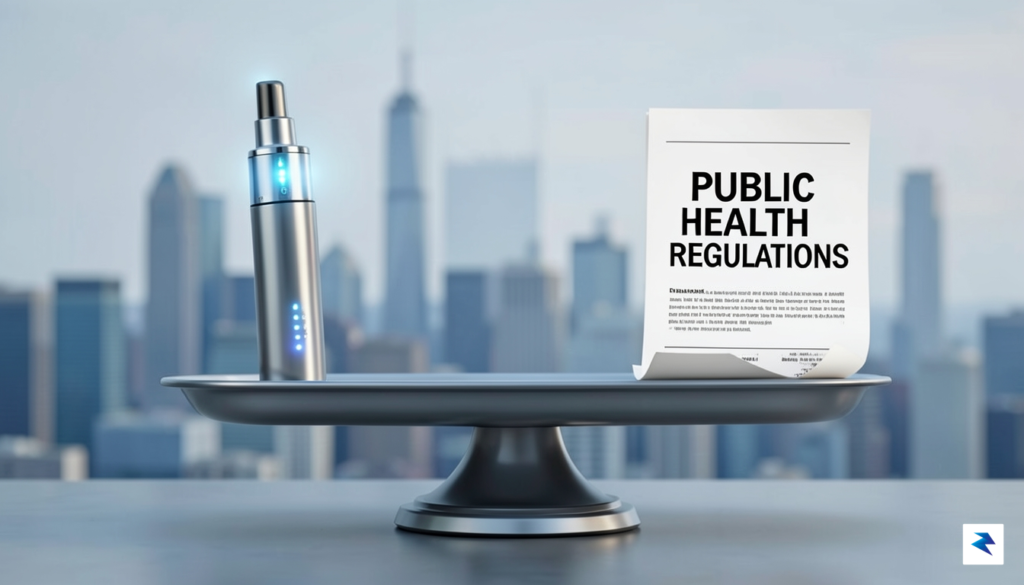
The resolution of this litigation will almost certainly serve as a foundational precedent for how the Food and Drug Administration navigates the complex intersection of rapid technological innovation and federal consumer protection. Because the outcome will dictate the legal boundaries of the agency’s discretionary power, industry observers and public health advocates alike are watching closely to see if the judiciary will demand a more rigorous, standardized application of the Premarket Tobacco Product Application (PMTA) process. Should the courts side with the plaintiffs, the FDA may be forced to adopt a significantly more restrictive posture toward flavored nicotine products, effectively closing the regulatory loopholes that have allowed various vaping devices to remain on the market while their authorization status remains in administrative limbo.
“The tension between fostering harm reduction tools for adult smokers and shielding the youth population from the allure of flavored nicotine remains the central challenge for modern regulatory frameworks.”
Looking toward the horizon, the long-term implications for public health policy are profound. If the judicial system mandates a stricter enforcement timeline, we could see a dramatic shift in the landscape of available consumer goods, potentially accelerating the decline of flavored products that have been criticized for their appeal to younger demographics. Conversely, if the current regulatory ambiguity is upheld, the FDA may find its authority challenged, leading to a fragmented market where product safety standards vary wildly. This case does not merely concern the legality of specific vaping flavors; it defines the extent to which public health agencies can exercise their preventive authority in the face of persistent industry pushback.
Ultimately, achieving a sustainable equilibrium requires a delicate balancing act that acknowledges both the potential for e-cigarettes to serve as cessation aids and the urgent need to protect the well-being of the next generation. As the legal proceedings unfold, the overarching goal must remain the establishment of a robust, science-based framework that does not sacrifice long-term health outcomes for short-term market convenience. Whatever the ruling, it will undoubtedly influence the future of tobacco control policy for years to come, forcing stakeholders to reconcile the ongoing evolution of nicotine delivery systems with the fundamental mandate of public safety.
You must be logged in to post a comment.