Best Power Banks (2026): How to Choose the Right Portable Charger
Understanding Your Power Needs: Beyond Capacity When searching for a new portable power source, it is tempting to simply look for the largest…

For decades, the physical disc served as the undisputed gold standard of the gaming industry, representing a tangible connection between the player and their virtual adventures. Opening a fresh game case, smelling the plastic, and carefully inserting the disc into a console was a rite of passage that defined a generation of collectors and enthusiasts. These discs were more than just data storage; they were artifacts of ownership, allowing players to trade, lend, or resell their titles at will. However, that era of physical dominance is rapidly receding into the rearview mirror, replaced by an industry architecture that prioritizes convenience and perpetual connectivity over the sanctity of a shelf-bound collection.
The current market trends paint a sobering picture for those who value physical media. Retail sales for console games have seen a steady, precipitous decline as major publishers and platform holders shift their focus toward proprietary digital storefronts. This transition is not merely a byproduct of changing habits, but a calculated business strategy; by moving to digital-only distribution, companies effectively eliminate the used-game market, capture 100% of the revenue from every sale, and maintain total control over the software’s lifespan. Consequently, we are seeing the rise of “all-digital” console iterations, which lack optical drives entirely, signaling that hardware manufacturers are no longer interested in supporting the physical format in the long term.
The shift toward digital distribution is driven by a powerful synergy between corporate profit motives and the consumer’s growing demand for immediate access.
On the consumer side, the appetite for instant gratification has fundamentally altered the landscape. In an age where high-speed internet is the norm, the prospect of waiting for a shipping delivery or traveling to a brick-and-mortar store feels increasingly archaic compared to the ability to pre-load and play a title the second it unlocks at midnight. This convenience, while undeniably efficient, comes with a hidden cost: the erosion of true ownership. When a game is entirely digital, the user is essentially purchasing a revocable license rather than a product. If a storefront closes or a publisher decides to pull a title from their servers, that game can effectively vanish from existence, leaving the player with nothing but empty space on their hard drive. This existential crisis for physical media is not just about the loss of a format; it is a fundamental shift in the power dynamic between the player and the platform.

The transition from physical discs to digital downloads is often marketed as the ultimate consumer convenience, promising an era where entire libraries exist at our fingertips without the clutter of plastic cases. However, this shift masks a fundamental transformation in the legal relationship between the player and the product. When you purchase a physical game, you acquire a tangible asset that you can lend to a friend, resell to a local shop, or keep on a shelf as a permanent piece of history. In contrast, purchasing a digital title is merely the acquisition of a revocable license—a permission slip from the publisher that can be rescinded at any time, for any reason, without compensation.
This reality becomes painfully clear when storefronts shutter or licensing agreements expire. We have already witnessed the quiet disappearance of digital games from storefronts, leaving players unable to re-download titles they technically “own.” Because these assets are tied to centralized servers, the longevity of your library is entirely dependent on the continued existence and goodwill of the platform holder. If a company decides to sunset a service or remove a game due to music rights or internal policy shifts, the consumer has no recourse. Unlike a disc, which functions as long as the hardware remains operational, a digital license is a fragile tether that snaps the moment the provider pulls the plug.

From the perspective of major gaming corporations, the move toward a digital-only ecosystem is a strategic masterstroke designed to maximize profit margins. By eliminating the physical medium, companies effectively erase the secondary market; there is no “used digital game” economy where players can recoup costs or purchase titles at a discount from peers. Furthermore, the immense costs associated with manufacturing, shipping, and retail distribution are slashed overnight, allowing publishers to retain a larger share of every sale. As one industry analyst might put it:
The digital shift isn’t just about speed or convenience; it is a calculated effort to transition the consumer from an owner of goods to a perpetual subscriber to a service.
Ultimately, this model prioritizes the short-term efficiency of the publisher over the long-term sovereignty of the player. As we continue to trade the permanence of physical media for the immediate gratification of a download, we must acknowledge the cost. We are not just losing discs; we are losing the ability to preserve gaming history, control our personal collections, and ensure that the titles we love remain accessible long after the hype cycle has faded and the servers have gone quiet.

The digital revolution, while offering unprecedented convenience and accessibility for gamers, has inadvertently introduced a profound existential threat to the historical record of video games themselves. Unlike traditional art forms such as literature or film, where physical copies or established archives ensure longevity, a significant portion of modern gaming content exists in a far more precarious state. We are witnessing an era where entire swathes of interactive entertainment, representing years of creative effort and technological innovation, stand on the precipice of being lost forever, not through natural decay, but by deliberate corporate decisions. This raises critical questions about our ability to preserve what is rapidly becoming one of the most significant cultural mediums of our time.
At the heart of this looming crisis lies the widespread adoption of server-side licensing and always-online requirements. Many contemporary games, even those primarily focused on single-player experiences, rely on backend servers for authentication, updates, or even core gameplay elements. While this model offers benefits to publishers, such as robust anti-piracy measures and continuous content delivery, it simultaneously creates a ticking time bomb for the game’s long-term viability. When a publisher decides that an older title is no longer profitable to support, or if a company ceases operations entirely, those essential servers can be—and frequently are—shut down, rendering the game unplayable for anyone who owns it. This isn’t merely about losing access to online multiplayer; it means the entire experience can vanish into thin air, regardless of whether you’ve “purchased” it.
Consider the stark reality: countless games from past generations have already been rendered inaccessible or severely crippled due to server shutdowns. Whether it’s the online components of classic sports titles, the authentication servers for an early MMO, or even single-player campaigns that require a one-time online check, the digital infrastructure is prone to eventual obsolescence and abandonment. Players who invested their time and money find their purchases transformed into digital dust, with no recourse. This scenario poses a direct challenge to the very notion of ownership in the digital age, transforming a purchase into a lease agreement contingent on the publisher’s continued support.
In stark contrast, physical media—the humble disc, cartridge, or even the now-rare game box—stands as a remarkably resilient bulwark against this digital impermanence. A game stored entirely on a physical medium, requiring no external server validation for its core functionality, offers a permanent, offline record of its existence. It can be played decades later, provided the hardware still functions, without permission from a distant server or the benevolence of a long-defunct corporation. This tangible format ensures that the game’s code, art assets, and gameplay mechanics are self-contained, offering a direct, unmediated connection to the historical artifact.
This distinction is profoundly important for the mission of game preservation. While digital storefronts offer unparalleled convenience and distribution, they function as curated libraries, not permanent archives. Games can be delisted for various reasons—licensing issues, lack of profitability, or even a publisher going out of business—effectively erasing them from public access. Without a physical counterpart, these delisted titles face an immediate threat of being lost forever, their cultural and historical significance disappearing from the collective memory. Physical media, therefore, acts as a crucial decentralized archive, ensuring that even if a digital version vanishes, a tangible copy might still exist to be played, studied, and appreciated by future generations.
Ultimately, preserving the rich tapestry of gaming history necessitates a robust and independent method of archiving, and in this critical role, physical media remains irreplaceable. It provides an enduring, offline testament to the artistic and technological achievements embedded within each title, offering a safeguard against the capricious nature of server lifecycles and corporate priorities. As the industry increasingly shifts towards digital-only distribution models, the potential for historical loss escalates dramatically, underscoring the vital, often understated, importance of owning a physical copy.
The transition toward a digital-only gaming landscape fundamentally alters the financial equilibrium for the average consumer, shifting the power dynamic away from the buyer and firmly into the hands of platform holders. Historically, physical discs served as a form of liquid asset; when a player finished a campaign or lost interest in a title, they could trade that game at a local retailer or sell it on the secondary market to recoup a portion of their initial investment. By eliminating physical media, publishers effectively kill the pre-owned market, forcing gamers to pay full retail prices for every single purchase. This policy forces consumers into a closed ecosystem where they are essentially “price-takers,” stripped of the ability to shop for competitive deals or access lower-cost used copies, which previously made gaming an affordable hobby for millions.
For the dedicated collector, the stakes are even higher, as the value of a gaming library is no longer tethered to tangible ownership but to the stability of a digital storefront. Collectors have long valued the aesthetic appeal of box art, the tactile experience of inserting a disc, and the inclusion of physical manuals that provide lore and instruction. When these items are replaced by ephemeral data on a server, the sense of permanence is lost, and the collection itself becomes a hostage to the platform holder’s licensing agreements. If a digital service decides to delist a title due to expiring music rights or server decommissioning, the consumer is left with nothing but a void in their library, regardless of how much money they originally spent.
True ownership in the digital age is often an illusion; when you purchase a game on a locked storefront, you are buying a revocable license rather than a permanent asset.
Furthermore, the long-term financial implications of this shift are often obscured by the convenience of digital storefront sales, which can create a false sense of value. While temporary discounts on digital platforms are common, they rarely match the floor price of the physical secondary market, where older games eventually become highly affordable. Once the industry successfully pushes out physical media, the lack of competition from used-game retailers will likely lead to higher long-term costs for the average gamer. Without the ability to trade, sell, or lend games to friends, the consumer loses every leverage point they once had, transforming the act of buying a game from a one-time purchase into a permanent dependency on the platform holder’s dictated pricing models.
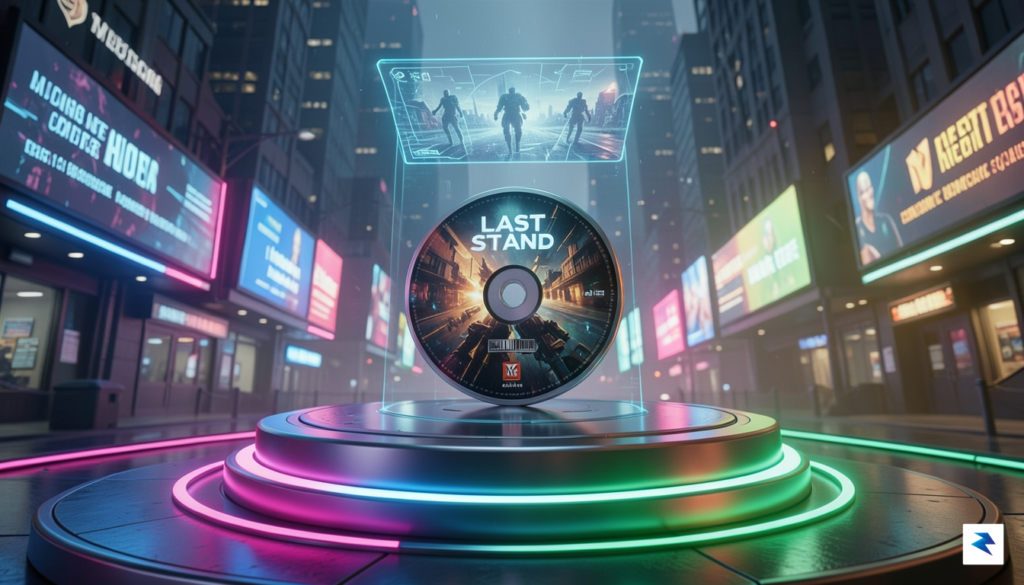
While the mainstream trajectory of the gaming industry points toward a future defined entirely by digital storefronts and cloud-based subscriptions, the physical disc is unlikely to vanish into total obscurity. Instead, it is poised to undergo a transformation similar to the vinyl record revival. Just as music enthusiasts returned to analog formats to reclaim a sense of tactile intimacy and superior aesthetic quality, a dedicated segment of the gaming community is treating physical media as a form of cultural rebellion against the impermanence of digital licenses. In this new landscape, physical releases will likely shift away from being the default delivery method and toward becoming premium, boutique products designed for the modern collector.
The rise of boutique publishers—companies that specialize in producing limited-run physical versions of popular indie titles—serves as a clear indicator that there is still significant market demand for tangible goods. These companies understand that for many, a game is not just software, but a piece of art that deserves to be displayed on a shelf. By bundling discs with physical soundtracks, intricate manuals, and high-quality art prints, these publishers are successfully repositioning the physical format as a luxury item. This niche model proves that even if the mass market abandons the disc, there is an enduring economic viability in catering to those who value the permanence and ownership that only a physical object can provide.
“True ownership is becoming a rare commodity in an age of subscription-based access; the physical disc stands as the final line of defense for the consumer’s right to keep what they purchase.”
Ultimately, the industry must reckon with the growing consumer anxiety surrounding the “digital-only” future. As developers and publishers continue to shut down servers and revoke licenses, the fragility of the digital ecosystem becomes impossible to ignore. If gaming corporations wish to maintain long-term trust with their most dedicated fans, they must recognize that physical media is not merely a legacy technology, but a vital service to the customer. Providing a tangible product is a promise of longevity, signaling that the consumer’s investment is safe from the whims of changing licensing agreements or corporate bankruptcy. Moving forward, the path to survival for the physical disc lies in embracing its role as a premium, archival format, ensuring that the history of interactive entertainment remains accessible for generations to come.
You must be logged in to post a comment.