Obsidian’s New Direction: Why Microsoft is Pivoting the Studio to Fallout
The Xbox Strategy Shift: A New Era for Obsidian Microsoft is currently navigating a period of significant strategic recalibration, moving away…

The digital realm, once a trusted repository of visual truth, is increasingly becoming a battleground where reality is fluid and easily manipulated. A recent, unsettling example materialized on social media platforms in the form of a seemingly authentic photograph of Senator Mitch McConnell. This image, which quickly gained traction, depicted the prominent political figure in a context designed to be provocative and, for many, deeply concerning. However, beneath its convincing facade lay a sophisticated deception: the image was not a photograph at all, but a meticulously crafted deepfake, generated by artificial intelligence, designed to mislead and provoke a strong reaction.
Upon closer inspection, the artificial origins of the viral image began to reveal themselves through a series of subtle yet unmistakable tells. Discerning eyes could identify inconsistencies in the lighting, where shadows fell unnaturally or light sources appeared to emanate from multiple, illogical directions, creating a subtly ‘off’ aesthetic that betrayed its digital genesis. Furthermore, the texture of skin often exhibited an uncanny smoothness or, conversely, an overly pixelated quality inconsistent with genuine photography, while clothing sometimes displayed strange folds or patterns that defied gravity and fabric logic. Perhaps most tellingly, deepfakes frequently betray themselves through anatomical distortions, such as oddly shaped hands, fingers with too many joints, or subtly asymmetrical facial features that, once noticed, cannot be unseen. These collective visual anomalies served as the digital fingerprints of AI authorship, marking the image as a product of algorithms rather than a camera lens.
Despite these underlying imperfections, the deepfake image spread with alarming velocity across various social media channels, bypassing initial scrutiny from countless users. Its rapid proliferation underscores a critical vulnerability in our current information ecosystem: the sheer speed at which digital content can travel often outpaces our collective capacity for verification. This immediate viral spread was not accidental; it was fueled by potent psychological triggers. Images that align with pre-existing political biases, evoke strong emotional responses like anger, shock, or amusement, or simply confirm a user’s worldview are far more likely to be shared impulsively, often without a second thought about their authenticity. Consequently, the fabricated McConnell image tapped directly into partisan divides, leveraging strong feelings to accelerate its journey across the internet.
The incident serves as a stark warning, illustrating the pervasive threat posed by sophisticated deepfake technology in an increasingly polarized world. It highlights how easily visual evidence, once considered irrefutable, can now be manufactured to manipulate public perception and sow discord. The fact that a demonstrably false image could achieve such widespread dissemination before being widely debunked speaks volumes about the challenges confronting digital literacy and truth-seeking in the modern age. This event unequivocally establishes the severity of the threat, demonstrating that deepfakes are not merely a futuristic concept but a present danger capable of significantly impacting public discourse and trust in institutions. Therefore, the McConnell deepfake episode is a powerful reminder that vigilance, critical thinking, and advanced detection systems are more vital than ever in navigating the murky waters of digital information.
At the heart of modern digital forensics lies a multi-layered approach to identifying synthetic content, moving far beyond the simple visual checks a human eye might perform. When Google’s detection systems encounter a suspicious image, they initiate a deep-dive analysis that scrutinizes the building blocks of the file. By leveraging advanced algorithmic pattern recognition, these tools look for the “fingerprints” left behind by Generative Adversarial Networks (GANs). These networks often struggle to replicate the perfect physics of light and shadow, frequently leaving behind subtle, pixel-level artifacts—such as unnatural blurring, inconsistent skin textures, or illogical edge alignments—that signal the presence of machine-generated manipulation.
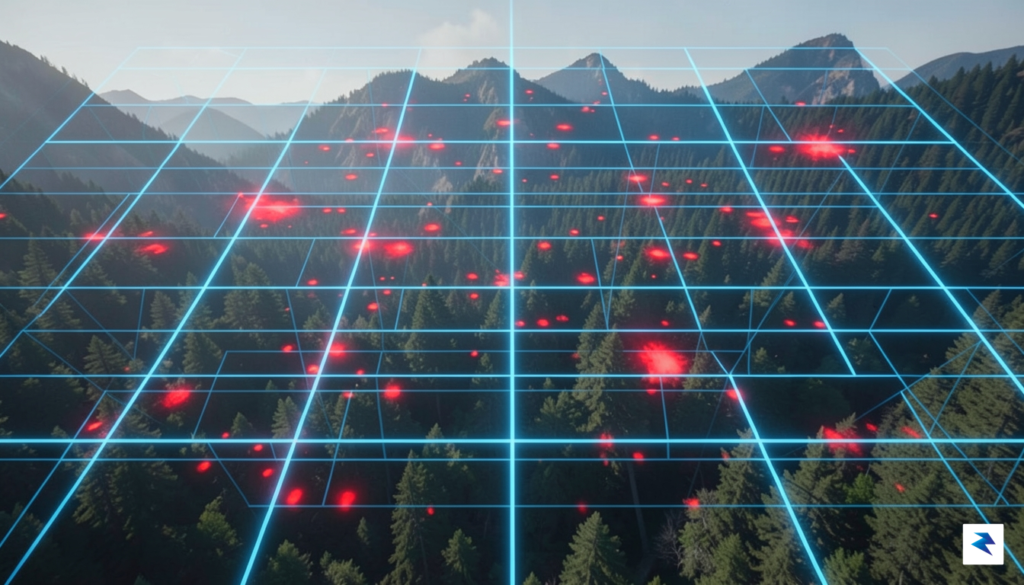
Beyond traditional pattern recognition, Google is pioneering the use of digital watermarking, most notably through its SynthID technology. This tool embeds an imperceptible, robust watermark directly into the pixels of AI-generated media. Because this marker is woven into the fabric of the image itself, it remains detectable even if the file is cropped, resized, or subjected to heavy color grading. This provides a definitive “proof of origin” that bypasses the ambiguity of standard forensic guessing, allowing systems to instantly categorize content as machine-derived rather than captured by a camera lens.
To further validate authenticity, the software performs a rigorous assessment of metadata and contrast consistency. Often, deepfakes suffer from “environmental mismatch,” where the direction of light on a subject does not align with the background, or where the edge-detection around a subject appears jagged due to poor compositing. The detection engine maps these contrast boundaries with surgical precision; if the mathematical consistency of the lighting fails to hold up across the entire frame, the system flags the image as a likely fabrication. This is particularly effective against low-effort hoaxes, where the AI may have generated a convincing face but failed to blend it seamlessly into the surrounding environment.
The strength of AI detection relies on a perpetual arms race; as generative models grow more sophisticated, forensic tools must evolve to detect increasingly subtle mathematical inconsistencies.
However, it is important to acknowledge that current detection software is not an infallible panacea. While these systems are remarkably efficient at identifying known patterns, they can struggle with “adversarial attacks”—where a malicious actor intentionally adds noise to an image to confuse the detector—or with entirely new, generative models that haven’t yet been cataloged in the system’s training data. Consequently, Google’s approach acts as a critical filter rather than a final judge, serving to provide context and warnings that help users navigate an increasingly complex information ecosystem. By combining metadata analysis, watermarking, and structural forensics, these tools create a robust defense that forces bad actors to contend with a digital environment that is learning to see through their illusions.
The proliferation of sophisticated AI-generated imagery represents more than just a technological curiosity; it poses a fundamental threat to the stability of democratic institutions. When synthetic media is used to manufacture crises or fabricate scandalous behavior by public officials, the primary casualty is not just the reputation of the individual, but the shared reality upon which our political discourse depends. As deepfakes become increasingly indistinguishable from authentic footage, the public’s baseline of truth begins to fracture. This creates a volatile environment where citizens, unsure of what is real, may retreat into echo chambers, further polarizing an already divided electorate and undermining the foundational trust required for a functioning society.
One of the most insidious consequences of this technological surge is the emergence of the “Liar’s Dividend.” This phenomenon occurs when the mere existence of deepfake technology allows bad actors to dismiss legitimate, incriminating evidence as “AI-generated” or “a deepfake.” By casting doubt on the authenticity of genuine footage, corrupt entities can escape accountability, effectively shielding themselves from the consequences of their actual actions. Consequently, the burden of proof shifts from the person being accused to the entity presenting the evidence, creating a perpetual state of skepticism that benefits those who wish to obscure the truth.

The danger is further amplified by the asymmetry between the speed of viral misinformation and the sluggish pace of official verification. A fabricated image can circulate across global social media networks in a matter of minutes, triggering emotional reactions and shaping public opinion before traditional fact-checkers can even begin their analysis. By the time a corrective report is issued, the damage to public perception is often irreparable. This creates a systemic disadvantage for truth-tellers, as malicious actors can leverage the rapid spread of inflammatory content to manipulate financial markets, disrupt election cycles, and incite civil unrest before any meaningful counter-narrative can take root.
The resilience of our democracy depends on our collective ability to distinguish fact from fiction. When the visual record is no longer reliable, the democratic process itself becomes vulnerable to manipulation by those who seek to profit from chaos.
Ultimately, the ethical responsibility of tech platforms and developers has never been more critical. It is no longer sufficient to merely build tools; there is an urgent need to deploy robust detection systems that can keep pace with the evolving capabilities of generative AI. Transparency, provenance, and the widespread adoption of cryptographic watermarking are essential steps in reclaiming the digital landscape. Without a concerted effort to authenticate the digital media we consume, we risk entering an era of “post-truth” politics, where the loudest, most deceptive voice drowns out the nuance of reality, leaving the voting public increasingly alienated and uninformed.

In an era where synthetic media can convincingly mimic reality, the responsibility of verifying visual information has shifted from newsrooms to the individual user. Cultivating a mindset of digital skepticism is no longer an optional skill; it is a fundamental requirement for navigating the modern information landscape. Before you hit the share button on a viral image that triggers an immediate emotional response, you must act as your own first line of defense against misinformation.
The most accessible tool at your disposal is the reverse image search. By utilizing platforms like Google Lens, TinEye, or Yandex, you can trace an image back to its earliest appearance online to determine if it has been manipulated or taken out of context. If a photo claims to show a breaking news event but appears nowhere on reputable news outlets, the likelihood of it being a deepfake or a misattributed image increases significantly. Always prioritize results from established journalistic organizations that adhere to rigorous verification standards, as they are equipped with the forensic tools necessary to debunk sophisticated forgeries.
Beyond technical searches, you should train your eyes to spot the telltale signs of AI generation that software often misses. While generative models are improving, they frequently struggle with biological consistency and spatial logic. Inspect the image closely for:
The most powerful tool in your verification toolkit is the pause button. Misinformation is designed to bypass your logical reasoning by exploiting anger, fear, or shock—if an image makes you feel an intense emotional spike, that is your cue to slow down and investigate before spreading it further.
Ultimately, the goal of deepfake technology is to erode our shared sense of reality by overwhelming us with noise. By slowing down, cross-referencing visual claims with trusted reporting, and scrutinizing the finer details of an image, you contribute to a healthier digital ecosystem. Remember that every time you choose to verify before you amplify, you are actively participating in the fight against the spread of synthetic disinformation.
You must be logged in to post a comment.