
Dosa Divas Review: Why This RPG is a Masterclass in Focused Design
The Evolution of Scope in Modern RPGs For over a decade, the AAA gaming industry has operated under the unwritten assumption that bigger is…
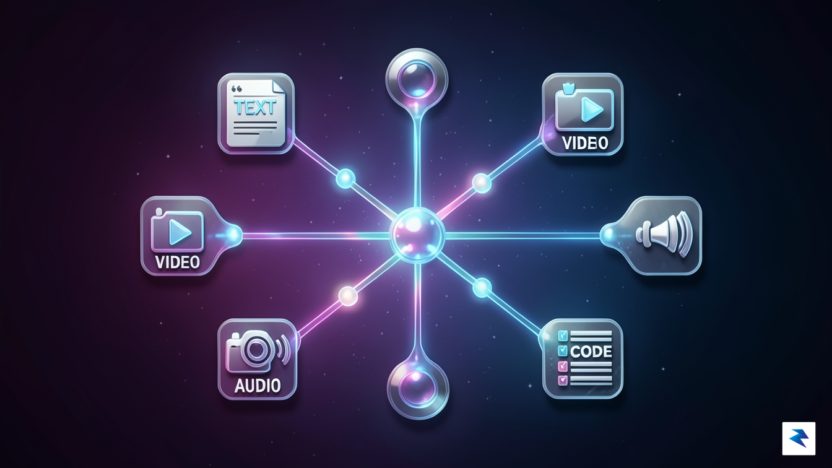

The landscape of artificial intelligence is no longer defined by a monolithic, one-size-fits-all approach. For years, Google’s strategy centered on foundational research and singular, high-profile projects, but the current era has ushered in a sophisticated, multi-tiered ecosystem. Today, Google deploys a diverse array of specialized models, each architected to solve distinct problems—from the massive, compute-heavy requirements of large-scale data analysis to the nuanced, energy-efficient demands of on-device processing. This shift from a singular AI focus to a comprehensive portfolio reflects the reality that modern workflows require agility, precision, and context-aware intelligence rather than just raw computational power.
For developers, enterprise leaders, and creative professionals, navigating this expansion is no longer optional—it is a critical necessity for maintaining a competitive edge. Understanding the differences between these models is essential because choosing the wrong tool for the job can lead to latency issues, increased costs, or suboptimal performance. Whether you are looking to integrate generative video capabilities into a media workflow or deploy a lightweight language model on a local mobile device, knowing which model fits your specific infrastructure is the difference between a stalled project and a seamless, high-performing integration. Google’s current strategy intentionally segregates its technology into tiers that address both cloud-based heavy lifting and localized, privacy-focused execution.

Understanding Google’s model hierarchy is the first step toward building resilient, AI-powered applications that can scale with your business needs.
Ultimately, the way these tools integrate into daily productivity is evolving at an unprecedented pace. By breaking down the barriers between specialized models, Google is enabling users to build “agentic” workflows where different AI components communicate and collaborate to complete complex, multi-step tasks. As we move forward, the ability to discern which model handles reasoning, which handles creativity, and which handles speed will define how efficiently we work. This guide serves to demystify that complexity, ensuring that you can leverage the full breadth of Google’s innovation to streamline your operations and unlock new creative possibilities in your professional toolkit.

At the heart of Google’s current technological evolution lies the Gemini family, a suite of models engineered from the ground up to be natively multimodal. Unlike previous generations of artificial intelligence that relied on stitching together separate, specialized models—one for text, one for vision, and another for audio—Gemini is built to perceive and process these diverse data streams simultaneously. This fundamental shift allows the model to reason across different media types with unparalleled fluidity, enabling it to bridge the gap between abstract concepts and sensory information in a way that feels increasingly human-like.
The architecture of this flagship series is categorized into three distinct tiers, each optimized for specific computational requirements and use cases:

The practical benefits of this native multimodality are profound, particularly when it comes to complex problem-solving. Because Gemini does not have to translate images into text before understanding them, it retains the spatial and contextual nuances inherent in visual data. Whether it is analyzing a sprawling technical diagram, debugging a complex codebase, or synthesizing information from a long-form video, Gemini maintains a coherent thread of logic throughout the entire interaction. This capability has allowed the model to set new benchmarks in competitive programming, high-level mathematical reasoning, and creative writing, consistently outperforming its predecessors by synthesizing information that would have previously required multiple, disconnected AI systems to interpret.
The true power of Gemini lies in its ability to generalize; it doesn’t just recognize patterns within a single modality, but understands the relationship between sight, sound, and language.
Ultimately, these models are not just tools for automation, but partners in cognition. By integrating these tiers across Google’s entire product suite, the company is effectively lowering the barrier for users to interact with advanced intelligence. As the system continues to evolve, the focus remains on pushing the boundaries of what is possible in coding, research, and creative synthesis, ensuring that the “Gemini Era” provides a robust, scalable foundation for the next generation of digital assistance.

While Gemini serves as the cognitive backbone of Google’s ecosystem, the company has channeled significant resources into specialized “creative” models designed to transform abstract concepts into tangible media. These tools are engineered to bridge the gap between human imagination and professional-grade digital output, effectively democratizing high-end production. By moving beyond traditional text-based interactions, Google is empowering creators to generate complex visual and auditory assets that were previously reserved for those with expensive software expertise or years of technical training.
At the forefront of this visual revolution is Veo, Google’s most advanced generative video model to date. Veo is capable of producing high-definition, cinematic footage that understands nuanced prompts, cinematic terminology, and specific visual styles. Whether a creator needs a sweeping landscape or a detailed close-up, Veo maintains temporal consistency, ensuring that characters and objects remain coherent across frames. This capability represents a massive leap forward from the jittery, abstract clips of the past, offering a level of fidelity that could fundamentally alter how storyboards and short-form content are produced.

Complementing this video capability is the evolution of Imagen, Google’s flagship text-to-image generator. Imagen has moved past simple object rendering to achieve near-photorealistic results, mastering complex textures, lighting, and even difficult elements like human anatomy and legible text. By integrating deep semantic understanding, Imagen allows users to iterate rapidly on visual concepts, making it an indispensable tool for designers and artists who need to visualize ideas with speed and precision.
Moving from the visual to the auditory, Lyria stands as Google’s most ambitious model for music composition and audio synthesis. Rather than simply mimicking existing tracks, Lyria is designed to understand the structure, rhythm, and emotional tone of music, allowing it to generate original compositions that feel authentic and structurally sound. For creators, this means the ability to generate unique background scores or soundscapes that perfectly match the mood of their video projects without the legal complexities of traditional stock music licensing. Lyria’s ability to synthesize high-quality audio demonstrates a sophisticated grasp of music theory, ensuring that the machine-generated output resonates on a human level.
The true power of these creative models lies not in replacing human artists, but in acting as a high-velocity force multiplier for the creative process.
With such immense creative power comes the vital necessity for safety guardrails and ethical standards. Google has implemented rigorous measures across Veo, Imagen, and Lyria to combat the generation of harmful, misleading, or copyrighted content. These protections include robust watermarking technologies like SynthID, which embeds imperceptible identifiers into AI-generated media to help distinguish it from authentic photography or recordings. As these tools continue to mature, the ongoing challenge remains balancing the freedom of artistic expression with the responsibility of preventing the spread of synthetic misinformation, ensuring that these creative breakthroughs serve the public good rather than undermining digital trust.
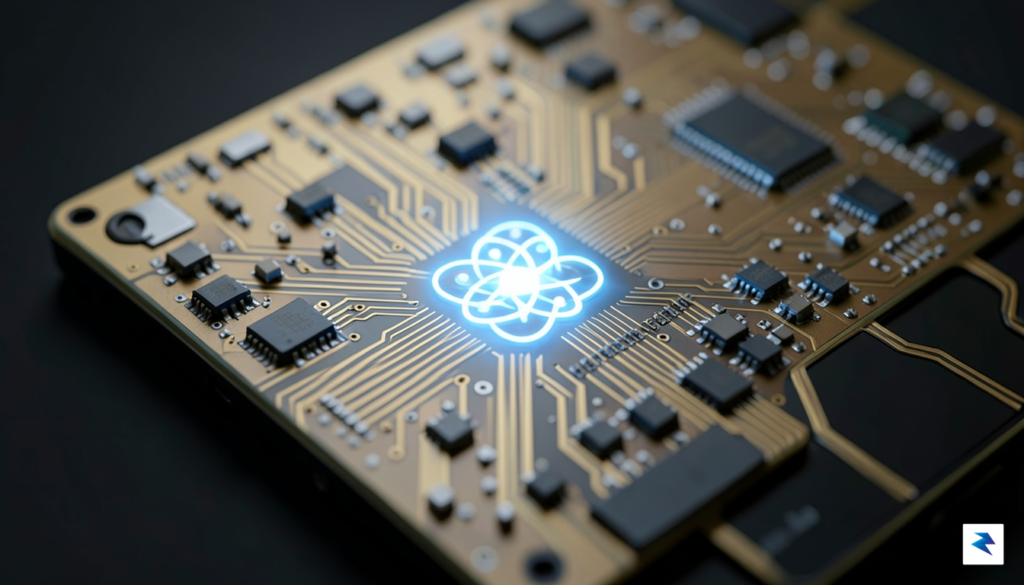
While large-scale artificial intelligence models often reside in massive data centers, leveraging immense computational power, Google keenly recognizes that not all AI needs to live exclusively in the cloud. A significant portion of practical AI applications benefits immensely from processing intelligence directly on local devices. This approach, known as “edge AI,” is fundamental to enhancing user privacy, dramatically reducing latency, and enabling robust functionality even when offline. By bringing AI closer to the user and the data source, Google ensures that powerful capabilities are accessible where and when they are most needed, fostering a more responsive and secure digital experience across a myriad of devices and use cases.
At the forefront of Google’s edge AI strategy is Gemini Nano, a highly efficient, on-device version of the company’s flagship Gemini model. Specifically engineered for mobile devices, Nano brings sophisticated AI capabilities directly to smartphones without requiring constant internet connectivity or sending sensitive user data to the cloud. This design choice is paramount for safeguarding user privacy, as personal information and interactions remain securely on the device. For instance, Gemini Nano powers features like summarization within the Android Recorder app or suggests intelligent replies in messaging applications, delivering immediate, personalized assistance with minimal latency, truly transforming how users interact with their devices.
Further expanding the reach of local AI, Google introduced Gemma, a family of lightweight, open-weights models built from the same research and technology used to create the Gemini models. Unlike proprietary cloud-based services, Gemma is designed to be accessible to developers and researchers, allowing them to download, customize, and run these powerful models on their own hardware—from laptops and workstations to smaller enterprise servers. This open-weights approach democratizes advanced AI, empowering a broader community to innovate and build specialized applications tailored to specific needs, fostering a vibrant ecosystem of local AI development. It offers unparalleled flexibility for enterprises seeking to integrate AI capabilities directly into their existing infrastructure while maintaining full control over their data and deployment.
Beyond general-purpose intelligence, Google’s portfolio also includes specialized models like Chirp, an exceptionally efficient and accurate speech-to-text model optimized for on-device processing. Chirp delivers high-quality transcription with minimal computational overhead, making it ideal for voice interfaces, dictation, and transcribing audio in real-time on devices where resources might be limited. The collective emphasis on models like Nano, Gemma, and Chirp underscores a critical advantage for enterprises: the ability to perform inference locally. This capability is indispensable for businesses handling sensitive data, as it ensures that proprietary information never leaves the secure confines of the company’s own infrastructure, thereby meeting stringent data security and compliance requirements. Local inference minimizes reliance on external network connections and bolsters overall operational reliability, making sophisticated AI practical and secure for a wider array of applications.

At the heart of Google’s technological dominance lies a unified, high-performance infrastructure that serves as the engine for its entire artificial intelligence ecosystem. By centralizing its research and computing resources, Google has created a symbiotic relationship between its hardware—specifically its custom-designed Tensor Processing Units (TPUs)—and its sophisticated software libraries. This synergy ensures that every model, from the lightweight Nano series designed for mobile devices to the massive, multimodal Gemini architectures, is trained on a consistent foundation that maximizes efficiency and scalability. By treating hardware and software as a single, cohesive unit, Google can accelerate the training cycles of its most complex models while simultaneously reducing the energy footprint required to run them in global data centers.

This architecture is designed to function like a complex nervous system where different models play specialized roles. While Gemini acts as the “brain,” providing the heavy-duty reasoning, coding, and logical capabilities that power core features, specialized models function as the “senses.” For instance, specialized audio-processing models like Chirp translate spoken language into actionable data, while generative video models like Veo process visual dynamics. These specialized components do not operate in isolation; instead, they funnel their unique insights into the broader Gemini framework. This allows the system to synthesize diverse inputs—such as text, audio, image, and video—into a single, coherent output, creating a more intuitive and responsive experience for the end user.
To make this power accessible to developers and enterprise users, Google has integrated these diverse models into the Vertex AI platform. This cloud-based environment acts as a central hub where businesses can tap into the full spectrum of Google’s AI research. Through a single interface, developers can deploy the massive scale of Gemini Pro or Ultra, or scale down to the efficiency of Nano for edge computing, all while leveraging the same security, compliance, and data governance frameworks. This integration eliminates the friction of managing disparate AI tools, effectively turning Google’s research laboratory into a standardized toolkit that can scale as quickly as a business grows.
The true strength of Google’s strategy is not found in a single model, but in the seamless interoperability of its entire AI portfolio, enabled by a consistent, high-performance computing backbone.
Ultimately, this strategic architecture is built to ensure that progress in one area of AI research benefits the entire family of models. When researchers make a breakthrough in model efficiency or reasoning capabilities, those improvements are quickly propagated across the cloud infrastructure, benefiting everyone from individual developers building mobile apps to large-scale enterprises processing petabytes of data. By maintaining this unified approach, Google ensures that its models are not just powerful, but also reliable, adaptable, and ready to meet the evolving demands of the digital landscape.

The true measure of the AI revolution lies not in the raw capability of models like Gemini or Veo, but in how effectively organizations can weave these disparate technologies into the fabric of their daily operations. We are rapidly moving past the novelty phase of generative AI, where the mere presence of a chatbot was considered a competitive advantage. Today, the focus has shifted toward practical integration and the pursuit of measurable business value. To thrive in this new landscape, leaders must stop viewing AI as a monolithic solution and instead start treating it as a versatile toolkit, selecting the right engine for the specific task at hand—whether that is deploying a lightweight Nano model for real-time edge processing or utilizing a massive multimodal model for complex creative synthesis.

For organizations looking to navigate this evolution, a structured framework for adoption is essential. Start by auditing your current workflows to identify high-friction bottlenecks that could benefit from automation or augmented intelligence. Once these opportunities are identified, match them to the appropriate model architecture: prioritize high-speed, local processing models for sensitive or latency-dependent tasks, and reserve the most powerful, resource-intensive models for deep research, strategic planning, or high-fidelity media production. By aligning the model’s complexity with the use case’s requirements, businesses can optimize both their operational efficiency and their bottom-line expenditure on computational resources.
The future of work will not be defined by a choice between human intuition and machine intelligence, but by the synergy of both working in tandem to solve problems that were previously insurmountable.
Ultimately, the most successful enterprises will be those that foster a culture of human-AI collaboration rather than total displacement. These tools are designed to handle the heavy lifting of data analysis, pattern recognition, and content generation, which in turn frees up human talent to focus on higher-order objectives like ethical judgment, creative strategy, and complex stakeholder management. As these technologies continue to mature, the barrier to entry for innovation will continue to lower, allowing teams to iterate faster and experiment with greater confidence. By embracing a nuanced understanding of these diverse models, you are not just adopting software; you are upgrading the cognitive capacity of your entire organization for the decade ahead.
You must be logged in to post a comment.