
Google AI Models Explained: Your Guide to Gemini, Veo, and More
Introduction: Navigating Google’s Expanding AI Ecosystem The landscape of artificial intelligence is no longer defined by a monolithic,…


The recent unmasking of the WP-SHELLSTORM infrastructure marks a significant turning point in our understanding of how automated mass-hacking campaigns operate within the WordPress ecosystem. For years, security professionals have fought a relentless, often invisible war against botnets and scripts designed to exploit vulnerabilities in themes and plugins. The discovery of this specific server, however, pulled back the curtain on a sophisticated, centralized command-and-control hub that served as the engine for thousands of simultaneous intrusions. By inadvertently exposing its contents to the public internet, the operators behind this campaign provided researchers with a rare, comprehensive look at the tactical playbook used to compromise 25,000 websites.
Security researchers identified the infrastructure after discovering an open directory that functioned as the primary repository for the attackers’ malicious activities. Rather than being a collection of fragmented, disconnected scripts, this server housed an organized archive of stolen credentials, custom-built backdoors, and detailed execution logs. The transition from a hidden, predatory threat to a visible catalog of digital weaponry allowed analysts to map the entire lifecycle of an attack, from initial reconnaissance to the final injection of malicious redirects. This level of transparency is exceptionally rare in the cybersecurity landscape, where threat actors typically prioritize obfuscation and rapid rotation of their network assets to evade detection.

The WP-SHELLSTORM server was not merely a storage locker for stolen data; it was a functioning automated factory that systematically scanned, breached, and maintained control over a massive fleet of victim websites.
The significance of this find lies in the sheer scale of the automated industrialization it reveals. The server contained pre-configured attack scripts designed to automatically probe for known vulnerabilities, execute payloads, and report successful breaches back to the central console. Because the attackers left this infrastructure exposed, researchers were able to confirm that the campaign was not targeting high-profile individuals, but rather casting a wide net to capture as many vulnerable sites as possible. This discovery serves as a stark reminder that even small, seemingly insignificant blogs are often collateral damage in an automated, high-volume operation that treats website security as a game of statistical probability rather than a personal vendetta.
Ultimately, the WP-SHELLSTORM breach highlights the critical importance of proactive patch management and robust server-side security. While the immediate threat posed by this specific server has been mitigated, the tools and methodologies recovered by researchers are now being used to harden defenses across the wider WordPress community. By analyzing the specific backdoors and credential-harvesting techniques documented on the server, developers can now craft more effective signatures to detect similar incursions before they take hold. This incident underscores that while the digital battlefield is constantly evolving, the exposure of a single central hub can provide the intelligence needed to shift the balance of power back toward site owners.

To truly grasp the magnitude of a breach involving tens of thousands of WordPress sites, one must first understand the primary weapon in an attacker’s arsenal: the webshell. At its core, a webshell is a malicious script, often written in languages like PHP—the same language WordPress is built on—that attackers surreptitiously upload to a compromised web server. These scripts are incredibly powerful, designed to act as a remote administration tool, essentially giving the attacker a command-line interface directly through their web browser. This grants them persistent access and the ability to execute arbitrary commands, transforming a seemingly innocuous file into a potent backdoor.
The initial compromise that allows a webshell to be planted can stem from a variety of common vulnerabilities. Frequently, attackers exploit unpatched flaws in WordPress plugins or themes, leveraging known security weaknesses to gain a foothold. For instance, a critical vulnerability in an outdated image gallery plugin might allow an attacker to upload an arbitrary file, which in this case would be their webshell script. Similarly, weak administrative credentials or compromised FTP access can provide a direct path for an attacker to upload these malicious files into the WordPress installation directory. Once uploaded, these scripts often masquerade as legitimate files, tucked away in obscure directories, making them difficult for site owners to discover without specialized scanning tools.
Once a webshell is successfully deployed, it transforms the compromised website into a remote control panel for the attacker. This backdoor allows them to perform a wide range of nefarious activities. They can browse, upload, download, and delete files from the server, giving them full control over the website’s content and potentially other files on the server. Furthermore, webshells often provide functionalities to interact with the site’s database, enabling attackers to extract sensitive user data, modify existing content, or even create new administrative user accounts. This persistent access means that even if the initial vulnerability is patched, the attacker can maintain control through the webshell, using it to re-infect the site or plant additional backdoors.
The true danger of webshells lies in their ability to provide long-term, stealthy control. Attackers can use them to pivot to other servers, launch spam campaigns, host phishing pages, or integrate the compromised site into a larger botnet for distributed denial-of-service (DDoS) attacks. They can also be used to steal sensitive information such as customer data, financial details, or intellectual property. Detecting and removing webshells can be challenging, as they are often obfuscated to avoid detection by security scanners and antivirus software. A thorough cleanup requires not just deleting the known malicious files but also identifying and patching the original entry point, ensuring no other backdoors have been installed, and meticulously checking for any lingering traces of the attacker’s presence.

The discovery of the WP-SHELLSTORM server has revealed that this infrastructure served as far more than a simple command-and-control hub for automated attacks. Instead, it functioned as a massive, centralized warehouse for stolen digital identities, housing a treasure trove of exfiltrated data that puts thousands of organizations at severe risk. When researchers peeled back the layers of this server, they found not just basic login information, but a comprehensive collection of sensitive configuration files, database credentials, and administrative access tokens harvested from 25,000 compromised WordPress installations. This repository essentially acted as a one-stop shop for threat actors, enabling them to pivot from a simple website defacement to deep, systemic infiltration of entire corporate networks.

Perhaps the most alarming aspect of the breach is the presence of high-privilege cloud service credentials. The server contained raw access keys and secret tokens for major cloud infrastructure providers, including AWS, Azure, and Google Cloud Platform. By harvesting these keys, attackers effectively bypassed perimeter security entirely, gaining the ability to manipulate cloud environments, spin up unauthorized virtual machines, or exfiltrate massive volumes of proprietary data stored in object storage buckets. Once these cloud keys are in the possession of a malicious actor, the risk of lateral movement becomes critical; the attacker no longer needs to rely on the compromised WordPress site itself, as they can leverage the cloud infrastructure to launch further attacks or maintain persistence deep within a company’s broader internal network.
The exposure of cloud credentials represents a shift from website-level compromise to potential enterprise-wide disaster, as a single set of stolen keys can grant an attacker the “keys to the kingdom” within a victim’s cloud environment.
Furthermore, the practice of using a centralized server to manage thousands of client sites created a dangerous single point of failure. When an agency or hosting provider aggregates configurations and credentials for numerous disparate clients on a single backend, the blast radius of a security failure expands exponentially. A single successful breach of that aggregator server exposes the entire ecosystem of clients simultaneously. This consolidation means that even organizations with robust individual security measures were rendered vulnerable because their credentials were being held in an unprotected, centralized repository. Moving forward, this incident serves as a stark reminder that managing credentials securely—using vaults, rotating keys frequently, and limiting the scope of access—is no longer a suggestion, but a fundamental necessity for digital survival.
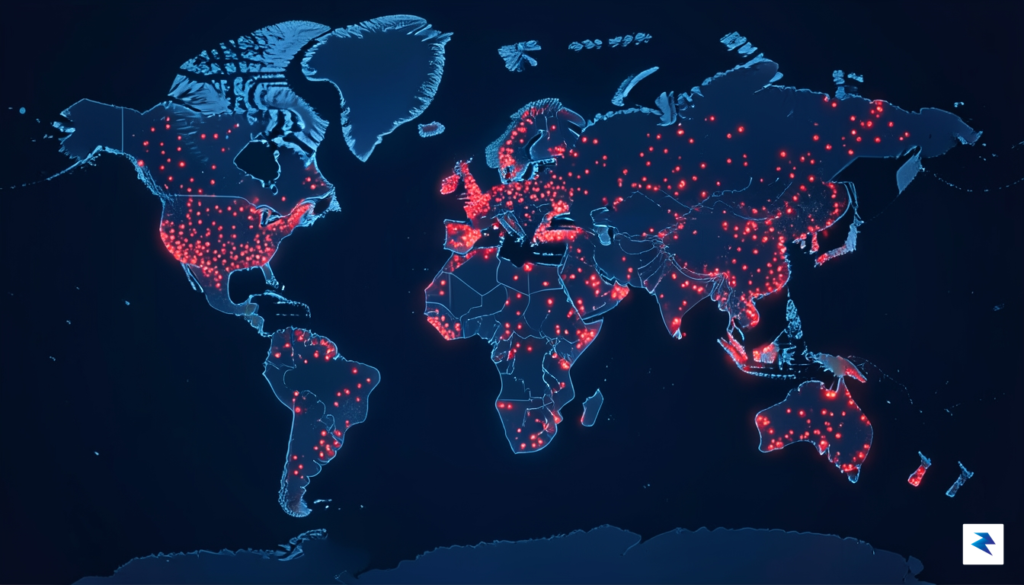
The discovery of 25,000 compromised WordPress websites is a stark reminder of the fragile ecosystem that makes up the “long tail” of the internet. While high-profile corporate breaches often dominate the news cycle, this incident highlights a far more pervasive issue: the vulnerability of small-to-medium business sites that operate without dedicated security oversight. These sites are frequently built by freelancers or business owners who lack the resources to implement enterprise-grade protection, making them the path of least resistance for cybercriminals. By targeting such a vast number of sites simultaneously, attackers can leverage automation to turn low-effort exploits into a highly profitable digital criminal enterprise.

The fallout for these site owners is rarely limited to a simple technical hiccup; instead, it often spirals into a multi-front crisis. Once a site is compromised, it may be used to host malicious scripts, distribute malware, or participate in sprawling botnet operations. Consequently, major search engines like Google will quickly identify the site as a security threat, resulting in immediate SEO blacklisting. For a small business, being wiped from search results is effectively a death sentence for their online presence, leading to a precipitous drop in traffic and revenue that can take months of intensive cleanup to reverse.
The true cost of a breach is not just the immediate recovery effort, but the long-term erosion of customer trust and the potential for regulatory penalties that follow a data compromise.
Beyond the immediate loss of visibility, site owners must confront the harsh realities of modern data privacy regulations. If the compromised WordPress sites hosted any form of customer information—ranging from contact forms and mailing lists to payment credentials—the breach could trigger mandatory reporting requirements under frameworks like the GDPR or CCPA. Failing to secure these sites adequately can result in significant legal liabilities and heavy fines, which are often far more damaging than the initial hack itself. This incident serves as a sobering wake-up call for the digital community: security is not a luxury reserved for the Fortune 500, but a fundamental necessity for every entity that maintains a presence on the web.
Ultimately, the profitability of this mass-scale attack lies in the sheer volume of targets. Because these sites often share common plugins, themes, and outdated configurations, hackers can deploy a single “skeleton key” to gain unauthorized access to thousands of environments in one fell swoop. Automation allows them to bypass the need for bespoke hacking strategies, turning the ubiquity of WordPress into its greatest liability. Until site administrators prioritize proactive maintenance—such as rigorous patching and the implementation of multi-layered security protocols—the long tail of the internet will continue to function as a low-risk, high-reward hunting ground for malicious actors.

Securing a WordPress environment is not a singular event that you check off a list; rather, it is a continuous discipline that must evolve alongside the threat landscape. When news of massive, automated campaigns targeting thousands of installations breaks, it serves as a stark reminder that your site is likely being scanned by bots every single hour. To move from a reactive posture to a proactive defense, administrators must implement a layered security strategy that addresses both the application layer and the underlying server environment.
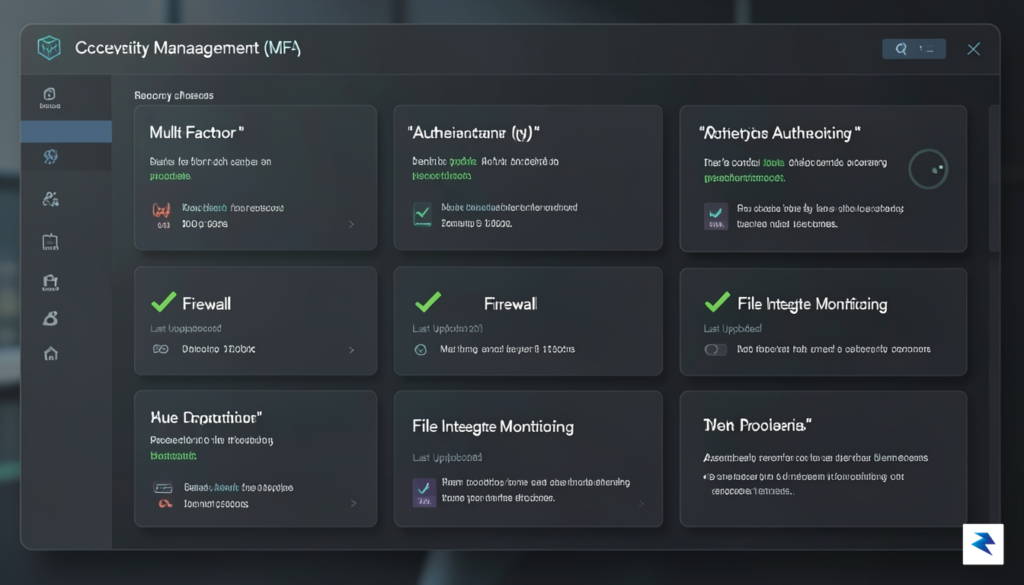
The most immediate defense against the vulnerabilities exploited in recent campaigns involves strict maintenance and access control. Start by auditing your current plugin and theme inventory. If you have any software that is no longer receiving updates, or if you are using “nulled” versions obtained from untrusted sources, these must be purged immediately. Beyond simple updates, you should enforce the principle of least privilege. This means strictly limiting the number of administrative accounts and ensuring that users only have the permissions necessary to perform their specific tasks. By reducing the number of entry points, you significantly shrink the attack surface available to unauthorized actors.
WP-SHELLSTORM style of infection.Security is a process, not a destination. By the time a vulnerability is publicly disclosed, malicious actors have already begun building exploits. A proactive, multi-layered approach is the only way to ensure your data remains confidential and your site remains online.
Ultimately, transparency and visibility are your greatest allies. You should regularly review your server access logs for anomalous behavior, such as repetitive 404 errors or unexpected requests to wp-admin or hidden configuration files. If you are managing your site through a managed hosting provider, reach out to their support team to verify that server-level hardening, such as disabling PHP execution in the /uploads directory, is currently active. By combining these technical defenses with consistent administrative oversight, you create a robust ecosystem that can withstand sophisticated automated attacks.

The discovery of the WP-SHELLSTORM infrastructure serves as a stark wake-up call for the digital landscape, illustrating that the security of a single website is rarely an isolated concern. When thousands of sites are compromised simultaneously, it reveals the fragility of our interconnected web ecosystem, where a vulnerability in one plugin or a lapse in server hardening can lead to a domino effect of unauthorized access. This incident underscores a shift in how we must perceive cyber threats: we can no longer afford to view website maintenance as a solo endeavor. Instead, individual site owners and administrators must recognize that they are part of a larger, shared infrastructure where collective defense is the only viable path forward.
As we look toward the future, the trend toward increasingly sophisticated, automated, and cloud-based attacks is undeniable. Cybercriminals are no longer manually probing sites one by one; they are deploying advanced bots that scan the entire internet for known vulnerabilities, executing scripts that exploit weaknesses at lightning speed. These cloud-native attack vectors allow malicious actors to maintain persistent backdoors across vast arrays of servers, making detection exponentially more difficult for the average user. Consequently, the defense strategy must evolve from reactive patching to a proactive, layered security model that utilizes automated threat intelligence to anticipate and neutralize these attacks before they can gain a foothold.

True security in the WordPress ecosystem is not achieved by individual silos of protection, but by a culture of shared responsibility and rapid, community-driven threat intelligence.
Moving forward, the WordPress community must prioritize a more vigilant and collaborative approach to site management. This means moving beyond basic password hygiene to include robust security auditing, the implementation of least-privilege access, and the active monitoring of server-side logs for anomalous outbound traffic. As the barrier to entry for launching massive, automated campaigns continues to drop, the onus falls on both developers and site owners to adopt “security-by-design” principles. By fostering a culture where security updates are treated with the same urgency as feature releases, and where threat data is shared openly among professionals, we can collectively build a more resilient environment that makes the internet a safer space for everyone.
You must be logged in to post a comment.