
Not One Tourist More: How Barcelona is Rethinking Global Travel
Barcelona's New Strategic Shift: Moving Beyond Mass Tourism For decades, Barcelona has been celebrated as the ultimate global success…
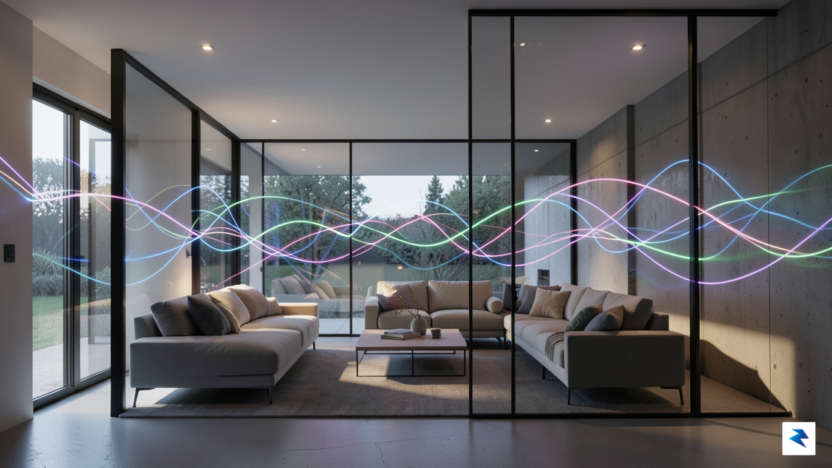

For decades, the radio frequency (RF) spectrum was viewed primarily as a invisible highway for data—a medium through which our voices, text messages, and streaming videos traveled from point A to point B. However, we are currently witnessing a profound transformation in how we perceive this spectral landscape. Software-defined radio (SDR) technology has acted as the catalyst for this shift, moving us away from rigid, hardware-locked communication devices toward flexible systems capable of interpreting the environment in unprecedented ways. By turning the air around us into a rich dataset, we have unlocked the ability to move beyond mere connectivity and into the realm of environmental awareness.

The true disruption lies in the concept of passive sensing. Rather than requiring specialized transmitters or active radar installations, researchers have discovered that ambient signals—like the ubiquitous WiFi pulses pulsing through our homes—can be repurposed to act as a sophisticated “vision” system. When these signals bounce off objects, humans, or even drones, they undergo subtle distortions and phase shifts. By capturing these minute environmental interactions, we can effectively “see” through solid walls without ever needing a camera or a direct line of sight. This is no longer the stuff of science fiction; it is the practical application of advanced signal processing applied to the noise of our daily digital lives.
At the center of this technological revolution is QuadRF, a breakthrough platform that promises to bring high-precision spatial monitoring to the masses. While previous attempts at RF imaging often required expensive, bulky laboratory equipment, QuadRF leverages low-cost, accessible hardware to achieve levels of fidelity that were previously unattainable. By applying complex algorithms to ambient signals, the system can distinguish between a static wall and a moving intruder, or even identify the unique acoustic and electronic signature of a drone hovering outside a window. This combination of affordability and high-resolution tracking effectively democratizes a technology that was once the exclusive domain of military intelligence and specialized security firms.
The power of QuadRF isn’t just in its ability to detect movement; it is in its ability to map the physical world using the invisible energy we already generate every single day.
As we integrate this technology into our smart homes and urban security infrastructures, the potential for disruption is immense. Beyond simple monitoring, QuadRF represents a fundamental shift in how we interact with our physical environment. Whether it is improving the response times of emergency services by locating individuals inside burning buildings or providing a new layer of drone defense for residential privacy, the ability to turn RF noise into actionable visual intelligence is changing the game. We are entering an era where our physical presence is perpetually tethered to our digital footprint, and the walls that once offered total seclusion are now becoming transparent to the right set of eyes.
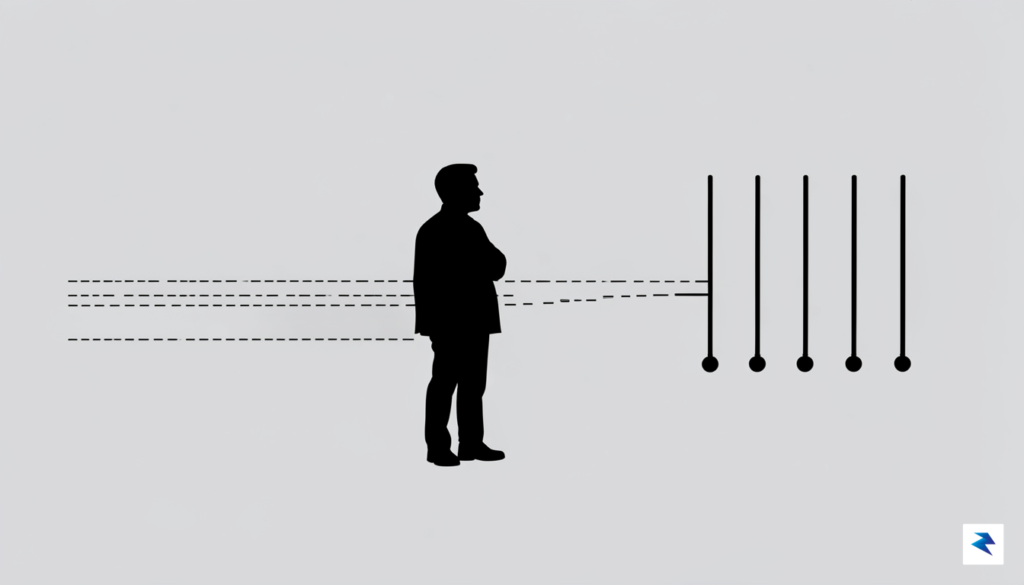
At the heart of this sensing technology lies a phenomenon that is usually considered a nuisance in telecommunications: multipath propagation. In a typical room, a wireless signal does not travel in a perfectly straight line from a router to your device; instead, it bounces off walls, furniture, and even people before reaching its destination. While these reflections often create interference that degrades Wi-Fi speeds, QuadRF intentionally captures this “noise” to build a spatial map. By analyzing how these signals bounce and interact, the system can reconstruct the interior layout of a space, effectively turning the ambient radio environment into a high-resolution sensor array.
To turn this jumbled web of radio waves into a coherent image, the system relies on sophisticated measurements of time-of-flight and phase shift. Every signal that hits an object—whether it is a drone propeller or a person moving behind a partition—undergoes a slight delay and a subtle change in its phase as it reflects off surfaces. By comparing the exact moment a signal leaves the source and when it returns to the receiver, the software calculates the precise distance to any object within the line of sight. When these micro-measurements are processed through complex algorithms, the system can distinguish between static background structures and dynamic, moving targets with startling accuracy.
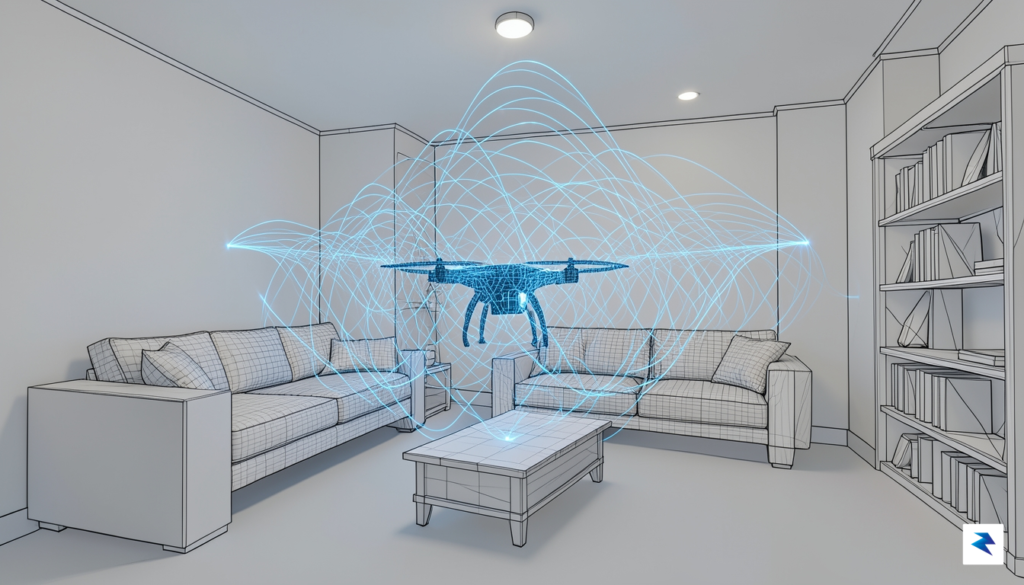
For many years, this level of signal processing was restricted to expensive military-grade radar systems or university laboratories equipped with million-dollar hardware. However, the recent surge in high-performance Software Defined Radio (SDR) boards has fundamentally changed the landscape for developers and hobbyists alike. Modern SDRs provide the raw, unfiltered access to radio frequency data required to perform these intensive calculations at a fraction of the traditional cost. Because these boards can be programmed to switch frequencies rapidly and capture wide swaths of the spectrum, they act as the perfect foundation for creating portable, “see-through-wall” sensors.
The true power of this technology is not in the hardware itself, but in the mathematical ability to interpret chaos. By treating interference as data rather than an obstacle, we can visualize the invisible movements of the world around us.
As these boards become more accessible, the barrier to entry for building your own environmental imaging system continues to drop. Enthusiasts can now leverage open-source signal processing libraries to perform the same type of Fourier transforms and spatial mapping that were once the exclusive domain of defense contractors. This convergence of affordable, high-speed hardware and advanced algorithmic frameworks is creating a new frontier in sensing, where the ubiquity of Wi-Fi signals provides a constant, invisible map of our physical surroundings.

The ability to detect and track objects through solid barriers represents a monumental shift in how we approach security, moving far beyond the limitations of traditional optical sensors. At the forefront of this evolution is the capacity to identify unauthorized drones by analyzing the unique radio frequency (RF) “noise” they emit during flight. Unlike standard visual detection systems that struggle with low light, fog, or physical obstructions, QuadRF technology identifies the distinct electromagnetic signatures created by a drone’s motors and communication links. By mapping these specific flight patterns and frequency spikes, the system can pinpoint a drone’s location and movement trajectory in real-time, providing a robust defense mechanism for sensitive perimeters or private residences without needing to maintain a direct line of sight.
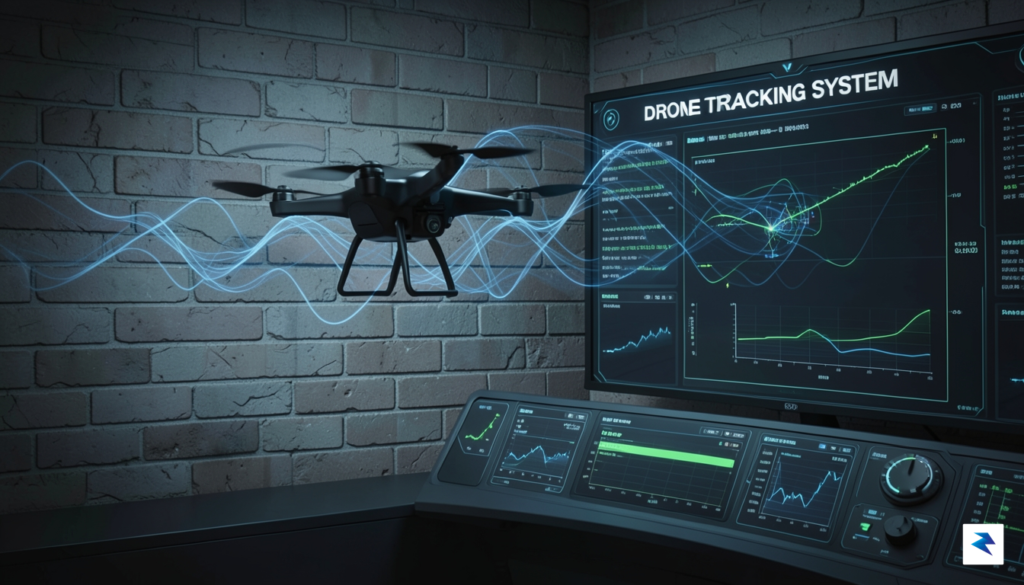
Beyond the skies, this technology offers a transformative leap for interior monitoring, particularly when compared to standard Passive Infrared (PIR) motion sensors. Traditional PIR sensors are notoriously prone to false positives—triggered by wandering pets, shifting curtains, or subtle changes in ambient heat—and they often fail to track a person if they remain stationary for too long. RF-based sensing, however, captures the minute disturbances in radio waves caused by the displacement of air and the movement of human bodies within a space. This allows for far more nuanced data collection, such as detecting the specific gait of an individual or identifying whether someone has suffered a fall, even if they are lying completely still. This granularity makes it an ideal solution for elderly care, where it can monitor movement and wellbeing without the intrusive nature of cameras.
The true power of RF sensing lies in its ability to provide high-fidelity situational awareness while maintaining total anonymity, effectively bridging the gap between comprehensive security and personal privacy.
Perhaps the most compelling argument for this technology is its inherent privacy-first design. In an era where surveillance cameras are increasingly viewed as an invasion of personal space, RF-based sensing provides the necessary visibility for safety without the risks associated with optical recording. Because the system interprets raw signal reflections rather than generating high-resolution images or videos of individuals, it is impossible to identify specific faces or capture private activities on film. This distinction allows homeowners and facility managers to implement advanced security monitoring in sensitive areas—like bathrooms or bedrooms—where cameras would be socially or legally unacceptable. By shifting the focus from visual identification to environmental awareness, we are entering a new paradigm where our homes can be safer and more responsive, all while protecting the fundamental right to remain unseen.
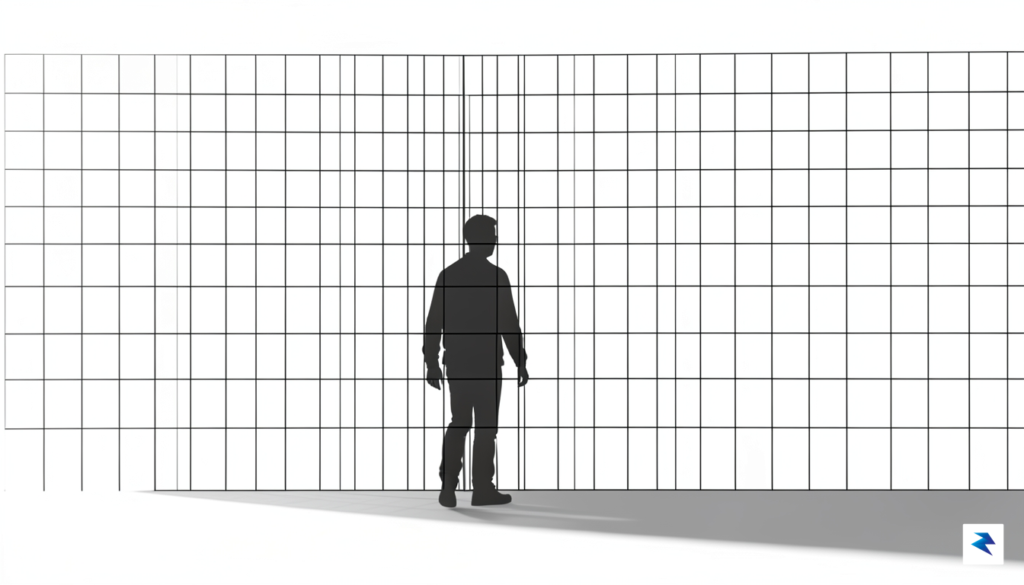
The advent of QuadRF technology fundamentally shifts our understanding of domestic privacy by turning the ubiquitous background noise of WiFi signals into a high-resolution window. Because this surveillance method is entirely non-contact and requires no physical hardware to be installed inside a target’s home, it bypasses the traditional barriers that once protected our private sanctuaries. Unlike a visible security camera that one might identify and disable, RF imaging is silent, invisible, and operates through physical obstructions. This capability forces us to confront an uncomfortable reality: our digital footprint has evolved from simple data packets to a literal mapping of our physical movements and activities, all without our knowledge or explicit consent.
In residential settings, the potential for misuse is profound and deeply concerning. If an unauthorized party can map the layout of a home or track the presence and posture of inhabitants, the risk of targeted harassment, stalking, or even sophisticated home invasions increases exponentially. We are entering an era where the walls of our homes no longer provide an inherent shield against prying eyes, effectively eroding the “reasonable expectation of privacy” that legal systems have relied upon for decades. Without strict regulatory intervention, the democratization of such powerful sensing tools could lead to a permanent state of surveillance where personal autonomy is sacrificed on the altar of technological advancement.
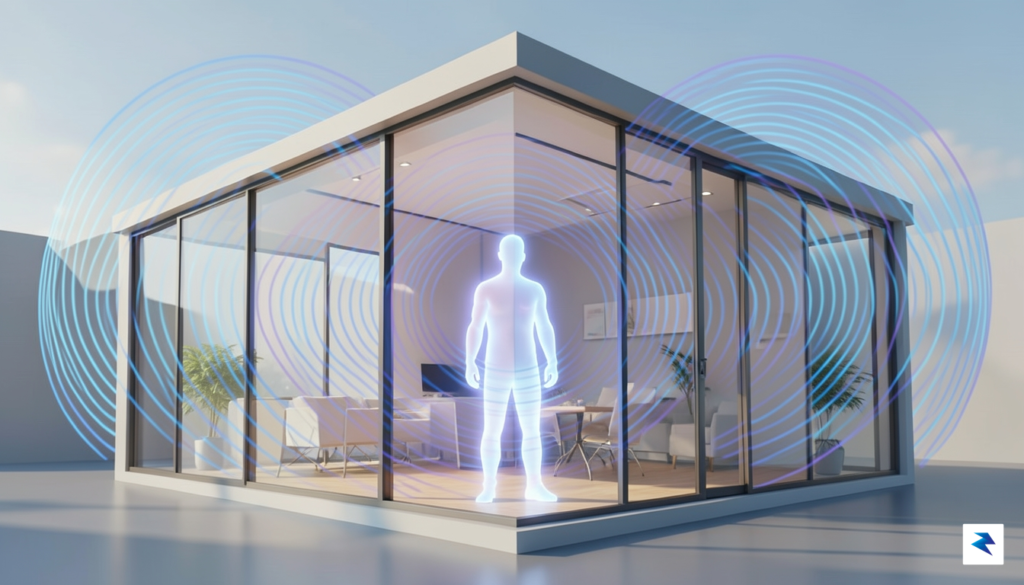
To navigate this ethical minefield, we must establish robust technical and legal guardrails before the technology becomes a standard feature of urban infrastructure. On a technical level, developers should prioritize the implementation of “privacy-by-design” architectures. This could include mandatory hardware-level encryption or signal obfuscation protocols that prevent RF sensors from identifying human subjects without a verified digital handshake or specific authorization. Furthermore, software filters could be hardcoded to redact or blur sensitive activity, ensuring that the technology serves its intended purpose—such as drone detection or energy management—without infringing on the sanctity of private living spaces.
The true test of innovation is not whether we can build a technology that sees through walls, but whether we possess the collective discipline to ensure it never becomes a tool for exploitation.
Legally, the framework governing RF imaging must be updated to explicitly classify “radio-wave spatial mapping” as a form of electronic surveillance. Current wiretapping laws were designed for audio and digital data interception, not for the visual reconstruction of private life through building materials. Policymakers should consider implementing strict licensing requirements for the operation of high-sensitivity RF sensors, coupled with severe penalties for non-consensual mapping. By bridging the gap between current legal statutes and the reality of modern wave-based sensors, we can foster an environment where technological progress does not come at the cost of our fundamental human rights.

The emergence of QuadRF represents a seismic shift in how we perceive the invisible landscape surrounding us, marking the transition from active, intrusive monitoring to a future defined by pervasive, passive sensing. As the underlying hardware costs continue to plummet and the computational efficiency of signal-processing algorithms reaches new heights, we are rapidly moving toward an era where our built environment is effectively “aware” of our presence. What was once the domain of specialized military or high-end industrial surveillance is poised to become a commodity feature, embedded deep within the fabric of our daily infrastructure. This trajectory suggests that within the next decade, the ability to “see” through walls via radio frequency analysis will be as ubiquitous as the common motion sensor, fundamentally altering how we manage security, energy efficiency, and human-computer interaction.

It is not difficult to envision a future where this sensing capability is integrated directly into the next generation of smart home hubs. Instead of relying on a dozen disparate cameras or infrared sensors that can be easily obscured or bypassed, a centralized RF sensing array could monitor the entire footprint of a household with pinpoint accuracy. These systems will likely go beyond simple presence detection; they will be capable of tracking biometric markers, such as breathing patterns or heart rates, providing an unprecedented layer of health monitoring without the need for wearable devices. By leveraging the ambient RF noise that already permeates our homes—from Wi-Fi signals to cellular pings—these hubs will turn every living room into a sophisticated, privacy-conscious data point that reacts dynamically to the needs of its inhabitants.
The true power of passive sensing lies not in the data collected, but in the seamless, friction-free way it anticipates human intent before a command is ever spoken.
However, this transition toward an omnipresent sensing environment brings with it a profound societal challenge. As our homes and offices become increasingly sensitive to the minutiae of our movements and even our physiological states, we must grapple with the necessity of establishing firm digital and physical boundaries. The convenience of a house that knows exactly where you are and how you are feeling is undeniably seductive, yet it necessitates a new framework for data sovereignty. Moving forward, the industry must prioritize “privacy by design,” ensuring that the powerful sensors monitoring our environments are coupled with robust, local-only processing that prevents sensitive behavioral data from ever leaving the premises. Balancing the utility of this breakthrough technology with the fundamental human right to remain unmonitored in private spaces will be the defining technological debate of the coming decade.
You must be logged in to post a comment.