
The 20% Strait of Hormuz Fee: How It Could Disrupt Global Supply Chains
The Strategic Importance of the Strait of Hormuz The Strait of Hormuz is not merely a maritime shipping lane; it is the absolute jugular vein…


For decades, the cultural archetype of the scientist was trapped behind the glass of the sterile laboratory or confined to the chalkboard-laden offices of the “mad genius.” Cinema frequently painted these figures as socially detached, obsessive, or morally ambiguous. However, the 1993 release of Jurassic Park shattered this mold by presenting Dr. Alan Grant not as a detached theorist, but as a rugged, boots-on-the-ground investigator. Sam Neill’s portrayal transformed paleontology from a perceived dusty, static pursuit into an adrenaline-fueled quest to decode the very origins of life on Earth. This shift in representation proved to be a powerful catalyst for a generation of students who suddenly viewed Earth Sciences as a dynamic, adventurous career path rather than a purely academic footnote.
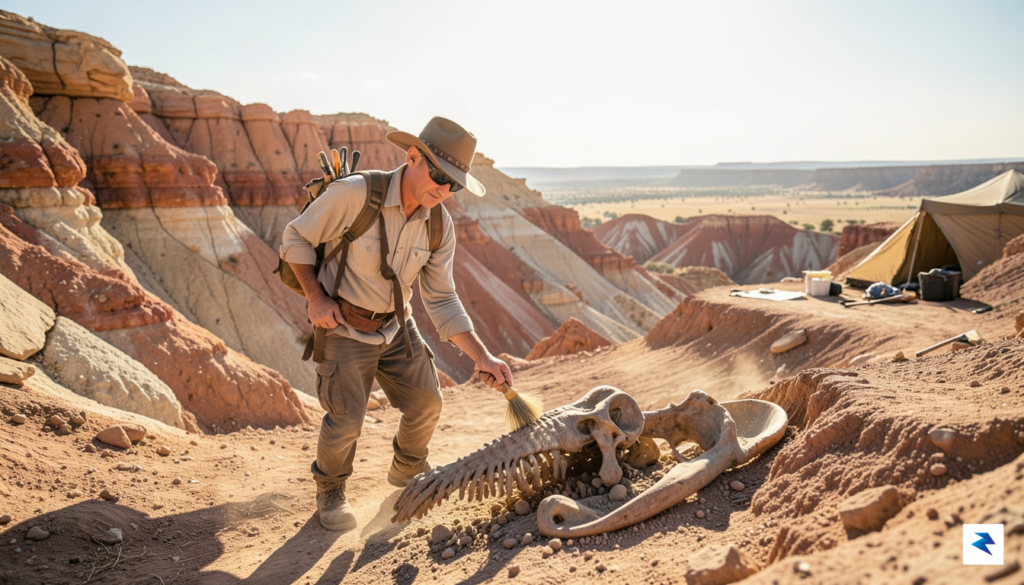
The measurable surge in university enrollment within geological and biological sciences following the film’s release is often referred to by academics as the “Jurassic Park Effect.” This phenomenon illustrates the profound power of pop culture artifacts in shaping long-term career aspirations. When students witness a character engage with the complexities of the natural world—questioning the ethics of de-extinction, meticulously uncovering fossilized evidence, and applying critical thinking in high-stakes environments—the barrier to entry for STEM fields feels significantly lower. The film bridged the gap between the inaccessible, ivory-tower scientist and the relatable, inquisitive explorer, ultimately convincing thousands of young people that a career in science could involve equal parts physical grit and intellectual rigor.
The most enduring legacy of fictional scientists is not their technical accuracy, but their ability to foster a sense of wonder that turns a casual interest into a lifelong pursuit of knowledge.
Beyond the mere romanticization of the profession, Neill’s performance emphasized the importance of field research and the hands-on nature of scientific inquiry. By depicting Grant as someone who felt more comfortable in the mud of a dig site than in a lecture hall, the film validated the “fieldwork” aspect of science, which is often overshadowed by laboratory-based research in popular media. This grounded portrayal resonated deeply because it depicted science as a detective story, where the primary tools are not just microscopes, but observation, patience, and a deep respect for the Earth’s history. By grounding the science in a tangible, tactile reality, Jurassic Park allowed an entire demographic to visualize themselves as the next generation of researchers, transforming the way society interprets the vital, ongoing work of those who study the past to better understand our future.

Sam Neill’s portrayal of Dr. Alan Grant fundamentally shifted the cinematic archetype of the scientist from the detached, ivory-tower intellectual to a grounded, tactile observer of the natural world. Unlike many action-oriented protagonists of the 1990s who relied on physical dominance or weaponry to resolve conflict, Grant operated through a lens of quiet authority and intellectual humility. His approach to discovery was defined by patience; he did not seek to conquer or control the dinosaurs he studied, but rather to understand their behavioral patterns and ecological significance. This pragmatic, non-aggressive style of engagement made science feel profoundly accessible, suggesting that the most powerful tool in a researcher’s arsenal is not a firearm, but a keen sense of observation and a willingness to learn from the environment.

The resonance of Grant’s character is perhaps best observed in his evolving relationship with the children in the narrative. Initially uncomfortable with the prospect of parenthood or prolonged interaction with youth, Grant’s transition into a protective, guiding figure served as a powerful metaphor for intergenerational knowledge transfer. By treating the children not as liabilities, but as fellow explorers capable of rational thought, he demonstrated that science is a bridge between generations. His ability to explain complex paleontological concepts with clarity and enthusiasm transformed the act of learning into a collaborative adventure, effectively humanizing the scientific process for millions of viewers who saw themselves in those curious, wide-eyed children.
The true heroism of Alan Grant lies in his rejection of the ‘action hero’ trope; he survives not by outgunning his predators, but by outthinking them, proving that intellect and empathy are the ultimate survival skills.
Furthermore, Neill’s performance was a masterclass in subverting toxic tropes that have historically plagued male leads in blockbuster films. There is a distinct absence of ego in Grant’s decision-making; he consistently prioritizes logical problem-solving and the safety of others over personal glory. By eschewing the “hero who saves the day with a gun” narrative, Neill allowed the audience to focus on the merit of scientific inquiry and the weight of ethical responsibility. This portrayal fostered a generation of thinkers who understood that courage is not the absence of fear, but the ability to remain curious and analytical even in the face of prehistoric danger. In doing so, Neill provided a blueprint for a form of positive masculinity that values stewardship, intellectual rigor, and a deep-seated respect for the complexities of life on Earth.

For decades, the public perception of a paleontologist was firmly cemented in the imagery of the Victorian era: a bespectacled academic sequestered in the quiet, climate-controlled silence of a museum basement. They were viewed as archivists of the extinct, hunched over mahogany desks or carefully organizing labeled drawers in dimly lit archives. This image suggested that the study of the past was a sedentary, strictly intellectual pursuit—a pursuit that occurred far away from the grit of the real world. It was a profession defined by preservation rather than discovery, an academic discipline that appeared static and disconnected from the adrenaline-fueled pace of modern exploration.
Everything changed in the summer of 1993, when Sam Neill’s portrayal of Dr. Alan Grant breathed visceral life into the field. Suddenly, the public was introduced to the idea that paleontology was not merely about cataloging bones, but about the high-stakes theater of excavation. The film transformed the seemingly mundane tasks of field science—meticulously brushing away layers of hardened sediment, carefully chipping at calcified rock, and recording spatial data under a relentless sun—into a high-stakes detective story. Neill’s performance lent a rugged, approachable humanity to the work, demonstrating that the scientific process was just as much about physical endurance and intuition as it was about academic rigor.
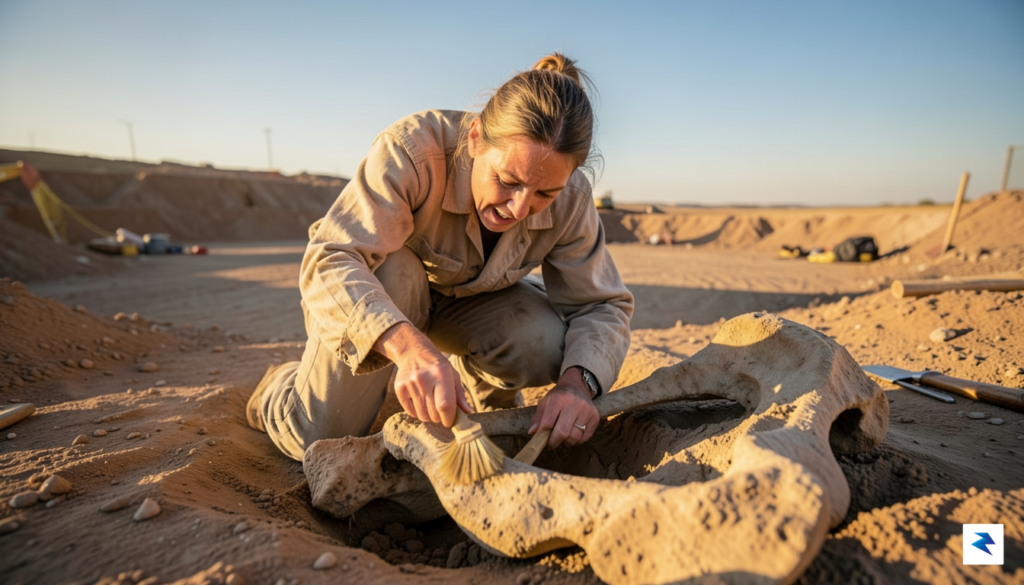
This shift in representation fundamentally altered how young students and the general public viewed the profession. Instead of seeing paleontology as a “boring” desk job, a new generation began to perceive it as an active, outdoor profession defined by adventure and scientific mystery. The grit under the fingernails and the sweat on the brow were no longer signs of tedious labor; they became badges of honor for those engaged in the hunt for evolutionary history. By framing the painstaking process of discovery as the essential foundation for understanding life on Earth, the film effectively bridged the gap between the ivory tower and the wild, unpredictable terrain of the field site.
The true impact of this cultural shift lies in the democratization of curiosity; by humanizing the scientist, the discipline transformed from a niche academic study into an aspirational career path for millions of budding explorers.
Ultimately, this reimagining of the field scientist triggered a ripple effect that went well beyond mere box-office success. As the public grew more invested in the narrative of active, hands-on scientific research, the discipline itself saw a surge in interest that translated into tangible growth. This newfound fascination helped secure more public funding, encouraged university enrollment, and elevated the status of paleontology in the scientific community. By shifting the focus from the finished museum display to the active, messy, and rewarding process of excavation, Neill and his colleagues turned the paleontologist into a modern hero, proving that the secrets of the past are always worth the effort required to uncover them.

Throughout his storied career, Sam Neill has cultivated a reputation for portraying characters with a rare, grounded authenticity that transcends the typical tropes of genre filmmaking. Rather than relying on grandiose gestures or hyperbolic displays of intellect, Neill often imbues his roles with a quiet, observational intensity that makes the internal lives of his characters feel remarkably tangible. This commitment to realism was perhaps never more consequential than in his portrayal of Dr. Alan Grant, a character who eschewed the “mad scientist” archetype in favor of a weary, pragmatic, and deeply passionate expert. By prioritizing the humanity of the researcher over the spectacle of the discovery, Neill crafted a performance that resonated far beyond the confines of the silver screen, fundamentally altering how the public perceived the grit required for scientific inquiry.
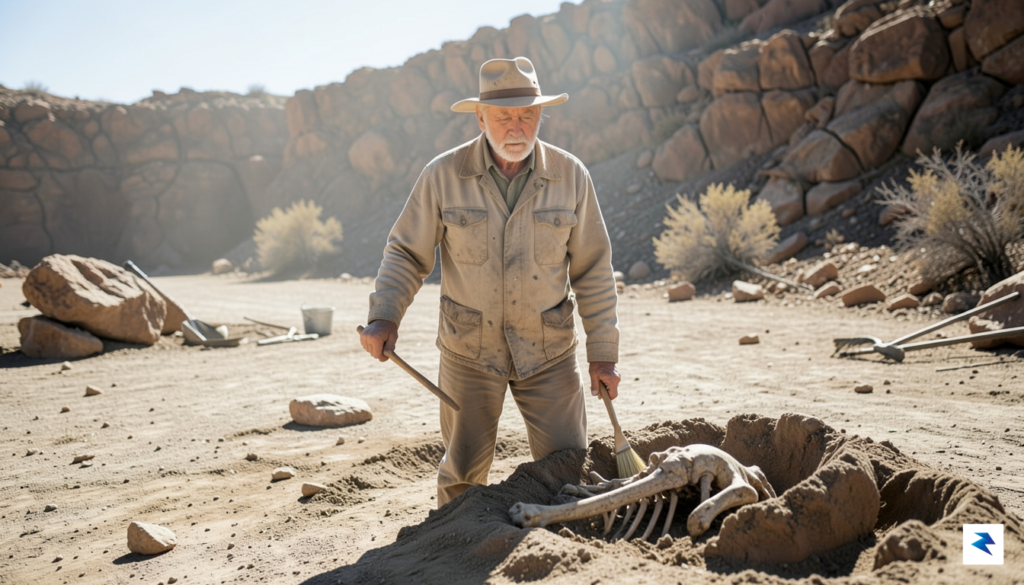
For many researchers currently working in fields ranging from paleontology to molecular biology, Neill’s version of the quintessential scientist served as a vital touchstone. His portrayal highlighted the humility inherent in a life dedicated to study—the long hours in the field, the painstaking attention to detail, and the profound respect for the natural world that often goes unnoticed in popular culture. Unlike the trope of the untouchable genius, Neill’s Grant was a man who got his hands dirty, who felt genuine frustration when faced with the unknown, and who approached his work with a sense of wonder that felt earned rather than scripted. This authenticity validated the experiences of countless students who saw their own academic struggles, intellectual curiosities, and quiet dedication reflected in a major cinematic figure.
The true power of Neill’s performance lies in his ability to make the scientific process feel like a heroic pursuit, not because of flashy technology, but because of the persistent, unglamorous quest for truth.
The long-term impact of this representation cannot be overstated, as the media we consume plays a critical role in shaping our aspirations and our understanding of various professions. When scientists are depicted with nuance and integrity, it effectively dismantles the barriers of intimidation that often keep brilliant minds from pursuing academic careers. By grounding Dr. Grant in reality, Neill provided a blueprint for how scientists could be portrayed as relatable, empathetic, and profoundly human figures. Decades later, this performance continues to serve as an anchor for those who seek to bridge the gap between complex research and public engagement, proving that an accurate, thoughtful portrayal of a researcher is one of the most effective tools for inspiring the next generation of thinkers and innovators.

Science is far too often mischaracterized as a sterile repository of cold, immutable facts, existing in a vacuum far removed from the heartbeat of human culture. Yet, history has shown us that the most profound scientific breakthroughs struggle to gain traction unless they are woven into the fabric of the public imagination. This is where the vital discipline of science communication—or SciComm—becomes indispensable. By translating the dense, technical jargon of academia into compelling narratives, storytellers act as the essential bridge between the laboratory and the living room, ensuring that scientific inquiry is not merely observed from afar, but deeply felt and understood by the society it serves.
The necessity of this storytelling cannot be overstated, particularly because public perception is the primary engine behind policy and funding. When the general public feels a genuine connection to scientific endeavors, they are more likely to advocate for robust research budgets, support evidence-based legislation, and encourage the next generation to pursue careers in STEM. If researchers remain isolated behind a wall of impenetrable data, they risk losing the very support required to push the boundaries of human knowledge. Actors like Sam Neill, through their dedication to portraying intellectual curiosity and ethical responsibility, demonstrate that the human element is what makes science relatable and, ultimately, worth fighting for.

Moving forward, the challenge for both scientists and storytellers is to maintain a standard of integrity that respects the complexity of the research while honoring the power of a good story. Ethical storytelling means avoiding the trap of sensationalism, instead opting for narratives that highlight the beauty of the scientific process—the failures, the slow progress, and the eventual, hard-won insights. By centering these stories on human values, we can foster a culture that views science as a collaborative, ongoing adventure rather than a static textbook chapter.
True progress in any field relies on the ability to translate technical discovery into human impact; without that narrative thread, even the most revolutionary ideas risk being lost to apathy.
Ultimately, the legacy of iconic performances that spark curiosity in the young is a testament to the fact that we are all, at our core, story-driven beings. Whether through the lens of a camera or the publication of a peer-reviewed paper, the goal remains the same: to ignite that initial flicker of “what if?” in the minds of the next generation. As we continue to navigate an increasingly complex world, the collaboration between the empirical and the artistic will be the defining factor in how we choose to solve our greatest challenges. By embracing the role of the storyteller, we ensure that science remains a vibrant, living force that inspires us to look closer at the world and envision a better future.
You must be logged in to post a comment.