
Chemours PFAS Settlement: What the $450 Million Payout Means for Environmental Safety
Understanding the $450 Million PFAS Settlement The recent agreement requiring Chemours to pay $450 million marks a definitive turning point in…

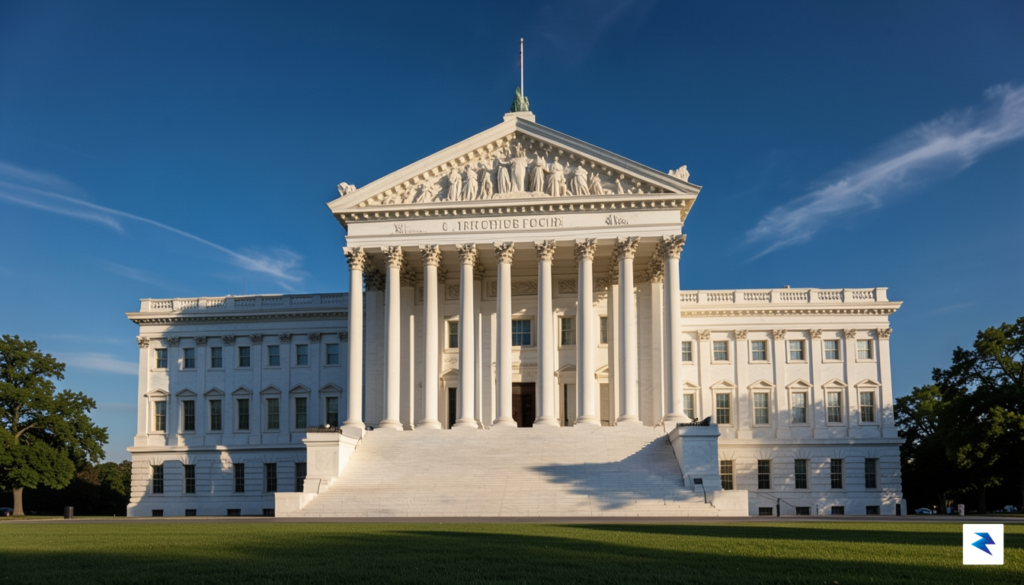
The Supreme Court’s recent decision to decline hearing the appeal brought against Bayer marks a decisive, albeit procedural, turning point in the years-long legal saga surrounding the herbicide Roundup. By denying the petition for certiorari, the justices effectively chose not to intervene in the lower court’s ruling, which had favored the plaintiff, Edwin Hardeman. It is vital for observers to understand that this denial does not constitute a definitive ruling on the merits of the case; rather, it signifies that the Supreme Court has opted not to set a national precedent on the specific conflict between federal pesticide labeling laws and state-level “failure-to-warn” claims. Consequently, the appellate court’s decision remains the final word for this particular case, leaving the underlying debate over glyphosate’s safety and the necessity of cancer warnings in a state of unresolved tension.
For Bayer, this outcome represents a significant relief in its broader strategy to mitigate the financial and reputational damage caused by tens of thousands of lawsuits. The company had argued that because the Environmental Protection Agency (EPA) has consistently deemed glyphosate safe and approved the product’s labeling, state law claims demanding cancer warnings should be preempted by federal authority. By refusing to take up the case, the Supreme Court has left this federal preemption defense in a precarious position, failing to provide the blanket immunity that the agrochemical giant had sought to protect itself from future litigation. This leaves Bayer to continue navigating a patchwork of state-level judicial outcomes, where juries may continue to find that the company failed to adequately communicate potential risks to consumers.
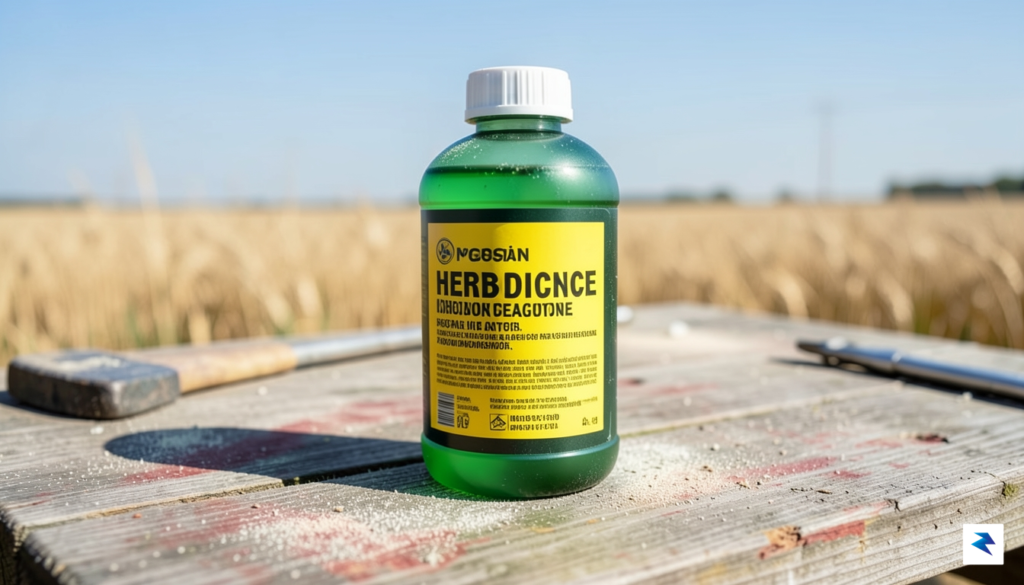
The implications of this non-ruling reach far beyond the individual litigants involved in the Hardeman case. For the thousands of plaintiffs currently waiting for their day in court, the Supreme Court’s refusal to intervene serves as a signal that the current legal framework—which allows for state-based liability claims—remains intact for now. This creates a challenging landscape for corporate defendants, as it suggests that the judiciary is not yet prepared to override local jury verdicts in favor of federal regulatory guidance. As a result, the legal battlefield remains fragmented, ensuring that the debate over Roundup’s safety will continue to be litigated on a case-by-case basis rather than being settled by a sweeping national decree.
The Supreme Court’s decision to bypass this appeal preserves the current status quo, effectively ensuring that the legal battle over glyphosate warnings will persist in state and lower federal courts for the foreseeable future.
Moving forward, this juncture represents a critical shift in the litigation timeline. While Bayer has successfully resolved many claims through settlement agreements, the persistence of these individual lawsuits suggests that the company’s legal department will remain heavily occupied for years to come. By declining to provide a clear directive on the preemption issue, the high court has ensured that the burden of interpretation remains with lower courts, where inconsistent rulings will likely continue to drive volatility in both the company’s stock performance and its long-term litigation reserves.

For Bayer, the Supreme Court’s decision to steer clear of this particular legal battle serves as a long-awaited reprieve that ripples far beyond the courtroom walls. Since the company’s $63 billion acquisition of Monsanto in 2018, the shadow of Roundup-related litigation has acted as a persistent drag on its market valuation and investor sentiment. By declining to take up the case, the Court has effectively spared Bayer from a potentially precedent-setting ruling that could have either cemented or dismantled its defense strategy. For years, the company has been forced to navigate a precarious landscape of multi-billion dollar settlement funds, carving out massive financial reserves to resolve thousands of individual claims while simultaneously fighting to maintain the product’s commercial viability. This outcome provides a critical layer of stability, signaling to the market that the company may finally be moving toward a manageable conclusion to its most expensive legal headache.

The core of Bayer’s legal argument has centered on the concept of federal preemption, which posits that because the Environmental Protection Agency (EPA) has consistently deemed the active ingredient in Roundup—glyphosate—safe for use, state-level “failure-to-warn” claims should be barred. Had the Supreme Court ruled in favor of the plaintiff, it would have fundamentally undermined this shield, likely opening the floodgates for a renewed wave of state-based litigation that would have been nearly impossible to defend. Instead, the current status quo remains intact, allowing Bayer to continue its strategy of resolving claims through structured, negotiated settlements rather than exposing itself to the volatility of unpredictable jury verdicts. Investors have responded to this development with cautious optimism, viewing the decision as a validation of the company’s long-term risk mitigation efforts.
The refusal of the Supreme Court to intervene essentially preserves the current, albeit costly, status quo, allowing Bayer to manage its legal liabilities through private channels rather than facing a catastrophic shift in federal regulatory standards.
Moving forward, this ruling grants Bayer’s leadership team the necessary breathing room to pivot away from a purely defensive litigation posture. With the specter of a detrimental high-court ruling removed for the time being, the company can better allocate capital toward its core pharmaceutical and agricultural research divisions, rather than keeping billions of dollars indefinitely tied up in litigation reserves. While the company still faces thousands of pending cases, the legal framework is now more predictable, allowing for more precise financial forecasting. For shareholders who have watched the stock price stagnate under the weight of these mounting legal costs, the Court’s silence is perhaps the most favorable outcome they could have hoped for in an otherwise turbulent regulatory environment.

The tension surrounding glyphosate—the active ingredient in Roundup—represents one of the most contentious clashes between scientific consensus and judicial outcomes in modern history. At the center of this debate is the International Agency for Research on Cancer (IARC), a branch of the World Health Organization, which famously classified glyphosate as “probably carcinogenic to humans” in 2015. This assessment, based primarily on studies of occupational exposure, provided the foundational spark for thousands of personal injury lawsuits, as it gave plaintiffs a credible scientific hook to argue that their health struggles were directly linked to long-term use of the herbicide.
Conversely, the U.S. Environmental Protection Agency (EPA) has consistently maintained a different stance, asserting that there are no risks of concern to human health when glyphosate is used in accordance with its current label instructions. Regulatory bodies in other jurisdictions, including the European Food Safety Authority, have largely aligned with the EPA’s perspective, arguing that the weight of evidence does not support a causal link to non-Hodgkin lymphoma. This regulatory divide creates a complex environment for juries, who are often forced to weigh conflicting expert testimony while navigating the high-stakes emotional narratives presented by plaintiffs who have suffered severe illnesses.

Proving causation in mass tort litigation is notoriously difficult, primarily because science and the law operate on entirely different standards of proof. In a scientific study, researchers look for statistical significance and biological plausibility, often requiring years of longitudinal data to establish a definitive link. In a courtroom, however, the burden of proof rests on the plaintiff to demonstrate by a “preponderance of the evidence” that the product was a substantial factor in causing their specific cancer. This legal threshold is significantly lower than the rigorous standard of absolute scientific certainty, which allows juries to award massive damages even when the broader scientific community remains divided or inconclusive.
The core of the legal struggle lies in the gap between regulatory safety findings and the subjective experience of individual plaintiffs, a space that expert witnesses are tasked with bridging through complex and often contradictory testimony.
As these cases move forward, the role of expert testimony becomes the deciding factor in the courtroom. Plaintiffs rely on toxicologists and epidemiologists to draw lines between chemical exposure and cellular damage, while defense teams leverage internal corporate data and meta-analyses to argue that such correlations are statistically insignificant. Ultimately, the judiciary is not equipped to resolve the underlying scientific ambiguity regarding glyphosate. Instead, courts act as a theater where this ongoing debate is argued in front of laypeople, turning highly technical toxicology reports into binary outcomes of liability or exoneration.

The Supreme Court’s decision to decline hearing the appeal in a high-profile Roundup lawsuit marks a pivotal moment, shaping the trajectory of product liability litigation in the United States. While this particular case against Bayer is now settled in its immediate context, the broader legal landscape for manufacturers and consumers is undeniably shifting. This refusal by the nation’s highest court to intervene, specifically concerning claims that state law “failure to warn” arguments were preempted by federal regulations, sends a strong signal to lower courts and potentially reshapes strategies for future mass tort cases involving federally regulated products.
A central concept illuminated by this outcome is **federal preemption**, a legal doctrine where federal law supersedes state law when there is a conflict or when Congress has intended to occupy an entire field of regulation. In the context of the Roundup litigation, a key defense raised by Bayer was that the Federal Insecticide, Fungicide, and Rodenticide Act (FIFRA), which governs pesticide labeling, preempted state law claims alleging that the company failed to warn consumers about cancer risks. Because the Environmental Protection Agency (EPA) had approved Roundup’s label without a cancer warning, Bayer argued it could not be held liable under state law for failing to include a warning that federal regulators did not require. The Supreme Court’s decision not to review this argument, effectively letting lower court rulings stand that favored preemption in some instances, strengthens the hand of manufacturers seeking to use this defense for products with comprehensive federal regulatory oversight.
This stance will undoubtedly influence judges in lower courts facing similar claims. District and appellate courts, observing the Supreme Court’s reluctance to intervene, may become more inclined to grant summary judgment motions for defendants based on preemption arguments, particularly in “failure to warn” cases involving products with labels approved by federal agencies. This could potentially stifle certain types of litigation, making it more challenging for plaintiffs to pursue claims against manufacturers of federally regulated chemicals and drugs if their arguments hinge solely on the absence of a warning that a federal agency had not mandated. However, it is crucial to understand that this does not necessarily close the door on all product liability lawsuits. Plaintiffs’ attorneys may pivot to alternative theories of liability, such as design defect, manufacturing defect, or claims of general negligence, which might not be as directly impacted by federal labeling preemption. The focus could increasingly shift towards rigorous scientific evidence linking products to harm, independent of labeling disputes.
Looking further ahead, this judicial trend could catalyze potential legislative changes. If the courts are perceived as increasingly favoring manufacturers based on federal regulatory approval, public pressure might mount for Congress to act. Lawmakers could amend existing statutes like FIFRA or the Federal Food, Drug, and Cosmetic Act (FDCA) to clarify or explicitly limit the scope of federal preemption, thereby preserving the ability of states to provide avenues for consumer recourse through common law claims. Such legislative action would represent a significant rebalancing of power, potentially requiring federal agencies like the EPA to reassess their processes for evaluating long-term health risks and ensuring that product labels are not just federally compliant but also adequately protective of public health. This ongoing tension between federal oversight and state-level consumer protection highlights a dynamic legal and political battleground that will continue to evolve.


The legal battles surrounding glyphosate have brought the complexities of modern agricultural practices into the spotlight, forcing both industrial producers and home gardeners to reconsider their reliance on chemical weed control. For decades, glyphosate-based products became the industry standard due to their efficacy and relative ease of use, leading to a profound dependency in large-scale crop management. However, the rise of herbicide-resistant weeds—often dubbed “superweeds”—has created a cycle where farmers are forced to apply higher volumes of chemicals or rotate through increasingly aggressive herbicide cocktails to maintain yields. This evolutionary arms race has sparked a broader conversation about whether the current model of chemical-heavy farming is sustainable in the long term or if it is merely delaying an inevitable shift toward more diverse, integrated pest management strategies.

For the average consumer and home gardener, the ongoing debate serves as a crucial reminder to prioritize safety and education when handling any agricultural chemical. While the regulatory landscape remains complex, the best practice for those who choose to use herbicides is to strictly adhere to the manufacturer’s safety protocols. This includes wearing appropriate protective gear such as gloves, long sleeves, and eye protection, and ensuring that application occurs on days with minimal wind to prevent unintended drift. Furthermore, many experts now encourage gardeners to explore non-chemical alternatives, such as mechanical weeding, mulching, or utilizing organic-certified herbicidal soaps, which can often achieve desired results without the high-stakes controversy associated with synthetic glyphosate formulations.
The core of the agricultural transition lies in the shift from a chemical-first mindset to a systemic approach that values soil health, crop rotation, and natural biodiversity as the primary defenses against weeds.
Ultimately, the agricultural sector is finding itself at a crossroads as it balances the immediate need for food security with an increasing public demand for transparency and environmental stewardship. The push for more sustainable farming solutions is gaining momentum, with researchers and farmers collaborating on innovative techniques like cover cropping, precision robotics for weed removal, and enhanced soil microbiome health. While these methods require more labor and technical investment than a single pass with a sprayer, they offer a path forward that mitigates the risks associated with chemical dependency. As society continues to evaluate the safety of the food supply, the future of agriculture will likely be defined by a move toward a more balanced, multi-faceted approach that values long-term ecological resilience over the convenience of chemical reliance.
You must be logged in to post a comment.