Digital Fatigue: Why You’re Burned Out on Social Media (And How to Fix It)
Understanding the Digital Fatigue Epidemic Digital fatigue is no longer merely a trending phrase or a niche complaint; it has evolved into a…


For decades, category theory has served as the elegant scaffolding of computer science, providing a rigorous language to describe how data structures relate to one another within static, hierarchical frameworks. Yet, as our software systems grow increasingly distributed and event-driven, the traditional focus on static mapping often feels restrictive. This is where the concept of actegories emerges as a transformative evolution. By shifting our perspective from purely structural relationships to the ways in which objects interact and transform, actegories allow us to model not just what a system is, but exactly how it behaves under the influence of dynamic operations.

The transition from standard category theory to an action-oriented framework represents a fundamental shift in how we approach software architecture. In classical category theory, we often treat objects as passive entities characterized by their morphisms—the arrows that map one structure to another. However, an actegory introduces a richer, more nuanced layer: the notion of an object “acting” upon another, akin to the way a monoid might act on a set. This synthesis bridges the gap between abstract mathematical purity and the messy, real-world requirements of concurrent programming, where an operation is rarely just a transformation of data, but an active event that ripples through a system’s state space.
Actegories represent the convergence of structural stability and operational fluidity, providing a formal bridge between the static architecture of code and the dynamic reality of runtime execution.
For engineers and mathematicians alike, the value proposition is profound. By formalizing actions as first-class citizens within a categorical framework, we gain a powerful new toolset for formal verification and system design. Instead of relying on heuristic testing to ensure that complex, interacting services behave as expected, actegories provide a mathematical foundation to prove that a sequence of operations will maintain system invariants. This transition from “static mapping” to “dynamic action” allows developers to reason about distributed systems, microservices, and state-machine transitions with unprecedented clarity. We are no longer merely mapping data from point A to point B; we are orchestrating the very forces that define how our software evolves over time.
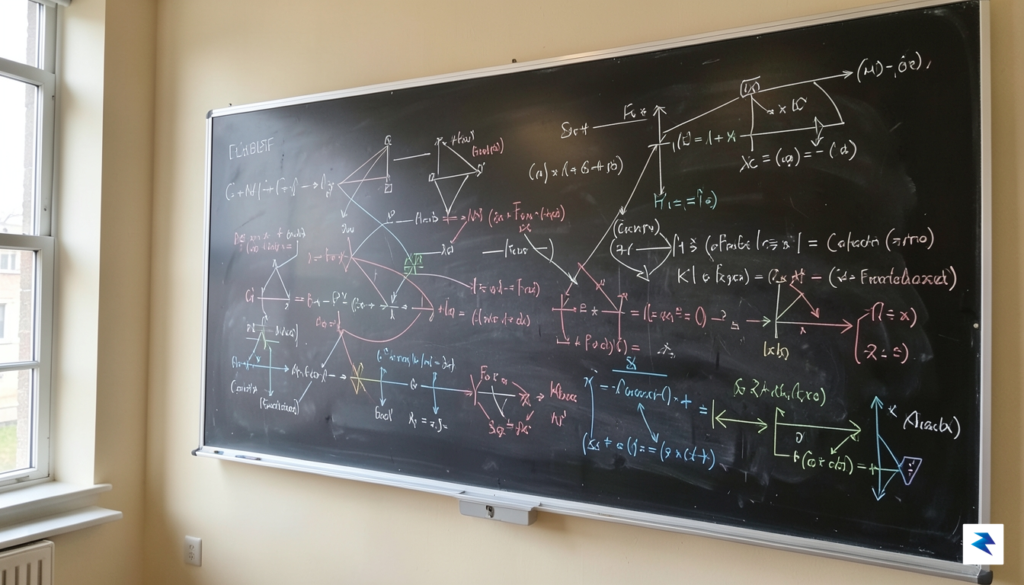
To grasp the mechanics of an actegory, one must first visualize a dual-layer structure where two distinct categorical worlds interact. Formally, an actegory is defined as a category C that is equipped with an action from a monoidal category M. In this arrangement, M functions as the “actor”—a collection of processes or transformations—while C acts as the stage upon which these transformations occur. The action itself is a functor that maps the product of M and C back into C, effectively describing how an object in the actor category modifies an object in the base category. This structure allows mathematicians and computer scientists to treat state transitions not merely as disconnected functions, but as a cohesive system governed by the rigorous algebraic laws of monoidal categories.

At the heart of this relationship lies the tensor product, which serves as the connective tissue between the two categories. Just as a group might act on a set in classical algebra, the monoidal category M acts on C by satisfying specific coherence conditions that ensure consistency throughout the transformation process. These conditions require that the composition of two actions in M must correspond exactly to the sequential application of those actions upon C. Furthermore, the unit object of the monoidal category must act as an identity transformation, leaving any object in C unchanged. Without these stringent coherence requirements, the “side effects” modeled by the actegory would become unpredictable, rendering the framework useless for formal verification or complex software architecture.
The power of an actegory lies in its ability to reconcile the dynamism of change with the static nature of structural types. By encoding side effects as a formal categorical action, we transition from ad-hoc state management to a unified, predictable mathematical language.
The elegance of this approach becomes particularly apparent when considering how it mirrors real-world computational environments. When we write software that involves state changes, we are essentially navigating the interplay between processes—the actor category—and the data they manipulate—the acted-upon category. By framing these interactions as actegories, we gain access to the powerful tools of category theory, such as natural transformations and adjoint functors, to prove that our systems behave correctly under composition. Consequently, the actegory is not merely an abstract curiosity; it is a profound bridge that allows us to reason about the evolution of complex systems with the same precision we apply to static data structures.

For decades, traditional category theory has been revered for its ability to map the static relationships between mathematical objects, providing a bird’s-eye view of structures through morphisms. While this framework is intellectually elegant, it has historically struggled to capture the “how” of computer science—the granular, step-by-step execution of code that defines modern software. In a standard category, objects are often inert, existing in a state of conceptual stillness. Actegories, however, introduce a paradigm shift by treating these objects as entities capable of undergoing defined transformations, effectively transforming a map of relationships into a blueprint for operational behavior. This transition allows developers to move beyond merely describing what a system is and start formalizing exactly what a system does.
The primary advantage of this shift lies in the robust way actegories handle state encapsulation. In complex architectures, managing state transitions is frequently the source of the most intractable bugs, as side effects often ripple through a system in unpredictable ways. By modeling these transitions as formal actions, actegories ensure that state changes are not just incidental consequences, but controlled operations that adhere to strict mathematical laws. This encapsulation forces developers to define the boundaries of each action explicitly, ensuring that local state changes do not inadvertently compromise the integrity of the global system. As a result, the code becomes more modular, predictable, and easier to reason about, even as the underlying architecture scales in complexity.

Actegories bridge the divide between abstract logic and operational reality by treating system behavior as a first-class mathematical citizen, ensuring that safety properties are baked into the execution flow rather than added as an afterthought.
Furthermore, actegories significantly reduce the cognitive load associated with modeling concurrent systems. When multiple processes operate simultaneously, tracking the sequence of operations and their potential interdependencies can quickly become an exercise in chaos. Because actegories provide a formal language for these interactions, they allow us to define composition rules that guarantee safety properties—such as data consistency and deadlock prevention—across the entire stack. Instead of manually auditing every possible execution path, developers can rely on the underlying structural properties of the actegory to maintain order. By turning dynamic, unpredictable behavior into a structured, algebraic model, actegories provide the necessary rigor to build resilient, high-performance systems that remain stable under the pressure of real-world concurrency.
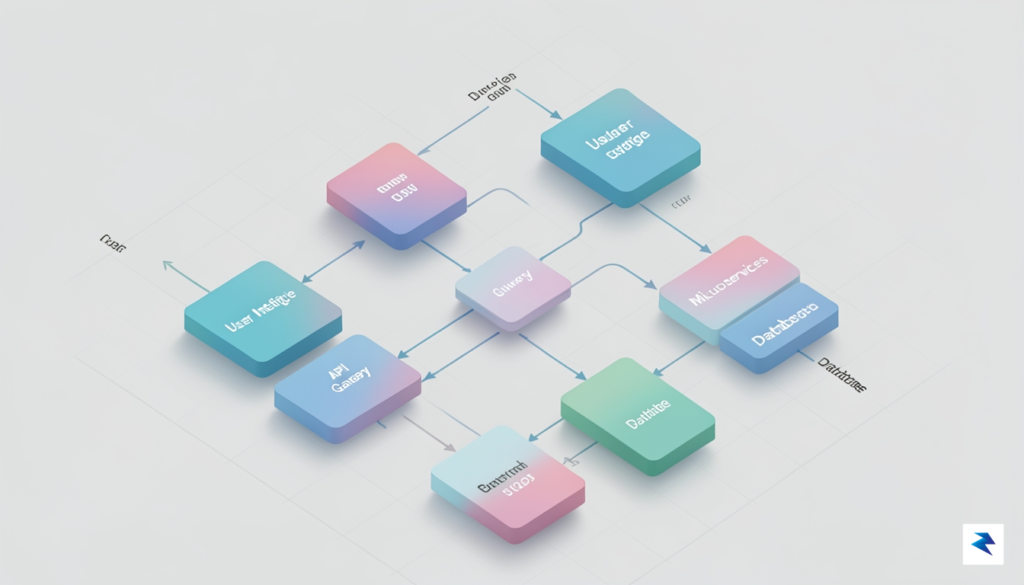
The theoretical elegance of actegories finds its true power in practical application, particularly within the realm of software architecture. Here, they offer a sophisticated framework for building systems that are not only robust but also remarkably adaptable. Crucially, actegories provide a formal lens through which to approach functional programming paradigms, where the goal is often to minimize or completely eliminate side effects for predictability. While pure functions are ideal, real-world applications invariably require interaction with external systems – databases, network services, user interfaces – introducing necessary impurities. Actegories step in to elegantly model these essential ‘actions’ and their corresponding ‘effects,’ transforming what could be chaotic side effects into well-defined, composable units.
Managing stateful side effects, such as updating a customer’s profile in a database or sending an email notification after a purchase, is a perennial challenge in software development. In traditional imperative designs, these operations can be scattered throughout the codebase, making them difficult to trace, test, and reason about, especially in concurrent environments. Actegorical design patterns, however, advocate for encapsulating these effects within explicit ‘actions.’ This means that instead of directly modifying state or performing an I/O operation, a function might return a description of the effect that should happen. This description can then be interpreted and executed by a dedicated runtime or an effect handler, effectively decoupling the business logic from the mechanics of effect execution. Consequently, the core logic remains pure and highly testable, while the side effects are managed in a predictable and isolated manner.
Consider, for instance, a complex e-commerce order fulfillment system, a common source of concurrency bugs. When multiple users simultaneously attempt to purchase the last item in stock, or when various background services are updating inventory and dispatching orders, race conditions and inconsistent states are rampant. An actegorical approach would model each step – checking stock, reserving an item, processing payment, updating inventory, sending shipping notifications – as distinct actions with well-defined effects. For example, ‘reserve item’ isn’t an immediate database write, but rather an action that describes the intent to reserve, which a dedicated effect interpreter can then execute transactionally. This explicit modeling ensures that the sequence of operations and their potential interactions are clear. By structuring these operations as composable acts, architects can design systems where the execution of effects is carefully orchestrated, preventing scenarios where an item is double-sold or a payment is processed for an out-of-stock item. The system can guarantee that all effects related to a single order are either fully committed or fully rolled back, adhering to ACID properties implicitly through the design.

As the digital world becomes increasingly intricate and reliant on software, the demand for absolutely reliable systems has never been higher. This escalating need inevitably pushes the boundaries of our current formal methods, making the adoption of sophisticated mathematical abstractions not just beneficial, but essential. In this evolving landscape, actegories are uniquely positioned to emerge as a foundational pillar, supporting the development of next-generation formal verification tools and inherently type-safe systems that can withstand the rigors of modern computing challenges. Their ability to precisely model both the static structure and the dynamic actions within a system offers a profound advantage over traditional approaches, promising a future where software correctness is not an aspiration, but an intrinsic property.
One of the most exciting prospects for actegories lies in their potential to revolutionize automated verification. By providing a rigorous framework for describing how actions transform states and interact with contexts, actegorical models naturally lend themselves to automated reasoning. Imagine tools that can not only detect potential errors but formally prove the absence of entire classes of bugs in complex distributed systems, concurrent programs, or even smart contracts. This goes beyond mere property checking; it enables the construction of proofs that guarantee a system’s behavior under all specified conditions, offering an unprecedented level of assurance. Such systems could automatically generate proofs of correctness, or even synthesize code that is provably correct by construction, significantly reducing the manual effort and expertise currently required for high-assurance software development.
Looking ahead over the next decade, we can anticipate a gradual yet impactful industry adoption of actegorical principles. Initially, this might manifest in highly specialized domains where the cost of failure is astronomical, such as avionics, autonomous vehicle control systems, or critical medical devices. Here, the investment in understanding and applying these abstract concepts will be justified by the unparalleled levels of safety and security they provide. Early adopters will likely be research-oriented divisions within large tech companies or specialized consultancies, leveraging actegories to tackle problems that are currently intractable with conventional methods. As tooling matures and educational resources become more accessible, the barriers to entry will lower, paving the way for broader integration.
Subsequently, as the benefits become more widely recognized and developer-friendly abstractions are built atop actegorical foundations, their influence will permeate more mainstream software development. We might see the emergence of
You must be logged in to post a comment.