
Meta’s New Smart Glasses Update: Why Your Privacy Light Matters Now More Than Ever
The Evolution of Smart Glasses Privacy The landscape of wearable technology has shifted dramatically over the past few years, evolving from…

In recent days, several public-facing portals associated with the United States Army became the targets of unauthorized digital interference, resulting in the temporary defacement of their landing pages. The intrusion involved external actors gaining control over the interface of these websites to broadcast politically charged messages directed at high-profile political figures, specifically Donald Trump. Unlike a silent data exfiltration attack, this incident was overt and performative, designed to capture public attention rather than to steal sensitive intelligence or personnel records. The messages displayed were clearly identifiable as hacktivist-driven, utilizing the government domain’s visibility as a megaphone for ideological expression.

The discovery of the unauthorized access triggered immediate protocols within the Department of Defense’s cybersecurity infrastructure. Upon detecting the compromised portals, technical teams moved swiftly to isolate the affected servers and verify the extent of the unauthorized entry. The remedial process prioritized the restoration of official content, and administrators successfully took the compromised pages offline to scrub malicious scripts and perform a comprehensive security audit. By systematically patching the vulnerabilities that allowed for the unauthorized access, the military’s IT specialists ensured that the portals were returned to their standard functional state, effectively neutralizing the threat posed by the external actors.
It is essential to distinguish between a superficial website defacement and a catastrophic breach of secure military databases; the former is a public relations disruption, while the latter would involve the compromise of classified or sensitive personal information.
Distinguishing between the nature of this event and a major data breach is critical for understanding the current threat landscape. In this instance, the integrity of the Army’s internal, classified networks remained entirely separate from the public-facing websites that were compromised. While the defacement represents a clear failure in the security posture of these specific web domains, there is currently no evidence to suggest that the attackers penetrated the underlying backend architecture or gained access to sensitive data stores. This distinction underscores the difference between attacking a public website—which is often managed by third-party hosting or content management systems—and breaching the hardened, segmented environments where critical government and military data are housed.
The incident serves as a stark reminder of the ongoing challenges faced by government entities in securing public-facing web infrastructure against opportunistic hacktivists. Because these sites are designed to be accessible to the general public, they inherently possess a larger attack surface than internal administrative systems. Moving forward, the Department of Defense is expected to bolster its authentication requirements and conduct more frequent vulnerability assessments to prevent a recurrence of such digital vandalism, ensuring that official channels remain secure and reliable for those who rely on them for information.

Hacktivism, at its core, represents the intersection of political activism and technical exploitation, functioning as a digital megaphone for causes that often struggle to find traditional avenues for discourse. While the term was once synonymous with simple website defacements—often executed by lone actors with limited technical prowess—it has transformed into a sophisticated toolset for modern information warfare. Today, decentralized groups leverage complex vulnerabilities, social engineering, and coordinated data exfiltration to challenge state actors and global institutions. This shift marks a departure from mere vandalism toward a strategic, albeit illegal, attempt to disrupt the perceived legitimacy and security of high-profile entities.

The recent targeting of United States Army infrastructure highlights a deliberate choice to utilize government domains as a high-visibility canvas. By breaching a federal site, actors aim to achieve a psychological impact that far outweighs the actual technical damage caused to the server. This tactic relies on the shock value of compromising a secure, institutional fortress to signal that no organization, regardless of its prestige or defensive budget, is beyond the reach of a determined collective. The goal is rarely permanent destruction; rather, it is the manipulation of public perception, forcing an immediate, visible reaction from those in power while simultaneously broadcasting a political message to a global, internet-connected audience.
The true power of modern hacktivism lies not in the technical breach itself, but in the ability to puncture the illusion of absolute security held by state institutions.
However, this strategy carries inherent risks that extend well beyond the digital realm. Engaging in unauthorized access to federal domains invites severe legal scrutiny and shifts the narrative from the activist’s intended message to the criminality of the act itself. When groups move beyond symbolic defacement into the realm of data theft or infrastructure disruption, they often lose the sympathy of the public, who may view the breach as a threat to national stability rather than a legitimate form of protest. Consequently, this incident serves as a stark reminder that while the digital age has democratized the ability to voice dissent, the consequences of such actions remain firmly rooted in the physical world, often resulting in long-term surveillance and prosecution for those who cross the line from speech to subversion.

Securing the digital perimeter of a massive entity like the U.S. Army creates a persistent paradox: federal agencies must maintain seamless public access to information while simultaneously shielding their architecture from thousands of automated threats that probe for weaknesses every single hour. The reality of government web infrastructure is often a complex tapestry of modern security protocols layered over aging legacy systems. When hackers successfully deface a high-profile domain, it is rarely due to a singular, sophisticated “Hollywood-style” bypass; instead, it typically stems from the accumulation of technical debt, such as outdated Content Management System (CMS) plugins or misconfigured server permissions that leave a digital door slightly ajar.
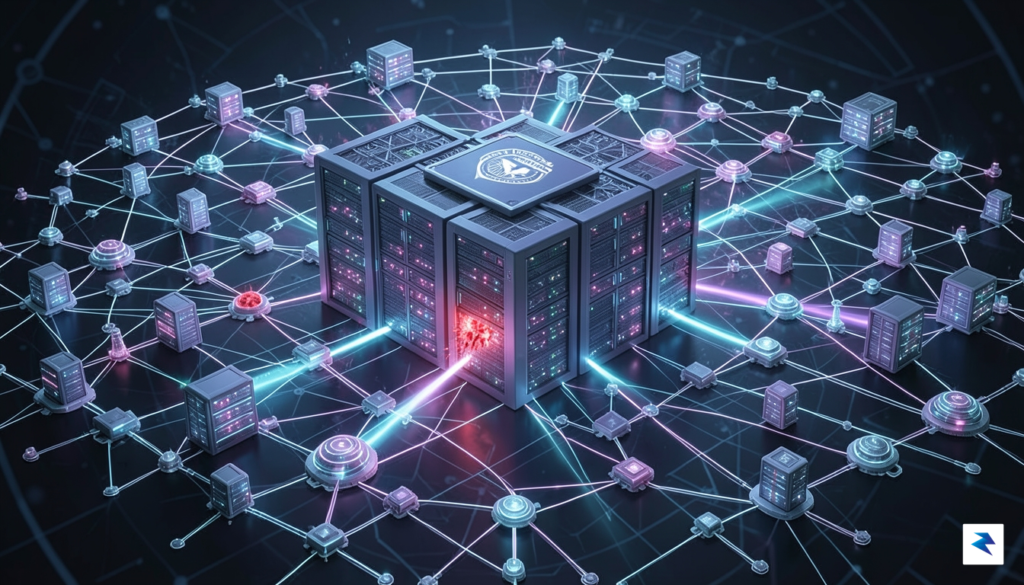
Common entry points for these unauthorized defacements frequently trace back to predictable technical oversights. For instance, SQL injection remains a pervasive threat, allowing attackers to manipulate backend databases by injecting malicious queries into unsecured input fields. Furthermore, as organizations rely on third-party integrations to manage content, a single unpatched plugin can serve as a gateway for an intruder to gain administrative privileges. Beyond code-level vulnerabilities, social engineering continues to play a critical role; if a single employee or contractor is tricked into revealing credentials through a phishing attempt, even the most robust firewall becomes essentially irrelevant. These incidents underscore the reality that security is not merely a software problem, but a continuous operational challenge.
The core of the issue lies in the sheer scale of the attack surface, where legacy software often lacks the inherent security design required to withstand modern, automated exploitation techniques.
To combat these persistent risks, federal IT departments are increasingly shifting toward a Zero-Trust Architecture. This security model operates on the principle of “never trust, always verify,” assuming that the network is already compromised and therefore requiring strict identity verification for every person and device attempting to access resources. By compartmentalizing data and restricting lateral movement within a network, even if one segment is breached, the damage can be effectively contained before it spreads to critical infrastructure. This represents a fundamental change in philosophy from the traditional “moat and castle” approach, which focused primarily on perimeter defense.
Modernizing military-grade security domains is an ongoing, Herculean task that involves replacing end-of-life hardware and digitizing manual verification processes. As these agencies move toward cloud-native environments, they are prioritizing automated vulnerability scanning and continuous monitoring to identify anomalies in real-time. By fostering a culture of cyber-resilience, the U.S. military aims to reduce the window of opportunity for hacktivists and state-sponsored actors alike. Ultimately, closing the gap in government web infrastructure requires a relentless commitment to patching, updating, and verifying every connection, ensuring that public-facing assets are as fortified as the classified networks they support.

At first glance, a defaced government website—often displaying inflammatory political slogans or digital graffiti—can appear to be little more than a public relations nuisance. However, viewing these incidents merely as digital vandalism is a dangerous miscalculation. From a security architecture perspective, website defacement is rarely an isolated event; rather, it acts as a loud, high-visibility “warning shot” that signals a fundamental breakdown in an organization’s perimeter defense. When an unauthorized actor gains the administrative permissions necessary to replace a site’s homepage, they have successfully cleared the most difficult hurdle in the cyber-attack lifecycle: achieving privileged access to a secure environment.
The technical reality is that the path to defacement is identical to the path used for far more catastrophic outcomes. If a threat actor possesses the credentials or exploits the vulnerabilities required to alter a high-profile web domain, they theoretically possess the same access required to intercept classified communications, exfiltrate sensitive personnel data, or distribute sophisticated malware to unsuspecting visitors. The difference between a simple defacement and a silent, long-term espionage campaign is often nothing more than the intent of the attacker. Consequently, these public displays should be treated as proof of concept—a demonstration by the hacker that they have breached the castle walls and are currently roaming the infrastructure with elevated privileges.

The true cost of a defacement is not the time spent restoring the site, but the exposure of a critical failure in access control, identity management, and server hardening.
Beyond the technical implications, the reputational damage resulting from such breaches is profound. Government portals serve as the primary conduits for reliable public information; when these channels are compromised, the public’s fundamental trust in institutional communication begins to erode. If a federal agency cannot secure its own digital front door against politically motivated interference, citizens are left to question the integrity of the information provided therein. This loss of trust is a strategic victory for hacktivist groups, as they aim to undermine the perceived competence and stability of the entity they target.
Ultimately, these incidents necessitate a shift in how we categorize “minor” security breaches. By ignoring the warning signs inherent in a defacement, organizations risk leaving the door wide open for persistent threats that operate silently beneath the surface. To mitigate these risks, security teams must move beyond surface-level remediation and conduct comprehensive forensic audits to determine how the intrusion occurred, what other systems may have been accessed, and how to harden the environment against future, more malicious incursions. In the world of modern cybersecurity, a defacement is never just a prank—it is a critical intelligence indicator that the network’s integrity has been fundamentally compromised.

In the wake of high-profile defacements targeting government web assets, federal agencies are being forced to abandon outdated, reactive security models in favor of a proactive, persistent defense posture. Relying on periodic patching schedules is no longer sufficient when hacktivists and state-sponsored actors leverage automated scripts to exploit vulnerabilities the moment they are disclosed. To fortify critical digital infrastructure, administrators must adopt a “Zero Trust” architecture that assumes an attacker is already within the network perimeter. By implementing rigorous identity management protocols—such as phishing-resistant multi-factor authentication—agencies can ensure that even if credentials are compromised, unauthorized actors cannot gain administrative control over mission-critical web portals.

One of the most effective ways to combat unauthorized site changes is through the integration of artificial intelligence and machine learning. Unlike traditional signature-based detection systems that only flag known threats, AI-driven monitoring establishes a baseline for what “normal” website behavior looks like. When an unauthorized modification occurs—such as a rogue script injection or a sudden change in source code—the system can instantly detect the deviation from the established baseline. This allows security teams to respond in seconds rather than hours, effectively neutralizing a defacement attempt before it becomes visible to the public.
The future of federal cybersecurity lies not just in building stronger walls, but in developing immune-system-like capabilities that detect and isolate anomalies in real-time.
Beyond automated detection, federal agencies must implement comprehensive Vulnerability Management Programs (VMPs) that prioritize the most critical assets. This process involves continuous scanning for misconfigurations and software flaws that could serve as entry points for digital protesters. A robust VMP is not merely an IT checkbox; it is a lifecycle process that includes rapid remediation cycles, regular penetration testing, and “red team” exercises that mimic the tactics of persistent threat actors. By treating these environments as living entities that require constant care, agencies move from a state of vulnerability to one of resilience.
As the political climate remains polarized, digital activism will likely continue to target federal web infrastructure to amplify ideological messages. The path forward requires a unified strategy where federal web administrators, cybersecurity analysts, and policy makers align on a defense-in-depth approach. By blending advanced machine learning tools with disciplined human oversight, the government can transform its digital footprint from a vulnerable target into a hardened, highly monitored ecosystem capable of withstanding even the most determined cyber disruptions.
You must be logged in to post a comment.